When you’re standing in front of a gleaming used car that looks perfect in every way, it’s easy to get swept up in the excitement. But seasoned detailers and savvy buyers know that glossy finish can hide a multitude of sins—repairs, resprays, and bodywork that could signal hidden damage or diminished value. This is where a paint thickness gauge becomes your most trusted diagnostic companion, transforming guesswork into precise data and protecting you from costly mistakes.
Understanding what lies beneath that mirror-like surface isn’t just for professional body shops anymore. Whether you’re a weekend warrior perfecting your ceramic coating application, a collector verifying originality, or a buyer negotiating your next vehicle purchase, the right paint thickness gauge reveals the story written in microns. But with countless options flooding the market—from budget-friendly entry models to sophisticated professional instruments—knowing which features truly matter can mean the difference between a smart investment and an expensive paperweight.
Top 10 paint thickness gauges
Detailed Product Reviews
1. Car Coating Thickness Meter for Used Car Buyers, Paint Mil Thickness Meter Gauge Check The Car’s Original Coating Auto Car Paint Meter (Black)
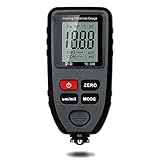
Overview: This dual-technology coating thickness gauge automatically detects both ferrous and non-ferrous substrates, making it purpose-built for automotive paint inspection. Designed specifically for used car buyers, it measures paint thickness on steel and aluminum panels to reveal hidden accident repairs, body filler, and repainting jobs. The device works exclusively on metallic surfaces and operates across various automotive applications from anodized aluminum to bike frames.
What Makes It Stand Out: The auto-detection capability eliminates manual substrate switching, streamlining inspections across mixed-material modern vehicles. Its focused marketing toward used car buyers demonstrates clear purpose—helping identify inconsistent panel thickness that signals previous collisions. The tool covers a comprehensive range from 0-1500μm with sufficient accuracy for consumer-grade diagnostics, making it accessible for non-professionals while remaining useful for enthusiasts.
Value for Money: At $43.99, this gauge occupies the sweet spot between basic magnetic testers and professional-grade equipment. It offers electronic precision and dual-substrate detection at roughly half the cost of high-end models, while providing exponentially more capability than manual alternatives. For occasional use by private buyers or small dealers, the price-to-performance ratio is compelling.
Strengths and Weaknesses: Pros: Automatic substrate recognition speeds up inspections; clear LCD display; purpose-built for automotive use; solid build quality for the price; comprehensive measurement range. Cons: Cannot measure non-metallic surfaces; accuracy may not match professional inspection standards; limited advanced features; battery dependency.
Bottom Line: An excellent entry-level electronic gauge for used car buyers wanting reliable paint thickness data without professional inspector pricing. It delivers core functionality effectively, though serious dealers may require higher precision.
2. Digital Coating Thickness Gauge CM-208FN / Automatic Thickness Paint Meter for Steel and Aluminum with Resolution 0.001mils /0.1um (Fe/Al)

Overview: The CM-208FN represents a professional-grade digital thickness gauge engineered for industrial applications requiring extreme precision. This sophisticated tool automatically recognizes ferrous and non-ferrous metals while delivering measurements in mils, microns, and millimeters. With resolution down to 0.001 mils on thin coatings, it serves quality control inspectors, body shops, and serious automotive professionals who demand laboratory-grade accuracy in field conditions.
What Makes It Stand Out: The exceptional 0.001 mil resolution on coatings under 4 mils sets this device apart from consumer-grade alternatives. This microscopic precision reveals subtle variations invisible to lesser gauges, crucial for detecting thin overspray or feather-edging in high-end restorations. The automatic material recognition and multiple unit outputs demonstrate professional workflow integration, eliminating conversion errors and manual settings that slow down inspections.
Value for Money: At $109.99, this gauge commands a premium price justified by its industrial-grade specifications. While triple the cost of entry-level models, it delivers accuracy comparable to equipment costing several hundred dollars. For professionals whose reputation depends on detection capability, the investment pays for itself by identifying one missed repair. Hobbyists may find the precision overkill, but restoration shops and inspection services will recognize immediate ROI.
Strengths and Weaknesses: Pros: Unmatched resolution and accuracy; multiple measurement units; robust construction; professional-grade sensors; reliable auto-recognition. Cons: Significantly higher price point; complexity may overwhelm casual users; over-specified for basic used car shopping; no zinc-specific detection.
Bottom Line: A top-tier instrument for professionals who cannot compromise on accuracy. The CM-208FN justifies its premium price with performance that meets industrial standards, making it overkill for casual buyers but essential for serious inspectors.
3. Paint Thickness Gauge CM-224Auto 2025 | Goating Thickness Meter, Digital Paint Depth Gauge for Cars, Al/Fe+Zinc Detection, Auto Calibration, 0.1 μm/0.01 mil Resolution, Large LCD

Overview: The CM-224Auto 2025 edition advances consumer-grade thickness measurement with zinc substrate detection alongside traditional ferrous and non-ferrous recognition. This digital gauge measures coatings from 0-1500μm with 0.1μm resolution and ±3% accuracy, targeting automotive enthusiasts and professional detailers. Its dynamic sensor design accommodates curved, rough, and convex surfaces, expanding versatility beyond flat-panel limitations while maintaining portability for mobile inspections.
What Makes It Stand Out: Zinc detection capability addresses modern automotive manufacturing where galvanized steel is increasingly common, preventing false readings on protective coatings. The auto-calibration feature ensures consistent accuracy without manual intervention, while the large LCD display enhances readability in varying light conditions. This combination of advanced substrate recognition and user-friendly automation positions it as a forward-thinking tool for contemporary vehicle analysis.
Value for Money: Priced at $59.99, this gauge delivers professional features at a mid-tier price point. The zinc detection alone justifies the modest premium over basic dual-mode gauges, while auto-calibration eliminates user error that can compromise cheaper units. It bridges the gap between hobbyist tools and industrial equipment, offering compelling value for serious enthusiasts and entry-level professionals alike.
Strengths and Weaknesses: Pros: Zinc substrate detection; automatic calibration; high accuracy and resolution; ergonomic sensor for complex geometries; large, clear display. Cons: Limited to metal surfaces only; not as precise as premium industrial models; may require periodic calibration verification; build quality adequate but not ruggedized.
Bottom Line: An intelligent upgrade for users dealing with modern vehicles featuring galvanized panels. The CM-224Auto 2025 offers future-proof substrate detection and convenience features that make it worth the modest price increase over basic models.
4. Mcbazel Paint Thickness Tester Meter Gauge, Magnetic Car Paint Coating Tester, Car Body Damage Detector, Waterproof Crash Test Check Tool for Used Car Inspection

Overview: This mechanical magnetic thickness tester offers a refreshingly simple approach to paint inspection without batteries or electronics. The pen-shaped device uses magnetic attraction strength to estimate coating thickness on steel panels, featuring a color-coded scale for quick interpretation. Its waterproof construction and durable design make it ideal for outdoor inspections in any weather condition, appealing to budget-conscious buyers and professionals needing a reliable backup tool.
What Makes It Stand Out: The complete independence from power sources eliminates battery concerns during critical inspections, while the magnetic principle works reliably on dirty or wet surfaces where electronic gauges might fail. Its sub-$10 price point democratizes paint thickness checking, putting essential inspection capability within reach of every used car shopper. The color-coded scale provides instant visual feedback without digital complexity.
Value for Money: At $8.99, this represents the absolute minimum investment for paint thickness assessment. While lacking digital precision, it provides order-of-magnitude accuracy sufficient to identify major bodywork and filler applications. For occasional users or as a secondary verification tool, the value is undeniable. However, professionals will find its limitations quickly apparent, making it a specialist tool rather than a primary instrument.
Strengths and Weaknesses: Pros: Extremely affordable; no batteries required; waterproof and rugged; highly portable; works on contaminated surfaces. Cons: Only works on steel; low precision compared to digital gauges; subjective readings; cannot detect thin overspray; no data recording.
Bottom Line: An essential entry-level tool that delivers basic detection capability at an unbeatable price. Perfect for casual buyers as a primary tool or professionals as a backup, but inadequate for detailed inspections requiring precise measurements.
5. Paint Thickness Gauge CM-205FN for Cars | Digital Paint Meter, Paint Depth Gauge, Coating Thickness Tester, Car Paint Tester, Mil Gauge, LCD, Ferrous/Non-Ferrous, Auto Calibration

Overview: The CM-205FN positions itself as a professional-grade digital paint meter optimized for automotive applications, combining magnetic induction and eddy current technologies for comprehensive metal substrate coverage. Measuring 0-1500μm with 0.1μm resolution and ±3% accuracy, it targets body shops, detailers, and serious buyers. The 2.2-inch backlit LCD and Teflon-coated steel sensor emphasize durability and usability in demanding workshop environments with temperature ranges from -13°F to 104°F.
What Makes It Stand Out: The Teflon-coated sensor provides exceptional wear resistance against abrasive paints and compounds, extending service life in high-use scenarios. Large, glove-friendly buttons and the backlit display demonstrate thoughtful ergonomic design for professional workflows. The wide operating temperature range ensures reliability in unheated garages or outdoor inspections, while auto-calibration maintains accuracy across varying conditions without user intervention.
Value for Money: At $49.99, this gauge undercuts many competitors while delivering professional features. The durable sensor coating and environmental robustness provide long-term value that cheaper plastic models cannot match. For working professionals, the reliability and ergonomic benefits justify the modest price premium over entry-level units, offering near-industrial durability at a fraction of industrial cost.
Strengths and Weaknesses: Pros: Teflon-coated sensor for durability; large backlit LCD; glove-friendly controls; wide temperature operating range; auto-calibration; excellent accuracy. Cons: Restricted to metal surfaces; no zinc-specific mode; slightly higher price than basic consumer models; sensor size may limit access to tight areas.
Bottom Line: A workhorse tool that balances professional durability with reasonable pricing. The CM-205FN is ideal for regular users who need reliable performance in challenging environments without paying premium industrial prices.
6. KAIWEETS Paint Thickness Gauge Car Coating Depth Gauge 0~2999μM Digital Paint Meter for Cars Paint Mil Thickness Tester for Used Car Buyers with Limit Alarm, Data Storage, 2-Direction Rotating Screen

Overview: The KAIWEETS Paint Thickness Gauge is a digital coating depth meter for automotive and industrial use, measuring 0-2999μm with automatic ferrous/non-ferrous metal detection. Factory-calibrated with Zero Point and Multi-Points modes, it delivers precise readings in seconds, targeting used car buyers and professionals seeking reliable assessment without premium pricing.
What Makes It Stand Out: The two-direction rotating backlit display ensures readability from any angle—crucial when inspecting awkward vehicle panels. Thirty-set data storage with upper/lower alarm limits streamlines evaluations, flagging abnormal thickness without constant monitoring. The compact, glove-friendly design includes a storage bag for portability. A 3-year maintenance program and lifetime technical support demonstrate manufacturer confidence.
Value for Money: At $49.99, this gauge bridges basic mechanical tools and professional equipment. It offers digital accuracy and convenience features typically found in pricier models, ideal for serious DIY enthusiasts and independent inspectors. While industrial professionals might need more robust data logging, it delivers exceptional functionality for its price tier.
Strengths and Weaknesses: Strengths include rapid automatic metal detection, rotating display, practical alarm limits, and comprehensive warranty support. The 30-data-point storage suffices for most inspections. Weaknesses include limited storage versus professional models, resolution that may not match high-end industrial gauges, and plastic construction that may not endure heavy industrial abuse.
Bottom Line: The KAIWEETS gauge excels for used car buyers and hobbyists wanting digital precision without breaking the bank. Its thoughtful features and strong support make it a smart automotive paint inspection investment.
7. Coating Thickness Gauge CM-208Z Professional Industrial Paint Meter with External Probe/Measuring Range: 0~120mils (0~3000 um) / Resol: 0.001mils / PC Connection

Overview: The CM-208Z is a professional industrial paint meter delivering exceptional 0.001 mil resolution across a 0-120 mil (0-3000μm) range. Engineered for demanding applications, it targets industrial inspectors, automotive professionals, and quality control specialists requiring laboratory-grade accuracy in field conditions, with PC connectivity for comprehensive documentation.
What Makes It Stand Out: The external probe sensor enables accurate readings on curved surfaces and hard-to-reach areas where integrated probes fail. PC connectivity allows detailed data logging and analysis essential for professional reporting. Built to function reliably in harsh environments—withstanding dust, gas, humidity, and temperature fluctuations—it surpasses consumer-grade alternatives. Triple unit support (mils, microns, millimeters) ensures cross-industry versatility.
Value for Money: At $219.99, this premium investment suits professionals earning income from coating inspection. The precision, durability, and connectivity justify the cost for commercial users. For occasional DIY use, the price is harder to justify versus sub-$50 alternatives, but for industrial applications requiring certified accuracy and documentation, it offers excellent ROI.
Strengths and Weaknesses: Strengths include unparalleled resolution, external probe flexibility, rugged construction, PC connectivity, and professional-grade accuracy. The high price is the main weakness for non-professionals. Complexity may overwhelm casual users, and the external probe presents a potential damage or loss risk in the field.
Bottom Line: For professional inspectors and industrial quality control, the CM-208Z is a top-tier instrument worth every penny. Casual users should consider more affordable options, but professionals will appreciate its precision and durability.
8. TCP Global Wet Film Thickness Gauge Comb, 1-80 Mil Scale, Step and notched for Paints Resins (Pack of 3)

Overview: The TCP Global Wet Film Thickness Gauge Comb provides a mechanical method for measuring coating thickness immediately after application. This three-pack of notched gauges covers 1-80 mils for paints, resins, lacquers, and powder coatings before curing. Designed for painters and coating applicators, it serves as a basic quality control tool ensuring proper wet film application and preventing costly rework.
What Makes It Stand Out: Its simplicity is paramount—no batteries, calibration, or electronic failures. The notched comb design delivers immediate visual feedback, making it foolproof for quick checks during application. The three-pack provides spares or workstation distribution. It uniquely measures both liquid and uncured powder coatings—something electronic gauges cannot do for wet films. The low cost makes it disposable yet durable enough for repeated use.
Value for Money: At $19.99 for three, this offers exceptional value for painting professionals and DIYers. While lacking digital precision, it fills a critical niche—wet film measurement—that prevents costly rework from improper thickness. For coating applicators, this essential tool delivers unbeatable cost-effectiveness and reliability.
Strengths and Weaknesses: Strengths include absolute simplicity, no power requirements, immediate results, suitability for wet films and uncured powders, and excellent price. Weaknesses include limited accuracy versus digital gauges, inability to measure cured films, no data storage, and subjective range-based readings rather than exact measurements.
Bottom Line: An indispensable tool for painters needing quick wet film checks. While not a dry film gauge substitute, its specialized function and unbeatable price make it a must-have for professional and serious hobbyist coating applicators.
9. Paint Thickness Gauge,Paint Coating Tester, Car Body Damage Detector,Crash-Test Check, Car Paint Inspection,Water Resistant, Great to Have When Shopping for Used car(Size:17.8x7.2x1.7cm)

Overview: This mechanical magnetic paint thickness gauge offers a battery-free solution for detecting automotive paint depth and body damage. Shaped like a pen and priced at $12.99, it uses magnetic attraction on ferrous surfaces to identify repainted panels and potential accident damage. Designed for used car buyers, it provides simple damage detection without digital complexity or power requirements.
What Makes It Stand Out: The magnetic tip excels on curved surfaces and tight spaces where digital probes struggle. Water-resistant, battery-free operation works in rain or on dirty vehicles—conditions challenging electronic gauges. The micron-level color scale enables quick visual interpretation across panels. The pen-sized form factor ensures exceptional portability for impromptu inspections, fitting easily in a pocket or glove compartment for immediate use.
Value for Money: At $12.99, this is the most affordable paint assessment option available. For budget-conscious used car shoppers, it provides essential detection that can prevent costly mistakes. While imprecise, it effectively identifies significant thickness variations indicating repairs. The negligible cost versus potential savings from avoiding poorly repaired vehicles makes it a smart precautionary purchase for any buyer.
Strengths and Weaknesses: Strengths include extreme portability, no batteries, water resistance, curved surface effectiveness, and unbeatable price. Weaknesses include ferrous metals only, subjective color-scale readings, no digital precision, no data storage, and inability to measure non-magnetic substrates like aluminum.
Bottom Line: A worthwhile tool for casual used car buyers on tight budgets. While not replacing digital gauges for serious inspectors, its simplicity and price make it a sensible entry-level option for basic damage detection.
10. Abizarch Paint Thickness Gauge Meter Fe/NFe Probe Coating Thickness Gauge Professional Multifunctional Car Paint Depth Gauge Test Precise HW-300PRO for Car Automatic Detection(black) (black)

Overview: The Abizarch HW-300PRO is a budget-friendly digital coating thickness gauge for automotive paint inspection and industrial use. With a 0-2000μm range and automatic ferrous/non-ferrous substrate detection, this $18.99 instrument offers digital precision at an entry-level price, targeting DIY enthusiasts and value-conscious professionals seeking basic inspection capabilities.
What Makes It Stand Out: The statistical recording function is impressive for this tier, tracking average, maximum, minimum, and differential values across 50 data points—exceeding many pricier competitors. The integrated Fe/NFe probe automatically detects substrate properties using electromagnetic induction and eddy current principles. The large LCD displays metal type, mode, and battery status, while auto-shutdown preserves battery life. Its compact design suits automotive inspections and general manufacturing.
Value for Money: At $18.99, this gauge delivers remarkable value by offering digital accuracy and data logging typically found in $50+ units. The 50-data-point capacity is outstanding for the price. While build quality and sensor precision may not match premium brands, it provides essential features for basic inspections. For hobbyists and occasional professional use, it’s an outstanding bargain that minimizes financial risk.
Strengths and Weaknesses: Strengths include exceptional price, 50-data-point storage, automatic substrate detection, statistical calculations, and compact portability. Weaknesses include unknown brand reputation, potentially lower durability, limited 2000μm range versus competitors’ 3000μm, and basic display quality. Accuracy claims lack independent verification from established testing bodies.
Bottom Line: An outstanding value proposition for those entering paint inspection. While professionals may prefer established brands, this gauge offers impressive functionality for under $20, making it a low-risk investment for DIY users and budget-minded inspectors.
What Is a Paint Thickness Gauge and Why Does It Matter for Car Care?
A paint thickness gauge, also known as a coating thickness meter or paint depth gauge, is a precision instrument that measures the distance between its sensor probe and the underlying metal substrate. In automotive applications, this translates to the total thickness of your vehicle’s coating system: primer, base coat, clear coat, and any subsequent layers from repairs or restoration work. For car care enthusiasts, this tool serves as a truth detector, revealing whether that “factory original” claim holds up or if those “minor touch-ups” were actually full panel resprays.
The significance extends far beyond simple curiosity. When performing paint correction, knowing your exact clear coat thickness prevents burning through to the base coat—a mistake that requires costly repainting. For ceramic coating applications, baseline measurements help you verify even coverage and monitor wear over time. Perhaps most critically, when evaluating a used vehicle, inconsistent readings across panels expose previous accident damage, shoddy repairs, or excessive material buildup that could indicate underlying rust issues waiting to surface.
How Paint Thickness Gauges Work: The Science Behind the Measurement
Eddy Current and Magnetic Induction Principles
Modern automotive paint thickness gauges operate using two primary scientific principles: magnetic induction for ferrous (steel) substrates and eddy current for non-ferrous (aluminum) substrates. Magnetic induction gauges measure changes in magnetic field strength as the probe approaches the steel panel, while eddy current models generate electromagnetic fields that induce currents in aluminum surfaces, with the resulting impedance changes correlating to coating thickness. Understanding this dual-technology requirement is fundamental to selecting a gauge that works on all modern vehicle constructions.
Measurement Resolution and Precision
Resolution refers to the smallest incremental change a gauge can detect—typically measured in microns (µm) or mils (thousandths of an inch). Professional-grade instruments offer resolutions of 0.1 µm, while entry-level models might only resolve to 1 µm. However, resolution differs from accuracy, which indicates how close the measurement is to the true value. Accuracy specifications, usually expressed as a percentage of the reading plus a fixed value (e.g., ±1-3% + 1µm), reveal far more about real-world performance than resolution alone.
Ferrous vs. Non-Ferrous: Understanding Substrate Compatibility
Why Your Gauge Must Handle Both Materials
Modern vehicles increasingly mix steel and aluminum panels to reduce weight and improve fuel efficiency. Your hood might be aluminum while your doors remain steel, and luxury vehicles may feature extensive aluminum architecture. A gauge that only measures ferrous substrates leaves you blind on up to 40% of a contemporary vehicle’s surface area. This limitation creates dangerous assumptions about paint consistency and repair history.
Automatic vs. Manual Substrate Recognition
Premium gauges feature automatic substrate recognition, instantly detecting whether they’re placed on steel or aluminum and applying the correct measurement algorithm. Budget models often require manual mode switching, which introduces user error and slows workflow. Some advanced units even display which substrate they’re reading, providing valuable diagnostic information about manufacturer construction methods and potential panel replacements.
Single-Function vs. Dual-Function Gauges: Making the Right Choice
When a Single-Function Gauge Makes Sense
If you exclusively work on classic cars with all-steel construction or focus solely on aluminum-bodied vehicles, a single-function gauge offers cost savings and simplified operation. These specialized tools often provide slightly better accuracy on their target substrate since they optimize for one measurement principle rather than compromising for dual functionality. However, this specialization becomes a liability the moment you encounter a mixed-material vehicle.
The Versatility Advantage of Dual-Function Instruments
For anyone regularly working on modern vehicles, dual-function gauges represent the only practical choice. These instruments seamlessly transition between ferrous and non-ferrous measurements, often without user intervention. The incremental cost difference pales compared to the risk of missing critical information or needing to purchase a second gauge later. Consider this: even if your current project vehicle is all-steel, your next one likely won’t be.
Measurement Accuracy: What to Look for in Technical Specifications
Decoding Accuracy Ratings
Manufacturers specify accuracy using formulas like “±(1% of reading + 1µm).” On a 100µm reading, this means your actual thickness could be anywhere from 98µm to 102µm. For paint correction work, where you might remove 2-3µm during a polishing stage, this margin of error significantly impacts safety margins. Professional detailers should seek gauges with ±1% accuracy or better, while buyers evaluating used cars can work with ±2-3% accuracy since they’re looking for relative differences rather than absolute precision.
The Impact of Calibration Standards
Accuracy claims only hold true when the gauge is properly calibrated against certified thickness standards. Reputable manufacturers include calibration foils or plates of known thickness. Be wary of brands that don’t mention calibration procedures or include verification standards—these instruments likely drift from factory settings during shipping and handling, rendering their readings unreliable from day one.
Probe Types and Measurement Modes: Getting the Right Data
Integrated vs. External Probes
Integrated probe designs offer convenience and portability, with the sensor built directly into the gauge body. This works well for flat, easily accessible panels but struggles in tight areas like door jambs, behind mirrors, and around complex body lines. External probe models separate the sensor from the display unit via a cable, allowing you to position the sensor precisely while viewing measurements comfortably. For comprehensive vehicle assessment, external probes prove invaluable.
Single-Point vs. Continuous Measurement
Single-point mode takes individual readings when you press the trigger, ideal for methodical grid patterns across panels. Continuous mode streams measurements as you drag the probe, quickly revealing thickness variations and helping locate edges of repair zones. Advanced gauges offer both modes, with some adding statistical functions that calculate average, minimum, and maximum values across a measurement series—essential for documenting panel consistency.
Display Features: From Basic Readings to Advanced Data Visualization
LCD vs. OLED Displays
Basic LCD displays suffice for simple readings but become difficult to read in bright sunlight—a common condition when inspecting vehicles outdoors. OLED displays offer superior contrast and viewing angles, remaining visible even with polarized sunglasses. Some premium gauges incorporate backlit displays with adjustable brightness, crucial for working in dimly lit garages or under vehicles.
Data Presentation Options
Beyond simple numeric displays, sophisticated gauges graph measurement trends, color-code readings relative to factory specifications, and overlay data on vehicle diagrams. Visual feedback helps you quickly identify problem areas without memorizing factory standards for every make and model. Some models even offer smartphone connectivity, projecting data onto larger screens for easier analysis and screenshot documentation.
Memory and Data Logging: When Storage Capabilities Matter
Onboard Memory Capacity
Entry-level gauges display readings without storing them, forcing you to manually record measurements or risk losing critical data. Mid-range models store hundreds of readings, while professional units hold thousands with panel-by-panel organization. This capability proves essential when documenting a complete vehicle assessment or tracking paint removal during multi-stage correction processes.
Export and Reporting Functions
USB connectivity and Bluetooth data transfer separate professional tools from toys. The ability to export measurement logs to spreadsheets or generate PDF reports adds credibility when presenting findings to customers or sellers. Some advanced systems even integrate with body shop management software, streamlining documentation and billing workflows. For serious enthusiasts, this feature transforms anecdotal observations into verifiable evidence.
Build Quality and Ergonomics: Durability in Professional Environments
Housing Materials and Impact Resistance
Professional gauges withstand drops from ladder height onto concrete—because this will happen eventually. Look for ruggedized housings with rubber overmolding and IP-rated dust and moisture protection. Plastic housings may suffice for occasional use but crack under daily professional abuse. The probe cable deserves equal attention; reinforced connections and strain relief prevent the most common failure point in external probe designs.
Weight and Hand Fatigue
A gauge that feels fine during initial testing can become burdensome during a two-hour vehicle inspection. Ergonomic designs distribute weight evenly, while balanced probe cables don’t tug the sensor away from measurement points. Consider how the gauge stores—does it include a protective case with dedicated compartments for probes and calibration standards, or will components rattle around and potentially damage each other?
Battery Life and Power Management: Staying Operational
Battery Types and Longevity
Professional gauges typically use AA or AAA batteries, providing 20-40 hours of operation and easy field replacement. Rechargeable lithium-ion models offer convenience but can leave you dead in the water without backup power. Some units include auto-shutoff features that preserve battery life, though aggressive timing can interrupt workflow. Evaluate battery life claims critically—manufacturer specifications often assume minimal display brightness and sporadic use.
Power Indicators and Low-Battery Warnings
A gauge that dies mid-measurement without warning can cost you valuable diagnostic time. Quality instruments provide clear battery level indicators and low-power warnings with sufficient advance notice to complete your current assessment. Some professional models maintain calibration data and settings during battery changes, while cheaper units reset to factory defaults, requiring recalibration before resuming work.
Calibration and Certification: Ensuring Long-Term Reliability
Zero Calibration and Multi-Point Calibration
Zero calibration adjusts the gauge on an uncoated substrate representative of your target material—essential for accurate absolute measurements. Multi-point calibration using certified foils of known thickness (50µm, 100µm, 250µm, etc.) verifies accuracy across the instrument’s full range. Professional workflows demand both procedures regularly, while DIY users should at minimum perform zero calibration before each major project.
NIST Traceability and ISO Standards
For commercial applications, calibration standards must be NIST (National Institute of Standards and Technology) traceable, meaning their accuracy is documented back to primary national standards. ISO 17025 certification indicates the manufacturer operates a quality management system for calibration processes. While overkill for hobbyists, these certifications separate professional-grade instruments from consumer toys and justify higher price points for businesses.
Price Tiers and Value Proposition: Budgeting for Quality
Entry-Level Options ($50-$150)
Budget gauges typically offer basic functionality: single-point measurements, manual substrate switching, limited accuracy (±3-5%), and no data storage. They work adequately for occasional used car inspections where you’re primarily looking for major discrepancies rather than precise measurements. However, their lack of calibration standards and questionable long-term stability makes them risky for paint correction work where microns matter.
Mid-Range Instruments ($150-$400)
This sweet spot delivers dual-function capability, reasonable accuracy (±2-3%), basic memory functions, and included calibration standards. Many professional detailers start here, finding these gauges reliable for daily use without the premium price tag. They typically include protective cases and multiple measurement modes, representing the best value for serious enthusiasts who aren’t using the tool commercially.
Professional-Grade Tools ($400+)
Professional gauges justify their cost through superior accuracy (±1% or better), extensive data logging, robust construction, and advanced features like Bluetooth connectivity and statistical analysis. They maintain calibration longer, withstand harsh environments, and often include manufacturer training or support. For body shops, dealerships, and high-volume detailers, the time savings and credibility these tools provide quickly offset their higher initial investment.
Professional vs. DIY Applications: Matching Features to Your Needs
Detailing and Paint Correction Requirements
Paint correction demands extreme precision since you’re removing clear coat material permanently. You need a gauge with 0.1µm resolution, excellent repeatability, and memory to track removal across multiple polishing stages. The ability to quickly measure the same spot repeatedly without hunting for the exact location saves time and ensures you’re not overworking any area. Integration with paint thickness maps helps visualize high and low spots across complex panels.
Used Vehicle Inspection Priorities
Buyers evaluating pre-owned vehicles prioritize speed and coverage over absolute precision. Look for gauges with continuous measurement mode, automatic substrate detection, and the ability to quickly flag readings that deviate significantly from panel averages. A robust memory system lets you document findings panel-by-panel, providing negotiating leverage or peace of mind. Durability matters when you’re crawling around vehicles at dealerships or auctions.
How to Use a Paint Thickness Gauge: Best Practices for Accurate Results
Surface Preparation and Measurement Technique
Always clean the measurement area thoroughly—dirt, wax, and polish residue artificially inflate readings. Remove any ceramic coating or paint sealant if you’re establishing a true baseline, as these add 1-3µm to measurements. Hold the probe perpendicular to the surface with consistent, gentle pressure. Excessive force compresses soft paint layers and yields artificially low readings. Develop a systematic grid pattern, taking 5-10 readings per panel to account for factory variation and identify localized repairs.
Establishing Factory Baselines
Factory paint thickness varies by manufacturer, model, and even production facility. German luxury brands often apply 120-180µm total thickness, while mass-market Japanese vehicles might measure 80-120µm. Research your specific vehicle’s typical range before making judgments. Take measurements on original panels with no damage history to establish your baseline, focusing on areas least likely to have been repaired: roof pillars, inside door jambs, and under weather stripping.
Common Mistakes That Compromise Measurement Accuracy
Environmental Factors and User Errors
Measuring on curved surfaces without proper probe alignment introduces significant errors—the sensor must remain parallel to the substrate. Temperature extremes affect both the gauge electronics and paint properties; allow both instrument and vehicle to stabilize at room temperature when possible. Magnetic fields from nearby equipment can interfere with ferrous measurements, while electrical noise from shop equipment impacts eddy current readings.
Misinterpreting Edge and Corner Measurements
Paint naturally builds up thicker along panel edges and body lines due to electrostatic spray patterns during factory application. Readings taken within 10mm of edges typically run 20-40% higher than panel centers. Similarly, measuring over body filler, seam sealer, or anti-chip coatings yields artificially high values. Learn to recognize these normal variations before concluding a panel has been resprayed.
Interpreting Your Readings: What the Numbers Actually Mean
Factory Paint Thickness Ranges by Manufacturer
European manufacturers generally apply thicker paint systems: BMW and Mercedes often measure 120-200µm, while Audi’s aluminum panels might read 100-150µm. Japanese brands like Toyota and Honda typically run thinner, 80-120µm on steel panels. American trucks often feature exceptionally thick paint, sometimes exceeding 200µm for durability. These variations reflect different philosophies on corrosion protection, appearance standards, and manufacturing processes.
Spot Repairs vs. Full Panel Resprays
Spot repairs typically show localized thickness increases of 50-150µm confined to a small area, often with feathered edges that gradually return to factory levels. Full panel resprays exhibit uniformly elevated readings across the entire panel, usually 50-100µm thicker than adjacent original panels. Blended repairs show intermediate patterns—thicker in the repair zone but tapering toward panel edges where clear coat blending occurred.
Maintenance and Care: Protecting Your Investment
Storage and Transportation Best Practices
Always return your gauge to its protective case after use—probes can be knocked out of calibration by minor impacts. Store calibration foils flat and away from heat sources; warped or damaged foils compromise calibration accuracy. For external probe models, loosely coil cables without tight bends that stress internal conductors. Remove batteries during long-term storage to prevent leakage and corrosion.
Periodic Calibration Verification
Even if you haven’t dropped your gauge, calibration drifts over time due to temperature cycling and component aging. Verify accuracy monthly using your calibration foils, and perform full multi-point calibration quarterly or before critical jobs. Keep a logbook of calibration dates and results—this documentation proves invaluable if measurement accuracy is ever questioned by a customer or in a dispute.
Integrating Paint Thickness Data with Other Diagnostic Tools
Combining with Paint Meters and Inspection Lights
Paint thickness readings gain context when paired with paint inspection lights that reveal texture differences, solvent popping, or orange peel indicative of resprays. A gloss meter quantifies how well a repaired panel matches factory finish. Thermal imaging cameras can detect body filler beneath paint, which reads like thick paint on your gauge but feels different thermally. This multi-tool approach builds an irrefutable case about a vehicle’s true condition.
Digital Vehicle History Documentation
Progressive detailers and inspectors create digital vehicle profiles, storing paint thickness data, photos of damage, and measurement locations in cloud-based systems. This historical record tracks paint removal during correction, monitors coating wear over time, and provides baseline data for future owners. Some advanced gauges integrate directly with these platforms via Bluetooth, automating data transfer and reducing transcription errors.
Frequently Asked Questions
What’s the difference between a paint thickness gauge and a paint depth gauge?
These terms describe the same instrument—both measure coating thickness. “Paint depth gauge” emphasizes detecting how much material exists, while “paint thickness gauge” focuses on the measurement itself. Professional literature uses both interchangeably, though “thickness gauge” is more common in technical specifications.
How accurate are consumer-grade paint thickness gauges?
Entry-level gauges typically offer ±3-5% accuracy, sufficient for detecting major resprays but marginal for paint correction. Mid-range consumer models achieve ±2% accuracy, adequate for most detailing work. Professional-grade instruments deliver ±1% or better accuracy, crucial when removing minimal clear coat during multi-stage corrections where every micron counts.
Can I use a paint thickness gauge on plastic bumpers?
Standard magnetic induction and eddy current gauges only work on conductive metal substrates. They cannot measure paint on plastic, fiberglass, or carbon fiber components. Specialized ultrasonic gauges exist for these materials, but they’re significantly more expensive and rarely used in automotive contexts. Most inspectors simply note that plastic components can’t be measured and focus on adjacent metal panels for consistency clues.
What is a normal paint thickness reading for a factory paint job?
Typical factory paint systems range from 80-180µm total thickness, varying by manufacturer and vehicle type. Japanese brands often run 80-120µm, German luxury vehicles 120-180µm, and American trucks sometimes exceed 200µm. Always establish baseline readings from original panels on the specific vehicle you’re evaluating, as even identical models show production variation.
How do I know if my gauge needs recalibration?
Perform a verification check using your calibration foils monthly. If readings deviate more than the gauge’s stated accuracy from the foil’s certified value, recalibrate. Also recalibrate after any drop or impact, significant temperature changes, or if readings suddenly seem inconsistent across known-original panels. Professional shops often calibrate weekly as part of quality control.
Are smartphone-connected gauges better than standalone units?
Bluetooth connectivity offers advantages: larger data visualization, easy report generation, and cloud storage. However, it also introduces potential connection issues and app compatibility problems. Standalone units work reliably without phone dependence. For professional use, consider gauges that offer both—standalone operation for quick checks and app connectivity for detailed documentation.
What’s the difference between single-point and continuous measurement modes?
Single-point mode records one reading per trigger pull, ideal for methodical documentation. Continuous mode streams measurements as you drag the probe, quickly revealing thickness transitions and repair boundaries. Use single-point for formal reports and continuous for rapid initial assessments. Advanced gauges calculate statistics across both modes, identifying minimum, maximum, and average values.
Can paint thickness gauges detect body filler underneath paint?
Standard gauges measure total material above the metal substrate, so they detect filler as increased thickness. However, they can’t distinguish between filler and extra paint layers. Experienced inspectors recognize filler by its characteristic thickness (often 500µm to several millimeters) and by comparing readings to adjacent areas. For definitive filler detection, combine gauge readings with a magnet test or thermal imaging.
How do temperature and humidity affect measurements?
Cold paint contracts, potentially reading slightly thinner, while heat expands it. More significantly, temperature affects gauge electronics and probe sensors. Always allow gauge and vehicle to stabilize at similar temperatures before measuring. Extreme humidity can affect some electronic components but generally impacts measurements less than temperature. For critical measurements, work in climate-controlled environments.
Is it worth buying a professional-grade gauge for personal use?
For enthusiasts who perform paint correction or frequently evaluate vehicles, a mid-range gauge ($150-$400) offers the best value. Professional-grade instruments ($400+) justify their cost through durability and features only if you use them regularly or require documentation for business purposes. Entry-level gauges suffice for occasional used car buying but lack precision for correction work. Consider your actual usage frequency and the cost of potential mistakes from inaccurate readings.