There’s something deeply satisfying about transforming a grime-covered vehicle into a showroom-worthy masterpiece from the comfort of your own driveway. For car enthusiasts who take pride in their ride’s appearance, the electric pressure washer has become the ultimate garage companion—delivering professional-level cleaning power without the deafening roar, harmful emissions, or maintenance headaches of gas-powered alternatives. But here’s the thing: not all pressure washers are created equal when it comes to the delicate art of automotive detailing. Choosing the wrong machine or using it improperly can turn your paint correction dreams into a swirl-marked nightmare faster than you can say “clear coat damage.”
Whether you’re a weekend warrior tackling your daily driver or a budding detailer building a side hustle, understanding what separates a paint-safe pressure washer from a paint-peeling disaster is crucial. This comprehensive guide cuts through the marketing fluff and dives deep into the technical specifications, must-have features, and expert techniques that will help you make an informed decision. We’re not just talking about raw power—we’re talking about intelligent power, the kind that lifts dirt without lifting your paint’s protective layers.
Top 10 Electric Pressure Washers
Detailed Product Reviews
1. Westinghouse ePX3500 Electric Pressure Washer, 2500 Max PSI 1.76 Max GPM with Anti-Tipping Technology, Onboard Soap Tank, Pro-Style Steel Wand, 5-Nozzle Set, for Cars/Fences/Driveways/Home/Patios
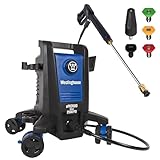
Overview: The Westinghouse ePX3500 delivers robust cleaning performance in a remarkably compact package. With 2500 PSI maximum pressure and 1.76 GPM flow rate, this electric pressure washer tackles medium-duty tasks from vehicle washing to fence restoration. Standing just 16.5 inches tall and weighing 19 pounds, its low-profile design integrates four quick-lock wheels with 360° steering for exceptional maneuverability.
What Makes It Stand Out: The anti-tipping technology with low center of gravity prevents accidents during operation. The pro-style steel extendable wand with five quick-connect nozzles (0°, 15°, 25°, turbo, and soap) provides professional versatility. The auto-stop pump system extends motor life by shutting down when the trigger releases, while the 20-ounce onboard soap tank enables seamless detergent application.
Value for Money: At $169, the ePX3500 sits in the sweet spot for performance versus cost. The three-year limited warranty with nationwide support significantly exceeds industry standards, offering peace of mind that justifies the investment over cheaper alternatives with minimal coverage.
Strengths and Weaknesses: Strengths include outstanding stability, compact storage footprint, versatile nozzle selection, and excellent warranty protection. The lightweight design enhances portability. Weaknesses involve the modest 1.2 rated GPM for sustained cleaning, potentially slower than higher-flow models. The nylon braided hose, while flexible, may not match rubber durability long-term.
Bottom Line: Ideal for homeowners needing reliable, portable power without gas-engine maintenance. The ePX3500 balances performance, safety, and value, making it a smart choice for most residential cleaning tasks.
2. Westinghouse ePX3100 Electric Pressure Washer, 2300 Max PSI 1.76 Max GPM with Anti-Tipping Technology, Onboard Soap Tank, Pro-Style Steel Wand, 5-Nozzle Set, for Cars/Fences/Driveways/Home/Patios

Overview: The ePX3100 represents Westinghouse’s entry-level compact pressure washer, delivering 2300 max PSI and 1.76 max GPM for light to medium-duty cleaning tasks. Sharing the same 16.5-inch height and 19-pound weight as its siblings, this unit prioritizes portability and user-friendly operation for routine maintenance cleaning.
What Makes It Stand Out: Identical anti-tipping technology and four-wheel steering system provide exceptional stability uncommon in this price class. The five-nozzle set includes the same pro-style steel wand configuration as more expensive models, ensuring you don’t sacrifice versatility. The auto-stop pump feature and 20-ounce soap tank are also retained, offering premium functionality at a budget price.
Value for Money: At $139, this model delivers the Westinghouse build quality and three-year warranty for $30 less than the ePX3500. For homeowners primarily cleaning cars, patio furniture, and occasional driveway spots, the slightly lower 1900 rated PSI provides adequate power without overpaying for unnecessary capacity.
Strengths and Weaknesses: Strengths include the rock-bottom price point, compact storage design, excellent stability, and comprehensive warranty. The lightweight construction enables effortless transport. Weaknesses center on the reduced cleaning power for stubborn stains, identical GPM limitations as higher models, and plastic components that may show wear with heavy use. The power difference is noticeable on concrete and heavily soiled surfaces.
Bottom Line: Perfect for budget-conscious buyers seeking reliable brand backing for light residential tasks. The ePX3100 offers core Westinghouse advantages without premium pricing.
3. Westinghouse WPX3000e Electric Pressure Washer, 3000 Max PSI and 1.76 Max GPM, Induction Motor, Onboard Soap Tank, Spray Gun and Wand, 5 Nozzle Set, for Cars/Fences/Driveways/Homes/Patios/Furniture
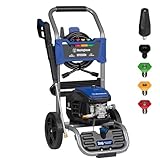
Overview: The WPX3000e is Westinghouse’s heavy-duty electric powerhouse, delivering 3000 max PSI and 2600 rated PSI for demanding cleaning applications. Built around a durable induction motor and axial three-piston pump, this unit targets users requiring gas-like performance without emissions or maintenance headaches.
What Makes It Stand Out: The steel frame construction with 10-inch never-flat wheels provides professional-grade durability and mobility. M22 fittings ensure compatibility with commercial accessories like surface cleaners and undercarriage attachments. The 0.45-gallon soap tank is double the capacity of compact models, reducing refill interruptions during large projects.
Value for Money: At $267.64, this premium model costs nearly double the ePX series but delivers substantially more power and longevity. The induction motor’s extended lifespan and three-year warranty make it a cost-effective alternative to gas units for serious homeowners or semi-professional use.
Strengths and Weaknesses: Strengths include maximum cleaning power, robust steel construction, superior component compatibility, and large wheels for rough terrain. The 35-foot GFCI cord enhances reach. Weaknesses involve the heavier 12-inch profile, reduced 1.1 rated GPM flow rate, and premium price point. The bulkier design sacrifices the compact storage advantage of smaller models.
Bottom Line: For users prioritizing raw power and durability over portability, the WPX3000e is an excellent electric alternative to gas pressure washers, backed by reliable warranty support.
4. Pressure Washer, Power Washer with 4 Nozzles and Foam Cannon, High Pressure Cleaning Machine for Cars, Driveways, Fences, Patios, Home Cleaning.

Overview: This generic electric pressure washer positions itself as a feature-rich budget option, claiming 2300 PSI and 2.5 GPM with a foam cannon included. Designed for cost-conscious consumers, it emphasizes high flow rates and comprehensive accessory packages for versatile home cleaning applications.
What Makes It Stand Out: The included foam cannon and four nozzles (0°, 15°, 25°, 40°) provide immediate versatility without additional purchases. The 2.5 GPM flow rate claim exceeds most competitors in this price range. Thoughtful storage solutions include dedicated hooks for the power cord, nozzles, spray gun, and detergent bottle, addressing common organization frustrations.
Value for Money: At $139.99, this model undercuts brand-name alternatives while offering higher claimed GPM and a foam cannon. However, unverified brand reliability and potentially optimistic specifications require careful consideration. The value proposition depends heavily on actual performance matching claims.
Strengths and Weaknesses: Strengths include the foam cannon inclusion, impressive GPM specification, safety lock mechanism, and comprehensive onboard storage. The 20-foot hose offers decent reach. Weaknesses involve uncertain brand reputation, likely shorter warranty coverage, potentially inflated specifications, and questionable long-term durability compared to established manufacturers. Customer support networks may be limited.
Bottom Line: A gamble for budget buyers wanting maximum features. If specifications prove accurate, it’s exceptional value, but brand reliability concerns make it riskier than proven alternatives.
5. Westinghouse ePX3100v Electric Pressure Washer, 2100 Max PSI 1.76 Max GPM, Built-in Carry Handle, Detachable Foam Cannon, Pro-Style Steel Wand, 3-Nozzle Set, for Cars/Fences/Driveways/Home/Patios

Overview: The ePX3100v is Westinghouse’s most compact and affordable pressure washer, delivering 2100 max PSI for light-duty residential cleaning. Weighing just 18 pounds with an integrated carry handle, this model prioritizes convenience and storage efficiency for users with minimal cleaning requirements.
What Makes It Stand Out: The built-in carry handle simplifies transport more than wheel-based designs. The detachable foam cannon offers flexibility for detergent application while maintaining a streamlined profile. The auto-stop pump system and three-year warranty are retained despite the entry-level pricing, ensuring reliable operation.
Value for Money: At $129, this is the most affordable Westinghouse option, making brand reliability accessible to ultra-budget shoppers. The three-year warranty provides exceptional value at this price point, offering protection typically reserved for premium models.
Strengths and Weaknesses: Strengths include ultimate portability, smallest storage footprint, lowest price with brand backing, and simplified operation. The lightweight design is ideal for elderly users or those with limited storage. Weaknesses involve reduced cleaning power for tough jobs, only three nozzles limiting versatility, shorter 20-foot hose restricting reach, and the detachable foam cannon requiring separate storage. Performance lags behind siblings on concrete and heavy grime.
Bottom Line: Best suited for apartment dwellers or those needing occasional light cleaning. The ePX3100v trades power for maximum convenience and unbeatable price with warranty security.
6. Washer with 4 Quick Connect Nozzles, Cleaning Machine with Foam Cannon

Overview: This mid-range electric pressure washer offers a compelling blend of power and versatility for homeowners tackling routine outdoor cleaning tasks. With its integrated foam cannon system and four quick-connect nozzles, it targets users seeking professional-style results without the premium price tag of established brands.
What Makes It Stand Out: The built-in foam function sets this unit apart from basic pressure washers, allowing you to apply thick cleaning suds for vehicle detailing or deep-cleaning siding. The quick-connect nozzle system enables rapid switching between 0°, 15°, 25°, and 40° spray patterns, adapting instantly to different surfaces from delicate patio furniture to stubborn concrete stains.
Value for Money: At $125.99, this washer sits in the competitive mid-range segment. It undercuts major brand equivalents by $50-100 while delivering comparable features like foam application and multiple nozzles. However, the unknown brand name means sacrificing the warranty support and proven longevity that companies like Westinghouse provide.
Strengths and Weaknesses: Strengths include the versatile foam cannon, quick nozzle changes, lightweight portability, and straightforward operation ideal for beginners. The powerful cleaning performance handles most residential tasks effectively. Weaknesses involve uncertain long-term durability, potentially lower-quality components than premium brands, and limited customer support infrastructure. The absence of detailed PSI/GPM ratings raises questions about actual performance.
Bottom Line: This washer suits budget-conscious homeowners needing foam capability for occasional car washing and patio cleaning. While it lacks brand pedigree, the feature set and price make it a reasonable entry point into pressure washing.
7. Westinghouse WPX3400e Electric Pressure Washer, 3400 Max PSI and 2.0 Max GPM, Brushless Motor, Onboard Soap Tank, Spray Gun and Wand, 5 Nozzle Set, for Cars/Fences/Driveways/Homes/Patios/Furniture
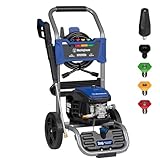
Overview: The WPX3400e represents Westinghouse’s flagship electric pressure washer, delivering gas-like power without the maintenance headaches. With 3400 PSI maximum pressure and a true brushless motor, this unit targets serious DIYers and homeowners with demanding cleaning schedules who refuse to compromise on performance.
What Makes It Stand Out: The brushless motor technology ensures exceptional durability and efficiency, running cooler and quieter than brushed counterparts while requiring zero maintenance. The comprehensive five-nozzle set includes a turbo nozzle for aggressive cleaning, and the steel frame construction with never-flat wheels handles rough terrain effortlessly. The half-gallon soap tank is generously sized for large projects.
Value for Money: At $399, this premium electric model competes with entry-level gas pressure washers while offering cleaner operation and lower lifetime costs. The three-year limited warranty, covering service, labor, and parts, provides substantial peace of mind that justifies the investment over cheaper alternatives with 90-day warranties.
Strengths and Weaknesses: Strengths include best-in-class power output, robust brushless motor longevity, excellent warranty coverage, superior build quality, and the versatile nozzle assortment. The 25-foot hose and 35-foot cord provide exceptional reach. Weaknesses are the hefty price tag, substantial weight from the steel frame, and potential overkill for users only washing cars occasionally. The 2.0 GPM max rating drops to 1.1 GPM at rated pressure.
Bottom Line: For homeowners needing maximum electric power for driveways, decks, and heavy grime, the WPX3400e is worth every penny. The warranty and performance make it a long-term investment rather than a disposable tool.
8. Westinghouse WPX3200e Electric Pressure Washer, 3200 Max PSI and 1.76 Max GPM, Induction Motor, Onboard Soap Tank, Spray Gun and Wand, 5 Nozzle Set, for Cars/Fences/Driveways/Homes/Patios/Furniture
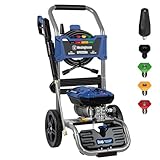
Overview: Positioned as Westinghouse’s mid-tier offering, the WPX3200e balances robust cleaning power with thoughtful value engineering. Delivering 3200 PSI maximum pressure through a reliable induction motor, this unit serves as the sweet spot for homeowners wanting brand reliability without paying flagship premiums.
What Makes It Stand Out: The high-performance 13A induction motor provides excellent durability and consistent power delivery, while the five-nozzle set (including turbo) covers every cleaning scenario imaginable. The .61-gallon soap tank is conveniently integrated, and the steel frame construction ensures this washer survives years of garage storage and transport abuse.
Value for Money: At $303.47, this model offers approximately 90% of the WPX3400e’s performance for about 75% of the cost. The three-year warranty matches its premium sibling, making this a smarter buy for most residential users who don’t need absolute maximum PSI for routine driveway and vehicle maintenance.
Strengths and Weaknesses: Strengths include strong brand reputation, comprehensive warranty coverage, solid power output for most tasks, durable construction, and the versatile nozzle selection. The induction motor runs efficiently with minimal maintenance. Weaknesses include slightly lower performance than the 3400e model, the same weight considerations as other steel-framed units, and the GPM drop-off from 1.76 max to 1.1 rated. The price may still deter casual users.
Bottom Line: The WPX3200e hits the sweet spot for discerning homeowners. It delivers reliable Westinghouse quality and power at a price that makes sense for regular use without professional-grade overkill.
9. Westinghouse ePX3050 Electric Pressure Washer, 2100 Max PSI 1.76 Max GPM with Foam Cannon, for Cars/Fences/Driveways/Home/Patios

Overview: The ePX3050 is Westinghouse’s compact, budget-friendly entry into electric pressure washing, designed for urban dwellers and occasional users. With 2100 PSI maximum pressure and an ultra-low profile design, this unit prioritizes storage convenience and ease of use over raw power.
What Makes It Stand Out: Remarkably, Westinghouse includes a foam cannon accessory at this sub-$100 price point, a feature typically reserved for more expensive models. The low 26-inch profile and small 5-inch wheels allow storage in cramped apartments or crowded garages where traditional washers simply won’t fit. The 35-foot GFCI cord provides surprising reach for such a compact unit.
Value for Money: At $99.99, this represents exceptional value from a major brand. You’re getting Westinghouse’s factory testing, two-year warranty, and lifetime technical support—benefits that generic competitors can’t match at any price. This is arguably the best entry-level electric pressure washer available.
Strengths and Weaknesses: Strengths include unbeatable price-to-brand-value ratio, compact storage footprint, included foam cannon, adequate power for light vehicles and patio furniture, and reliable customer support. The auto-stop pump saves energy and extends longevity. Weaknesses are limited power for heavy-duty tasks like concrete stain removal, only two nozzles (15° and 25°), shorter 20-foot hose, and plastic construction that may not withstand heavy abuse. Performance drops from 2100 max PSI to 1800 rated.
Bottom Line: For apartment residents or homeowners needing light-duty cleaning, the ePX3050 is a no-brainer. It offers brand reliability and foam capability at a price that makes it an easy first pressure washer purchase.
10. Pressure Washer, Power Washer with Foam Cannon High Pressure Washer for Cars, Fences, Patios, Decks, Patios and Driveway Powerwasher

Overview: This generic-branded pressure washer targets safety-conscious families seeking versatile cleaning capability without breaking the bank. With professional-style features like a foam cannon and brass nozzles, it aims to deliver premium functionality at a mid-range price point for homeowners with diverse outdoor cleaning needs.
What Makes It Stand Out: The Total Stop System (TSS) automatically shuts off the pump when the trigger releases, saving energy and extending pump life—a feature often omitted in budget models. The child-safe lock on the handle demonstrates thoughtful family-oriented design. Four brass nozzles provide durability and corrosion resistance, while the ability to draw water from a bucket adds flexibility for remote cleaning locations without spigot access.
Value for Money: At $139.99, this washer competes directly with Product 6, offering similar core features plus enhanced safety mechanisms and brass hardware. The inclusion of a TSS system and child lock partially justifies the $14 premium over its generic competitor, though it still lacks the brand backing of Westinghouse models.
Strengths and Weaknesses: Strengths include excellent safety features, brass nozzle durability, foam cannon inclusion, bucket water suction capability, and upgraded stainless steel spray gun with metal connections preventing leaks. The 23-foot hose provides decent reach. Weaknesses involve unknown brand reliability, unspecified PSI/GPM ratings that raise performance questions, potential warranty limitations, and uncertain long-term parts availability. The anti-tipping design suggests potential balance issues.
Bottom Line: This washer appeals to families prioritizing safety and versatility. While brand uncertainty persists, the robust feature set and safety focus make it a solid choice for cautious buyers willing to trade name recognition for functionality.
Why Electric Pressure Washers Dominate Car Detailing
The modern garage has evolved from a dark, oil-stained cave into a climate-controlled sanctuary where automotive artistry happens. Electric pressure washers fit this environment perfectly. They start with the push of a button, run quietly enough to hold a conversation over, and won’t fill your enclosed space with carbon monoxide. Unlike their gas-guzzling cousins, electric models maintain consistent pressure without the power fluctuations that can occur as fuel levels drop or engines heat up.
For automotive paint—one of the thinnest and most vulnerable surfaces you’ll pressure wash—consistency is king. Electric motors deliver steady, predictable performance that lets you develop muscle memory for safe cleaning distances and techniques. Plus, the absence of exhaust fumes means you can work in winter without ventilation concerns, and your neighbors won’t file noise complaints when you’re detailing at 7 AM on a Saturday.
Decoding PSI and GPM: The Science Behind the Spray
Walk down any pressure washer aisle and you’ll see bold numbers screaming for attention: 2000 PSI! 2.5 GPM! But what do these metrics actually mean for your car’s finish? Let’s break down this alphabet soup into actionable intelligence.
PSI (pounds per square inch) measures the pressure—the “punch” behind the water stream. GPM (gallons per minute) measures the flow rate—the volume of water delivered. Think of PSI as the sharpness of a knife and GPM as the weight behind the cut. For car detailing, you need a scalpel, not a sledgehammer.
PSI: The Pressure Paradox for Paint Protection
Here’s the counterintuitive truth: when it comes to automotive paint, more pressure isn’t better—it’s dangerous. Modern clear coats measure just 1.5 to 2 mils thick (thinner than a human hair), and excessive pressure can embed microscopic cracks, strip wax, and force water past seals into places it shouldn’t go.
The sweet spot for car detailing lies between 1,200 and 1,900 PSI. Anything below 1,200 PSI struggles to blast away stubborn brake dust and road tar, while anything above 1,900 PSI enters the danger zone where paint damage becomes likely, especially on older vehicles or those with compromised clear coats. The key is having enough pressure to clean effectively while maintaining a safety margin that protects your investment.
GPM: Why Flow Rate Matters More Than You Think
While PSI gets all the glory, seasoned detailers know that GPM is the real workhorse. A higher GPM rating means more water volume hitting the surface, which translates to faster dirt removal and more efficient rinsing. This is crucial for preventing soap from drying on the paint and for flushing contaminants from tight crevices.
For automotive use, aim for a minimum of 1.4 GPM, with 1.8 to 2.0 GPM being the sweet spot for serious detailers. A machine delivering 1,500 PSI at 1.8 GPM will outperform a 2,000 PSI unit with only 1.2 GPM every single time. The higher flow rate creates a “cushion” effect that helps lift dirt rather than grind it into the surface.
Electric vs. Gas: The Garage-Friendly Choice
The gas versus electric debate ends quickly when you factor in the realities of modern car care. Gas pressure washers undoubtedly offer more raw power, but that power comes at a cost that rarely justifies itself for automotive work.
Gas units require regular oil changes, fuel stabilization during storage, air filter maintenance, and spark plug replacements. They’re heavy, vibrate excessively, and produce exhaust that can settle on your freshly cleaned paint. The unloader valves on gas models also create pressure spikes when you release the trigger—spikes that can exceed safe levels for automotive finishes.
Electric models, by contrast, are essentially plug-and-play appliances. They weigh significantly less, making them easier to maneuver around your vehicle. The instant-on, instant-off operation with Total Stop Systems (TSS) protects both the motor and your paint. And modern brushless motors have closed the performance gap considerably, delivering professional-grade cleaning without the professional-grade headaches.
Essential Features for Detailing Excellence
Not all electric pressure washers are created equal, even within the same PSI and GPM class. The difference between a frustration-free detailing session and a equipment-related meltdown often comes down to thoughtful features designed with the end-user in mind.
Variable Pressure Control: Your Paint’s Best Friend
Look for machines with adjustable pressure settings or variable spray wands that let you dial down the intensity for sensitive areas. Engine bays, convertible tops, and older paint benefit from reduced pressure, while wheels and lower rocker panels can handle full power. This versatility transforms your pressure washer from a one-trick pony into a multi-purpose detailing tool.
Premium models feature digital pressure displays and fine-tuning knobs that let you drop output to as low as 500 PSI for delicate tasks. This level of control is invaluable when you’re working on high-end vehicles or performing maintenance washes on ceramic-coated cars where preserving the coating’s integrity is paramount.
Hose Management: Reaching Every Curve
A 20-foot hose might sound adequate—until you’re trying to reach the far side of a crew cab truck parked in your driveway. For true mobility without moving the unit, aim for a minimum 25-foot hose, with 30 to 35 feet being ideal.
But length isn’t everything. Hose material dramatically affects user experience. Cheap PVC hoses kink easily, restrict flow, and become brittle in cold weather. Rubber hoses remain flexible year-round but add weight. Steel-braided hybrid hoses offer the best of both worlds: flexibility, durability, and kink resistance. Quick-connect fittings at both ends save precious minutes during setup and breakdown.
Detergent Delivery Systems: Foam and Function
The difference between a good wash and a great wash often comes down to dwell time—the period where cleaning agents sit on the surface, breaking down bonded contaminants. Built-in detergent tanks are convenient but limited; they typically run at low pressure, reducing cleaning effectiveness for pre-wash foam applications.
External foam cannons connected via quick-disconnect fittings are the professional standard. They mix pressurized water with car shampoo to create a thick, clinging foam that encapsulates dirt particles. Look for pressure washers with dedicated soap nozzles and chemical injection systems that work at high pressure. The ability to switch between foam application and high-pressure rinsing without returning to the unit is a game-changer for workflow efficiency.
Motor Technology: The Heart of Your Machine
The motor is where manufacturers often cut corners to hit price points, but this is one area where skimping costs you in the long run. Understanding motor technology helps you invest wisely.
Traditional brushed motors use carbon brushes that physically contact the commutator, creating friction, heat, and eventual wear. They’re louder, less efficient, and have shorter lifespans—typically 200-400 hours of operation. For a weekend detailer, that might seem adequate, but those hours add up quickly.
Brushless motors, conversely, use electronic controllers to eliminate physical contact between moving parts. The result is whisper-quiet operation, 80% greater efficiency, minimal heat generation, and lifespans exceeding 2,000 hours. They also maintain consistent RPM under load, meaning your pressure doesn’t drop when you’re blasting a stubborn bug splatter. The premium is worth it—brushless motors pay for themselves in energy savings and longevity.
Nozzle Selection: The Anatomy of Safe Car Cleaning
The nozzle is where physics meets paintwork, and choosing wrong can spell disaster in seconds. Pressure washer nozzles are color-coded by spray angle, and each degree serves a specific purpose.
The red 0° nozzle creates a pinpoint jet capable of cutting through wood and concrete. It has absolutely no place near automotive paint—ever. The yellow 15° nozzle is equally dangerous for paintwork but useful for cleaning undercarriages and wheel wells with extreme caution.
The green 25° nozzle is your workhorse for wheels, tires, and heavily soiled lower body panels. The white 40° nozzle is the safest choice for general paintwork washing, providing adequate cleaning power with a wide, gentle spray pattern. The black 65° soap nozzle drops pressure to near-zero for chemical application.
Always start with the widest angle nozzle and only switch to narrower patterns if absolutely necessary. Keep a nozzle cleaning tool handy—clogged nozzles create pressure spikes that can exceed your machine’s rated output.
Safety Systems That Save Your Skin (and Paint)
Modern electric pressure washers incorporate critical safety features that protect both the user and the vehicle. Understanding these systems helps you appreciate their value.
Total Stop System (TSS) automatically shuts off the motor when you release the trigger. This prevents overheating, reduces pump wear, and eliminates the pressure spike that occurs when flow suddenly stops. For automotive work, TSS is non-negotiable—it gives you time to reposition around the vehicle without wasting energy or creating hazardous spray when you’re not ready.
Ground Fault Circuit Interrupter (GFCI) protection is equally crucial. Pressure washers and water are an obvious combination, and GFCI prevents electrocution by cutting power in milliseconds if it detects current leakage. Never use a pressure washer without GFCI protection, and never bypass it “just this once.” Your life is worth more than a clean car.
Power Supply Considerations for Home Detailers
Your pressure washer is only as good as the electricity feeding it. Most electric models draw 13-15 amps, pushing the limits of standard 15-amp household circuits. If your garage shares a circuit with outdoor lighting, a refrigerator, or power tools, you risk tripping breakers mid-wash.
Ideally, dedicate a 20-amp circuit to your pressure washer. If that’s not possible, map your garage’s electrical layout and ensure nothing else is drawing power during wash sessions. Avoid using extension cords when possible—voltage drop reduces motor performance and can cause premature failure. If you must extend your reach, use a 12-gauge cord no longer than 25 feet, and never connect multiple cords together.
Seasonal Storage and Maintenance Protocols
Your pressure washer’s lifespan depends heavily on how you treat it during downtime. Proper maintenance takes minutes but saves hundreds in replacement costs.
After each use, flush the system with clean water to remove detergent residue that can clog internal passages. Disconnect hoses and drain all water to prevent freeze damage and mineral buildup. Run the pump saver product through the system before long-term storage—these lubricants protect seals and prevent corrosion.
For winter storage in unheated garages, add RV antifreeze to the pump (never automotive antifreeze—it’s corrosive). Store the unit upright in a dry location, and cover it to protect from dust. Check O-rings and seals quarterly; a $5 O-ring replacement prevents a $200 pump failure. Keep spare quick-connect fittings and nozzle cleaners in your detailing cabinet—they’re cheap insurance against workflow interruptions.
Detailing Disasters: Mistakes to Avoid
Even the best equipment becomes dangerous in careless hands. Learning from others’ mistakes keeps your paint pristine.
Never hold the nozzle closer than 12 inches from painted surfaces—distance is your primary safety buffer. Avoid spraying directly at emblems, trim pieces, or panel gaps where water intrusion can cause electrical gremlins. Never pressure wash a hot engine; rapid temperature change can crack components and damage sensors.
The most common mistake? Using too much pressure on a dry, dirty surface. Always pre-rinse with a wide-angle nozzle to remove loose grit. Pressure washing without lubrication is like sanding your paint with water—it’s a recipe for swirl marks and clear coat failure. Take your time, maintain proper distance, and remember that technique trumps brute force every time.
Frequently Asked Questions
What’s the ideal PSI range for safely washing my car without damaging the paint?
For automotive finishes, target 1,200 to 1,900 PSI. This range provides enough cleaning power to remove road grime and brake dust while maintaining a safety margin for your clear coat. Always start at the lowest setting and test in an inconspicuous area like the lower rocker panel. Remember, you can always make a second pass with more pressure, but you can’t undo paint damage.
Can I use a pressure washer on a ceramic-coated vehicle, or will it harm the coating?
Quality ceramic coatings are incredibly durable and absolutely safe for pressure washing—in fact, they make the process easier. The key is using proper technique: keep the nozzle at least 12 inches away, use a 40° nozzle for general washing, and avoid direct blasts at panel edges. The coating’s hydrophobic properties mean you’ll use less pressure overall, as contaminants release more readily. Just avoid aggressive 15° or 0° nozzles that could potentially compromise the coating’s bond over time.
How close should I hold the pressure washer nozzle to different parts of my car?
For painted surfaces, maintain a minimum 12-inch distance with a 40° nozzle. For wheels and tires, you can close to 6-8 inches using a 25° nozzle for stubborn brake dust. Engine bays require 18+ inches of distance with a 40° nozzle, and never pressure wash a hot engine. Convertible tops need the most caution—stay 18 inches away with a 40° nozzle and reduced pressure settings. When in doubt, increase distance; you can always move closer gradually if needed.
Is investing in a foam cannon really worth it for home car detailing?
Absolutely. A quality foam cannon transforms your pressure washer into a touchless pre-wash system, drastically reducing the risk of swirl marks. The thick foam clings to vertical panels, extending dwell time and encapsulating dirt particles so they slide off rather than grind across the surface. For the $30-50 investment, you’ll use less shampoo, clean more safely, and achieve professional-level results. Look for adjustable cannons that let you control foam thickness and spray pattern width.
Can pressure washing force water into my car’s electrical components and cause damage?
Yes, which is why technique matters more than raw power. Avoid direct sprays at headlight seals, door handles, window seals, and engine sensors. Never spray into the exhaust pipe or intake. Modern vehicles have better sealing than classics, but pressure can still compromise aged gaskets. Use a 40° nozzle, maintain proper distance, and angle your spray downward rather than directly at seals. For engine bays, cover the alternator, battery terminals, and exposed sensors with plastic bags as extra insurance.
How often should I perform maintenance on my electric pressure washer?
After every wash: flush detergent system and drain hoses. Monthly: inspect O-rings, clean inlet filter screen, and check for leaks. Quarterly: run pump saver lubricant through the system and inspect power cord for damage. Annually: replace worn O-rings, check GFCI function, and service the trigger gun. If you notice pressure drops, unusual noises, or leaks, address them immediately. Preventive maintenance takes minutes; reactive repairs take hours and cost significantly more.
When choosing between models, should I prioritize higher PSI or higher GPM?
For car detailing, prioritize GPM over PSI. A 1,500 PSI machine with 1.8 GPM will clean faster and more effectively than a 2,000 PSI unit with 1.2 GPM. Higher flow rate means better dirt suspension, faster soap rinsing, and more efficient overall cleaning. The extra water volume creates a cushioning effect that’s gentler on paint. Once you have adequate GPM (1.4+), then consider PSI within the safe automotive range. Never sacrifice flow for pressure when working on vehicles.
Can I use hot water with my electric pressure washer to improve cleaning power?
Unless your unit is specifically rated for hot water (most residential electric models are not), never exceed 100°F inlet temperature. Hot water can warp internal pump components, melt seals, and void your warranty. Cold water works perfectly fine for automotive detailing when paired with proper chemicals and technique. If you need extra cleaning power, invest in a better foam cannon and quality car shampoo rather than risking your equipment with hot water.
Are pressure washers safe for cleaning convertible soft tops, or will they cause leaks?
Convertible tops require extreme caution but can be safely cleaned with proper technique. Use the lowest pressure setting available, a 40° white nozzle, and maintain 18+ inches of distance. Never spray directly at seams or the rear window seal. Pre-treat with a dedicated convertible top cleaner and let it dwell. Use gentle, overlapping passes and avoid concentrating on any single area. If your top is older or shows wear, test in an inconspicuous corner first or stick to manual cleaning.
Do I really need a pressure washer if I’m already doing a proper two-bucket wash?
A pressure washer doesn’t replace the two-bucket method—it enhances it. The pre-rinse stage removes 80% of loose contaminants before your wash mitt ever touches the paint, drastically reducing swirl mark risk. It cleans wheel wells, undercarriages, and engine bays that are nearly impossible to tackle by hand. For maintenance washes on coated vehicles, a pressure washer with foam cannon can often clean effectively without any manual contact. Think of it as a force multiplier that makes your existing technique safer and more efficient.