Working on your car is a labor of love, but the chemicals that keep vehicles running smoothly don’t show your skin the same affection. From brake cleaner that strips contaminants in seconds to potent degreasers that dissolve years of engine grime, automotive solvents are formulated to be aggressively effective. Your skin, unfortunately, becomes collateral damage if left unprotected. The right solvent-resistant gloves aren’t just an accessory—they’re essential personal protective equipment that stands between you and serious health complications, including chemical burns, systemic toxicity, and long-term dermatological issues.
The problem? Not all gloves marketed as “chemical-resistant” can handle the specific cocktail of solvents found in automotive applications. Grab the wrong pair, and you might as well be wearing nothing at all as ketones, aromatic hydrocarbons, and chlorinated compounds silently permeate the material. This guide cuts through the marketing noise to equip you with the knowledge to select gloves that genuinely protect during brake jobs, paint correction, parts cleaning, and every chemical-heavy task in your garage or professional shop.
Top 10 Solvent-resistant Gloves
Detailed Product Reviews
1. ThxToms Chemical Resistant Nitrile Gloves, Resist Household Acid, Alkali, Solvent and Oil, Latex Rubber Free, 1 Pair Medium
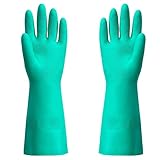
Overview: These medium-sized nitrile gloves from ThxToms deliver robust protection for household and light industrial tasks. At 15 mils thick, they strike an impressive balance between chemical resistance and manual dexterity, making them suitable for everything from kitchen cleaning to automotive maintenance. The latex-free construction ensures safe use for those with rubber allergies.
What Makes It Stand Out: The 15-mil thickness is the sweet spot—thick enough to resist punctures and chemicals, yet thin enough for precise work. The slip-resistant texturing across the palm and fingers provides superior grip on wet or oily surfaces, a critical safety feature often missing in generic gloves. The odor-resistant flock lining enhances comfort during extended wear while preventing that sticky feeling common with unlined alternatives.
Value for Money: At $6.99 for a single pair, these gloves sit in the mid-range for consumer-grade chemical-resistant gloves. While bulk purchasing offers better per-unit value, this price point makes sense for occasional users who need reliable protection without committing to a multi-pack. Comparable disposable nitrile gloves lack the durability, while cheaper reusable options often compromise on chemical resistance.
Strengths and Weaknesses: Strengths include excellent chemical resistance to acids, alkalis, and solvents; latex-free formulation; comfortable flock lining; and superior grip texture. Weaknesses are the single-pair pricing which adds up for frequent users, limited size availability in this listing, and they may not withstand heavy industrial abuse like thicker alternatives.
Bottom Line: Ideal for homeowners and DIY enthusiasts needing dependable chemical protection with medium-sized hands. These gloves offer professional-grade features at a consumer-friendly price point, making them a smart choice for periodic use.
2. ThxToms Chemical Resistant Nitrile Gloves, Resist Household Acid, Alkali, Solvent and Oil, Latex Rubber Free, 1 Pair Large

Overview: This large-size variant of ThxToms’ nitrile glove line offers identical protection to its medium counterpart, catering to users with bigger hands. The 15-mil nitrile construction provides reliable defense against household chemicals, solvents, and oils while maintaining the flexibility needed for detailed tasks. Latex-free composition makes them accessible to allergy sufferers.
What Makes It Stand Out: Beyond the size accommodation, these gloves excel with their precision-engineered 15-mil thickness that doesn’t sacrifice tactile feedback. The comprehensive slip-resistant texturing ensures secure handling of tools and containers in wet conditions. The flock lining prevents interior odor buildup and improves comfort during prolonged cleaning sessions or lab work.
Value for Money: Priced at $6.99 per pair, the value proposition mirrors the medium version. For large-handed individuals, finding well-fitting chemical-resistant gloves at this price is challenging. While bulk buying remains more economical for heavy users, this single-pair option eliminates waste for those needing occasional, properly-sized protection.
Strengths and Weaknesses: Strengths include the same chemical and puncture resistance, latex-free safety, comfortable lining, and enhanced grip. The primary advantage is proper large sizing. Weaknesses include the per-pair cost premium over bulk alternatives, potential sizing inconsistencies, and limited durability compared to 20+ mil industrial gloves.
Bottom Line: A perfect match for users requiring large-size chemical protection without committing to multi-packs. These gloves deliver consistent performance for household maintenance, crafting, and light industrial applications where fit and comfort are paramount.
3. ThxToms Heavy Duty Latex Gloves,Chemical Resistant Gloves,Puncture Resistant, Resist Acid,Oil,Alkali, Waterproof for Industrial Cleaning,Gardening,14", 1 Pair

Overview: ThxToms’ heavy-duty latex gloves provide extended 14-inch coverage for demanding industrial and outdoor tasks. Constructed from high-grade natural latex, these extra-large gloves offer superior tear and chemical resistance while protecting forearms from splashes. The waterproof design makes them ideal for wet environments like aquarium maintenance or chemical processing.
What Makes It Stand Out: The impressive length sets these apart, shielding wrists and forearms—a crucial feature when handling corrosive substances or working in deep water. The availability of three length options (though only 14" is detailed) demonstrates versatility. The smooth finish, contrary to textured alternatives, provides unique advantages for certain industrial applications where catching on materials must be avoided.
Value for Money: At $9.99, these cost more than standard 12" nitrile options but justify the premium through extended coverage and heavy-duty construction. For industrial cleaning, gardening with thorny plants, or machine repair, the forearm protection alone warrants the extra cost. Comparable length gloves often exceed $15 per pair.
Strengths and Weaknesses: Strengths include exceptional length for splash protection, superior tear resistance of natural latex, waterproof integrity, and versatility across industrial applications. Weaknesses are the single XL sizing limitation, potential latex allergy concerns, and smooth grip that may underperform with slippery objects compared to textured palms.
Bottom Line: Excellent choice for professionals and serious DIYers needing extended protection. While the XL-only sizing and latex material restrict some users, the forearm coverage and durability make these indispensable for heavy-duty cleaning, gardening, and industrial tasks.
4. PACIFIC PPE Chemical Resistant Gloves, Heavy Duty Industrial Rubber Gloves, Resist Acid, Alkali and Oil, 12.6", Large

Overview: PACIFIC PPE delivers a certified industrial-grade latex glove designed for rigorous professional environments. At 12.6 inches long and 28 mils thick, these large gloves provide substantial protection against chemicals, acids, and mechanical risks. The compliance with multiple CE standards signals serious engineering for hazardous material handling.
What Makes It Stand Out: The regulatory compliance is unmatched in this category—meeting EN 388, EN 420, and EN ISO374 standards for chemical, abrasion, and tear resistance. The 28-mil thickness offers nearly double the protection of consumer-grade options. The non-slip particle textured palm achieves level 3 abrasion resistance while maintaining grip in oily conditions.
Value for Money: At $9.99, these gloves compete directly with uncertified alternatives while offering verified protection. For workplace safety compliance or handling dangerous chemicals, the certification justifies every penny. Amateur users may not need this level of engineering, but professionals cannot afford to skimp.
Strengths and Weaknesses: Strengths include certified safety ratings, exceptional 28-mil durability, excellent grip texture, and compliance with CA Prop.65. Weaknesses include potential latex allergy issues, unlined interior that may reduce comfort during extended wear, and limited information on size range beyond large.
Bottom Line: Mandatory for industrial users requiring certified chemical protection. These gloves bridge the gap between consumer products and professional PPE, offering peace of mind through verified performance standards at a surprisingly accessible price point.
5. Potchen 20 Pairs Chemical Resistant Gloves Heavy Duty Thick Nitrile Gloves Bulk for Cleaning, Resist Household Acid, Alkali and Oil (X-Large)
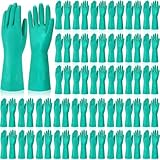
Overview: Potchen’s bulk offering delivers 20 pairs of heavy-duty nitrile gloves at an aggressive price point. These XL-sized gloves feature 15-mil thickness with flocked liners, providing chemical resistance against acids, alkalis, and oils for high-usage environments. The bulk packaging targets businesses, facilities, and serious DIYers who go through gloves regularly.
What Makes It Stand Out: The value proposition is undeniable—at $2.10 per pair, these cost less than a third of single-pair alternatives. The availability of four sizes (S through XL) in bulk is rare, ensuring proper fit for diverse users. The 15-mil thickness hits the practical sweet spot for most cleaning and maintenance tasks without unnecessary bulk.
Value for Money: The $41.99 upfront investment yields massive per-pair savings. For cleaning companies, workshops, or large households, the economics are compelling. Even if individual pair durability slightly trails premium singles, the replacement cost is negligible. This is essentially wholesale pricing delivered to consumers.
Strengths and Weaknesses: Strengths include exceptional bulk pricing, latex-free nitrile construction, multiple size options, comfortable flocked lining, and versatile particle grip. Weaknesses include the substantial upfront cost, potential quality variance across 20 pairs, and storage requirements for the bulk package.
Bottom Line: The smartest choice for frequent users. Whether managing a cleaning business or stocking a home workshop, this bulk pack eliminates the cost barrier to proper hand protection. The XL sizing and nitrile construction make these universally practical for demanding applications.
6. ThxToms 5 Pairs Nitrile Chemical Resistant Gloves, 15mil,13", Reusable Latex Rubber Free Heavy Duty Gloves, Acid Alkali Oil Protection, Industrial Use and Household Cleaning, Non-Slip, Medium

Overview: ThxToms delivers a five-pair pack of 13-inch nitrile chemical-resistant gloves designed for versatility across household and industrial tasks. At 15 mil thickness, these gloves strike a balance between dexterity and puncture resistance, making them suitable for handling pool chemicals, herbicides, cleaning agents, and automotive fluids. The package strategy allows users to station pairs in multiple locations for immediate access.
What Makes It Stand Out: The multi-pair delivery system is the primary differentiator, providing exceptional convenience for users needing regular protection in various workspaces. Unlike traditional rubber gloves, these are latex-free, eliminating allergy concerns and unpleasant odors. The diamond-textured palm maintains reliable grip even when oil-soaked, while the spray flocking lining ensures easy donning and doffing while preventing interior sweat buildup. This combination addresses common frustrations with chemical gloves.
Value for Money: At $3.60 per pair, these reusable gloves offer substantial savings compared to disposable alternatives for routine tasks. The five-pair distribution maximizes utility across kitchen, garage, and garden locations. While thicker industrial gloves exist, this price point for nitrile chemical resistance with ergonomic features represents strong value for semi-professional and dedicated DIY users.
Strengths and Weaknesses: Strengths include the strategic multi-pack convenience, latex-free composition, excellent wet grip texture, comfortable flocking liner, and broad chemical resistance. Weaknesses involve the 15 mil thickness being insufficient for highly corrosive industrial chemicals, potential wear of the flocking liner over repeated washes, and medium size potentially not fitting all users comfortably.
Bottom Line: These ThxToms gloves excel for homeowners and light industrial users seeking convenient, reusable chemical protection. The five-pair system solves accessibility issues, while nitrile construction and grip features deliver reliable performance. Best suited for regular maintenance rather than extreme chemical exposure.
7. ThxToms Chemical Resistant Gloves,Heavy Duty Long Rubber Gloves,Puncture Resistant, Resist Acid,Oil,Alkali, Waterproof for Industrial Cleaning, Medical, Gardening,18", 1 Pair

Overview: ThxToms offers a single pair of 18-inch heavy-duty natural latex gloves engineered for maximum coverage and chemical resistance. These extra-large gloves provide full forearm protection essential for deep tank cleaning, chemical processing, and hazardous material handling. The extended length makes them particularly valuable for tasks where splashing poses significant risk to skin and clothing.
What Makes It Stand Out: The exceptional 18-inch length stands as the defining feature, offering superior arm protection that shorter gloves cannot match. Made from high-grade natural latex, they deliver enhanced tear resistance while maintaining tactile sensitivity crucial for precise operations. The smooth finish paradoxically improves grip for certain wet applications, and the three available length options (though only 18-inch is detailed) demonstrate versatility for different hazard levels.
Value for Money: At $11.99 for a single pair, these gloves represent moderate value for specialized applications requiring extended protection. Natural latex durability ensures multiple uses when properly maintained, justifying the cost over disposables. However, the single-size (XL) limitation reduces value for users needing different fits, and latex alternatives exist at similar price points without allergy concerns.
Strengths and Weaknesses: Strengths include outstanding length coverage, superior chemical and tear resistance, maintained tactile sensitivity, and suitability for industrial and medical environments. Weaknesses center on natural latex triggering Type I allergies in sensitive individuals, the smooth finish potentially reducing grip security in oily conditions, and limited sizing options constraining user accessibility.
Bottom Line: Ideal for professionals requiring extensive arm protection during chemical handling, these ThxToms gloves perform admirably in industrial, laboratory, and medical settings. The latex composition necessitates careful user screening, but for those without allergies, the 18-inch length provides unmatched security for high-risk tasks.
8. Beastek Nitrile Disposable Gloves, 8 Mil Powder Free Latex Free Chemical Resistant Heavy Duty Food Safe Diamond Gloves, Orange 50 Pcs (X-Large)

Overview: Beastek’s orange nitrile disposable gloves provide heavy-duty 8 mil protection in a 50-count package designed for professional environments. More than twice as thick as standard exam gloves, these powder-free, latex-free barriers excel in automotive, janitorial, and food service applications. The bright orange color enhances visibility while hiding stains, maintaining a professional appearance throughout demanding shifts.
What Makes It Stand Out: The diamond-textured surface covering the entire palm and fingers delivers up to 60% improved wet and dry grip by channeling liquids away from contact points. This feature proves invaluable when handling tools, fasteners, or equipment in oily or soapy conditions. Full latex and powder elimination ensures no allergic reactions or residue contamination, critical for paint work and sensitive environments. ASTM D6319 and EN 374 compliance guarantees verified barrier performance.
Value for Money: At approximately $0.13 per glove, these heavy-duty disposables offer exceptional value for professional users. The 8 mil thickness provides reusable-like durability while maintaining disposable convenience, reducing per-task costs. For mechanics, plumbers, and technicians requiring frequent glove changes, this price point balances protection and economy effectively.
Strengths and Weaknesses: Strengths include superior 8 mil thickness, exceptional grip texture, zero allergy risk, professional appearance, and recognized safety certifications. Weaknesses involve disposable environmental impact, potential for tearing under extreme abrasion despite thickness, and limited tactile sensitivity compared to thinner alternatives.
Bottom Line: Beastek orange gloves deliver professional-grade protection for demanding trade environments. The combination of heavy-duty thickness, superior grip, and certified chemical resistance makes them ideal for automotive, plumbing, and industrial applications where disposable convenience is paramount.
9. Beastek Nitrile Disposable Gloves, 8 Mil Powder Free Latex Free Chemical Resistant Heavy Duty Food Safe Diamond Gloves, Black 50 Pcs (Large)

Overview: Beastek’s black nitrile disposable gloves mirror their orange counterpart with identical 8 mil heavy-duty construction in a 50-count package. The stealth black colorway targets professionals in automotive, tattoo, and emergency services where appearance and stain concealment are paramount. These powder-free, latex-free gloves provide robust protection against chemicals, oils, and solvents while maintaining a clean, uniform aesthetic.
What Makes It Stand Out: The matte black finish effectively hides dirt, grease, and dye stains, allowing technicians and professionals to maintain a polished appearance during client-facing interactions. This visual advantage complements the same diamond-textured grip technology that channels liquids for 60% improved handling security. The professional aesthetic is trusted by mechanics, barbers, EMS personnel, and law enforcement who require both performance and presentation.
Value for Money: At $6.98 per box (approximately $0.14 per glove), these black gloves command a slight premium over the orange variant. The price increase is justified for professionals whose image impacts customer confidence. For tattoo artists, auto detailers, and private contractors, the enhanced appearance directly translates to business value, making the marginal cost increase worthwhile.
Strengths and Weaknesses: Strengths mirror the orange version: excellent 8 mil protection, superior diamond texture grip, complete allergy safety, and professional certifications. The black color provides unique stain-hiding benefits. Weaknesses include the disposable nature’s environmental impact, marginally higher cost than orange, and potential visibility issues in low-light conditions.
Bottom Line: Perfect for appearance-conscious professionals, these black Beastek gloves deliver identical heavy-duty performance with enhanced aesthetic appeal. The stain-concealing color makes them ideal for automotive, cosmetic, and service industries where maintaining a clean image is as important as hand protection.
10. SHOWA Atlas 620 Double-Dipped PVC Chemical Resistant Safety Work Glove with Cotton Liner, 12" Length, Large (1 Pair)

Overview: SHOWA Atlas 620 gloves feature a double-dipped PVC coating over a seamless cotton-polyester liner, creating a 12-inch chemical-resistant work glove optimized for cold environments and electrical insulation. The unique double-dipping process provides enhanced durability while maintaining flexibility down to -20°C, making them suitable for outdoor winter work and refrigerated storage applications.
What Makes It Stand Out: The double-dipped PVC construction delivers superior chemical resistance while remaining flexible in extreme cold, a rare combination in protective gloves. The seamless liner, knitted by computerized machines, eliminates interior seams that cause irritation and fatigue during extended wear. As an electrical insulator, PVC provides an additional safety layer for workers near live circuits, distinguishing these from nitrile and latex alternatives.
Value for Money: At $6.42 for a single pair, these gloves offer competitive value for specialized cold-weather and electrical applications. PVC durability ensures extended reuse, amortizing the cost over many work sessions. While not the cheapest option, the unique low-temperature performance and electrical properties justify the price for users in specific industries.
Strengths and Weaknesses: Strengths include exceptional cold-weather flexibility, seamless comfort, electrical insulation properties, strong chemical resistance, and washable liner. Weaknesses involve the 12-inch length providing less arm coverage than 13-18 inch alternatives, PVC’s lower elasticity compared to nitrile, and rough grip texture potentially reducing precision for delicate tasks.
Bottom Line: These SHOWA Atlas gloves excel in cold-environment chemical handling and electrical work applications. The double-dipped PVC construction and seamless liner provide unique advantages for outdoor maintenance, refrigeration, and industrial electrical tasks, though users requiring maximum arm coverage may need longer alternatives.
Understanding Solvent Exposure in Automotive Work
Every time you pop the hood or slide under a vehicle, you’re entering a chemical environment that demands respect. Automotive solvents aren’t household cleaners—they’re industrial-strength formulations designed to break down oils, paints, and contaminants that water can’t touch.
Common Automotive Chemicals That Demand Protection
Brake fluid, carburetor cleaner, parts washer solvent, paint thinner, acetone, mineral spirits, MEK (methyl ethyl ketone), xylene, and toluene represent just the starting lineup of aggressive chemicals in your garage. Each attacks glove materials differently. Ketones like acetone aggressively degrade standard nitrile, while aromatic hydrocarbons in paint products laugh at basic latex. Understanding your specific chemical exposure is the foundation of proper protection.
The Hidden Risks of Skin Contact with Solvents
Skin absorption isn’t just about immediate burns. Many automotive solvents are lipophilic, meaning they dissolve readily in body fat and can accumulate over time. This leads to chronic health issues including liver damage, kidney stress, and neurological effects. Dermal contact with brake fluid can cause immediate skin dehydration and cracking, while repeated exposure to degreasers strips away natural oils, leading to contact dermatitis that can end a mechanic’s career.
Why Standard Gloves Fail in Car Care Applications
That box of “industrial nitrile” gloves from the hardware store might work for oil changes, but throw brake cleaner at them and watch them dissolve into a sticky mess. The automotive chemical environment is uniquely harsh, requiring specialized protection.
Material Breakdown: When Regular Nitrile Isn’t Enough
Standard nitrile gloves typically rate 3-4 mils thick and are formulated for medical or light industrial use. They provide adequate protection against petroleum-based oils but offer minimal resistance to aggressive solvents. The polymer structure of basic nitrile breaks down when exposed to aromatic hydrocarbons, causing swelling, softening, and eventual permeation. For automotive work, you need specialized nitrile formulations or entirely different polymers.
Permeation vs. Penetration: Critical Distinctions
Permeation occurs at the molecular level as chemicals pass through intact glove material, invisible and undetected. Penetration happens through physical holes, tears, or gaps. A glove might show zero penetration but allow dangerous permeation within minutes. This is why breakthrough time ratings matter more than physical durability alone. A puncture-resistant glove that allows chemical molecules to seep through offers false security.
Key Performance Metrics for Solvent-Resistant Gloves
Professional-grade glove selection requires understanding standardized testing data, not just marketing claims. The numbers on a technical data sheet tell the real story of protection.
Breakthrough Time: Your First Line of Defense
Breakthrough time measures how long it takes a chemical to permeate from the outside surface to the inside of the glove material. For automotive solvents, look for breakthrough times exceeding 30 minutes for your specific chemicals. Anything under 15 minutes means you’re on the clock from the moment you start working. The ANSI/ISEA 105 standard provides normalized ratings from 0-6, with level 6 indicating breakthrough times over 480 minutes.
Degradation Rating: Material Integrity Under Attack
Degradation measures how a chemical physically changes the glove material—causing swelling, shrinking, hardening, or cracking. Even if breakthrough time is acceptable, a highly degraded glove loses dexterity and is prone to mechanical failure. Check degradation ratings on chemical compatibility charts, which typically score from “Excellent” to “Poor.” For daily-use gloves, never accept less than “Good” ratings for your primary chemicals.
Permeation Rate: The Slow Creep of Chemicals
After breakthrough occurs, the permeation rate measures how quickly the chemical continues to pass through. A low permeation rate means minimal exposure even after the glove is technically compromised. This metric is crucial for tasks where you might wear gloves for extended periods, like full-day paint correction sessions or marathon degreasing jobs.
Top Materials for Solvent-Resistant Gloves
No single glove material dominates all automotive chemicals. The smart approach matches polymer chemistry to your specific solvent exposure.
Viton (FKM): The Premium Choice for Aggressive Chemicals
Viton, a fluoroelastomer, stands as the gold standard for resistance to aromatic hydrocarbons, chlorinated solvents, and strong acids. It laughs at brake fluid, transmission fluid, and most paint chemicals. The downside? Cost and reduced dexterity. Viton gloves run 3-5 times the price of nitrile and feel stiffer, making them ideal for short-duration, high-exposure tasks like brake system overhauls but less suitable for detail work.
Butyl Rubber: Superior for Ketones and Esters
When working with acetone, MEK, or ethyl acetate, butyl rubber offers breakthrough times measured in hours rather than minutes. Its unique polymer structure provides exceptional resistance to gas permeation as well, making it valuable when working with volatile solvents that evaporate quickly. Butyl’s major limitation is poor resistance to petroleum-based oils and fuels, so it’s a specialized tool rather than an all-purpose solution.
Laminated Film (Silver Shield): The Universal Barrier
Laminated film gloves, often called Silver Shield, use a multi-layer construction of polyethylene and ethylene vinyl alcohol to create a near-universal chemical barrier. They resist over 280 chemicals, including most automotive solvents. The trade-off is zero dexterity—they’re essentially chemical-resistant plastic bags. Use them as inner liners under more durable outer gloves for maximum protection during extreme exposure scenarios.
Heavy-Duty Nitrile: The Balanced Workhorse
Specialty nitrile formulations with 8-15 mil thickness and enhanced polymer blends offer the best compromise for general automotive work. These gloves provide good resistance to oils, greases, and moderate solvents while maintaining acceptable dexterity for wrench work. Look for “nitrile premium” or “nitrile heavy-duty” designations with proven compatibility charts for brake cleaner and carburetor cleaner.
Neoprene: Flexibility Meets Chemical Resistance
Neoprene excels in applications requiring both chemical resistance and flexibility, such as handling hoses and gaskets during fluid changes. It offers good protection against refrigerants, glycol, and mild solvents while maintaining grip in wet conditions. For dedicated brake work, neoprene falls short against aggressive cleaners but serves well for general maintenance where moderate chemical exposure meets physical demands.
Critical Fit and Comfort Considerations
A glove that compromises your ability to feel fasteners or grip tools becomes a safety hazard itself. The best chemical protection is worthless if you remove gloves due to discomfort.
Dexterity vs. Protection: Finding the Sweet Spot
Thicker gloves (10+ mil) provide better chemical resistance and durability but reduce tactile feedback crucial for threading bolts or handling small clips. For intricate work like fuel injector replacement, consider thinner, more flexible gloves with higher-grade polymers rather than thick, clumsy options. Many professionals maintain multiple thicknesses for different tasks.
Cuff Length: Protecting Your Forearms from Splash
Standard 9-inch cuffs leave wrists and forearms vulnerable during brake bleeding or when reaching into parts washers. Extended 12-14 inch cuffs provide critical additional protection where solvents splash and run down arms. For paint gun cleaning or transmission work, consider elbow-length gloves that integrate with shop coveralls for complete protection.
Lined vs. Unlined: Sweat Management in Hot Garages
Unlined gloves offer maximum dexterity but turn into sweaty messes within 30 minutes in a summer garage, increasing discomfort and skin maceration. Flocked cotton liners absorb moisture and make removal easier, while interlock liners provide smoother comfort. In cold climates, thermal liners maintain hand warmth, which is crucial for maintaining blood flow and preventing chemical absorption through cold, cracked skin.
Durability Factors for Professional Use
Shop economics demand gloves that withstand abrasion, punctures, and repeated use without becoming Swiss cheese by noon.
Puncture and Abrasion Resistance in Rough Environments
Sharp metal edges, burrs, and rough castings destroy basic gloves. Look for raised diamond textures or sandy finishes that provide both grip and additional thickness at wear points. Some manufacturers reinforce fingertips and palms with extra material layers. ANSI puncture resistance levels (1-5) help quantify this durability—aim for level 3 or higher for general automotive work.
Grip Texture: Handling Oily Parts Safely
Smooth gloves become slippery death traps when handling greasy transmissions or oil-slicked components. Textured surfaces—whether diamond patterns, foam coatings, or micro-roughening—maintain grip in oily conditions. For paint work, however, overly aggressive textures can leave marks on soft surfaces, requiring a different glove selection.
Reusability: When to Wash vs. When to Toss
Some heavy-duty gloves withstand multiple uses and washing, while disposables become dangerous after single exposure. Establish a protocol: if gloves contact aggressive solvents, consider them single-use regardless of appearance. For oil and grease work, wash with mild soap, air dry, and inspect for degradation. Never reuse gloves that show swelling, stickiness, or stiffness changes.
Safety Certifications and Standards Explained
Certifications separate marketing fiction from tested reality. Understanding the labels ensures you’re getting genuine protection, not colorful promises.
ANSI/ISEA 105: The North American Benchmark
The American National Standards Institute provides the primary rating system for chemical-resistant gloves in North America. The 2016 update introduced specific chemical permeation testing with a 0-6 scale. A glove rated “ANSI 105 Level 4” for brake fluid means it resists permeation for at least 120 minutes. Always verify that testing was done against your specific chemicals, not just generic categories.
EN 374: European Standards for Chemical Protection
European Norm 374 uses a letter-based system (A through L) testing against 18 benchmark chemicals. A glove marked “EN 374-3:JKL” indicates proven resistance to specific solvents. Many quality gloves carry both ANSI and EN ratings, providing comprehensive data. The EN standard also includes degradation testing, giving a more complete picture than permeation alone.
Decoding the Pictograms on Glove Packaging
The beaker pictogram with chemical names underneath indicates specific testing. A beaker with a “Type A” designation means protection against at least 6 test chemicals for 30+ minutes. Type B indicates 3 chemicals, Type C only 1. Don’t trust generic “chemical-resistant” claims without pictogram verification. The broken beaker symbol indicates degradation performance, often overlooked but equally critical.
Specialized Applications in Car Care
Different automotive tasks create unique chemical exposure profiles. One-size-fits-all glove strategies leave dangerous gaps in protection.
Paint and Body Shop Requirements
Isocyanates in clear coats and hardeners represent some of the most hazardous automotive chemicals, capable of causing permanent respiratory and skin sensitization. Butyl rubber or laminated film gloves are mandatory for paint mixing and gun cleaning. For sanding and prep work, you need gloves that resist solvents while providing tactile feedback for feather edging. Consider double-gloling with a thin liner and durable outer glove that can be changed frequently.
Undercarriage and Brake Work Challenges
Brake cleaner formulations containing tetrachloroethylene or aggressive hydrocarbons demand Viton or specialized heavy nitrile. The horizontal work position means solvents pool in gloves if cuffs aren’t properly sealed. Use gauntlet-style gloves with elasticized or cuffed wrists that prevent runoff from entering. For brake fluid, which aggressively attacks most glove materials, change gloves immediately after exposure—don’t wait for visible degradation.
Parts Cleaning and Degreasing Protocols
Parts washers using petroleum-based solvents require different gloves than aqueous or bio-based degreasers. Petroleum solvents quickly degrade neoprene and natural rubber but are handled well by heavy nitrile. For heated parts washers (which increase chemical aggressiveness), upgrade to Viton or butyl. Always consider splash hazards—degreasing sprays create aerosols that contact skin beyond the hands.
Cost-Effectiveness and Value Analysis
Premium gloves carry sticker shock, but comparing cost-per-use reveals the true economic picture. Cheap gloves that fail mid-task cost more in ruined work and health risks.
Disposable vs. Reusable: Breaking Down the Math
A $2 pair of heavy-duty nitrile gloves that lasts five uses costs $0.40 per use. A $15 pair of Viton gloves that lasts 50 uses costs $0.30 per use. Factor in the cost of a chemical burn or dermatitis treatment, and premium gloves become insurance policies. For shops, track glove usage per technician and calculate replacement rates. Often, providing better gloves reduces overall consumption because workers aren’t changing torn gloves multiple times per job.
Bulk Purchasing Strategies for Shops
Professional shops should negotiate direct with industrial suppliers rather than buying retail boxes. Case quantities (10-20 boxes) typically reduce per-pair costs by 30-40%. Consider subscription services that auto-deliver based on usage rates. Store gloves properly—heat and sunlight degrade materials even in unopened boxes, wasting your investment before first use.
Proper Usage and Maintenance Best Practices
Even the best gloves fail when used improperly. Technique matters as much as material selection.
Donning and Doffing Techniques to Prevent Contamination
Pulling gloves off incorrectly transfers chemicals from the exterior to your skin. Roll cuffs down to create a clean removal surface. Never touch the exterior of a glove with bare skin. Use the “glove-in-glove” technique: pinch the palm of one glove with the gloved hand, pull it off inside-out, then use the clean interior to remove the second glove. This contains contamination.
Storage Conditions That Extend Glove Life
Heat, ozone, and UV light are glove kryptonite. Store gloves in their original packaging in a cool, dark cabinet away from electric motors (which generate ozone). Never leave gloves in direct sunlight on a workbench or in a hot car. Butyl and Viton have longer shelf lives (5-7 years) than nitrile (3-5 years). Rotate stock using first-in, first-out principles.
Inspection Routines: Knowing When to Retire Gloves
Before each use, inflate gloves slightly and check for pinholes, cracks, or thin spots. Flex fingers and palms to detect stiffness or tackiness indicating chemical degradation. After use, inspect for swelling, color changes, or texture alterations. Any change from the glove’s original condition signals retirement. For critical high-exposure tasks, consider gloves single-use regardless of appearance.
Common Mistakes That Compromise Protection
Even experienced technicians make errors that nullify glove protection. Recognizing these pitfalls prevents dangerous exposure.
Double-Gloving Myths and Realities
Double-gloving with two identical gloves offers minimal benefit—if the outer glove fails to a chemical, the inner glove is made of the same vulnerable material. Effective double-gloving pairs a chemical-resistant inner liner (like Silver Shield) with a mechanically durable outer glove (like heavy nitrile). This strategy provides universal chemical protection plus physical durability, but changes the outer glove frequently.
Using the Wrong Glove for the Chemical
Grabbing whatever glove is handy is the most common error. A glove that excels with brake fluid might dissolve in acetone. Post a chemical compatibility chart at your workbench and glove storage area. Color-code glove boxes by chemical type. Train all shop personnel that “nitrile” isn’t a universal solution—specify thickness and formulation.
Ignoring Degradation Signs
Gloves don’t fail catastrophically; they degrade gradually. Sticky palms, stiff fingers, or a glove that feels “different” has already begun breaking down. The polymer chains are compromised, and permeation accelerates. Trust your senses—if a glove feels off, retire it immediately. Waiting for visible tears is waiting too long.
Environmental and Health Considerations
Protection extends beyond the individual to the workplace and environment. Modern glove selection balances safety with sustainability.
Latex Allergies in the Workshop
Natural rubber latex gloves offer poor solvent resistance anyway, but some technicians still use them for basic tasks. The proteins in latex can cause severe allergic reactions in sensitized individuals, affecting not just the wearer but coworkers through airborne particles. Ban latex from automotive shops entirely. Modern synthetic alternatives outperform latex in every metric, including cost.
Eco-Friendly Disposal Methods
Contaminated gloves are hazardous waste. Solvent-soaked gloves can’t go in regular trash. Establish a disposal protocol: collect used gloves in sealed, labeled containers and arrange pickup with a licensed hazardous waste disposal service. For shops generating large volumes, investigate glove recycling programs that turn used nitrile into plastic lumber and other products, reducing landfill impact.
Innovations in Glove Technology
The glove industry hasn’t stood still. New technologies offer smarter protection and improved user experience.
New Blended Materials on the Horizon
Manufacturers are developing nitrile-Viton blends that balance cost and performance, offering better solvent resistance than nitrile alone while maintaining flexibility. Graphene-enhanced polymers promise improved puncture resistance without added bulk. These materials are entering the market now and will redefine cost-effective protection in the next 2-3 years.
Smart Gloves with Chemical Detection
Experimental gloves incorporate indicator dyes that change color when exposed to specific solvents, providing visual warning of breakthrough. While currently limited to laboratory settings, this technology is migrating to industrial applications. Imagine gloves that turn red when brake cleaner permeates, giving immediate warning before skin contact occurs.
Building a Multi-Glove Strategy for Your Shop
The reality is no single glove handles every automotive task optimally. Smart shops maintain a glove inventory tailored to different workstations.
Creating a Glove Station System
Designate specific glove types for each work area: heavy nitrile for the general service bay, Viton for the brake station, butyl for the paint booth. Mount compatibility charts above each station. This system prevents grab-and-go errors and ensures technicians have appropriate protection within arm’s reach.
Color-Coding for Chemical Compatibility
Implement a shop-wide color code: orange for brake work (Viton), blue for general service (nitrile), green for paint chemicals (butyl). This visual system eliminates confusion and allows quick verification that the right glove is being used. Pair this with training that explains the “why” behind each color.
Frequently Asked Questions
How often should I change my solvent-resistant gloves during a brake job?
Change gloves immediately after any direct brake cleaner spray exposure, even if they appear intact. For a typical four-wheel brake service, plan on using 3-4 pairs. The aggressive solvents in brake cleaner rapidly permeate glove materials, and the horizontal position increases contact time. Never reuse gloves after they’ve been soaked with brake fluid or cleaner.
Can I use the same gloves for oil changes and parts washing?
Only if your parts washer uses water-based degreaser. Petroleum-based solvent tanks require heavier protection than standard oil-change nitrile gloves provide. The aromatic hydrocarbons in parts washer fluid degrade regular nitrile within minutes. Maintain separate glove types: 6-8 mil nitrile for oil service, 10+ mil nitrile or better for solvent-based parts washing.
What’s the minimum glove thickness for safe carburetor cleaning?
Carburetor cleaners contain aggressive chlorinated solvents and ketones that laugh at thin gloves. Minimum 8 mil nitrile is required, but 10-15 mil is recommended for any sustained cleaning. For dip-type carb cleaners, use Viton or butyl gloves with extended cuffs, as the concentrated solution causes rapid permeation and the fumes alone can degrade inadequate gloves.
Are powder-free gloves really necessary for automotive work?
Absolutely. Powdered gloves create multiple hazards: the powder can contaminate brake components and paint surfaces, it acts as a carrier for chemicals to reach your skin, and it aerosolizes latex proteins (if using latex gloves, which you shouldn’t). In paint applications, powder causes fisheye defects. Always specify powder-free for any automotive application.
How do I know if a glove is truly compatible with my specific brake fluid?
Check the manufacturer’s chemical compatibility chart for your exact brake fluid specification (DOT 3, DOT 4, DOT 5, DOT 5.1). Most charts test against generic “brake fluid” categories. For DOT 5 silicone fluid, standard nitrile works adequately. For DOT 3/4 glycol-ether fluids, you need Viton or specialized heavy nitrile. Contact the glove manufacturer directly if your specific fluid isn’t listed—reputable companies provide technical support.
Should I wear gloves when handling new, uninstalled brake pads?
Yes. Many brake pads contain copper, asbestos (in older or imported pads), and chemical binding agents that can irritate skin. While not a solvent exposure, wearing nitrile gloves prevents contamination of the friction material with skin oils, which can cause squealing and uneven break-in. It’s a best practice for both your health and the vehicle’s performance.
What’s the shelf life of unused solvent-resistant gloves?
Unopened, properly stored nitrile gloves last 3-5 years; Viton and butyl last 5-7 years. Check the manufacture date on the box. Gloves stored in hot shops or direct sunlight degrade significantly faster—sometimes within months. If gloves become sticky, brittle, or discolored in the box, discard them regardless of age. The polymer has already begun breaking down.
Can I wash and reuse disposable nitrile gloves?
Washing compromises the polymer structure and removes protective finishes applied during manufacturing. While heavy-duty nitrile gloves can sometimes withstand gentle washing for non-critical tasks, never reuse gloves after chemical exposure. Water won’t remove absorbed solvents from the material. For solvent contact, treat all gloves as single-use. Reuse only for oil and grease protection, and only if inspection shows zero degradation.
Why do my gloves swell up when I use certain cleaners?
Swelling indicates polymer degradation—the solvent molecules are infiltrating and separating the polymer chains, causing the material to expand. This is a clear sign of chemical attack. While the glove might not have leaked yet, its protective properties are compromised. Remove them immediately and switch to a material rated “Excellent” for that specific chemical. Continued use risks rapid failure.
Are there any solvents that no glove can protect against?
Yes. Some extremely aggressive chemicals like hydrofluoric acid (used in some wheel cleaners) and certain paint strippers containing methylene chloride will permeate any glove material within minutes. For these substances, the solution isn’t better gloves—it’s engineering controls like brush application instead of spraying, splash guards, and minimizing skin exposure time through rapid, efficient work practices combined with frequent glove changes.