A flat tire in your driveway shouldn’t feel like a CrossFit workout. Yet many DIY car enthusiasts find themselves wrestling with heavy, stubborn air hoses that fight back more than they help. Whether you’re topping off tire pressure before a weekend road trip, running a pneumatic wrench for a brake job, or meticulously detailing with a blow gun, the right lightweight air compressor hose transforms from a simple accessory into an extension of your own efficiency.
In the world of automotive care, where precision meets physical labor, every ounce matters. A featherweight hose reduces fatigue during extended projects, eliminates the frustration of kinked lines that starve your tools of air, and makes quick tire checks actually quick. But not all “lightweight” hoses are created equal—some sacrifice durability for reduced heft, while others deliver premium performance at a premium price. This comprehensive guide cuts through the marketing noise to arm you with the knowledge to select the perfect hose for your garage setup, ensuring your next project flows as smoothly as the air through your tools.
Top 10 Air Compressor Hose
Detailed Product Reviews
1. YOTOO Hybrid Air Hose 3/8-Inch by 50-Feet 300 PSI Heavy Duty, Lightweight, Kink Resistant, All-Weather Flexibility with 1/4-Inch Brass Male Fittings, Bend Restrictors, Red
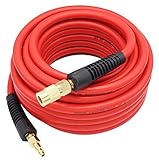
Overview: The YOTOO Hybrid Air Hose offers a 50-foot reach with a smart rubber and PVC blend that balances durability with manageable weight. Designed for all-weather performance, this 3/8-inch hose handles up to 300 PSI working pressure and includes pre-installed brass fittings for immediate use without additional purchases.
What Makes It Stand Out: The hybrid material provides excellent cold-weather flexibility while resisting abrasions better than standard PVC. Both ends feature brass 1/4-inch NPT fittings and bend restrictors, eliminating the need for separate purchases. The 1200 PSI burst pressure rating adds substantial safety margin for demanding applications, and the two-year warranty demonstrates manufacturer confidence.
Value for Money: At $29.99 ($0.60 per foot), this hose sits in the sweet spot between budget PVC and premium options. The included brass fittings and bend restrictors represent roughly $8-12 in savings compared to buying components separately, making it a cost-effective choice for DIY enthusiasts and professionals who need reliable performance without breaking the bank.
Strengths and Weaknesses: Strengths include excellent weather resistance, quality brass fittings, dual bend restrictors, and a two-year warranty. The 50-foot length covers most applications without frequent repositioning. Weaknesses: The hybrid construction is slightly heavier than pure PVC alternatives, and the red color may show dirt more readily. Some users might prefer swivel fittings for enhanced maneuverability in tight spaces.
Bottom Line: The YOTOO 50-foot hybrid hose delivers reliable performance and genuine value. It’s an intelligent choice for users seeking professional-grade features without premium pricing, backed by solid warranty protection and thoughtful design.
2. Flexzilla Air Hose, 3/8 in. x 50 ft., 1/4 in. MNPT Fittings, Heavy Duty, Lightweight, Hybrid, ZillaGreen - HFZ3850YW2

Overview: Flexzilla’s iconic ZillaGreen hose represents the gold standard in hybrid air hoses. This 3/8-inch by 50-foot hose combines extreme flexibility with professional-grade durability, functioning flawlessly in temperatures from -40°F to 140°F and maintaining pressure up to 300 PSI for demanding job site applications.
What Makes It Stand Out: The proprietary hybrid polymer technology delivers zero memory, meaning it lies flat and coils easily without fighting back. Aircraft-grade aluminum fittings provide superior crush resistance while reducing weight. Flexzilla’s reputation for quality assurance and consistent performance sets it apart from generic competitors, and the distinctive color ensures visibility on busy work sites.
Value for Money: Priced at $34.74, this hose commands a premium but justifies it through exceptional longevity and user experience. The cost per year of service often beats cheaper alternatives that require frequent replacement, making it economical for daily users. For professionals who rely on their tools, the reduced frustration and downtime deliver tangible returns.
Strengths and Weaknesses: Strengths include unmatched flexibility, lightweight design, superior cold-weather performance, and professional aesthetics. The abrasion-resistant cover withstands harsh job site conditions. Weaknesses: The premium price may deter casual users, and the distinctive green color isn’t for everyone. Some report the fittings could be longer for better grip during connection.
Bottom Line: For professionals and serious DIYers who use air tools regularly, the Flexzilla is worth every penny. Its combination of flexibility, durability, and hassle-free operation makes it the benchmark others try to match, justifying its position as an industry favorite.
3. 3/8" Hybrid Air Hose, 15Ft Air Compressor Hose,Heavy Duty, Lightweight, Kink Resistant, All-Weather Flexibility with 1/4-Inch Industrial Quick Coupler Fittings, Bend Restrictors, 300 PSI, Black
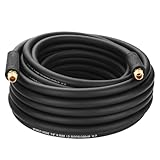
Overview: This compact 15-foot hybrid air hose targets users needing maneuverability over reach. The 3/8-inch inner diameter provides superior airflow compared to standard 1/4-inch hoses, making it ideal for high-demand pneumatic tools in confined spaces like automotive shops or dedicated workstations where longer hoses create hazards.
What Makes It Stand Out: The three-layer construction with reinforced polyester middle layer offers durability uncommon in short hoses. Removable quick coupler and plug allow for customization or replacement without discarding the entire hose. Its abbreviated length reduces pressure drop and eliminates tripping hazards in tight workshops while providing full-size performance.
Value for Money: At $25.99 ($1.04 per foot), the unit price seems high, but the specialized nature justifies the cost for the right application. It eliminates the frustration of wrestling with excess hose when working on vehicles or in pits where longer hoses become tangled. For targeted use, it saves money versus buying an unnecessarily long hose.
Strengths and Weaknesses: Strengths include optimal length for automotive work, larger diameter for better tool performance, lightweight handling, and removable fittings. The 300 PSI rating matches full-length hoses. Weaknesses: Limited reach requires frequent compressor repositioning. The higher cost per foot makes it poor value for general use. It’s too short for framing or roofing applications.
Bottom Line: This hose excels as a secondary or specialized line. Purchase it specifically for automotive repair, workbench use, or where a 50-foot hose creates more problems than it solves. It’s a purpose-built tool that performs brilliantly within its intended niche.
4. YOTOO Polyurethane Recoil Air Hose, Air Compressor Hose 1/4" Inner Diameter by 25’ Long with Bend Restrictor, 1/4" Industrial Quick Coupler and Plug, Blue

Overview: YOTOO’s recoil air hose offers a unique self-coiling solution for users prioritizing storage and portability. The 25-foot polyurethane construction provides excellent cold-weather flexibility while automatically retracting to a compact form when not in use, making it ideal for mobile applications and small workshops.
What Makes It Stand Out: The recoil design eliminates tangling and storage headaches, snapping back to a tight spiral that fits in tool bags. Polyurethane material offers superior kink resistance and weighs less than comparable rubber hoses. The 1/4-inch fittings are removable for maintenance or customization, extending service life beyond fixed-fitting alternatives.
Value for Money: At $18.99 ($0.76 per foot), this hose positions itself as an affordable specialty option. It’s particularly valuable for mobile mechanics and hobbyists where space is at a premium and long runs aren’t necessary. The included quick coupler and plug add convenience value while the two-year warranty provides peace of mind.
Strengths and Weaknesses: Strengths include compact storage, lightweight design, excellent temperature range (-40°F to +150°F), and tangle-free operation. The 150 PSI rating suits inflation and light pneumatic tasks. Weaknesses: The recoil tension can fight you during use, limiting effective reach to about 18 feet. The 1/4-inch diameter restricts airflow for high-demand tools. Lower PSI rating makes it unsuitable for heavy-duty applications.
Bottom Line: This hose serves a specific niche perfectly. Choose it for light-duty tasks, mobile applications, or where storage space is severely limited. For heavy use, pair it with a standard hose as a secondary line for inflation and quick tasks.
5. SARDVISA 22-Packs Air Compressor Accessories Kit, 25FT Upgrade Repairable PU Air Hose with 1/4’’ NPT Air Tool Kit, Air Blow Gun/Air Chuck/Tire Gauge, Pneumatic Tool Set

Overview: SARDVISA’s comprehensive kit revolutionizes value by bundling a repairable 25-foot PU air hose with 21 essential pneumatic accessories. This all-in-one solution targets beginners and mobile users who need everything in a single purchase, eliminating guesswork and multiple store visits while providing immediate functionality.
What Makes It Stand Out: The repairable hose design features detachable fittings, allowing users to cut away damaged sections and reattach ends, effectively doubling the hose’s lifespan. The kit includes a metal blow gun with expansion chamber, multiple chucks, couplers, and inflation accessories—components that would cost twice as much if purchased separately from hardware stores.
Value for Money: At $19.99 for 22 pieces, this kit represents exceptional value. The repairable hose alone justifies the price, while the quality metal blow gun and array of fittings eliminate multiple shopping trips. It’s arguably the best starter package available, costing less than most hoses alone while including tools that see regular use in any workshop.
Strengths and Weaknesses: Strengths include unbeatable price, repairable hose innovation, comprehensive accessory selection, and US-standard NPT fittings. The metal blow gun outperforms plastic competitors. Weaknesses: The 200 PSI hose rating (recommended 120 PSI) limits heavy-duty use. Accessory quality varies, and the hose lacks the durability of premium brands. No swivel fittings are included, which some users prefer.
Bottom Line: This kit is perfect for homeowners, hobbyists, and mobile technicians needing a complete, economical setup. Professionals should view it as a backup kit rather than primary equipment. The repairable hose innovation alone makes it worth considering for any user looking to maximize value and minimize waste.
6. Hromee 1/4 in x 25 ft Polyurethane Recoil Air Hose with Bend Restrictors Compressor Hose with 1/4" Industrial Universal Quick Coupler and I/M Plug Kit, Red

Overview: The Hromee recoil air hose delivers a compact, self-coiling solution for light-duty pneumatic applications. This 25-foot polyurethane hose features a vibrant red finish that ensures high visibility on busy job sites. The package comes complete with a universal quick coupler and plug kit, making it immediately compatible with most compressor systems without requiring additional purchases.
What Makes It Stand Out: The self-coiling design eliminates storage hassles and prevents kinking, while the polyurethane construction provides superior cold-weather flexibility down to -20℃. The inclusion of a universal coupler that fits Industrial, ARO, and Automotive profiles adds exceptional versatility. Double swivel brass ends with bend restrictors significantly extend hose life by reducing stress at connection points, a feature often missing in budget recoil hoses.
Value for Money: At $18.99 ($0.76 per foot) with included fittings, this hose represents solid value for DIY enthusiasts and light professional use. While recoil hoses typically cost more per foot than straight hoses, the convenience factor and included accessories justify the price point. Comparable recoil hoses without universal fittings often sell for $25+.
Strengths and Weaknesses: Strengths include excellent flexibility in cold weather, tangle-free recoil action, universal fitting compatibility, lightweight design, and bend restrictors that prevent premature failure. Weaknesses are the modest 120 PSI maximum rating, which limits use with high-demand tools like impact wrenches, and the 1/4" inner diameter that restricts airflow compared to 3/8" hoses. The recoil design may also be too short for some applications requiring extended reach.
Bottom Line: This Hromee hose excels for users needing a portable, low-maintenance solution for inflation, brad nailing, and light air tool operation in garages or job sites where maneuverability and cold-weather performance matter most.
7. WYNNsky 3/8" X 25ft PVC Air Compressor Hose Kit With 17 Piece Air Tool and Air Compressor Accessories Kit
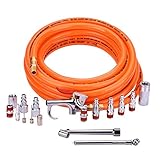
Overview: WYNNsky delivers a comprehensive starter package combining a 25-foot PVC air hose with an extensive 17-piece accessory kit. This all-in-one solution targets DIY homeowners and hobbyists seeking to maximize their compressor’s utility without multiple shopping trips for compatible fittings and tools. Everything arrives in one convenient package.
What Makes It Stand Out: The kit’s completeness is its primary advantage, bundling blow guns, tire inflators, and multiple quick-connect fittings. The 300 PSI pressure rating exceeds many competitors in this price class, while solid brass end fittings ensure corrosion resistance and reliable sealing. A two-year limited warranty provides additional peace of mind rarely found with budget tool kits.
Value for Money: At $23.99 for hose plus 17 accessories, this kit offers exceptional value. Purchasing components individually would easily exceed $40, making it an economical entry point for new compressor owners. The PVC construction keeps costs down while remaining serviceable for intermittent use around the home or workshop.
Strengths and Weaknesses: Strengths include the comprehensive accessory selection, high pressure rating, warranty coverage, and quality brass fittings versus cheaper aluminum alternatives. Weaknesses involve PVC’s tendency to kink and crack over time, especially in cold weather, and lower durability compared to rubber or polyurethane for daily professional use. The included accessories, while functional, lack the refinement and longevity of premium brands.
Bottom Line: Ideal for DIYers and occasional users, this WYNNsky kit removes the guesswork from accessorizing a new compressor. Professionals should invest in higher-grade materials, but for home garage use, it provides everything needed at an unbeatable package price.
8. Good Year 50’ x 3/8" Rubber Air Hose Red, 250 Psi

Overview: This traditional rubber air hose from Good Year offers a straightforward, no-frills solution for users prioritizing durability and extended reach. The 50-foot length provides excellent mobility around workshops and job sites, while Class C oil-resistant EPDM rubber construction handles demanding industrial environments and exposure to petroleum products without degradation.
What Makes It Stand Out: Made in the USA quality assurance and robust EPDM rubber construction distinguish this hose from import alternatives. Spiral synthetic yarn reinforcement prevents blowouts under pressure, while solid brass 1/4" NPT fittings ensure reliable, leak-free connections. The 50-foot length at this price point offers superior reach compared to shorter alternatives, reducing the need to move compressors frequently.
Value for Money: At $39.79 for 50 feet, this hose balances professional-grade materials with reasonable cost. While more expensive than PVC options, rubber construction typically lasts 3-5 times longer under regular use, making it more economical long-term for serious users who work with air tools daily.
Strengths and Weaknesses: Strengths include excellent durability, oil and abrasion resistance, generous length, reliable brass fittings, and proven EPDM rubber performance. The Made in USA origin ensures consistent quality control. Weaknesses are significant weight compared to modern hybrid hoses, potential memory issues causing kinks if not stored properly on reels, and the 250 PSI rating being lower than some competitors. The hose may be overkill for casual DIYers who use air tools infrequently.
Bottom Line: Perfect for professional mechanics and serious DIY enthusiasts who need a rugged, long-lasting hose for daily use. The investment pays off through years of reliable service in tough conditions where cheaper hoses would fail prematurely.
9. Goodyear 50’ x 3/8" Hybrid Air Hose - 300 PSI - Kink Free - Made in USA

Overview: Goodyear’s hybrid hose merges the best attributes of rubber and PVC, creating a lightweight yet durable 50-foot air line. Engineered to resist kinking and maintain zero memory, this hose addresses common frustrations with traditional rubber hoses while offering premium performance characteristics for demanding applications.
What Makes It Stand Out: The kink-free design with zero memory sets this apart, allowing the hose to lay flat immediately without fighting coils. The weather, oil, and solvent-resistant outer coating provides multi-environment durability. At 300 PSI maximum pressure, it handles high-demand tools like impact wrenches, while Made in USA construction ensures stringent quality standards and material consistency throughout.
Value for Money: Priced at $29.99, this hybrid hose hits a sweet spot between budget PVC and premium rubber options. It offers approximately 80% of rubber’s durability at 60% of the weight and cost, making it an intelligent compromise for users wanting professional performance without the heavyweight penalty or premium price tag.
Strengths and Weaknesses: Strengths include exceptional kink resistance, lightweight handling, high pressure rating, versatile chemical resistance, and quality brass fittings. The hybrid material remains flexible across temperature extremes. Weaknesses include potential longevity questions compared to pure rubber for heavy industrial use, and the 250 PSI operating pressure (despite 300 PSI max rating) may confuse some users expecting full utilization.
Bottom Line: The best all-around choice for most users, combining professional performance, ease of use, and excellent value. Whether for automotive work or construction, this hose eliminates common frustrations while delivering reliable, long-term service that satisfies both pros and serious DIYers.
10. Primefit Pri-6044 IK1016S-20 Deluxe 1/4" Air Compressor Accessory Kit Including 1/4" Recoil Airhose
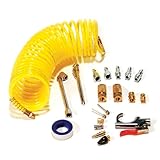
Overview: Primefit targets first-time compressor owners with this ultra-affordable 19-piece accessory kit. The package includes a 25-foot recoil hose and essential pneumatic tools, providing an immediate entry point into compressed air applications without requiring separate component purchases or compatibility research.
What Makes It Stand Out: Unbeatable price and comprehensive accessory count make this kit unique in the market. The inclusion of a blow gun with multiple inflation nozzles and sport ball needles covers common household tasks immediately. Heavy-duty brass quick couplers add a touch of durability to an otherwise budget-focused package, while the recoil hose design simplifies storage in cramped garages.
Value for Money: At $16.96, this represents the most economical way to outfit a compressor. The sheer quantity of included items would cost three times more when purchased separately, making it ideal for users unsure about their long-term air tool needs or working with extremely tight budgets that preclude professional-grade purchases.
Strengths and Weaknesses: Strengths include the incredibly low price, extensive accessory variety, recoil hose convenience, and brass couplers that outperform plastic alternatives. The kit works perfectly for inflation and light-duty tasks. Weaknesses involve lower-quality components unsuitable for professional use, the 1/4" hose diameter limiting airflow to tools, and potential durability issues with frequent daily use. The recoil hose may be too short for some workshop applications.
Bottom Line: An exceptional starter kit for homeowners and hobbyists who need basic pneumatic functionality. While not built for heavy-duty work, it provides tremendous value for occasional use and lets users experiment with different air tools before investing in professional-grade equipment.
Why Weight Matters: The Case for Lightweight Air Hoses in Auto Care
When you’re maneuvering around a vehicle on jack stands or reaching into tight wheel wells, a heavy rubber hose becomes a liability. Traditional hoses can weigh over three pounds per 25 feet, creating a dragging anchor that pulls on your fittings and tests your patience. Lightweight alternatives often tip the scales at less than half that weight, making them feel more like an extension cord than an industrial tether.
The Ergonomic Advantage for DIY Enthusiasts
For the home mechanic, fatigue is the enemy of precision. After an hour of fighting a stiff, heavy hose while trying to detail an engine bay or sand body panels, your hands cramp and your focus wavers. A sub-pound-per-25-feet hose allows you to work longer without the cumulative strain on wrists and shoulders. This becomes especially critical during cold weather when heavier hoses stiffen and become even more cumbersome to coil and uncoil.
Professional Shop Efficiency
In commercial settings, technicians might walk several miles in a single day dragging hoses across shop floors. Lightweight hoses reduce trip hazards and improve workflow speed. When a hose weighs less, it stays where you place it instead of recoiling into a tangled mess. This means less time untangling knots and more time turning wrenches—a direct impact on the bottom line.
Understanding Air Hose Materials: Pros and Cons
The material composition determines everything from weight and flexibility to temperature tolerance and chemical resistance. Each option presents a unique balance of characteristics that either excel or fall short in automotive environments.
Rubber Hoses: The Traditional Workhorse
Classic rubber hoses deliver unmatched durability and remain flexible across a wide temperature range. They resist kinking when warm and maintain suppleness in freezing conditions. However, they typically weigh 2.5 to 3.5 pounds per 25 feet, making them the heaviest option. They also develop memory—the tendency to retain coil shape—which creates handling frustrations. For automotive use, look for nitrile rubber blends that resist oil and brake fluid exposure.
PVC Hoses: Lightweight but Limited
PVC (polyvinyl chloride) hoses offer the lowest weight—often under one pound per 25 feet—and the most attractive price point. Their rigid structure resists abrasion but becomes brittle in cold weather and may crack when flexed repeatedly around sharp corners. In hot garages, PVC can soften and kink more easily. While suitable for occasional tire inflation, they struggle with the demands of continuous pneumatic tool operation and may collapse under vacuum applications.
Polyurethane Hoses: The Premium Lightweight Option
Polyurethane represents the gold standard for lightweight performance. These hoses typically weigh 0.8 to 1.2 pounds per 25 feet while maintaining excellent flexibility down to -40°F. They exhibit near-zero memory, laying flat straight out of the box. The trade-off comes in abrasion resistance—they can wear faster when dragged across concrete. For car care, they’re ideal for detailing, inflation, and light-duty tool use where maneuverability trumps heavy-duty durability.
Hybrid Polymer Hoses: Best of Both Worlds
Hybrid polymer hoses blend materials (often PVC and rubber) to capture benefits from each. They typically weigh 1.5 to 2 pounds per 25 feet, offering better cold-weather performance than straight PVC with more abrasion resistance than pure polyurethane. Many feature “no memory” designs and maintain flexibility across 0°F to 130°F ranges. This makes them the sweet spot for most automotive enthusiasts who need versatility without excessive weight.
Hose Diameter Decoded: 1/4" vs 3/8" for Automotive Applications
Internal diameter directly impacts air flow, measured in cubic feet per minute (CFM). Choose wrong, and you’ll starve your impact wrench of the air it needs to break loose lug nuts.
Matching Hose Diameter to Your Tools
The 1/4-inch hose serves as the default for most home garage setups. It adequately supplies tools requiring up to 4 CFM at 90 PSI—covering most brad nailers, blow guns, and tire inflators. However, when you step up to high-torque impact wrenches (demanding 5-8 CFM) or continuous-use tools like die grinders, the 1/4-inch hose creates a bottleneck.
A 3/8-inch hose doubles the internal volume, delivering the higher CFM that heavy-duty pneumatic tools crave. The weight penalty is minimal—typically adding only 0.3 to 0.5 pounds per 25 feet—but the performance gain is substantial. For automotive work, the 3/8-inch diameter often proves the smarter long-term investment.
CFM Requirements for Common Car Care Tasks
Tire inflation requires minimal CFM (1-2), making any diameter sufficient. Orbital sanders and paint guns need consistent 6-8 CFM, demanding 3/8-inch hoses. Impact wrenches vary—compact 1/2-inch drives work with 1/4-inch hoses, but 3/4-inch or larger impacts need 3/8-inch minimum. Always check your tool’s CFM rating at operating pressure, not just its maximum PSI.
Length Matters: Finding Your Optimal Reach
Longer isn’t always better. Every additional foot adds weight, pressure drop, and potential for tangles.
The 25-Foot Standard for Home Garages
A 25-foot hose hits the sweet spot for most two-car garages. It reaches all four tires from a centrally located compressor while remaining lightweight and manageable. The pressure drop across 25 feet of quality 3/8-inch hose is negligible—typically under 2 PSI. This length coils easily for storage and rarely creates tripping hazards.
When to Consider 50-Foot or Longer Hoses
If your compressor lives in a corner or you work on vehicles in a driveway, 50 feet becomes necessary. The weight doubles, but modern lightweight materials keep total weight under 3 pounds for a 50-foot polyurethane hose. Be aware that pressure drop becomes significant—potentially 5-8 PSI—so you may need to increase compressor regulator settings accordingly.
The Coiled Hose Alternative
Coiled hoses stretch from 6 feet coiled to 25 feet extended, offering self-retracting convenience. They excel for tire inflation stations but frustrate during continuous use, as the coil tension constantly pulls the tool back toward the compressor. For detailing or paint work, this tension creates fatigue and reduces precision.
Fittings and Couplers: The Unsung Heroes
A hose is only as good as its connection points. Leaky fittings waste compressor energy and create pressure inconsistencies that affect tool performance.
Automotive-Standard Fittings Explained
Most automotive air tools use 1/4-inch NPT (National Pipe Thread) fittings. However, the quick-connect profile matters more. The industrial “M-style” coupling (also called I/M or Type D) dominates automotive applications with its robust ball-bearing retention system. Avoid automotive “A-style” or “T-style” couplings unless your existing tools specifically require them.
Quick-Connect Systems for Efficiency
Push-to-connect fittings allow one-handed operation—crucial when you’re holding a tool in one hand and a hose in the other. Look for sleeves that rotate freely, preventing hose twist during connection. High-flow couplers feature larger internal passages that reduce restriction, particularly beneficial for 3/8-inch hoses running high-CFM tools.
Material Choices: Brass vs. Steel vs. Aluminum
Brass fittings resist corrosion and seal reliably but add weight. Steel fittings offer maximum durability for shop environments but require regular oiling to prevent rust. Aluminum fittings provide the lightest option but can gall and seize if overtightened. For most car care applications, brass strikes the best balance, though aluminum appeals to weight-conscious mobile detailers.
Pressure Ratings and Safety Margins
That bargain hose might handle your compressor’s 150 PSI output, but what happens during a pressure spike?
Understanding PSI Ratings
Working pressure indicates the safe continuous operating limit—typically 150-300 PSI for quality hoses. Burst pressure represents the catastrophic failure point, usually 4:1 above working pressure. A 300 PSI working pressure hose should burst above 1,200 PSI. For automotive use, never select a hose with working pressure below your compressor’s maximum output.
Safety Factors for Automotive Applications
Pneumatic tools create pressure spikes when triggers release. Choose a hose rated at least 50 PSI above your compressor’s shut-off pressure. If your compressor hits 175 PSI, a 300 PSI working pressure hose provides comfortable safety margin. This prevents ballooning and potential rupture during repeated cycling.
Safety Factors for Automotive Applications
Pneumatic tools create pressure spikes when triggers release. Choose a hose rated at least 50 PSI above your compressor’s shut-off pressure. If your compressor hits 175 PSI, a 300 PSI working pressure hose provides comfortable safety margin. This prevents ballooning and potential rupture during repeated cycling.
Temperature Resistance: Garage and Outdoor Use
Automotive environments expose hoses to temperature extremes that affect performance and longevity.
Cold Weather Performance
Standard PVC hoses turn rigid and brittle below 30°F, cracking when flexed. Premium polyurethane and hybrid hoses remain supple down to -30°F or lower. If you live in a climate with freezing winters and store your compressor in an unheated garage, cold-weather flexibility becomes non-negotiable. Look for hoses explicitly rated for low-temperature use, and avoid storing any hose in a coil during winter—cold memory makes them nearly impossible to straighten.
Hot Weather and Under-Hood Use
Summer heat and engine bay work expose hoses to 150°F+ temperatures. PVC softens and can collapse under pressure in these conditions. Rubber and hybrid polymer hoses maintain structural integrity up to 180°F. If you plan to use a blow gun for drying engine components or run lines near exhaust manifolds, select hoses with high-temperature ratings and keep them away from direct contact with hot metal.
Flexibility and Memory: The Kink Factor
Nothing kills workflow like stopping to unkink a hose every few minutes. Memory and flexibility determine how gracefully your hose moves with you.
Zero Memory Technology
Hoses marketed as “no memory” or “lay-flat” use specialized polymer formulations that resist taking a set shape. They uncoil straight and stay straight during use. This technology shines in polyurethane and premium hybrid hoses. Test by coiling a hose tightly for 24 hours—if it springs back to straight when uncoiled, it has low memory. If it retains tight coils, it will fight you during every use.
Coil Memory vs. Lay-Flat Design
Traditional rubber hoses develop permanent coil memory that creates constant tension. Lay-flat designs use internal braiding and polymer blends to maintain neutrality. For automotive work involving walking around a vehicle, lay-flat hoses reduce trip hazards and prevent the hose from wrapping around tires or jack stands.
Durability in Demanding Environments
Your garage floor is a hostile environment for hoses. Concrete abrasion, chemical spills, and UV exposure all conspire to shorten hose life.
Abrasion Resistance
Drag a hose across a concrete garage floor daily, and you’ll wear through a standard polyurethane jacket in months. Look for hoses with reinforced outer layers—textured surfaces or embedded nylon braid that resist scuffing. Rubber excels here naturally, while some hybrids add rubberized coatings to polymer cores.
Oil and Chemical Resistance
Brake fluid, motor oil, and detailing chemicals attack hose materials. Nitrile rubber and certain polyurethane formulations resist petroleum products. PVC degrades quickly when exposed to oil, becoming sticky and eventually cracking. If your hose will live in a shop environment with frequent chemical exposure, prioritize oil-resistant ratings.
UV Protection for Outdoor Storage
Sunlight breaks down many polymers, causing cracking and color fading. UV-stabilized hoses include additives that block destructive rays. If your setup requires leaving the hose coiled outdoors, this feature extends lifespan from one season to several years. Store hoses in shade when possible, regardless of UV rating.
Weight Comparison: Real-World Numbers
Marketing claims about “ultra-lightweight” mean little without context. Here’s how materials stack up in practical terms.
Pounds per Foot Analysis
- Heavy rubber: 0.12-0.14 lbs/ft (3+ lbs per 25 ft)
- Standard rubber: 0.10-0.12 lbs/ft (2.5-3 lbs per 25 ft)
- Hybrid polymer: 0.06-0.08 lbs/ft (1.5-2 lbs per 25 ft)
- Polyurethane: 0.04-0.05 lbs/ft (1-1.25 lbs per 25 ft)
- PVC: 0.03-0.04 lbs/ft (0.75-1 lb per 25 ft)
Total System Weight Considerations
Remember to factor in fitting weight. Brass quick-connect couplers add 2-3 ounces each, while aluminum versions cut that in half. For a 25-foot setup with two couplers, material choice can mean the difference between a 1.5-pound and 4-pound system you’ll be dragging around your vehicle.
Maintenance and Longevity Tips
Even the best hose requires proper care to reach its potential lifespan of 5-10 years.
Proper Storage Techniques
Never leave a hose pressurized when not in use—this stresses the walls and fittings. Drain air completely after each session. Store loosely coiled in large loops (at least 12-inch diameter) to prevent tight kinks. Wall-mounted reels with oversized hubs prevent memory formation. For seasonal storage in cold climates, bring hoses indoors to prevent material degradation.
Cleaning and Inspection Routines
Monthly, wipe down the entire length with a rag dampened with mild soap solution to remove abrasive grit and chemical residues. Inspect fittings for cracks and check the hose for bulges, cuts, or excessive abrasion. Pay special attention to the first and last five feet, where most damage occurs from dragging and bending at the compressor connection.
When to Replace Your Hose
Replace immediately if you find any bulging, exposed reinforcement braid, or cracking at fittings. A hose that leaks at connections despite new thread sealant likely has internal damage. If flexibility decreases noticeably or the hose retains severe kinks even when warm, material breakdown has begun. Don’t risk a burst near your face during under-hood work.
Common Buying Mistakes to Avoid
Smart shoppers avoid these pitfalls that lead to buyer’s remorse and garage frustration.
Overlooking Flow Rate Requirements
That bargain 1/4-inch PVC hose won’t power your new 1/2-inch impact wrench, no matter how high you crank the compressor. Always match hose diameter to your highest-CFM tool. Buying for your current needs without considering future tool purchases creates expensive replacement cycles.
Choosing Price Over Quality
A $15 PVC hose seems economical until it cracks in winter and sprays air across your garage. Quality hybrid or polyurethane hoses cost $30-60 but last years longer. Calculate cost per year rather than upfront price. A $50 hose lasting eight years costs less than replacing a $15 hose every two years.
Ignoring Fitting Compatibility
That European-style quick-connect won’t mate with your American industrial couplers. Verify your existing compressor and tool fitting styles before ordering. While adapters exist, each connection point introduces potential leaks and pressure drop. Standardize your entire system on one coupling style from the start.
Matching Your Hose to Specific Car Care Tasks
Different automotive jobs demand different hose characteristics. One size doesn’t fit all.
Tire Inflation and Pressure Monitoring
For pure inflation duties, a short 10-foot coiled polyurethane hose with a built-in gauge offers ultimate convenience. The coil keeps the gauge at hand, and the light weight prevents the chuck from damaging valve stems. Look for hoses with swivel fittings at the chuck end to prevent twisting as you thread it onto the valve.
Paint and Bodywork Applications
Painting demands consistent pressure and clean, oil-free air. A 3/8-inch hybrid polymer hose with high-flow fittings ensures your spray gun receives steady CFM. Length matters—too short and you’re trapped near the compressor; too long and pressure drop affects atomization. A 35-foot length provides mobility without significant pressure loss.
Pneumatic Tool Operation
Impact wrenches and ratchets need high CFM and maximum maneuverability. A 3/8-inch polyurethane or hybrid hose with a swivel fitting at the tool end prevents fatigue. Consider a short (6-foot) whip hose between the main line and tool for ultimate flexibility. This whip absorbs tool vibration and allows you to set the main hose down while working.
Cleaning and Detailing
Blow guns for drying vehicles require lightweight hoses that won’t scratch paint. A bright-colored polyurethane hose (yellow or orange) increases visibility to prevent tripping over it around a prized car. Smooth outer surfaces prevent grit from embedding in the jacket that could later transfer to paintwork.
Storage Solutions for Lightweight Hoses
Proper storage extends life and keeps your workspace safe and organized.
Wall-Mounted Reels
Choose reels with oversized hubs (at least 12 inches) to prevent tight coiling memory. Look for models with guide arms that keep the hose level during winding. For lightweight hoses, avoid heavy-duty spring-return mechanisms—they’re overkill and add unnecessary cost. Manual crank reels with locking mechanisms offer better control and reliability.
Portable Hose Caddies
Mobile detailers benefit from compact caddies that hold 25-50 feet of hose plus fittings. Look for designs with carrying handles and integrated storage for chucks and gauges. The best models include a post to wrap the hose in a loose figure-8 pattern, preventing twists and kinks during transport.
Compact Coiling Techniques
Master the “over-under” coiling method: alternate twisting the hose in opposite directions with each loop. This neutralizes twist memory and allows the hose to uncoil without tangling. For storage on a hook, use large loops (18+ inches) and secure with a Velcro strap rather than a tight wire tie.
Price vs. Performance: Finding the Sweet Spot
Budget constraints are real, but strategic spending yields better long-term value.
Budget-Friendly Options That Don’t Compromise
Quality hybrid polymer hoses in the $25-35 range deliver 80% of premium performance at half the cost. Focus on reputable brands that specialize in air accessories rather than generic import labels. These mid-tier options often include the same fittings as premium hoses but use slightly simpler jacket materials.
Premium Features Worth the Investment
Swivel fittings at both ends justify their $10-15 premium by preventing twist fatigue and making connections easier. Textured abrasion-resistant jackets add $5-10 but double lifespan in concrete-floor garages. Pre-attached quick-connect couplers from the factory ensure leak-free connections compared to user-installed fittings.
Warranty and Brand Considerations
A hose is only as reliable as the company standing behind it.
What to Look for in a Hose Warranty
Quality manufacturers offer 2-5 year warranties against defects and premature failure. Read the fine print—many exclude abrasion damage and improper storage. The best warranties cover fittings and hose body equally. Register your purchase online; some brands extend warranties by an additional year for registered products.
Reputation in the Automotive Community
Seek brands with dedicated automotive lines rather than general hardware store brands. Companies that specialize in pneumatic tools for auto shops understand the unique demands of our environment. Check enthusiast forums and professional technician groups for real-world feedback on longevity and warranty support.
Frequently Asked Questions
What’s the lightest air compressor hose material suitable for regular automotive use?
Polyurethane offers the best weight-to-performance ratio, typically weighing under 1.25 pounds per 25 feet. Premium hybrid polymer hoses are nearly as light while providing better abrasion resistance for concrete garage floors.
Can I use a lightweight hose with my high-torque 1/2" impact wrench?
Yes, but ensure it’s 3/8-inch diameter to deliver adequate CFM. A 1/4-inch hose will starve the tool, reducing torque output. Look for high-flow quick-connect couplers to minimize pressure drop at connection points.
How do I prevent my lightweight hose from kinking during use?
Choose a “no memory” or “lay-flat” design, store it in large loops (12-inch+ diameter), and avoid tight bends near fittings. Swivel fittings at the tool end also reduce twisting that leads to kinks.
What’s the ideal length for a home garage setup?
A 25-foot hose reaches all four tires on most vehicles from a centrally located compressor. If your compressor sits in a corner or you work in a driveway, consider 35-50 feet, but be aware of increased pressure drop.
Are swivel fittings worth the extra cost?
Absolutely. Swivel fittings prevent hose twist during use and make connections easier, especially in tight spaces. They reduce fatigue on both the user and the hose, extending lifespan and improving workflow.
How often should I replace my air compressor hose?
With proper care, quality hoses last 5-10 years. Replace immediately if you notice bulging, exposed reinforcement braid, cracking at fittings, or significant loss of flexibility. Annual inspection is essential for safety.
Can I repair a damaged lightweight hose?
Field repair kits exist for cut hoses, but they rarely restore original pressure ratings and often create weak points. For safety-critical automotive applications, replacement is recommended over repair. Fittings, however, can often be replaced if the hose body remains sound.
What’s the difference between working pressure and burst pressure?
Working pressure is the safe continuous operating limit (typically 150-300 PSI). Burst pressure is the catastrophic failure point, usually 4x the working pressure. Always choose a hose with working pressure exceeding your compressor’s maximum output by at least 50 PSI.
Do I need a special hose for painting my car?
Yes. Paintwork requires consistent, oil-free air delivery. Use a 3/8-inch hose with high-flow fittings to maintain steady pressure. Ensure the hose is rated for your spray gun’s CFM requirements, typically 6-8 CFM at 40 PSI.
How should I store my hose during winter?
Drain all air completely, coil loosely in large loops, and store indoors if possible. If outdoor storage is unavoidable, choose a cold-weather rated hose (to -30°F or lower) and protect it from UV exposure. Never leave a hose pressurized in freezing temperatures.