Whether you’re chasing that perfect aggressive stance, solving clearance issues with your brake calipers, or simply wanting to improve your vehicle’s handling characteristics, wheel spacers represent one of the most misunderstood yet potentially transformative modifications in automotive care. These precision-engineered components sit between your wheel hub and wheel assembly, pushing your wheels outward by precise millimeters to achieve both aesthetic and functional goals.
But here’s the reality: wheel spacers aren’t just cosmetic accessories. They’re critical safety components that directly impact your vehicle’s suspension geometry, bearing loads, and overall driving dynamics. Get it right, and you’ll unlock a new level of performance and style. Get it wrong, and you’re inviting catastrophic failure, accelerated component wear, and potential legal liability. This comprehensive guide cuts through the internet forum myths and armchair engineering to give you the expert-level knowledge you need to make informed decisions about wheel spacers for your specific application.
Top 10 Wheel Spacers
Detailed Product Reviews
1. KSP 6X5.5 Wheel Spacers for Silverado Sierra,1.5"(38mm) Real Forged Spacers with 78.1mm Hub Bore M14x1.5 Studs fit for Tahoe Avalanche Express Suburban Sierra Yukon

Overview: These KSP wheel spacers target GM full-size truck and SUV owners seeking a 1.5-inch stance improvement. Designed for an extensive range of 1999-2024 Silverado 1500, Tahoe, Suburban, Sierra 1500, Yukon, and Escalade models, this four-piece set uses real forged 6061-T6 aircraft aluminum instead of cast alternatives. The CNC-machined construction ensures precise fitment with a 78.1mm hub bore and M14x1.5 stud pattern. Black anodizing adds corrosion resistance while maintaining a factory-appearance. Each kit includes thread locker and promises straightforward installation for DIY enthusiasts.
What Makes It Stand Out: The “real forged” manufacturing process distinguishes these from cheaper cast spacers, delivering superior strength-to-weight ratio and resistance to cracking under stress. KSP addresses common failure points by using ISO/DIN 10.9-12.9 grade geomet studs made from heat-treated SCM435 steel, significantly reducing breakage risks. The company proactively modified stud lengths based on customer feedback, eliminating installation interference issues that plague universal kits. With coverage spanning 25 years of GM vehicles, the compatibility list is exceptionally comprehensive.
Value for Money: At $141.99 for four forged spacers, this represents mid-range pricing that justifies itself through material quality and engineering. Cast alternatives may cost 30-40% less but risk catastrophic failure. Premium brands charge $180+ for similar forged construction. The included 30-day refund and 12-month replacement policy provides financial protection, while the thread locker adds $10 value. For vehicles running larger tires or requiring offset correction, this investment prevents costlier suspension modifications.
Strengths and Weaknesses: Strengths include genuine forged aluminum construction, heat-treated high-grade steel studs, extensive vehicle compatibility, corrosion-resistant anodizing, and responsive design improvements. The 85-95 FT/LBS torque rating indicates robust engineering. Weaknesses involve potential need for stud trimming on some applications despite improvements, and the 78.1mm hub bore may not center perfectly on all aftermarket wheels. Installation requires professional torque wrench use and re-torquing after 50-100 miles.
Bottom Line: These KSP spacers offer excellent value for GM truck owners prioritizing safety and durability over bargain pricing. The forged construction and quality hardware justify the moderate premium, making them ideal for daily drivers and light off-road use. Follow installation instructions meticulously and verify wheel clearance before purchasing.
2. dynofit 6x5.5 to 6x5.5 Forged 2inch Wheel Spacers Adapters for 1999-2025 Silverado 1500 Sierra 1500 Yukon 2019-2025 Ram 1500 | Set of 4 Compatible with Chevrolet GMC Cadillac Ram 6x139.7 M14x1.5 Studs

Overview: Dynofit’s 2-inch forged wheel spacers serve a dual-market audience, fitting both classic GM trucks (1999-2025 Silverado, Sierra, Tahoe, Yukon) and the 2019-2025 Ram 1500. This four-piece set provides aggressive stance widening at 50.8mm thickness per corner, addressing clearance issues for oversized brake calipers or suspension components. Constructed from forged 6061-T6 aluminum with black anodizing, these adapters include SGS-tested bolts and CNC-machined surfaces. The 108mm hub bore accommodates a broader range of applications than OEM-centric designs.
What Makes It Stand Out: The 2-inch thickness offers substantial track width increase for serious off-road or aesthetic applications, setting it apart from standard 1.25-1.5-inch options. Cross-compatibility between GM and newer Ram platforms maximizes utility for multi-vehicle households or resale value. Dynofit emphasizes the forged manufacturing method over casting, claiming enhanced durability. The inclusion of SGS-approved bolts provides third-party quality verification rarely advertised in this price segment. The company’s explicit recommendation for post-installation alignment and re-torquing demonstrates proactive safety awareness.
Value for Money: Priced at $119.99, these represent exceptional value for 2-inch forged spacers. Comparable thickness spacers from premium brands exceed $160, while universal cast versions sacrifice safety for marginal savings. The multi-brand compatibility effectively doubles potential use cases. However, the larger 108mm hub bore may require hub-centric rings for perfect centering on some applications, adding hidden costs. The absence of extended lug nuts (required for many installations) necessitates separate purchase, offsetting initial savings.
Strengths and Weaknesses: Strengths include aggressive 2-inch width, forged aluminum construction, GM/Ram cross-compatibility, SGS-certified hardware, and competitive pricing. The CNC machining ensures consistent quality. Weaknesses center on the oversized hub bore potentially causing vibration without additional rings, lack of included lug nuts, and thinner application range per vehicle due to extreme offset. The 2-inch thickness may exceed legal limits in some jurisdictions and accelerates wheel bearing wear.
Bottom Line: Ideal for enthusiasts wanting maximum stance aggression on GM or Ram half-ton trucks. The forged quality and third-party bolt certification at this price point are compelling. Budget an extra $30-40 for hub-centric rings and extended lug nuts. Best suited for off-road or show vehicles rather than daily drivers due to increased stress on drivetrain components.
3. Gxencks Blaster 4/156 Front Wheel Spacers 1.5" wide each adds 3 inches of width Fit for all years ATV Banshee, Raptor Warrior 350, YFZ450 and YFZ450R

Overview: Gxencks Blaster wheel spacers cater specifically to ATV enthusiasts running Yamaha Banshee, Raptor, Warrior 350, YFZ450, and YFZ450R models. This kit adds 1.5 inches per side (3 inches total width) using a 4/156 bolt pattern common in sport ATVs. Constructed from aluminum alloy with a design emphasizing easy installation and removal, these spacers target riders seeking improved stability in corners and enhanced flotation in mud or sand. The product description focuses on simplicity rather than technical specifications, positioning it as a budget-friendly handling upgrade for recreational riders.
What Makes It Stand Out: The ATV-specific design addresses a niche market often overlooked by automotive spacer manufacturers. The emphasis on easy installation/removal appeals to riders who frequently transport ATVs and need to quickly revert to stock width for trailering. At 1.5 inches per side, these provide substantial stability improvement for dune running and aggressive cornering without requiring expensive long-travel suspension. The universal fitment across all years of popular Yamaha models simplifies purchasing decisions for owners of older or modified machines where documentation is scarce.
Value for Money: At $74.99, these offer accessible performance enhancement for ATV owners. Equivalent width improvements through aftermarket a-arms cost $400+. While automotive-grade forged spacers command premium prices, the lower stress environment of ATV applications makes aluminum alloy construction adequate. The price point allows entry-level riders to experiment with stance modifications. However, the vague “aluminum alloy” specification (no grade mentioned) and absence of included hardware (likely reuses stock lug nuts) suggests cost-cutting. No warranty information is provided, reducing purchase protection.
Strengths and Weaknesses: Strengths include ATV-specific engineering, substantial width increase, easy installation design, budget pricing, and broad Yamaha compatibility. The width addition significantly improves cornering stability. Weaknesses involve unspecified aluminum grade, no mention of stud strength or treatment, lack of included hardware, minimal product documentation, and absence of warranty/support details. The 4/156 pattern limits use to specific ATV models, and the “search for usage videos” disclaimer indicates poor instruction quality.
Bottom Line: A functional budget option for Yamaha ATV riders prioritizing stability over premium materials. Suitable for recreational trail riding and moderate dune use. Inspect studs before installation and consider upgrading to grade 8 hardware for high-performance applications. Competitive riders or those running heavily modified machines should invest in higher-spec spacers with documented material grades. For casual enthusiasts, the price-to-benefit ratio is favorable.
4. KSP 1.25" Wheel Spacers for Tacoma 6 Lug Wheel,4pcs 6x5.5 Hubcentric Spacer fit for 4runner Tundra Fj Cruiser Sequoia,32mm Forged Spacer with 12x1.5 Stud 106mm Center Bore,6x139.7 Aluminum Tire Spacer

Overview: KSP’s 1.25-inch hubcentric wheel spacers target Toyota truck and SUV owners seeking subtle stance improvement without excessive stress on components. Designed for 1996-2022 4Runner, 2000-2006 Tundra, 2007-2022 FJ Cruiser, 2001-2007 Sequoia, and 2002-2022 Tacoma (excluding 2WD S-Runner/X-Runner), these 32mm spacers prioritize precise fitment. The hubcentric 106mm center bore with lip ensures vibration-free operation by perfectly centering on OEM hubs. Forged from 6061-T6 aluminum with black anodizing, the kit includes 24 super-strong 12.9-grade open-ended lug nuts and thread locker.
What Makes It Stand Out: The hubcentric design with integrated lip is crucial for Toyota applications, eliminating the vibration issues common with universal slip-on spacers. KSP’s engineering team specifically measured OEM dimensions to create minimal-clearance fitment. The inclusion of 12.9-grade lug nuts (exceeding typical 10.9 grade) provides exceptional clamping force for aggressive off-road use. Laser-engraved sizing information aids future identification during maintenance. The company’s transparent communication about potential thread engagement issues on Tacoma/FJ models, complete with specific ET lug nut part number recommendations, demonstrates unusual honesty and customer support focus.
Value for Money: At $119.99 including premium lug nuts, this kit delivers strong value. Comparable hubcentric forged spacers sell for $130-150 without hardware. The 12.9-grade lug nuts alone represent $25-30 value. KSP’s “tested by enthusiasts” claim suggests real-world validation, reducing buyer risk. However, Tacoma/FJ owners may need ET lug nuts (B07DLX519N), adding $20-25 cost. The 72-80 FT/LBS torque specification is conservative, indicating confidence in engineering margin. The 30-day refund policy provides purchase security, though warranty duration isn’t specified.
Strengths and Weaknesses: Strengths include true hubcentric forged construction, application-specific engineering, included high-grade hardware, comprehensive Toyota compatibility, corrosion-resistant anodizing, and transparent installation guidance. The 106mm hub bore perfectly matches Toyota specifications. Weaknesses involve potential need for additional ET lug nuts on some models, incompatibility with locking hub vehicles, and conservative 1.25-inch thickness may disappoint those wanting aggressive stance. The open-ended lug nuts require careful torque sequence to avoid thread damage.
Bottom Line: Excellent choice for Toyota owners prioritizing precision and safety over maximum width. The hubcentric design is non-negotiable for vibration-free daily driving. KSP’s honest communication about thread engagement issues builds trust. Ideal for correcting offset on stock wheels or fitting slightly larger tires. Budget for possible ET lug nuts and professional installation if unfamiliar with hubcentric systems. A smart, conservative upgrade for Toyota purists.
5. KSP 6X5.5 Wheel Spacers Fit for Tacoma 4runner, 1.5 inches Forged Hub Centric Adapters Kits with Extended Open Lug Nuts fit 6 Lug Wheels Without Locking hub, Package of 4 (Black 6061 T6 Aluminum)

Overview: KSP’s 1.5-inch hubcentric adapters serve Toyota truck and SUV owners wanting more aggressive stance than their 1.25-inch counterparts offer. Compatible with 1996-2022 4Runner, 2007-2022 FJ Cruiser, 2005-2019 Fortuner, 2001-2007 Sequoia, 2002-2022 Tacoma 4WD/Pre-Runner, 2000-2006 Tundra, and Lexus GX models, these 38mm spacers use forged 6061-T6 aluminum construction. The hubcentric 106mm bore with lip ensures vibration-free mounting, while heat-treated 10.9 grade geomet studs provide strength. KSP prominently warns about original bolt length issues, requiring ET lug nuts if OEM studs are under 27mm—a common Tacoma/FJ problem.
What Makes It Stand Out: The proactive safety warning about bolt length demonstrates KSP’s deep understanding of Toyota-specific installation challenges. Unlike competitors who obscure such issues, KSP provides explicit measurement guidance and ET lug nut part numbers. The 1.5-inch thickness hits the sweet spot for aesthetic improvement without excessive drivetrain stress. The hubcentric lip design maintains OEM-level vibration damping, crucial for body-on-frame Toyota vehicles sensitive to balance changes. The “real forged” aircraft-grade billet aluminum construction exceeds casting strength while remaining lightweight. The 30-day refund and 12-month replacement warranty surpasses industry standards.
Value for Money: Priced at $126.99, these command a $7 premium over KSP’s 1.25-inch version but provide 20% more width. The included extended open lug nuts partially offset the cost difference. Compared to generic 1.5-inch spacers at $90-100, the hubcentric design and forged construction justify the 25% upcharge. However, Tacoma/FJ owners with short OEM studs must purchase ET lug nuts (B07DLX519N), adding $20-25 and reducing value proposition. The warranty coverage adds long-term value for daily drivers. Professional alignment post-installation is recommended, representing hidden cost.
Strengths and Weaknesses: Strengths include Toyota-specific hubcentric engineering, forged 6061-T6 construction, comprehensive safety warnings, extended lug nuts included, broad vehicle compatibility, and robust warranty coverage. The 72-80 FT/LBS torque spec is appropriate for the design. Weaknesses involve mandatory ET lug nut purchase for many applications, incompatibility with locking hub vehicles, potential legality issues with 1.5-inch offset in some regions, and accelerated wheel bearing wear compared to stock. The black anodizing may fade with harsh off-road exposure.
Bottom Line: A well-engineered solution for Toyota owners wanting noticeable stance improvement without sacrificing hubcentric precision. KSP’s transparent communication about bolt length issues is commendable and prevents installation failures. Best suited for 4WD Tacomas, 4Runners, and FJ Cruisers running 33-inch or smaller tires. Verify OEM stud length before ordering and budget for ET lug nuts if needed. For daily drivers and moderate off-roaders, these offer an optimal balance of width, safety, and price. Professional installation is advisable for first-time spacer users.
6. glorider 4Pcs Universal Wheel Spacers 5mm for Most 4 Lug & 5 Lug Wheels, PCD 98mm to 120mm, 4x100 4x10⁸ 4x100 5x100 5x10⁸ 5x110 5x112 5x114.3 5x115 5x120 5x4.5 5x4.75 Multiple Bolts Pattern Vehicle
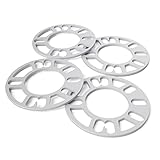
Overview: The glorider Universal Wheel Spacers deliver an ultra-affordable entry point into wheel offset adjustment. These 5mm spacers accommodate an extensive range of 4-lug and 5-lug bolt patterns from 98mm to 120mm PCD, covering numerous European and Asian vehicles. At just $16.99 for four pieces, the lightweight aluminum alloy construction provides subtle clearance improvements for brake calipers or suspension components without dramatically altering vehicle geometry.
What Makes It Stand Out: Few spacers match this universal compatibility in a single kit. The 5mm thickness solves minor interference issues while maintaining factory driving characteristics. The price point is virtually unbeatable, making professional-grade stance adjustments accessible to budget-conscious DIYers. This versatility allows the same set to potentially fit multiple vehicles in a household.
Value for Money: Exceptional base value, but hidden costs exist. Extended bolts/studs aren’t included and are frequently necessary. Professional installation is recommended, particularly for novices, adding $50-100 in labor. For experienced mechanics with proper tools, the total investment remains minimal. The spacers themselves represent outstanding value, but budget an extra $20-40 for hardware and factor in the critical re-torquing requirement after 25-50 miles.
Strengths and Weaknesses: Strengths include universal fitment, aircraft-grade aluminum construction, and rock-bottom pricing. Weaknesses center on safety protocols: mandatory re-torquing, potential need for extended hardware, and limited aesthetic impact due to minimal thickness. The thin profile reduces leverage on wheel bearings but also provides modest visual change. Installation demands precision and adherence to manufacturer torque specifications.
Bottom Line: Ideal for addressing minor clearance problems on a shoestring budget, but only for mechanically competent buyers who follow safety procedures religiously. The universal fit maximizes versatility, while the low price minimizes financial risk. Invest in quality extended bolts and professional assistance if uncertain.
7. maXpeedingrods 4PCS 6x5.5 Hubcentric Wheel Spacers 1.25 inch for Chevrolet Avalanche Blazer Express Silverado 1500 for GMC Savana Sierra Yukon 1992-2021, 6x139.7mm Spacers M14x1.5, 108 mm Hub Bore

Overview: The maXpeedingrods Hubcentric Wheel Spacers provide a 1.25-inch offset increase engineered specifically for Chevrolet and GMC full-size trucks and SUVs manufactured between 1992-2021. This four-piece set features a 6x5.5" (6x139.7mm) bolt pattern with M14x1.5 studs and 108mm hub bore. The hubcentric design centers precisely on the vehicle hub, minimizing vibration and reducing wheel bearing stress compared to lug-centric alternatives.
What Makes It Stand Out: Hubcentric construction ensures OEM-like fitment and ride quality, critical for heavy-duty applications. The moderate 1.25-inch thickness delivers noticeable stance improvement without overstressing suspension components. Covering nearly three decades of popular GM platforms eliminates guesswork for Silverado, Sierra, Yukon, and Tahoe owners seeking reliable fitment.
Value for Money: At $79.00, these occupy the mid-range pricing tier. The hubcentric design justifies the premium over universal spacers, offering superior stability for daily-driven trucks. While cheaper cast options exist, the vehicle-specific engineering provides confidence in long-term durability. However, the lack of detailed specifications requires buyers to verify material composition and stud grade directly with the manufacturer.
Strengths and Weaknesses: Strengths include hubcentric stability, appropriate thickness for full-size trucks, and extensive model compatibility. The 108mm hub bore matches most GM applications from this era. Weaknesses stem from sparse product details—material grade, stud certification, and finish quality aren’t specified. Buyers must confirm hub bore compatibility and likely purchase extended studs separately.
Bottom Line: A dependable choice for GM truck owners wanting moderate spacing with factory-style precision. The hubcentric design enhances safety and ride comfort, but contact the seller for complete specifications before purchasing. Budget for potential hardware upgrades and professional installation to ensure proper fitment.
8. KSP 5X5.5 Wheel Spacers for Ram 1500, 1.5(38mm) 5x139.7mm to 5x139.7mm Hub Centric Forged Wheel Spacers, Hub Bore 77.8mm Thread Pitch M14X1.5 for 2012+ Dodge Ram 1500, Package of 4Pcs Black

Overview: KSP’s 5X5.5 Wheel Spacers represent premium forged adapters engineered exclusively for 2012+ Dodge Ram 1500 trucks. These hubcentric spacers increase track width by 1.5 inches (38mm) using a precise 5x139.7mm bolt pattern with 77.8mm hub bore and M14x1.5 thread pitch. Constructed from forged 6061-T6 aluminum alloy with black anodized finish, they feature SGS-tested grade 10.9 geomet studs for maximum strength and durability in demanding applications.
What Makes It Stand Out: Forged construction distinguishes these from cast alternatives, delivering superior strength-to-weight ratio. The hubcentric design eliminates vibrations while reducing stress on lug nuts. KSP’s attention to safety details—providing thread locker and specific 85-95 ft-lb torque recommendations—demonstrates professional-grade engineering. The comprehensive 30-day refund and 12-month replacement warranty exceeds industry standards.
Value for Money: At $121.99, these command premium pricing that matches their exceptional quality. For Ram owners seeking significant stance improvement without compromising safety, the investment proves worthwhile. The forged aluminum and certified studs provide confidence for both daily driving and off-road use. This represents long-term value rather than initial savings, preventing costly failures associated with budget cast spacers.
Strengths and Weaknesses: Strengths include forged 6061-T6 construction, SGS-certified grade 10.9 studs, hubcentric precision, corrosion-resistant anodizing, and outstanding warranty support. The 1.5-inch thickness dramatically improves stability and allows aggressive tire fitment. The sole weakness is model exclusivity—these cannot be repurposed for other vehicles, limiting versatility.
Bottom Line: The definitive premium choice for Ram 1500 owners prioritizing safety and performance. Forged construction and certified components justify the higher price, making these spacers a wise investment for both daily drivers and serious off-road builds. Accept no compromises when safety is paramount.
9. EVIL ENERGY 6x5.5 Wheel Spacers Compatible with 1999-2024 Chevy Silverado 1500, 1.5"(38mm) 6x139.7mm Lug Centric Spacer for 1999-2022 GMC Sierra 1500, 78.1mm Wheel Adapter with M14x1.5 Studs Black

Overview: EVIL ENERGY’s 6x5.5 Wheel Spacers deliver a 1.5-inch offset solution for an extensive range of Chevrolet and GMC trucks and SUVs from 1999-2024. These lug-centric adapters feature 6x139.7mm bolt pattern with 78.1mm hub bore and M14x1.5 studs. Manufactured from 6061-T6 aircraft-grade aluminum billet using CNC automatic processing with anodized finish, they include 10.9-grade geomet bolts engineered to withstand heavy-duty applications without cracking or failure.
What Makes It Stand Out: Unprecedented vehicle compatibility spans over 25 years of GM products, making these ideal for multi-vehicle owners. The lug-centric design simplifies installation while the aircraft-grade aluminum ensures durability under harsh conditions. CNC machining guarantees consistent precision across production runs, maintaining tight tolerances essential for safe operation.
Value for Money: At $99.99 for four forged spacers, this represents compelling value. The extensive compatibility effectively provides multiple applications in one package, saving money for households with several GM vehicles. While priced below premium hubcentric alternatives, the quality materials and manufacturing processes maintain high performance standards for daily driving and moderate off-road use.
Strengths and Weaknesses: Strengths include massive vehicle compatibility, forged 6061-T6 construction, high-grade bolts, and competitive pricing. The 1.5-inch thickness significantly improves stability and corrects backspacing issues. Weaknesses involve the lug-centric design, which may transmit more vibration than hubcentric alternatives and places additional stress on wheel studs. Installation instructions lack detail regarding hub bore variances.
Bottom Line: An exceptional value for GM truck owners wanting 1.5-inch spacing across multiple vehicles. The versatility and quality materials outweigh minor compromises of lug-centric design. Verify your specific hub bore measurement before ordering and budget for professional installation to ensure proper torque sequence.
10. Orion Motor Tech 5x4.5 Wheel Spacers, 1 Inch Spacers with 1/2-20 Studs Compatible with Jeep Wrangler TJ YJ Grand Cherokee Ford Explorer Mustang Ranger, 82.5mm Center Bore Wheel Spacer Kit Set of 2

Overview: Orion Motor Tech offers these 5x4.5 wheel spacers as a two-piece kit of 1-inch adapters compatible with numerous Jeep and Ford vehicles from 1982-2018. Featuring a precision 60-degree taper for enhanced clamping force and unique removal slots on the rear face, these spacers utilize 1/2-20 studs with 82.5mm center bore. Constructed from T6 aircraft-grade aluminum with zinc-coated heat-treated bolts, they deliver moderate width increase while improving cornering stability and vehicle control.
What Makes It Stand Out: The innovative removal slots solve a universal frustration with stuck spacers, enabling easier maintenance and wheel changes. The 60-degree taper provides superior safety and clamping compared to flat-seat designs. Extensive compatibility covers iconic vehicles including Jeep Wranglers, Cherokees, and Ford Mustangs, appealing to enthusiasts across multiple platforms.
Value for Money: At $38.99 for two spacers, initial pricing seems attractive until recognizing most applications require four. Purchasing two kits totals nearly $78, reducing competitiveness. While the clever design features and quality materials justify some premium, the incomplete set size significantly diminishes overall value proposition compared to four-piece kits from competitors.
Strengths and Weaknesses: Strengths include premium T6 aluminum, heat-treated zinc-coated bolts, maintenance-friendly removal slots, and broad Jeep/Ford compatibility spanning 36 years. The 1-inch thickness offers subtle handling improvements without excessive stress. Weaknesses center on the insufficient set size—only two pieces forces additional purchase. The moderate thickness may prove inadequate for resolving serious clearance issues or achieving aggressive stance goals.
Bottom Line: High-quality engineering marred by incomplete packaging. Purchase only if you require spacers for a single axle application. Otherwise, invest in a complete four-piece kit to save money and ensure uniform vehicle appearance. The removal slots are genuinely useful, but not worth paying double for two separate purchases.
What Are Wheel Spacers and Why Do They Matter?
Wheel spacers are precisely machined discs that mount between your vehicle’s hub assembly and wheel, effectively increasing the track width by pushing the wheels further from the chassis. While many enthusiasts initially consider them purely for aesthetic purposes—creating that flush, aggressive look—professional mechanics understand their deeper functional value. They can correct offset issues when fitting aftermarket wheels, provide essential clearance for upgraded brake systems, and even improve stability by widening your vehicle’s stance.
The importance of proper selection cannot be overstated. These components bear the entire weight and dynamic loads of your vehicle, transferring forces through the wheel studs or bolts. A quality spacer acts as an extension of your hub, maintaining the same critical relationships between wheel, hub, and suspension components. A subpar spacer introduces new failure points, potentially separating your wheel from your vehicle at speed.
The Science Behind Wheel Spacers: How They Work
Understanding wheel spacers requires grasping basic suspension geometry principles. When you push a wheel outward, you’re altering the scrub radius—the distance between where your steering axis intersects the ground and the center of your tire’s contact patch. This change affects steering feel, torque steer, and how your vehicle responds to braking forces.
Additionally, spacers increase the lever arm acting on your wheel bearings. Every millimeter of spacing multiplies the forces transmitted through your bearings, accelerating wear if you exceed design limits. Quality spacers maintain hub-centricity, ensuring the wheel remains centered on the hub bore rather than relying solely on lug nuts or bolts for centering. This distinction separates safe, professional installations from dangerous DIY attempts.
Types of Wheel Spacers: Slip-On vs. Bolt-On
The wheel spacer market fundamentally divides into two categories, each serving different applications and safety requirements. Understanding which type your vehicle needs is your first critical decision.
Slip-On Spacers: Pros and Cons
Slip-on spacers, also called slide-on or push-on spacers, simply slide over your existing wheel studs and sit flush against the hub. Your original wheel bolts or lug nuts then thread through the wheel and spacer to secure everything. These typically range from 3mm to 20mm in thickness.
Advantages: They’re simpler, lighter, and generally less expensive. For minimal spacing needs (under 10mm), they often represent the cleanest solution. Installation is straightforward on vehicles with adequate stud length.
Disadvantages: They reduce the amount of thread engagement between your lug nuts and studs—a potentially fatal flaw. If your studs are too short, you’re essentially holding your wheels on with minimal thread contact. They also place all shear forces directly onto the studs rather than the hub, which violates the original engineering design of most vehicles.
Bolt-On Spacers: Pros and Cons
Bolt-on spacers (also called adapter spacers) come with their own set of studs pressed into the spacer body. You bolt the spacer to your hub using your original studs, then mount your wheel to the new studs on the spacer face. These typically start at 15mm and can exceed 50mm.
Advantages: They maintain proper thread engagement since you have full-length studs dedicated to the wheel. They also replicate the factory hub-centric design more effectively and distribute loads more appropriately across the hub assembly.
Disadvantages: They’re heavier, more expensive, and technically more complex to install. You must verify that the spacer’s stud pattern perfectly matches your hub, and that the new studs don’t interfere with your wheel’s mounting pad. They also increase unsprung weight more significantly.
Key Benefits of Installing Wheel Spacers
Beyond the visual appeal, properly selected wheel spacers deliver measurable performance advantages. Track width increases improve lateral stability, reducing body roll and enhancing cornering confidence. This wider stance lowers the roll center, making your vehicle feel more planted during aggressive maneuvers.
For enthusiasts upgrading to larger brake kits, spacers solve clearance issues where aftermarket calipers contact the inside of your wheel barrel. They also allow fitting wheels with incorrect offset, saving thousands on custom wheel purchases. Some drivers report improved steering response due to altered scrub radius, though this effect varies by vehicle geometry. Off-road enthusiasts use them to increase stability on uneven terrain and create space for larger, more aggressive tires.
Potential Drawbacks and Safety Concerns
Every benefit comes with trade-offs, and wheel spacers are no exception. The increased lever arm on wheel bearings accelerates wear, potentially halving bearing life with aggressive spacing. Your suspension geometry changes affect camber, toe, and caster settings, requiring professional alignment after installation.
Vibration issues plague improperly installed or non-hub-centric spacers, as wheels can sit slightly off-center. This creates harmonic imbalances that destroy ride quality and damage suspension components. Most critically, inadequate thread engagement or improper torque specifications can lead to lug nut loosening, wheel wobble, and catastrophic wheel separation.
Insurance companies may deny claims if they determine spacers contributed to an accident, and some jurisdictions have specific legal restrictions on track width modifications. Always check local regulations before installation.
Critical Measurements You Must Know Before Buying
Before spending a dollar, you need four precise measurements: bolt pattern, center bore diameter, stud thread pitch, and required spacing thickness. Your bolt pattern (e.g., 5x114.3mm) must match exactly—there’s no “close enough” in wheel hardware. Even a 0.5mm mismatch creates dangerous stress concentrations.
Measure your hub bore with a digital caliper; hub-centric spacers must match this diameter within 0.1mm for proper centering. Thread pitch varies even within the same manufacturer (Toyota uses M12x1.25 and M12x1.5), so verify your specific vehicle’s specification. For thickness, never exceed the available thread engagement—generally, you need at least 6-7 full turns of lug nut engagement, which translates to roughly 10-12mm of thread contact.
Material Matters: Aluminum vs. Steel vs. Composite
Material selection directly impacts strength, weight, and corrosion resistance. 6061-T6 billet aluminum dominates the performance market, offering excellent strength-to-weight ratio and natural corrosion resistance. Aircraft-grade 7075-T6 aluminum provides superior strength for extreme applications but costs significantly more.
Steel spacers, typically made from hardened chromoly, offer maximum strength but add substantial unsprung weight, negatively impacting ride quality and suspension response. They’re also prone to rust if not properly coated. Composite materials using reinforced polymers are emerging in the market, offering weight savings and corrosion immunity, but their long-term durability under high heat and load remains unproven for most street applications.
For 99% of applications, properly anodized 6061-T6 aluminum provides the optimal balance of properties. The anodizing prevents galvanic corrosion between the aluminum spacer and steel hub.
Hub-Centric vs. Lug-Centric: Making the Right Choice
This distinction separates safe installations from dangerous ones. Hub-centric spacers feature a precise lip that centers the spacer on your hub bore, then another lip that centers your wheel on the spacer. This maintains the factory load path, where the hub bears vehicle weight and shear forces while lug nuts simply clamp the assembly together.
Lug-centric spacers lack these centering lips, relying entirely on lug nuts to center the wheel. This places dangerous shear loads on the studs and creates alignment challenges. Even minor imperfections cause vibration and stud fatigue. Professional mechanics universally recommend hub-centric designs for any vehicle operating on public roads.
Verify both the inner diameter (hub bore) and outer diameter (wheel center bore) match your specific application. Some spacers offer interchangeable centering rings to accommodate multiple wheel sizes, providing flexibility for future wheel changes.
Installation Best Practices for Maximum Safety
Professional installation follows a specific protocol. First, thoroughly clean the hub mating surface with a wire brush, removing all rust, dirt, and old adhesive residue. Any debris creates uneven loading and potential for loosening. Apply a thin layer of anti-seize compound to the hub face—not the studs—to prevent galvanic corrosion and ensure future removal.
Torque specifications are critical and differ from factory wheel torque. Spacer manufacturers provide specific values for their products, typically ranging from 85-95 ft-lbs for most passenger vehicles. Use a calibrated torque wrench, never an impact gun, which can over-torque and stretch studs or under-torque, leading to loosening.
Torque in a star pattern, then re-torque after 50-100 miles of driving. This seating period allows components to settle. Check torque every oil change thereafter. For bolt-on spacers, apply medium-strength thread locker to the hub bolts, but never to wheel studs—wheel nuts must be removable for tire changes.
Legal and Insurance Considerations
Many jurisdictions regulate track width modifications. In the United States, most states allow spacers that keep tires within the fender wells, but some prohibit any modification that increases track width beyond factory specifications. European regulations are generally stricter, requiring TÜV certification for any spacer installation.
Insurance implications are equally serious. While spacers themselves aren’t illegal in most areas, failing to disclose modifications to your insurer can void coverage. Some insurers specifically exclude coverage for accidents where aftermarket modifications contributed to the loss. Before installation, obtain written confirmation from your insurance provider that spacers won’t affect your policy.
Document everything: purchase receipts, installation photos, torque specifications, and alignment reports. This documentation proves professional installation if questions arise after an incident.
Maintenance and Inspection Guidelines
Wheel spacers require more frequent inspection than factory wheels. Every 3,000 miles, perform a visual check for cracks, corrosion, or deformation. Look for discoloration around bolt holes, which indicates overheating from loose hardware. Check torque on all spacer and wheel bolts during this inspection.
Annually, remove the spacers completely to inspect the hub face for corrosion or damage. Clean all mating surfaces and reapply anti-seize. Examine the spacer’s centering lip for wear or deformation—any damage here requires immediate replacement. For vehicles seeing track use, inspect after every event.
Pay attention to changes in vibration, noise, or handling. A sudden onset of steering wheel shake often indicates a loose spacer or wheel. Don’t ignore these warning signs; pull over and inspect immediately rather than risking wheel separation.
Common Myths About Wheel Spacers Debunked
Myth: “Spacers are inherently dangerous.” Reality: Poor-quality spacers or improper installation cause failures, not the concept itself. OEM manufacturers use integrated spacers in many performance applications.
Myth: “They always cause bearing failure.” Reality: Moderate spacing (under 25mm) on properly engineered vehicles shows minimal bearing life impact. Excessive spacing without supporting modifications accelerates wear.
Myth: “Lug-centric is fine for daily driving.” Reality: Lug-centric designs place shear loads on studs, which they weren’t designed to handle. Hub-centric is the only professional standard.
Myth: “Thicker is always better for stance.” Reality: Exceeding 40mm without considering scrub radius and bearing loads creates dangerous handling characteristics and rapid component wear.
Myth: “You don’t need an alignment after spacers.” Reality: Even small spacing changes alter toe settings, which destroys tires quickly. Always align after installation.
Troubleshooting Common Issues
Vibration after installation almost always indicates improper centering. Remove the wheel and spacer, clean all surfaces thoroughly, and reinstall using a star pattern torque sequence. If vibration persists, check for wheel damage or have the assembly balanced with the spacer installed.
Wheel bolt loosening suggests inadequate torque, damaged threads, or incompatible hardware. Verify you’re using the correct thread pitch and that studs aren’t bottoming out in the nuts. For bolt-on spacers, ensure the spacer’s studs don’t contact your wheel’s mounting pad.
Rubbing issues after installation mean you need to measure clearance more carefully. Check both static clearance (vehicle stationary) and dynamic clearance (during suspension compression and steering lock). Remember that tires move relative to the body during cornering and braking—what clears when parked may rub aggressively on the road.
Frequently Asked Questions
1. How thick should my wheel spacers be for the perfect flush look? The ideal thickness depends entirely on your wheel offset, width, and body style. Measure the gap between your tire sidewall and fender lip at multiple points, then subtract 5mm for safety clearance. Most applications require 15-25mm for a flush appearance, but always measure rather than guess.
2. Will wheel spacers void my vehicle warranty? Spacers can affect specific warranties, particularly on suspension and drivetrain components. Under the Magnuson-Moss Warranty Act, manufacturers must prove the spacer caused the failure to deny coverage. However, dealerships often blame spacers for unrelated issues. Keep detailed installation records and consider consulting a lawyer if warranty claims are denied.
3. How do I know if my studs are long enough for slip-on spacers? Thread your lug nut onto the stud without the wheel or spacer. Measure how many turns it takes to seat against the hub. You need at least 6-7 full turns with the spacer and wheel installed. If you get fewer, you need extended studs or must switch to bolt-on spacers.
4. Can I use wheel spacers on my all-wheel-drive vehicle? Yes, but with extra caution. AWD systems are more sensitive to track width changes and bearing loads. Stay conservative with thickness (under 20mm) and always use hub-centric designs. Some manufacturers specifically advise against spacers on certain AWD models, so verify with your owner’s manual.
5. What’s the difference between spacers and wheel adapters? Spacers maintain your original bolt pattern while pushing wheels outward. Adapters change your bolt pattern (e.g., from 5x100 to 5x114.3) while also providing spacing. Adapters introduce additional failure points and should only be used when absolutely necessary, never for cosmetic reasons alone.
6. How often should I re-torque my spacer bolts? Re-torque after the first 50-100 miles, then every 3,000 miles or at each oil change. For track-driven vehicles, check torque before every event. Always use a calibrated torque wrench, never impact tools, and follow the manufacturer’s specific torque values.
7. Are hub-centric rings necessary if my spacers are already hub-centric? If both your spacer and wheel are properly hub-centric to your vehicle’s specifications, separate rings aren’t needed. However, if your wheel’s center bore is larger than the spacer’s outer lip, you’ll need adapter rings to maintain hub-centricity and prevent vibration.
8. Can spacers cause my wheels to fall off? Only with improper installation, poor quality components, or inadequate maintenance. Professional-grade hub-centric spacers, properly torqued and inspected regularly, are no more dangerous than factory wheels. The key is respecting engineering limits and maintenance schedules.
9. Do I need extended wheel studs for 10mm spacers? Usually yes. Most factory studs provide just enough thread for the factory wheel. A 10mm spacer typically leaves insufficient engagement. Measure your available thread length and compare to the spacer thickness plus required 10-12mm of thread engagement. When in doubt, install extended studs.
10. What’s the maximum safe spacer thickness for daily driving? For most passenger vehicles, 25mm represents the practical limit for daily use without compromising safety or accelerating wear excessively. Beyond this, you should consider wheels with proper offset instead. Always consult a suspension specialist who can evaluate your specific vehicle’s geometry and bearing capacity.