That pristine showroom shine can vanish in minutes when water spots etch their way into your clear coat. Whether you’re dealing with stubborn mineral deposits from sprinkler overspray or the aftermath of a rushed drying job, choosing the right water spot remover can mean the difference between flawless paint and permanent damage. The battle between acid-based and non-acid formulations isn’t just about cleaning power—it’s about chemistry, surface safety, and understanding exactly what you’re trying to remove from your vehicle’s delicate finishes.
As detailing enthusiasts know, not all water spots are created equal. Some wipe away with a quick detailer, while others bond chemically to your paint, requiring aggressive intervention. This comprehensive guide cuts through the marketing hype to explore the fundamental differences between acidic and non-acidic solutions, helping you make informed decisions that protect your investment while restoring that mirror-like finish you work so hard to maintain.
Top 10 Water Spot Removers
Detailed Product Reviews
1. Chemical Guys Heavy Duty Water Spot Remover Gel for Paint, Glass, and Metal - Safely Removes Mineral Stains and Water Marks from Cars, Trucks, Motorcycles, RVs, and More - 16 oz

Overview: Chemical Guys Heavy Duty Water Spot Remover Gel delivers professional-grade mineral stain elimination in a thick, clinging formula. This 16-ounce gel has earned its reputation among detailing professionals for tackling stubborn water spots on paint, glass, and metal surfaces. The specialized formulation targets calcium and magnesium deposits that create those frustrating chalky residues on your vehicle’s exterior.
What Makes It Stand Out: The gel consistency truly differentiates this product from liquid competitors. It adheres to vertical surfaces like doors and side panels, dramatically increasing dwell time for deeper penetration without constant reapplication. Its versatility across painted panels, chrome trim, aluminum, stainless steel, and exterior glass makes it an all-in-one solution. Additionally, the formula preps surfaces for waxes and sealants by removing contamination that inhibits bonding, effectively serving a dual purpose in your detailing workflow.
Value for Money: At $1.25 per fluid ounce, this product sits in the mid-range category. While not the cheapest option available, the gel’s efficiency means less product waste compared to runny liquids that drip away. The multi-surface capability eliminates the need for separate glass and metal cleaners, providing solid value for enthusiasts who regularly detail their vehicles.
Strengths and Weaknesses: Strengths include the clinging gel formula, safe composition for clear coats, impressive versatility, and surface preparation benefits. The primary weakness is the price point relative to volume. Some users may find it requires more manual agitation than chemical-action products, and results can vary based on water spot severity and how long stains have set.
Bottom Line: Chemical Guys Water Spot Remover Gel excels for dedicated car enthusiasts seeking a safe, versatile solution. It’s particularly valuable for those who follow multi-step detailing processes and appreciate surface preparation benefits.
2. Meguiar’s Water Spot Remover, Heavy Duty Water Spot Remover for Cars, Remove Water Stains and Polish Glossy Paint with a Versatile Clear Coat Safe Formula, 16 oz

Overview: Meguiar’s Water Spot Remover offers a dual-action solution that eliminates water stains while simultaneously polishing painted surfaces. This 16-ounce formula from one of car care’s most trusted names addresses spots caused by washing and environmental exposure. The clear coat-safe composition works on glossy painted surfaces, glass, chrome, and hard plastics, making it a versatile addition to any detailing arsenal.
What Makes It Stand Out: Unlike pure removers, this product enhances paint clarity and gloss as it works, essentially combining two steps into one. The flexibility of application methods sets it apart—use it by hand with a microfiber cloth for precision work, or pair it with a dual-action polisher for tackling larger areas efficiently. This adaptability serves both weekend warriors and professional detailers. The formula’s gentle polishing action restores brilliance to clear coat and single-stage paint without harsh abrasives.
Value for Money: At just $0.64 per fluid ounce, this represents exceptional value—the lowest cost per ounce among premium competitors. Meguiar’s reputation for reliable performance at accessible price points shines here. You’re getting a two-in-one product that reduces the need for separate polishes, maximizing your detailing budget.
Strengths and Weaknesses: Strengths include outstanding affordability, dual stain removal and polishing capability, versatile application methods, and trusted brand heritage. The formula is safe on all glossy finishes. Weaknesses include unsuitability for flat, matte, or satin finishes, and potentially less aggressive performance on severely etched or years-old mineral deposits compared to dedicated acidic removers.
Bottom Line: Meguiar’s Water Spot Remover is the smart choice for budget-conscious enthusiasts wanting professional results. It’s ideal for regular maintenance rather than heavy restoration projects.
3. Bioclean Hard Water Stain Remover 20.3 oz

Overview: Bioclean Hard Water Stain Remover brings industrial and commercial cleaning power to residential users in a convenient aerosol format. This 20.3-ounce eco-friendly formula targets years of hard mineral buildup, stains, and rust on windows, tile, and grout. While marketed for general hard water stain removal, its strength makes it capable of tackling automotive glass and metal surfaces.
What Makes It Stand Out: The aerosol delivery system provides uniform application without drips or runs, particularly useful for overhead surfaces like shower doors or tall windows. Its eco-friendly formulation appeals to environmentally conscious consumers who don’t want to compromise on cleaning power. The larger 20.3-ounce size offers more product than standard 16-ounce competitors, extending its utility across multiple cleaning projects beyond just vehicles.
Value for Money: At $0.82 per ounce, Bioclean sits in the middle of the price spectrum. The larger volume container means fewer replacements over time. However, its general-purpose design may require automotive users to purchase additional paint-specific products, potentially offsetting initial savings. It’s best viewed as a multi-surface household cleaner rather than a dedicated automotive solution.
Strengths and Weaknesses: Strengths include eco-friendly composition, industrial-strength performance, convenient aerosol application, and excellent value for large-area cleaning. The formula effectively removes years of buildup. Weaknesses include limited automotive surface testing compared to car-specific brands, potential overspray concerns in confined spaces, and lack of paint conditioning benefits found in dedicated car care products.
Bottom Line: Bioclean excels for homeowners needing a versatile hard water solution for bathrooms, windows, and occasional automotive glass use. Dedicated car enthusiasts should prioritize automotive-specific formulations.
4. Sud Factory Spotless X2 Upgraded Glass Hard Water Spot Remover for Cars, Shower Doors, Windows, Homes & Boats - 16oz

Overview: Sud Factory Spotless X2 positions itself as the ultimate water spot solution for virtually any surface imaginable. This 16-ounce formula commands premium pricing by promising professional-grade results on everything from automotive glass to shower doors, boats, appliances, and even toilet bowls. The advanced formula attacks mineral deposits, rust, soap scum, adhesives, and baked-on grime.
What Makes It Stand Out: Unmatched versatility defines this product—it’s truly a universal hard water stain remover rather than an automotive specialist. The claim of “permanent water spot removal” by breaking down mineral deposits at a molecular level distinguishes it from surface-level cleaners. Trusted by professional detailers, it transforms glass to “invisible-like clarity” with minimal effort and no specialized equipment required.
Value for Money: At $2.19 per fluid ounce, Spotless X2 is the most expensive option reviewed. This premium pricing reflects its professional-grade formulation and extraordinary versatility. For users battling severe, years-old stains across multiple surface types, it consolidates several specialty products into one. However, for routine automotive water spot maintenance, this represents significant overkill.
Strengths and Weaknesses: Strengths include incredible multi-surface capability, professional-strength performance, simple cloth-only application, and permanent stain removal claims. It eliminates the need for multiple specialty cleaners. Weaknesses center on the prohibitive cost for casual users, potential wastefulness on light-duty jobs, and lack of automotive-specific benefits like paint polishing or surface preparation.
Bottom Line: Spotless X2 suits professional detailers or homeowners with severe, widespread hard water issues across vehicles and property. Standard car owners should opt for more cost-effective automotive-specific solutions.
5. 3D Eraser Gel Water Spot Remover – Acidic Gel Formula for Hard Water Spots & Mineral Deposits – Safe for Paint, Glass, Chrome, Plastic & Metal - 16 oz

Overview: 3D Eraser Gel Water Spot Remover delivers an acidic gel formula engineered by detailers for detailers. This 16-ounce product leverages over 25 years of research and development to dissolve bonded minerals from clear coat, glass, chrome, and plastic surfaces. The brand’s professional heritage ensures a formulation that addresses real-world detailing challenges.
What Makes It Stand Out: The acidic gel chemistry provides aggressive action against stubborn calcium, magnesium, and mineral deposits while maintaining surface safety when used correctly. Unlike neutral pH products, this attacks stains at their source. The thick, clinging consistency maximizes dwell time on vertical surfaces, preventing waste and ensuring thorough penetration. The “by detailers, for detailers” philosophy means every aspect serves professional workflows.
Value for Money: Priced at $1.06 per ounce, 3D Eraser Gel offers excellent value for a specialized automotive product. The professional-grade formulation delivers results that rival more expensive options without the premium markup. The controlled gel application reduces product waste, stretching each bottle further than liquid alternatives.
Strengths and Weaknesses: Strengths include powerful acidic formula, excellent surface adhesion, multi-material safety, professional-grade results, and authentic detailing industry credibility. The gel stays where applied. Weaknesses include the acidic nature requiring careful handling and precise application, potential overkill on fresh water spots, and necessity to follow instructions meticulously to avoid damaging sensitive surfaces.
Bottom Line: 3D Eraser Gel is ideal for serious DIY detailers wanting professional results. Its automotive-specific design and powerful formulation make it perfect for tackling stubborn, bonded mineral deposits safely.
6. Adam’s Polishes Water Spot Remover - Hard Water Stain Remover for Glass, Shower Doors, Paint, Windows, Car Detailing | Calcium, Magnesium & Soap Scum Remover

Overview: Adam’s Polishes delivers professional-grade water spot removal with this acid-based formula designed for serious automotive enthusiasts. Manufactured in the USA, this 16-ounce bottle targets stubborn mineral deposits on paint, glass, metal, and trim. The chemistry neutralizes alkaline stains from calcium and magnesium while specialty surfactants lift contaminants from the surface, making it effective for both vehicles and household surfaces like shower doors.
What Makes It Stand Out: The thickened formula is a game-changer, clinging vertically to surfaces rather than running off, allowing precise application on door jambs and intricate trim. Unlike many competitors, it actively prepares surfaces for subsequent protection like waxes or ceramic coatings. The bold 110% satisfaction guarantee demonstrates exceptional confidence in the product’s performance, essentially making it risk-free for consumers who demand professional results.
Value for Money: At $1.06 per fluid ounce, this sits in the premium tier but justifies the cost through professional-strength performance and versatility across multiple vehicle surfaces. The concentrated nature means less product per application, offsetting the initial investment compared to weaker alternatives that require repeated treatments. For dedicated detailers, the time saved and results delivered validate every penny.
Strengths and Weaknesses: Strengths include the clingy viscosity for targeted cleaning, rapid mineral dissolution, multi-surface safety, and industry-leading guarantee. The acid-based composition, while effective, requires careful handling and protective gloves. Potential odor during application and the higher price point may deter casual users who only occasionally battle water spots.
Bottom Line: For dedicated detailers seeking professional results, Adam’s Polishes Water Spot Remover is a top-tier choice that delivers on its promises. The premium price buys proven chemistry and peace of mind.
7. Griot’s Garage Water Spot Remover for Car Detailing, Works on Paint, Chrome, Plastic Trim, Glass, and More, Professional-Grade, 10880, 22oz

Overview: Griot’s Garage brings its reputation for professional-grade detailing products to water spot removal with this 22-ounce spray bottle. Engineered to dissolve tough mineral deposits without harsh chemicals, this formula safely treats paint, chrome, plastic trim, and glass. The convenient spray design targets everything from broad windshields to intricate grille work and door jambs, making it a versatile addition to any car care arsenal.
What Makes It Stand Out: The patented formula delivers professional results while eliminating risk of surface damage, a common concern with acid-based removers. This safety-first approach makes it ideal for enthusiasts wary of aggressive chemicals. The spray application excels in hard-to-reach areas where gel formulas struggle, providing even coverage without manual spreading and reducing the chance of missed spots.
Value for Money: While pricing isn’t specified, Griot’s Garage typically commands premium rates justified by research-backed formulations and consistent performance. The 22-ounce quantity offers substantial coverage for multiple vehicles, representing solid value for regular users despite the brand’s upscale positioning. The cost-per-use remains low for those maintaining several cars.
Strengths and Weaknesses: Strengths include the no-harsh-substances formula, versatile surface compatibility, effortless spray application, and professional-grade efficacy. Weaknesses may include requiring longer dwell times than acid-based alternatives and potentially needing multiple applications for severe etching. The unspecified price makes direct value comparisons difficult for budget-conscious shoppers.
Bottom Line: Griot’s Garage Water Spot Remover is perfect for meticulous owners prioritizing surface safety and ease of use. It’s a reliable, user-friendly solution that trades aggressive chemistry for intelligent formulation.
8. PROJE’ Water Spot Remover - Neutralizes & Breaks Down Hard Water Spots - For Glass, Paint, Metal, Shower Doors, Car Detailing, & More - Can Be Used on Ceramic Coated Vehicles - 16 Fl Oz

Overview: PROJE’ offers a specialized water spot remover that balances effectiveness with surface safety, particularly for modern protected vehicles. This 16-ounce solution uses a mild acid formulation to break down chalky white residues from paint, metal, and glass without compromising existing protection layers. Its versatility extends beyond automotive to household applications, making it a dual-purpose cleaning solution for discerning users.
What Makes It Stand Out: This is one of the few removers explicitly safe for ceramic-coated vehicles, addressing a critical gap in the market. The formula neutralizes alkaline spots while preparing surfaces for fresh protection, creating a seamless maintenance workflow. Its ability to tackle everything from sprinkler stains to rain water deposits makes it exceptionally versatile for both garage and home use.
Value for Money: At $1.00 per ounce, PROJE’ undercuts many premium competitors while delivering comparable performance. The ceramic-coating compatibility adds significant value for owners of protected vehicles who would otherwise risk expensive reapplication. For general users, the dual automotive/home utility further stretches the investment across multiple cleaning tasks.
Strengths and Weaknesses: Strengths include ceramic-coating safety, fast-acting mild acid chemistry, multi-surface versatility, and excellent per-ounce pricing. Notable weaknesses are the unsuitability for anodized parts and the requirement for pre-cleaning before application, adding an extra step to the process. The milder formula may struggle with heavily etched spots that have baked onto surfaces over time.
Bottom Line: PROJE’ is the smart choice for ceramic-coated vehicle owners and value-conscious consumers. It provides specialized protection-friendly cleaning without the premium price tag.
9. Boat Bling Hot Sauce Premium Hard Water Spot Remover w/High-Gloss Wax Sealants, 32 oz.
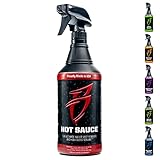
Overview: Boat Bling Hot Sauce redefines water spot removal by combining cleaning and protection in one 32-ounce bottle. Originally formulated for marine environments, this biodegradable solution tackles hard water spots, scum lines, and exhaust residue while simultaneously depositing high-gloss wax sealants. The spray-on, wipe-off application suits everything from boats to daily drivers, RVs, and motorcycles.
What Makes It Stand Out: The dual-action formula removes contaminants while adding protective wax layers, eliminating the need for separate protection steps. Unlike aggressive removers that strip existing wax, this enhances it with each use. The biodegradable, soft-water base makes it environmentally conscious, while the massive 32-ounce size dominates competitors and ensures you’re stocked for multiple detailing sessions.
Value for Money: At just $0.64 per ounce, this offers the best volume pricing in the category. The combination of removal and protection essentially provides two products for one price, while the large quantity handles numerous applications across multiple vehicles or watercraft. For frequent users, the cost-per-use is unmatched in the market.
Strengths and Weaknesses: Strengths include unmatched per-ounce value, wax-infused protection, biodegradable formula, versatility across vehicles, and surface-safe composition. Weaknesses involve the wax additive potentially interfering with subsequent ceramic coating applications and the marine-focused marketing that might deter pure automotive users. Heavily etched spots may require pre-treatment with a stronger remover.
Bottom Line: Boat Bling Hot Sauce is the value champion for maintenance cleaning, delivering protection and removal in one economical package. It’s ideal for regular use across diverse vehicles.
10. CLR Brands® Calcium, Lime & Rust Remover, Blasts Calcium, Dissolves Lime Deposits, Zaps Stubborn Rust Stains and Hard Water Deposits, 22 Ounce Spray Bottle (Pack of 1)

Overview: CLR Brands brings 40 years of household cleaning expertise to this EPA-certified Calcium, Lime & Rust Remover. While not automotive-specific, this 22-ounce spray tackles the same mineral deposits plaguing vehicles at a fraction of specialty product costs. The Safer Choice Program certification ensures no phosphates, ammonia, or bleach, making it a health-conscious option for garage and home use.
What Makes It Stand Out: The $0.24 per ounce price point demolishes automotive-specific competitors, making it irresistible for budget-conscious users. EPA certification provides confidence for environmental and health safety, while the multi-surface formulation handles everything from shower heads to vinyl siding. The trusted brand reputation spans generations, offering reliability that newer brands can’t match.
Value for Money: This represents unparalleled value, costing less than a quarter of premium automotive removers per ounce. For light to moderate water spots, performance rivals specialized products, making it a smart choice for casual detailers or those maintaining multiple vehicles on tight budgets. The dual household-automotive utility maximizes every dollar spent.
Strengths and Weaknesses: Strengths include unbeatable pricing, EPA Safer Choice certification, extreme versatility, fast-acting chemistry, and established brand trust. Weaknesses involve the non-automotive formulation potentially lacking lubricants for paint safety, possible harshness on delicate automotive surfaces, and marketing focused on household rather than vehicle use. Dilution may be necessary for sensitive clear coats.
Bottom Line: CLR is the budget champion for tackling water spots on vehicles and throughout the home. While not specialized, its value and safety certification make it a practical choice for cost-conscious consumers.
What Are Water Spots and Why Are They So Damaging?
Water spots are the mineral ghosts left behind when water evaporates from your vehicle’s surface. These aren’t just harmless residue—they’re concentrated deposits of calcium, magnesium, and other minerals that can permanently etch into your clear coat if left untreated. The damage occurs in stages: first as a superficial stain, then as a bonded contaminant, and finally as an etched crater that requires paint correction.
The real danger lies in their cumulative effect. Each water spot creates a microscopically rough surface that attracts more contaminants, accelerating the degradation of your protective layers. In hot climates, this process can happen in hours, not days. Understanding this progression is crucial because it determines whether you need the aggressive action of an acid-based remover or can rely on gentler non-acid alternatives.
The Science of Water Spot Formation on Automotive Surfaces
Water spots form through a process called mineral deposition. When hard water droplets sit on your paint, the water molecules evaporate, but the dissolved minerals remain. These minerals crystallize and bond to the surface through ionic attraction, creating a physical and chemical connection that’s stronger than many realize.
Temperature plays a critical role. A droplet baking in the sun can reach temperatures exceeding 150°F, accelerating evaporation and creating a more concentrated mineral deposit. The pH of the water source matters too—alkaline water (common in many municipal systems) leaves more stubborn deposits than neutral or slightly acidic water. This scientific understanding directly influences which type of remover will be most effective for your specific situation.
Acid-Based Water Spot Removers: Power and Precision
How Acidic Formulas Work at the Molecular Level
Acid-based removers operate through chemical dissolution. The acidic molecules donate protons that break the ionic bonds between mineral deposits and your paint surface. This chelation process literally dissolves calcium and magnesium compounds, turning solid deposits into soluble salts that rinse away. The lower the pH, the more aggressive this reaction becomes.
Types of Acids Used in Automotive Cleaners
The detailing world employs several acid types, each with specific characteristics. Sulfuric acid-based cleaners offer maximum strength for severe etching but require extreme caution. Hydrofluoric acid derivatives provide targeted mineral removal with less surface aggression. Gentler options like citric acid and oxalic acid deliver moderate cleaning power with improved safety profiles. Understanding these distinctions helps you match the acid strength to your contamination level without risking clear coat damage.
Non-Acid Water Spot Removers: Gentle Yet Effective
The Science Behind Non-Acid Formulations
Non-acid removers rely on physical and chemical mechanisms other than pH reduction. They use surfactant technology to penetrate beneath deposits, while alkaline builders soften mineral bonds. Some formulations incorporate nano-abrasives that polish away spots without dissolving them chemically. These products often work more slowly but carry significantly lower risk to sensitive surfaces.
When Gentle Cleaning Is the Smarter Choice
Non-acid solutions excel on fresh water spots, lightly contaminated surfaces, and delicate materials like matte finishes, vinyl wraps, and window tint. They’re also ideal for maintenance washing when you notice spots forming but haven’t reached the etching stage. If you’re dealing with weekly sprinkler mist rather than months of baked-on well water residue, non-acid removers provide sufficient cleaning power while preserving your wax or sealant layers.
Acid vs. Non-Acid: A Side-by-Side Comparison
The fundamental difference lies in their attack strategy. Acid removers chemically dissolve minerals, working from the inside out. Non-acid products break the physical bond or mechanically remove deposits, working from the outside in. This distinction affects everything from application time to safety requirements.
Acid-based formulas typically show results in 30-90 seconds of contact time, while non-acid products may require 2-5 minutes of dwell time plus gentle agitation. Acid removers demand immediate neutralization and thorough rinsing, whereas many non-acid formulas can be wiped off without extensive rinsing. The trade-off is power versus patience, with your vehicle’s specific needs dictating the right choice.
Critical Factors for Choosing the Right Remover
Surface age and condition should drive your decision. A brand-new ceramic-coated vehicle demands different care than a ten-year-old daily driver with thinning clear coat. The severity and age of the spots matter—fresh spots from yesterday’s rainstorm respond to gentle treatment, while year-old etching from a sprinkler system needs chemical aggression.
Your local water hardness level provides clues about deposit composition. Extremely hard water (over 180 ppm) creates dense, stubborn spots that often require acid intervention. Moderately hard water (60-120 ppm) typically responds to non-acid treatments. Testing your water source with inexpensive strips can guide your product selection before you ever start cleaning.
Surface-Specific Considerations for Different Materials
Painted surfaces with factory clear coats can tolerate both acid and non-acid removers when used correctly, but the clear coat thickness varies by manufacturer. Japanese imports often have thinner clear coats requiring gentler approaches. German vehicles typically sport robust clear coats that can handle more aggressive treatment.
Glass surfaces are surprisingly resilient and respond well to acid-based removers, but avoid ammonia-based cleaners that can damage window tint. Chrome and polished metal trim require extreme caution—acids can cause irreversible pitting and discoloration. Plastic trim and rubber seals should be protected from all chemical removers, as they can cause fading and degradation over time.
Application Techniques for Professional Results
Temperature and environmental conditions dramatically affect performance. Work in the shade with surface temperatures between 60-80°F. Hot surfaces cause rapid evaporation, leaving product residues and increasing chemical reaction rates beyond safe levels. Cold surfaces slow chemical activity and reduce effectiveness.
The two-bucket method isn’t just for washing—apply your remover with one microfiber applicator, then immediately follow with a clean, damp cloth from a separate bucket to neutralize and remove residue. This prevents recontamination and ensures complete removal. For acid-based products, keep a spray bottle with distilled water and baking soda solution (pH neutralizer) ready for immediate response to any drips or overspray.
Safety Protocols: Protecting Yourself and Your Vehicle
Acid-based removers demand comprehensive personal protective equipment: chemical-resistant nitrile gloves, safety glasses with side shields, and a respirator rated for acid vapors. Never work without adequate ventilation, and keep a neutralizing agent like baking soda or ammonia solution nearby for spills.
For your vehicle, mask off all adjacent surfaces with painter’s tape and plastic sheeting. Cover rubber trim, plastic badges, and especially adjacent panels you aren’t treating. A single drip of acid-based remover on a waxed surface creates a permanent dull spot. Work in small sections no larger than 2’x2’ to maintain control and prevent product drying.
Environmental Impact and Eco-Friendly Options
Acid-based cleaners, even when biodegradable, can harm local water systems if not properly contained. The neutralization process creates salts that affect pH balance in storm drains. Many municipalities prohibit washing vehicles with chemical cleaners on impervious surfaces without capture systems.
Non-acid formulations generally present lower environmental risk, with many brands offering plant-based surfactants and phosphate-free formulas. Waterless water spot removers that encapsulate minerals without rinsing represent the cutting edge of eco-conscious detailing, though their effectiveness on severe etching remains limited. Consider your local regulations and environmental values when selecting a product category.
Understanding Concentration Levels and Dilution Ratios
Professional-grade acid removers often arrive as concentrates requiring dilution. A typical starting ratio might be 1:10 (product to water) for light contamination, increasing to 1:4 for severe etching. Never exceed manufacturer recommendations—stronger isn’t always better and can cause irreversible clear coat damage.
Non-acid concentrates work differently, with dilution affecting dwell time rather than chemical aggression. A 1:20 dilution might require 5 minutes of contact time, while a 1:10 ratio works in 2 minutes. Always test your dilution on an inconspicuous area like the inside of a door jamb before committing to the entire hood or roof.
The Role of pH Balance in Water Spot Removal
pH isn’t just a number—it’s a direct indicator of chemical behavior. Acid removers typically range from pH 1.5 to 3.5, with lower numbers indicating stronger mineral dissolution capacity. Non-acid products usually sit between pH 7 and 9, using alkalinity to soften deposits rather than dissolve them.
Your vehicle’s surfaces have pH tolerances. Clear coats stabilize around pH 5.5-7.0. Exposing them to pH levels below 2.0 for extended periods breaks down cross-linking in the polymer structure, leading to premature failure. This is why dwell time limits are critical with acid-based products—chemical reaction doesn’t stop until you neutralize and rinse.
Preventing Water Spots: Proactive Measures
The best water spot remover is prevention. A quality ceramic coating or polymer sealant creates a sacrificial layer that minerals bond to instead of your clear coat. These protective layers are easier to clean and can withstand stronger chemicals without damage. Reapply sealants every 3-4 months in hard water areas.
Drying technique matters more than product choice. Use a forced-air dryer or plush microfiber towels with a drying aid that adds lubrication and protection. Never let tap water air-dry on your vehicle, even if it looks clean. Install a water deionizer or reverse osmosis system for your final rinse to eliminate mineral content at the source.
Common Application Mistakes That Cause Damage
Over-application is the number one error. Applying acid-based remover to an entire panel instead of working in small sections allows product to dry, increasing etching risk. The second mistake is inadequate rinsing—mineral salts left behind create new spots that are often worse than the original contamination.
Aggressive scrubbing ranks third on the damage list. Let the chemistry do the work. If a spot requires heavy pressure, either the product isn’t strong enough or the etching is too severe for chemical removal alone. In these cases, switch to a clay bar or light polishing compound rather than risking clear coat failure through abrasive action.
Maintaining Your Vehicle’s Finish Long-Term
Water spot removal shouldn’t be a monthly ritual. If you’re constantly battling spots, your protection strategy is failing. After successfully removing spots, immediately apply a sealant or wax to the treated area. The cleaning process strips existing protection, leaving bare clear coat vulnerable to immediate recontamination.
Create a maintenance schedule based on your environment. Daily drivers in hard water areas need weekly quick detailing with a water spot remover diluted for maintenance. Garage-kept weekend cars might only need quarterly treatment. Track your results in a detailing journal—note the water source, spot severity, product used, and outcome to refine your approach over time.
Frequently Asked Questions
1. Can I use household vinegar as a water spot remover on my car?
While white vinegar (acetic acid) can dissolve light mineral deposits, it’s unpredictable on automotive surfaces. Its pH varies by brand, and it contains no surfactants or lubricants, increasing the risk of micro-marring. Dedicated car care products include buffering agents and surface protectants that vinegar lacks. For a cheap DIY solution, you’re better off with a properly formulated non-acid car water spot remover.
2. How do I know if a water spot has etched into my clear coat?
Do the baggie test: Spray the area with water and rub gently with your finger inside a plastic bag. If you feel a noticeable bump or texture, the spot has etched below the surface. Superficial deposits feel smooth. Etched spots require polishing after chemical treatment, while surface deposits remove completely with the right remover.
3. Will water spot removers strip my ceramic coating?
Non-acid removers are generally safe for ceramic coatings and may even rejuvenate them by removing mineral buildup. Acid-based removers can degrade the coating’s top layer with repeated use. If you must use an acid remover on a coated vehicle, limit dwell time to 30 seconds, use the weakest effective dilution, and reapply a ceramic booster immediately after.
4. What’s the maximum safe dwell time for acid-based removers?
Never exceed 90 seconds for most consumer-grade acid removers. Professional formulas may require only 30-60 seconds. The moment you see the deposit dissolving, begin rinsing. Set a timer—don’t guess. Extended exposure doesn’t improve results but exponentially increases clear coat damage risk.
5. Can water spot removers fix windshield wiper streaking?
Often, yes. Wiper streaking frequently results from mineral buildup on glass that smears when wet. A non-acid glass-specific water spot remover can dissolve these deposits without harming wiper blades. If streaking persists after treatment, your wiper blades are likely worn and need replacement, not cleaning.
6. Are acid-based removers safe for matte paint finishes?
Absolutely not. Matte finishes lack the clear coat that protects glossy paint from chemical aggression. Acids will permanently alter the flat texture, creating shiny spots that cannot be repaired. Use only pH-neutral, non-acid cleaners specifically labeled safe for matte finishes, and always test in a hidden area first.
7. How often should I use water spot remover on my daily driver?
For maintenance, once a month is typical for hard water areas. For treatment of existing spots, only as needed. Overuse of any chemical cleaner accelerates clear coat wear. If you’re reaching for water spot remover weekly, upgrade your protection strategy with a stronger sealant or change your washing and drying routine to prevent spots from forming.
8. Do I need to clay bar before using water spot remover?
For fresh water spots, no. For old, bonded contamination, yes. Claying first removes surface debris, allowing the remover to contact the mineral deposit directly. Skipping clay on contaminated paint reduces remover effectiveness and can trap grit that causes scratching during application. Think of clay as preparation that makes your chemical treatment more efficient.
9. What’s the difference between water spot remover and descaler?
Descalers are industrial-strength acid concentrates designed for equipment cleaning, not automotive surfaces. They lack the buffering agents, lubricants, and corrosion inhibitors found in car-specific water spot removers. Using descaler on your vehicle guarantees clear coat damage, plastic degradation, and potential metal etching. Always use automotive-formulated products.
10. Can I apply water spot remover in direct sunlight?
Only if you enjoy gambling with your paint finish. Direct sunlight heats panels to 150°F+, causing instant product evaporation and uneven chemical reactions. This creates new spots, streaks, and potential etching. Always work in shade or indoors. If shade isn’t available, wash early morning or late evening when surfaces are cool to the touch.