That mesmerizing depth—that’s what sold you on metallic paint in the first place. Those tiny aluminum flakes suspended in rich pigment create a finish that seems to shift and shimmer under every passing light. But here’s what the dealership didn’t tell you: that stunning effect is also a magnet for every swirl, scratch, and water spot, and standard car wax might be doing more harm than good. Metallic paint doesn’t just reflect light differently—it demands a completely different approach to protection and enhancement.
Choosing the right wax for metallic paint isn’t about grabbing the most popular bottle on the shelf. It’s about understanding how formulation, application technique, and maintenance intervals work together to either amplify that three-dimensional brilliance or mute it into a dull, lifeless finish. Whether you’re a weekend warrior obsessed with that showroom shine or simply want to protect your investment, this guide breaks down everything you need to know about selecting and using car wax on metallic paint—without the brand bias or marketing fluff.
Top 10 Car Wax For Metallic Paint
Detailed Product Reviews
1. Car Gods Iris Custom Color Silver 3-in-1 Polish Wax Color Restorer & Scratch Remover, 16 Colors Available, 17 Fl Oz

Overview: Car Gods Iris delivers a specialized 3-in-1 solution for silver and gray vehicle owners seeking to restore faded paintwork while adding protection. This 17-ounce formula combines color-restoring pigments with fine cleaning minerals and carnauba wax, targeting the unique challenges metallic silver finishes face over time. Designed as a single-step treatment, it aims to eliminate light scratches, oxidation, and dullness while depositing protective silver pigments.
What Makes It Stand Out: The silver-specific pigment infusion sets this apart from generic waxes, actually replenishing lost color rather than just masking imperfections. The integrated fine cleaning minerals work like a mild polish, physically removing oxidation and light scratches before the carnauba wax seals the surface. This eliminates the need for separate polishing and waxing steps. The hydrophobic protective layer repels water and contaminants, keeping silver paint cleaner longer while enhancing its characteristic metallic sparkle with genuine silver micro-pigments.
Value for Money: At $24.84 for 17 ounces, this specialized treatment sits in the mid-range for premium color-specific waxes. While more expensive than basic carnauba waxes, it replaces three separate products (polish, pigment restorer, wax), offering cost savings for silver car owners. Comparable professional-grade color restorers often exceed $30, making this a reasonable investment for targeted paint care.
Strengths and Weaknesses: Strengths include genuine 3-in-1 convenience, silver-specific pigment technology, effective light scratch removal, and durable hydrophobic protection. The fine cleaning minerals provide real corrective action rather than purely cosmetic benefits. Weaknesses involve limited applicability (silver/gray cars only), potential for uneven application on larger panels, and the 17-ounce quantity may only cover 3-4 applications for SUVs. It may also be too abrasive for newer, well-maintained clear coats.
Bottom Line: Car Gods Iris is an excellent specialized solution for silver vehicle owners dealing with oxidation and minor paint defects, offering genuine restoration in a single step. Skip it if your silver paint is already in pristine condition.
2. WEICA Car Wax for Light & Metallic Cars | White, Silver, Pearl | Anti-Yellowing Carnauba | 90° Water Beading & UV Shield

Overview: WEICA’s specialized formula addresses the Achilles’ heel of light-colored and metallic vehicles: yellowing and haze formation. Tailored specifically for white, silver, and pearl finishes, this carnauba-based wax neutralizes discoloration while amplifying metallic flake brilliance. The quick-application paste transforms from white tint to transparent, promising a streak-free finish in approximately five minutes for time-conscious detailers.
What Makes It Stand Out: The anti-yellowing clarity technology directly combats UV-induced haze that plagues light paints, restoring original brightness rather than just adding surface shine. Its metallic flake enhancer uniquely optimizes the reflective properties of silver and ice gray paints, making metallic particles appear more vibrant. The 90° water beading contact angle demonstrates serious hydrophobic performance, while the UV Shield Technology provides proactive oxidation resistance beyond standard carnauba formulations.
Value for Money: Priced at $23.97, this 180-gram paste offers competitive value for a color-specific, dual-action treatment. While premium generic waxes cost $15-20, they lack the anti-yellowing chemistry and metallic enhancement. Professional yellowing correction services can cost hundreds, making this preventative approach economically smart for owners of susceptible light-colored vehicles.
Strengths and Weaknesses: Major strengths include targeted anti-yellowing chemistry, metallic paint optimization, rapid application, strong UV protection, and impressive water beading performance. The color-matched paste prevents white residue in crevices. Weaknesses include niche applicability (light colors only), paste format requiring more elbow grease than liquid alternatives, and 180g size limiting coverage to approximately 4-5 midsize vehicles per container. It may not conceal deeper scratches.
Bottom Line: WEICA’s light-color specialist wax is a must-have for white, silver, or pearl car owners battling yellowing, delivering preventative care and aesthetic enhancement in a time-efficient package.
3. Black Gold Car Wax with Pad Solid Auto Carnauba Cars Care Polish Cleaner Waxing Repair Scratches Ceramics Coating for Black Cars 300g with Free Waxing Sponge, 10.6oz

Overview: Black Gold positions itself as a durable solid wax solution exclusively for black vehicles, combining Brazilian carnauba with urethane resin for extended protection. This 300-gram (10.6-ounce) block promises three months of durability versus one month for typical liquid waxes, while incorporating scratch-repairing capabilities. The included application sponge adds immediate value for users starting their detailing journey.
What Makes It Stand Out: The solid wax format’s extended longevity is the primary differentiator, reducing application frequency by two-thirds. The urethane resin infusion provides ceramic-like hardness and scratch-filling properties uncommon in traditional carnauba products. Its versatility extends beyond paint to tire dressing applications, offering multi-surface utility. The waterproof and UV-resistant barrier formulation specifically combats the fading and water spotting that disproportionately affect black finishes.
Value for Money: At $20.99 for 300g with a free sponge, this represents exceptional value in the specialty wax category. Solid waxes typically command $25-35, and the urethane resin addition provides ceramic-coating benefits at a fraction of professional ceramic prices. The three-month durability significantly reduces annual product consumption, saving money long-term despite modest upfront cost.
Strengths and Weaknesses: Strengths include outstanding durability, scratch-repairing urethane resin, UV and water protection, generous quantity, included accessories, and versatility for tires. The solid format prevents spills and allows precise application control. Weaknesses involve black paint exclusivity, requiring more physical effort than liquid waxes, potential for uneven coverage in inexperienced hands, and longer drying times. Over-application can create difficult-to-remove residue on trim.
Bottom Line: Black Gold offers unbeatable value and durability for black car owners seeking ceramic-like protection without professional pricing, making it ideal for budget-conscious enthusiasts prioritizing longevity.
4. Car Gods Black Carnauba Wax Polish, Pigmented Formula 3 in 1 Removes Surface Oxidation, Blemishes and Minor Scratches, 17 Fl Oz

Overview: Car Gods Black Carnauba Wax extends the brand’s 3-in-1 philosophy to the black car market, offering restoration, pigmentation, and protection in a single 17-ounce liquid formula. Engineered for all black paint variations—including metallic, pearlescent, and xirallic—it targets oxidation, blemishes, and minor scratches while depositing black pigments. This professional-grade solution addresses the unique challenges of maintaining depth and richness in black finishes.
What Makes It Stand Out: The universal compatibility with sophisticated black paint systems (including xirallic) demonstrates advanced formulation chemistry rarely seen in consumer products. The integrated fine cleaning minerals provide genuine paint correction capability, removing surface defects before sealing, which distinguishes it from purely cosmetic glazes. The pigmented formula actively restores faded black paint by replenishing lost color pigments rather than temporarily masking them with dark oils.
Value for Money: At $21.26 for 17 ounces, this professionally-oriented product offers strong value for black vehicle enthusiasts. Competing black-specific correction systems often require separate polish ($15-20) and wax ($20-25) purchases. This 3-in-1 approach consolidates costs while delivering professional results, undercutting many boutique black waxes priced at $30+ for similar volumes.
Strengths and Weaknesses: Key strengths include comprehensive paint type compatibility, genuine corrective action through cleaning minerals, hydrophobic carnauba protection, and pigment restoration technology. The liquid format ensures easy, even application across large panels. Weaknesses include black-only specialization, potential for pigment buildup on trim if not carefully taped, 17-ounce quantity limiting coverage, and the abrasive cleaning minerals may be unnecessary for newer vehicles with minimal defects.
Bottom Line: Car Gods Black is a professional-caliber solution for black car owners needing genuine paint correction and color restoration, best suited for vehicles showing signs of oxidation and wear.
5. WEICA Car Wax for Red, Orange & Warm Color Paints | Sun Fade Defender & Metallic Pop | 180g Paste

Overview: WEICA’s warm-color specialist addresses sun fading and color dullness in red, orange, and warm-toned vehicles through light-optimizing pigment technology. This 180-gram paste formulation intensifies base color while amplifying metallic and pearl flake visibility, creating a multi-dimensional finish. The UV-filtering shield provides proactive fade prevention, crucial for notoriously sun-sensitive red pigments that oxidize faster than other colors.
What Makes It Stand Out: The light-optimizing pigment chemistry uniquely enhances warm color wavelengths, making reds appear richer and oranges more vibrant rather than simply adding generic gloss. The 90°+ HydroBead Shield achieves elite water repellency that exceeds many ceramic-infused waxes, actively preventing water spot etching on dark warm colors where spots are most visible. The metallic flake pop engineering specifically targets the light-reflective properties of pearl and metallic warm paints, creating depth conventional waxes cannot replicate.
Value for Money: Priced at $23.97 for 180g, this premium warm-color treatment competes directly with boutique color-enhancing waxes. While generic carnauba waxes cost less, they lack the UV fade defense and color-optimizing technology critical for maintaining red and orange vehicles. Professional color correction for faded red paint can exceed $500, making this preventative wax a financially prudent choice for warm-color car owners.
Strengths and Weaknesses: Strengths include specialized warm-hue enhancement, superior UV protection, exceptional water beading, streak-free color-matched application, and included accessories. The paste format allows controlled, precise application. Weaknesses involve extremely limited color applicability, requiring paste wax application technique, 180g quantity covering only 4-6 applications, and inability to correct deep scratches or severe oxidation. The color-specific formula offers no benefits for cool-toned vehicles.
Bottom Line: WEICA’s warm-color wax is essential for red and orange vehicle owners prioritizing color vibrancy and fade prevention, delivering specialized protection that generic products simply cannot match.
6. HS UltraGloss Carnauba Color Match Car Polish with PTFE results. The Professional Choice. 10 oz (1 PACK, SILVER)

Overview: The HS UltraGloss Carnauba Color Match Car Polish targets silver vehicle owners seeking professional-grade results. This 10-ounce formula combines carnauba wax with PTFE technology, promising durable protection and a high-gloss finish. Designed specifically as a touch-up solution, it addresses minor scratches and scuffs while providing UV protection for long-lasting shine.
What Makes It Stand Out: The PTFE infusion sets this apart from standard carnauba polishes, creating a slicker, more durable barrier against contaminants. Its precision color-matching for silver paintwork ensures seamless blending, making it ideal for spot treatments rather than full-vehicle applications. The “Professional Choice” branding suggests body shop-quality results in a consumer-friendly package.
Value for Money: At $11.99 ($1.20 per ounce), this polish offers excellent value for targeted touch-ups. It’s significantly cheaper than professional detailing services for minor blemishes. The 10-ounce size is perfect for occasional use without waste, though frequent users may find it small compared to 16-ounce competitors.
Strengths and Weaknesses: Strengths include impressive UV protection, easy application for small areas, PTFE-enhanced durability, and cost-effective scratch concealment. The carnauba base provides warm depth to silver finishes. Weaknesses are its limited silver-only formulation, small quantity for full-vehicle use, and inability to correct deeper paint damage. It functions better as a maintenance product than a comprehensive restoration solution.
Bottom Line: For silver car owners prioritizing convenient scratch touch-ups and lasting protection, the HS UltraGloss delivers professional results at a DIY price. It’s best suited for maintaining appearance between major details.
7. T-Cut Gray Scratch Remover Color Fast Paintwork Restorer Car Polish - 17 Fl Oz 13 Colours Available

Overview: T-Cut’s Color Fast Scratch Remover represents a versatile solution for multi-color households, offering 13 color options in a substantial 17-ounce bottle. This 3-in-1 product cleans, restores, and waxes simultaneously, utilizing advanced polymers and pigmented resins to address oxidation, blemishes, and minor scratches across most paint finishes, including metallics.
What Makes It Stand Out: The extensive color palette is the primary differentiator, ensuring precise matching for virtually any vehicle. The Triplewax shine technology promises lasting gloss, while the advanced polymer formula works effectively on surface imperfections without harsh abrasives. Its compatibility with metallic paints addresses a common weakness in color-matched polishes.
Value for Money: Priced at $21.41 ($1.26 per ounce), the larger volume offers reasonable value, especially for households with multiple vehicles of different colors. Eliminating the need for separate cleaners, polishes, and waxes provides additional cost savings, though dedicated products may outperform it in specific areas.
Strengths and Weaknesses: Major strengths include the unmatched color selection, generous quantity, proven T-Cut brand reputation, and effective metallic paint performance. The all-in-one convenience saves time and storage space. Weaknesses involve compromise performance compared to specialized single-function products, potential color-matching inconsistencies on custom paints, and a learning curve to achieve optimal results without streaking.
Bottom Line: T-Cut Color Fast excels as a versatile, cost-effective maintenance solution for families with diverse vehicle colors. It’s ideal for regular upkeep rather than severe restoration projects.
8. Formula 1 Color Wax Liquid for Silver Cars, Gives Ceramic Water Beading Protection and Ultimate Shiny Finish, Fills Minor Scratches with Color-Match Pigment, 16 oz

Overview: Formula 1’s Color Wax Liquid leverages modern ceramic SiO2 technology specifically for silver vehicles, delivering professional-grade protection in a 16-ounce bottle. This advanced formula bonds molecularly with paint surfaces, offering superior durability over traditional waxes while incorporating color-matching pigments to rejuvenate faded silver finishes and fill minor scratches.
What Makes It Stand Out: The ceramic water beading performance rivals professional coatings at a fraction of the cost. Color-matching pigments specifically engineered for silver paintwork provide noticeable color enhancement, while the SiO2 formulation creates a slick, contaminant-resistant surface. The brand’s 30-year legacy adds trustworthiness to its claims.
Value for Money: At $19.99 for 16 ounces, this product positions itself as an affordable ceramic alternative. Professional ceramic treatments cost hundreds of dollars, making this an exceptional value for enthusiasts seeking advanced protection without professional application costs. The liquid formula ensures efficient coverage.
Strengths and Weaknesses: Strengths include outstanding water beading, impressive UV protection, easy hand or machine application, and genuine color restoration for silver paint. The ceramic bond provides months of protection versus weeks for carnauba. Weaknesses include its silver-only limitation, potential for fabric staining requiring careful handling, and the need for thorough surface prep to maximize bonding.
Bottom Line: For silver car owners wanting ceramic coating benefits with color correction, Formula 1 delivers exceptional performance and value. It’s a smart upgrade from traditional waxes.
9. Car Gods Iris Custom Color Black 3-in-1 Polish Wax Color Restorer & Scratch Remover, 16 Colors Available, 17 Fl Oz

Overview: Car Gods Iris Custom Color Black offers a premium 3-in-1 solution combining polish, wax, and color restoration in a 17-ounce format. Specifically formulated for black vehicles, it employs tiny black pigments and fine cleaning minerals to address oxidation, light scratches, and blemishes while depositing a protective carnauba wax layer that enhances hydrophobic properties.
What Makes It Stand Out: The sophisticated 3-in-1 approach eliminates multiple product purchases, while the precision black pigments provide deeper color restoration than generic polishes. The hydrophobic carnauba layer repels water and dirt effectively, keeping black paint cleaner longer. Fine mineral abrasives offer gentle yet effective defect removal without compromising clear coat integrity.
Value for Money: At $24.84, this commands a premium price but justifies it through comprehensive functionality. The 17-ounce volume and multi-purpose design reduce the need for separate compounds, polishes, and waxes, ultimately saving money for dedicated enthusiasts. However, budget-conscious buyers may prefer separate, cheaper specialized products.
Strengths and Weaknesses: Strengths include exceptional convenience, impressive black color enhancement, durable hydrophobic protection, and effective light scratch removal. The deep gloss finish rivals professional results. Weaknesses involve the higher cost, potential for pigment transfer if over-applied, and limited effectiveness on severe scratches requiring dedicated compounds.
Bottom Line: Car Gods Iris is ideal for black car owners seeking a streamlined, high-quality maintenance routine. Its premium formulation justifies the cost for those valuing convenience and professional aesthetics.
10. Turtle Wax Hybrid Solutions Ceramic Acrylic Black Car Polish and Wax, Car Scratch Remover & Car Paint Restorer for Black Cars, Deep Shine, Ceramic Coating Protection & Water Beading, 14 oz (Pack of 1)
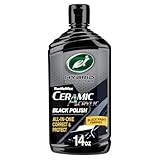
Overview: Turtle Wax Hybrid Solutions Ceramic Acrylic Black Car Polish and Wax merges ceramic polymers with acrylic infusion in a 14-ounce bottle designed specifically for black, dark blue, and charcoal vehicles. This innovative formula addresses light scratches, swirl marks, and paint imperfections while delivering ceramic coating benefits and UV protection in one application step.
What Makes It Stand Out: The hybrid ceramic-acrylic combination provides dual-layer protection rarely found in consumer products. Black-pigmented carnauba wax enhances color depth and clarity, while advanced ceramic polymers create lasting water beading and contaminant resistance. The acrylic component specifically targets UV damage, critical for dark paint preservation.
Value for Money: At $18.00, this offers accessible ceramic technology from a trusted brand. The 14-ounce size provides adequate coverage for multiple applications, positioning it as a mid-range option that outperforms traditional waxes while undercutting professional ceramic services. The versatile hand or machine application adds value for various skill levels.
Strengths and Weaknesses: Strengths include impressive ceramic water beading, enhanced UV defense for dark paints, color-specific pigmentation, and flexible application methods. The one-step polish-and-protect process saves significant time. Weaknesses are the 24-hour cure time requiring planning, smaller volume than some competitors, and potential need for multiple applications on heavily oxidized surfaces.
Bottom Line: Turtle Wax Hybrid Solutions offers the best balance of advanced protection, color enhancement, and user-friendly application for black vehicle owners. It’s an excellent stepping stone into ceramic technology.
Understanding the Unique Demands of Metallic Paint
What Makes Metallic Paint Different?
Metallic paint isn’t just regular paint with glitter mixed in. Those microscopic aluminum flakes are precisely oriented during the application process to create a uniform reflective surface. This orientation is what gives metallic finishes their signature depth and “flip” effect when viewed from different angles. However, this same characteristic makes the finish extremely susceptible to showing imperfections. A minor swirl that might hide on solid white paint becomes a glaring lightning bolt across metallic blue.
The clear coat over metallic paint also behaves differently. It needs to remain optically perfect to allow those flakes to do their job. Any hazing, filling, or unevenness in your protective layer will scatter light inconsistently, killing the metallic effect you paid extra for.
The Challenge of Protecting Metallic Flakes
Traditional waxes often contain cleaners or abrasives designed to remove oxidation. On metallic paint, these ingredients can disturb the delicate orientation of flakes, especially on older or poorly maintained finishes. The goal isn’t just to add protection—it’s to add protection that enhances rather than masks the metallic structure. This means your wax needs to be completely clear, non-filling (or minimally filling), and designed to create a uniform refractive index across the surface.
Why Your Wax Choice Matters More Than You Think
The Risk of Swirl Marks on Metallic Finishes
Every time you wax, you introduce potential micro-marring. Metallic paint has a knack for turning tiny, circular application marks into full-blown holograms that are visible from across the parking lot. Waxes with gritty textures or those that dry to a difficult-to-remove residue require aggressive buffing—exactly what you want to avoid. The wrong wax turns routine maintenance into a swirl-generating nightmare that requires machine polishing to fix.
How Wax Enhances (or Ruins) Metallic Depth
The right wax creates a perfectly smooth, transparent layer that allows light to penetrate, reflect off the metallic flakes, and exit uniformly. This amplifies depth and clarity. The wrong wax—one with fillers, silicones that dry unevenly, or incompatible solvents—creates a cloudy or inconsistent layer that diffuses light. Instead of deep sparkle, you get a flat, milky appearance that makes your metallic finish look like cheap metallic spray paint.
Types of Car Wax: Which Formulation Works Best?
Natural Carnauba Wax: The Classic Choice
High-grade carnauba wax, particularly in paste form, remains a gold standard for metallic paint when sourced correctly. The key is purity. Yellow carnauba (#1 grade) provides a warm, deep gloss that complements metallic flakes without adding artificial shine. However, avoid carnauba blends marketed as “cleaner waxes” for metallic finishes—the cleaning agents can be too aggressive. Pure carnauba requires more frequent application but rewards you with a natural, liquid depth that synthetics struggle to replicate.
Synthetic Polymer Sealants: Modern Protection
Polymer-based sealants offer longer-lasting protection and are inherently more swirl-resistant during application. They bond at a molecular level with the clear coat, creating a harder, more durable shell. For metallic paint, look for sealants specifically formulated to be “metallic-friendly,” which typically means they’re free of petroleum distillates that can cause shrinking or hazing around flake edges. The trade-off? Some sealants produce a colder, more “sterile” shine that can slightly mute the warm metallic effect.
Ceramic-Infused Waxes: The Hybrid Approach
These newcomers combine the ease of wax application with the durability of ceramic coatings. For metallic paint, ceramic-infused waxes offer a compelling advantage: they create an extremely slick, thin layer that doesn’t build up or fill. This preserves flake orientation while adding impressive water beading and UV resistance. The catch? They often require a perfectly decontaminated surface to bond properly, making prep work non-negotiable.
Spray Waxes: Convenience vs. Durability
Spray waxes have evolved beyond simple quick-detailers. Modern polymer-based sprays can offer surprising durability with minimal application effort. For metallic paint, sprays are excellent because they require virtually no pressure to apply—drastically reducing swirl risk. However, they typically lack the depth-enhancing properties of paste waxes. Think of them as maintenance toppers rather than primary protection for show cars.
Key Features to Prioritize for Metallic Paint Protection
When evaluating any wax, metallic paint demands specific characteristics. First, optical clarity is paramount—hold the product up to light; any cloudiness in the container translates to cloudiness on your paint. Second, examine the solvent base. Water-based or fluoropolymer solvents tend to evaporate more evenly, preventing the “tiger striping” effect common with metallic finishes.
Third, consider the melting point. Waxes with higher melting points (above 180°F) resist water spotting better, crucial because water spots on metallic paint etch around flakes, creating permanent dark spots. Finally, look for products labeled “body shop safe” or “silicone-free”—these won’t interfere with future paintwork and typically contain fewer problematic fillers.
The Application Process: Technique Makes the Difference
Surface Preparation: The Non-Negotiable First Step
Never wax metallic paint that hasn’t been properly decontaminated. Iron fallout, tar, and bonded contaminants create bumps that wax will seal in, scattering light unevenly. Always clay bar or use a chemical decontamination spray first. Follow with an isopropyl alcohol wipe-down to remove any oils. This ensures the wax bonds directly to the clear coat, not to grime, which is especially critical for maintaining uniform reflectivity across the metallic surface.
Application Tools That Prevent Damage
For metallic paint, microfiber applicators are outdated. The nap can trap dirt and create swirls. Instead, use a dense foam applicator pad with a completely flat face. Apply wax in a straight-line motion, never circular. Work in sections no larger than 2x2 feet—metallic paint shows overlap marks brutally, and smaller sections let you maintain a wet edge for seamless blending.
The Cross-Hatch Method for Even Coverage
Here’s a pro technique: apply your first ultra-thin layer in vertical strokes, covering the panel. Immediately follow with horizontal strokes using the same pad. This cross-hatch pattern ensures every square inch receives uniform coverage without buildup. On metallic paint, this prevents the “wax line” effect where overlapping passes create visible boundaries in how light reflects off the flakes.
Common Mistakes That Destroy Metallic Paint’s Appearance
The number one error is over-application. Metallic paint doesn’t need thick wax layers—in fact, thick layers create a phenomenon called “flake masking” where the protective film is so dense it physically separates from the flake structure, creating a ghostly haze. Another killer is waxing in direct sunlight. Metallic paint heats unevenly, causing wax to cure faster on some flakes than others, resulting in permanent staining. Always work in shade with the surface cool to the touch.
How Often Should You Wax Metallic Paint?
The frequency paradox: metallic paint needs more frequent but lighter protection. Unlike solid colors that can go 3-4 months between applications, metallic finishes benefit from monthly waxing with ultra-thin layers. This maintains consistent optical clarity without heavy buildup. Think of it as skincare—regular light moisturizing beats occasional heavy masks. If you use a polymer sealant, you can stretch this to every 6-8 weeks, but inspect weekly for water spot etching, which shows up faster on metallic surfaces.
Seasonal Considerations for Metallic Paint Care
Winter demands a different wax strategy. Road salt and magnesium chloride create a film that dulls metallic paint within days. Switch to a synthetic sealant with high salt resistance in November, and increase application frequency to every 3-4 weeks. Summer UV exposure can fade the pigment binder around flakes, making them appear dull. During hot months, prioritize waxes with UV inhibitors and consider a ceramic-infused product for its superior heat resistance. Spring and fall are ideal for carnauba applications when temperatures are moderate and you can maximize that warm glow.
Professional Application vs. DIY: Making the Right Choice
If you’re not confident in your technique, professional application pays for itself on metallic paint. Pros use paint thickness gauges to identify thin areas where flakes are closer to the surface and adjust pressure accordingly. They also have access to LED inspection lights that reveal swirl patterns invisible to the naked eye but glaring under dealership spotlights. However, if you’re willing to invest in proper tools (quality foam pads, inspection lighting, decontamination products), DIY can achieve 90% of professional results. The key is patience—rushing the process is what separates showroom shine from metallic disaster.
Cost vs. Value: Investing Wisely in Your Paint Protection
The most expensive wax isn’t always the best for metallic paint. A $50 pure carnauba paste applied correctly will outperform a $150 ceramic coating if that coating is applied over contaminated paint. Budget for preparation products first—clay bars, decontamination sprays, and quality microfiber towels are non-negotiable. Then allocate for the wax itself. For daily drivers, a mid-range polymer sealant ($30-40) offers the best durability-to-cost ratio. For garage-kept show cars, premium carnauba is worth the premium. Remember, you’re not buying wax; you’re buying insurance for a paint job that likely cost thousands extra.
Environmental Factors That Affect Wax Performance
Metallic paint in urban areas faces brake dust that embeds in the clear coat around flakes, creating a speckled appearance. Waxes with anti-static properties help, but more frequent decontamination is the real solution. Coastal environments deposit salt that attacks the edges of metallic flakes, causing them to oxidize. Here, you need waxes with high salt resistance and pH-neutral cleaning properties. Rural areas with pollen and tree sap require waxes that release contaminants easily—ceramic-infused options excel at this. Your location should dictate your wax chemistry as much as your paint type.
Spotting Wax Failure: Visual Cues on Metallic Surfaces
Wax failure announces itself differently on metallic paint. Instead of simple water beading loss, you’ll notice the metallic “flip” effect becomes inconsistent—some angles show brilliant sparkle while others look flat. This indicates uneven wax degradation around flakes. Another sign is “flake darkening,” where individual metallic particles appear to develop shadows. This happens when wax breaks down and traps microscopic contaminants that refract light incorrectly. If you see these signs, it’s time to strip and reapply, not just top with another layer.
Compatibility Concerns: Layering Products Safely
Never layer a carnauba wax over a polymer sealant—it won’t bond properly and will create a cloudy, greasy appearance on metallic paint. The reverse is fine: polymer over carnauba can extend durability. Ceramic-infused waxes are the most finicky; they require a bare, stripped surface and don’t play well with silicone-containing products. Before switching wax types, always perform a full chemical decontamination with a wax-stripping shampoo or isopropyl alcohol solution. On metallic paint, incompatible layering creates a “sugar cube” effect where light scatters in a million directions, destroying depth.
The Long-Term Strategy for Metallic Paint Perfection
Think of waxing metallic paint as a marathon, not a sprint. Establish a seasonal routine: deep decontamination and carnauba application in spring and fall for maximum gloss, with synthetic sealant maintenance in extreme weather months. Keep a detailing journal—note which products you used, ambient temperature, and how the metallic effect looked after one week versus one month. This data helps you dial in the perfect regimen for your specific color and climate. Remember, metallic paints vary; a silver metallic with large flakes behaves differently than a dark blue with micro-flakes. Your strategy should evolve through observation.
Frequently Asked Questions
1. Can I use the same wax on my metallic paint that I use on my spouse’s solid-color car?
Technically yes, but you shouldn’t. While many waxes are universal, metallic paint benefits from formulations specifically designed for optical clarity and minimal filling. Using a standard cleaner wax on metallic finishes risks disturbing flake orientation and creating visible swirls that solid colors would hide.
2. Why does my metallic paint look dull immediately after waxing?
This almost always indicates over-application or incompatibility. Too much wax creates a thick layer that separates from the flake structure, muting reflectivity. Try using 50% less product next time and ensure you’re working on a completely decontaminated surface. The dullness should resolve after 24-48 hours if it’s just curing unevenly.
3. Are ceramic coatings better than wax for metallic paint?
Ceramic coatings offer superior durability and chemical resistance, but they don’t always enhance metallic depth the way a high-quality carnauba does. Think of ceramics as superior protection with good gloss, while premium waxes offer superior gloss with good protection. For daily drivers, ceramics make sense; for show cars, wax remains king.
4. How do I remove wax residue from the crevices around my metallic flakes without scratching?
Use a soft-bristled detailing brush dipped in a quick detailer spray. Gently agitate the residue, then blot—don’t wipe—with a clean microfiber. Never use your fingernail or abrasive tools. On metallic paint, even gentle scratching around flakes creates light-scattering defects that are permanent until polished out.
5. My water beading is still perfect, but my metallic sparkle is fading. Is the wax still working?
Water beading indicates hydrophobic properties are intact, but metallic sparkle depends on optical clarity. The wax may be chemically breaking down and diffusing light unevenly. This is common with polymer sealants after 8-10 weeks. It’s time to strip and reapply, even if water still beads.
6. Can waxing too often damage metallic paint?
Yes, if you’re using abrasive cleaner waxes or applying with poor technique. However, using a pure carnauba or gentle polymer monthly with proper foam pads and straight-line motion is actually beneficial. It maintains a consistent protective layer without allowing environmental contaminants to etch around the metallic flakes.
7. What temperature is too hot or cold for waxing metallic paint?
Never apply wax when ambient temperature is below 55°F or above 85°F. Metallic paint amplifies temperature inconsistencies—wax cures differently on a sun-warmed hood versus a shaded door, creating visible curing lines. Always work in shade with the surface cool to the touch, regardless of air temperature.
8. Do darker metallic colors need different wax than lighter ones?
Absolutely. Dark metallics (blacks, blues) show swirls and holograms more dramatically and benefit from waxes with higher filling capabilities to mask minor defects. Light metallics (silvers, golds) need ultra-clear waxes that don’t yellow or cloud, as any discoloration is immediately visible. Adjust your product choice accordingly.
9. Is machine application safe for metallic paint?
Dual-action polishers with a finishing pad and ultra-low speed (speed 2-3) can apply wax safely and more uniformly than hand application. However, rotary polishers are dangerous in untrained hands—they generate heat that can re-flow the clear coat around flakes, permanently distorting the metallic pattern. For DIY, stick to hand application until you’ve mastered machine polishing on solid colors.
10. How do I know if a wax is truly ‘metallic-safe’ before buying?
Check the ingredient list for petroleum distillates and heavy silicones—both are red flags. Look for phrases like “body shop safe,” “silicone-free,” and “optically clear.” Better yet, buy a small sample size and test on an inconspicuous metallic panel (like inside the gas door). If it cures without clouding and enhances the metallic flip, you’ve found a winner.