When you’re chasing that mirror-perfect finish, every swirl, hologram, and micro-scratch tells a story. But here’s the catch: most of those stories only reveal themselves under the right light. Standard garage fluorescents are notorious for hiding imperfections that become glaringly obvious in direct sunlight. This is where color-match detailing lights become your most brutally honest critic—and your best friend in the pursuit of perfection. These specialized tools don’t just illuminate your work; they replicate the full spectrum of natural sunlight, exposing defects that would otherwise slip through unnoticed and ensuring your paint correction work holds up under any lighting condition.
Professional detailers understand that lighting isn’t just about brightness—it’s about truth. The difference between a good job and a show-winning finish often comes down to the quality of light used during inspection and correction. Whether you’re a weekend warrior polishing your daily driver or a seasoned pro preparing a concours contender, understanding the nuances of color-match detailing lights will fundamentally transform your results and efficiency.
Top 10 Color Match Detailing Lights
Detailed Product Reviews
1. Master Elite - LED Color Matching Light, 500 Lumen - Exact Paint Color Match, Replicates Natural Sunlight for Perfect Match - 3 Color Temperatures, Handheld Rechargeable Work Light,Bodyshop Repair
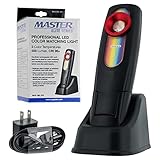
Overview: The Master Elite LED Color Matching Light positions itself as a professional-grade solution for body shops and detailing professionals. Delivering 500 lumens with an impressive CRI 96+ rating across three color temperatures (2700K, 4500K, 6500K), this handheld rechargeable unit is engineered to replicate natural sunlight for precise paint matching and defect identification. The tool features versatile positioning with a 180-degree tilting head, fold-out swivel hook, and built-in magnets, plus a convenient charging station with LED battery indicator.
What Makes It Stand Out: This light excels with its exceptional color accuracy (CRI 96+) that reveals subtle paint variations and imperfections invisible under standard lighting. The three distinct color temperatures simulate different daylight conditions, crucial for matching metallic and pearl finishes. The magnetic charging base provides secure storage and charging, while the 180-degree tilt mechanism allows precise angle adjustment for inspecting complex body contours and panel edges.
Value for Money: At $69.99, the Master Elite sits in the mid-premium range. The price is justified by its high color rendering index, professional build quality, and the trusted Master Airbrush brand backing. While not the cheapest option, it offers features typically found in more expensive units, making it a sound investment for professionals who rely on daily accurate color matching.
Strengths and Weaknesses: Strengths include excellent color accuracy (CRI 96+), versatile mounting options, reliable brand reputation, and comprehensive accessory package. Weaknesses are the relatively short 2.5-hour runtime, lengthy 4-hour charging period, and absence of water/dust resistance rating. The price may deter hobbyists but aligns with professional expectations.
Bottom Line: The Master Elite is a solid choice for collision repair technicians and serious detailers prioritizing color accuracy over extended runtime. Its professional features and brand reliability make it worth the investment for daily commercial use.
2. NextLED NT-2040B-3 Handheld Color Matching Auto Detailing light, 500 Lumen, CRI 97, 3 Color Temperature, 2700/4000/6500K, Car Detailing Light, Paint Correction Light, Detailing Work Light for Swirls

Overview: The NextLED NT-2040B-3 sets a new standard for paint inspection lights with its market-leading CRI 97 rating. This 500-lumen COB LED work light provides unparalleled color accuracy across three temperatures (2700K, 4000K, 6500K), making it indispensable for identifying swirl marks, sanding scratches, and color mismatches. The 2200mAh rechargeable battery delivers 2.5 hours of continuous use, while the IP-65 rating ensures durability in demanding shop environments.
What Makes It Stand Out: The CRI 97 rating is the highest available, offering superior color discrimination that reveals imperfections other lights miss. The robust IP-65 water and dust resistance makes it genuinely shop-ready, while the special joint design enables smooth 180-degree positioning. The inclusion of both back and bottom magnets, plus a swivel hook, provides exceptional versatility for hands-free operation during detailed inspections.
Value for Money: Priced at $59.99, this light delivers premium performance at a competitive price point. You’re getting professional-grade specifications—higher CRI than many competitors, IP certification, and a 365-day warranty—without the premium brand markup. It outperforms lights costing $20-30 more, making it arguably the best value in professional color matching tools.
Strengths and Weaknesses: Strengths include the highest CRI rating (97), excellent durability with IP-65 protection, comprehensive mounting options, and strong warranty support. The 4000K setting (versus the more common 4500K) is a minor deviation but still effective. Runtime matches competitors, though charging time could be faster.
Bottom Line: For detailers and body technicians seeking maximum color accuracy without breaking the bank, the NextLED NT-2040B-3 is the top choice. Its combination of exceptional CRI, rugged build, and reasonable price makes it a smart professional investment.
3. PowerSmith 500 LM Rechargeable LED Color Match (CRI 95+) Inspection Light, Two Color Temperatures 5000K/3500K, hanging hook, magnetic base with USB-C charging cable and 2 Year Warranty (PILC95500)

Overview: The PowerSmith PILC95500 offers a streamlined approach to color matching with its 500-lumen, CRI 95+ LED output. Unlike competitors offering three temperatures, this unit focuses on two practical settings (3500K and 5000K) that cover most inspection scenarios. The built-in 2.6Ah lithium-ion battery provides 2.5 hours of runtime and holds its charge for up to 18 months in storage, making it reliable for intermittent use. The package includes a magnetic base, USB-C charging, and an industry-leading 2-year warranty.
What Makes It Stand Out: This light’s standout feature is its exceptional charge retention—18 months of storage without significant drain is unmatched in this category. The USB-C charging modernizes the experience, while the included magnetic base adds versatility without extra cost. The 2-year warranty demonstrates manufacturer confidence and provides peace of mind that exceeds typical 1-year offerings.
Value for Money: At $34.98, the PowerSmith is the budget champion among reputable brands. While it sacrifices the third color temperature, it maintains high color accuracy (CRI 95+) and professional brightness. The long warranty and superior charge retention add significant value, making it ideal for hobbyists and part-time detailers who don’t need daily use but demand reliability when they do work.
Strengths and Weaknesses: Strengths include unbeatable price, excellent charge retention, modern USB-C charging, long warranty, and solid CRI rating. Weaknesses are the limited two-color temperature options, lack of IP rating for water/dust resistance, and absence of a dedicated charging dock. The 5000K max may be insufficient for some daylight matching scenarios.
Bottom Line: The PowerSmith PILC95500 is perfect for DIY enthusiasts and occasional detailers who want professional color accuracy on a budget. Its limitations are acceptable for non-commercial use, and its reliability features make it a practical, cost-effective choice.
4. Car Detailing Light Rechargeable, 600LM Paint Correction Inspection Light with Magnetic Base & Hook, 2700/4500/6500K, Handheld LED Work Light for Auto Detailing, Color Matching & Repairs (1 Pack)

Overview: This generic detailing light delivers impressive specifications at an entry-level price point. Boasting 600 lumens—the brightest in this comparison—with a CRI 95+ rating and three color temperatures (2700K, 4500K, 6500K), it covers all essential bases for paint inspection. The unique spotlight and floodlight modes provide versatility, while the 2000mAh battery offers variable runtime from 2.5 to 10 hours depending on mode. The 360-degree swivel hook and strong magnetic base enable flexible positioning.
What Makes It Stand Out: The dual-mode lighting system sets this apart, allowing users to switch between focused spotlight for pinpoint defect identification and broad floodlight for panel-wide assessment. The 600-lumen maximum brightness exceeds professional-grade competitors, potentially revealing finer imperfections. The 3-hour recharge time is faster than most rivals, minimizing downtime between detailing sessions.
Value for Money: Priced at just $28.99, this light demolishes price barriers to professional-quality color matching. You’re getting higher brightness, three color temperatures, and dual lighting modes for less than half the cost of name-brand alternatives. While build quality and long-term durability remain questions, the feature set is undeniably compelling for the price-conscious buyer.
Strengths and Weaknesses: Strengths include highest brightness (600LM), dual lighting modes, three color temperatures, fastest charging, and lowest price. Weaknesses involve unknown brand reliability, potentially inferior build quality, lack of IP rating, and unspecified warranty terms. The 2000mAh battery is smaller than competitors despite similar runtime claims.
Bottom Line: This light is ideal for beginners, hobbyists, or professionals needing a backup unit. Its performance specifications exceed its price point, but buyers should temper expectations regarding longevity and customer support. For those prioritizing features over brand reputation, it’s an unbeatable value.
5. Astro Pneumatic 50SLMAX Sunlight 500 Lumen Rechargeable Handheld Triple Temperature Color Match Light
Overview: The Astro Pneumatic 50SLMAX represents the premium tier of color matching lights, backed by a trusted name in automotive tools. This v2 model delivers 500 lumens across three color temperatures (2700K, 4500K, 6000K) with professional-grade durability. The IP65 water and dust proof rating, combined with impact-resistant construction, ensures survival in harsh shop conditions. The easily removable and cleanable lens is a practical feature for maintaining optimal light quality in dirty environments.
What Makes It Stand Out: Astro Pneumatic’s reputation for quality tools gives this light immediate credibility. The IP65 rating and impact resistance exceed most competitors, while the cleanable lens addresses a real-world maintenance issue that affects light quality over time. The collapsible 360-degree rotating hook and 180-degree folding magnetic base provide superior positioning flexibility, and the intuitive power button hold function simplifies temperature switching.
Value for Money: At $74.99, this is the most expensive option reviewed. The premium is justified by Astro’s brand reputation, exceptional build quality, and IP65 certification. For professional shops where tool failure means lost revenue, the durability and reliability offer strong ROI. However, hobbyists and occasional users will find better value elsewhere.
Strengths and Weaknesses: Strengths include premium brand reputation, superior durability (IP65), cleanable lens, robust mounting system, and professional build quality. Weaknesses are the highest price point, slightly lower max color temperature (6000K vs 6500K), and variable 2-4 hour runtime that may be shorter than advertised in practice.
Bottom Line: The Astro Pneumatic 50SLMAX is the professional’s choice for maximum durability and brand reliability. If you demand tools that withstand daily abuse in a commercial environment and prioritize longevity over cost, this is your light. For occasional use, more budget-friendly options make better sense.
6. Detailing Light Paint Inspection Lamp: MXLEGNT Rechargeable Led Color Match Lights with Magnet - Swirl Finder - Car Mechanic | 2700k 4500k 6500k | 93+ CRI | 500LM

Overview: The MXLEGNT WL41C is a versatile rechargeable inspection lamp designed for automotive professionals and DIY enthusiasts who demand accurate color matching and paint defect detection. This compact 500-lumen light combines high CRI 93+ LED technology with three color temperatures to replicate various lighting conditions.
What Makes It Stand Out: The 180° swing arm with integrated strong magnet sets this light apart, allowing hands-free operation on hoods, fenders, or workbenches. The rubber-coated magnet prevents paint damage—a thoughtful detail missing from many competitors. The 4000mAh battery delivers four hours of continuous use, while the hidden hook adds unexpected versatility.
Value for Money: At $49.99, this light sits in the sweet spot between budget headlamps and professional-grade tools. It offers 90% of premium features at half the cost of high-end alternatives. The 180-day replacement warranty and one-year guarantee provide exceptional buyer protection rarely seen in this price bracket.
Strengths and Weaknesses: Strengths include excellent color accuracy, versatile mounting options, damage-free magnetic base, and robust warranty coverage. The 500-lumen output is adequate for most tasks but falls short for large-area inspections. The plastic construction feels less durable than metal alternatives, and the USB charging is limited to 5V 1A-2A adapters.
Bottom Line: This is an outstanding value proposition for detailers and mechanics seeking professional-grade color matching without premium pricing. While build quality could be improved, the feature set and warranty make it a smart purchase for serious enthusiasts and professionals alike.
7. NextLED NT-2143C-B Auto Detail Headlamp with Motion Sensor, CRI 95+ Paint Inspection Light, 3000/4500/6000K, 300 LM, for Car Detailing, Color Match, Paint Correction, Swirl Finder

Overview: The NextLED NT-2143C-B is a specialized headlamp engineered for paint inspection and color matching tasks. Weighing just 3.54 ounces, this lightweight solution delivers professional-grade CRI 95+ accuracy with hands-free convenience that traditional work lights cannot match.
What Makes It Stand Out: The integrated motion sensor is the standout feature, allowing technicians to activate the light with a simple wave— invaluable when hands are coated in polish or compounds. The three color temperatures (3000K/4500K/6000K) provide versatility for different paint types and ambient conditions. Its headlamp design offers unmatched portability and directional control.
Value for Money: Priced at $34.99, this is one of the most affordable professional-grade inspection lights available. It undercuts most competitors while delivering superior CRI ratings and innovative features. For mobile detailers or those on a budget, it eliminates the need for more expensive stationary lights.
Strengths and Weaknesses: Strengths include exceptional color rendering, innovative motion control, ultra-lightweight design, and impressive affordability. However, the 300-lumen output limits effectiveness for deep paint correction or large panels. The ABS/TPU construction prioritizes weight savings over durability, and battery life is shorter than bulkier alternatives.
Bottom Line: Perfect for mobile detailers, spot inspections, and budget-conscious professionals. While not a replacement for high-output work lights, its portability and color accuracy make it an essential secondary tool for any serious automotive detailer.
8. Milwaukee M12 Paint and Detailing Color Match Light - No Charger No Battery, Bare Tool Only

Overview: The Milwaukee M12 Paint and Detailing Color Match Light represents the premium tier of inspection lighting, designed for professionals already invested in Milwaukee’s M12 battery ecosystem. This bare tool configuration requires separate battery and charger purchase, positioning it as a specialized addition rather than a standalone solution.
What Makes It Stand Out: Milwaukee’s legendary build quality and professional-grade durability distinguish this tool from consumer alternatives. The M12 system integration allows users to leverage existing batteries, creating a cost-effective long-term solution for those already committed to the platform. Its reputation for consistent performance in demanding shop environments is unmatched, with metal construction that outlasts plastic competitors.
Value for Money: At $179.89 for the bare tool, this is a significant investment. The value proposition depends entirely on existing M12 battery ownership—adding a battery and charger can push total cost over $250. For Milwaukee ecosystem users, it’s reasonably priced; for others, it’s prohibitively expensive compared to complete kits at half the price with comparable specifications.
Strengths and Weaknesses: Strengths include professional durability, seamless battery ecosystem integration, and brand reliability. The bare tool pricing is the primary weakness, creating hidden costs for new users. Limited feature disclosure in the listing raises concerns about lumen output, CRI rating, and color temperature options compared to explicitly specified competitors.
Bottom Line: Only recommended for existing Milwaukee M12 users seeking a rugged, ecosystem-compatible inspection light. For those starting fresh, more affordable and feature-transparent alternatives offer better value. The lack of included battery and minimal product details make it difficult to recommend universally.
9. Astro Pneumatic Tool 50SL SunLight 400 Lumen Rechargeable Handheld Color Match Light - CRI 97
Overview: The Astro Pneumatic 50SL SunLight sets the benchmark for color accuracy with its industry-leading CRI 97 rating. This 400-lumen rechargeable handheld light is engineered for professionals who refuse to compromise on color matching precision, delivering performance that reveals imperfections lesser lights miss.
What Makes It Stand Out: The CRI 97 rating is the highest available in LED inspection lights, providing unparalleled color fidelity for critical paint matching. The IP65 water and dust proof rating ensures reliability in harsh shop environments, while the 360° rotating hook and 180° folding magnetic base offer superior positioning versatility. The easily removable lens simplifies cleaning after overspray exposure.
Value for Money: At $73.02, this light commands a premium over budget alternatives but delivers tangible professional benefits. The extreme color accuracy justifies the cost for collision repair shops and high-end detailers where perfect color matching is non-negotiable. It bridges the gap between affordable hobbyist lights and ultra-expensive professional equipment.
Strengths and Weaknesses: Strengths include best-in-class CRI 97 rating, robust IP65 protection, versatile mounting options, and professional build quality. The 400-lumen output is adequate but not exceptional for the price. The lack of multiple color temperature settings limits versatility compared to some competitors, and the higher cost may deter casual users.
Bottom Line: An excellent investment for professionals prioritizing color accuracy above all else. The Astro 50SL justifies its premium price through unmatched color rendering and durability. While not the brightest or most feature-rich option, its specialized focus on color fidelity makes it indispensable for precision paint work.
10. NextLED NT-V3505 Rechargeable Ceramic Coating Light, 1000 LM, CRI 95+, w/Detachable Light Diffuser, for Auto Detailing, Optimal Ceramic Car Coating, Paint correction Kit, Color Matching Tool

Overview: The NextLED NT-V3505 is a specialized ceramic coating light designed to address the unique challenges of ceramic coating application and inspection. With 1000 lumens of CRI 95+ illumination and a detachable diffuser, it provides the intense, even lighting required to identify high spots and ensure perfect coating coverage.
What Makes It Stand Out: The detachable diffuser is a game-changer, expanding the light area by 33% while reducing glare—critical for detecting ceramic coating imperfections. The 1000-lumen high/low settings provide both intense inspection brightness and extended runtime up to 8 hours. Its 4000K COB LED specifically targets ceramic coating applications where natural sunlight replication is essential.
Value for Money: At $49.99, this light offers exceptional specialization for the price. The 1000-lumen output matches or exceeds lights costing twice as much, while the diffuser system adds unique value for ceramic coating work. For professionals offering ceramic services, it pays for itself by preventing costly rework from missed high spots.
Strengths and Weaknesses: Strengths include powerful 1000-lumen output, specialized diffuser design, long 8-hour battery life, and magnetic/hook mounting versatility. The single 4000K color temperature limits versatility for general paint correction compared to multi-temp lights. The IP54 rating is adequate but less robust than some premium alternatives. The plastic housing may not withstand heavy shop abuse.
Bottom Line: Highly recommended for detailers specializing in ceramic coatings. While less versatile as a general-purpose inspection light, its targeted design excels at its intended purpose. The combination of power, runtime, and specialized diffuser makes it an essential tool for achieving flawless ceramic coating results.
Understanding Color-Match Detailing Lights
Color-match detailing lights are specialized illumination tools engineered specifically for automotive paint inspection and correction. Unlike conventional workshop lighting, these devices are meticulously calibrated to reproduce the complete visible spectrum of natural daylight, typically achieving Color Rendering Index (CRI) ratings of 95 or higher. This exceptional color accuracy reveals the true condition of automotive paintwork, exposing defects like fine scratches, buffer trails, and sanding marks that disappear under inferior lighting.
The Science Behind Color Rendering
The magic lies in how these lights reproduce color. Standard LEDs often have gaps in their spectral output, creating an incomplete picture of your paint’s surface. High-CRI detailing lights utilize advanced phosphor formulations and multiple chip technologies to fill these spectral gaps. This full-spectrum output ensures that metallic flakes, pearl effects, and subtle color variations appear exactly as they would in natural sunlight, allowing you to assess your work with absolute confidence.
Why Standard Workshop Lights Fall Short
That 5000-lumen overhead LED fixture might seem bright enough, but brightness without accuracy is misleading. Most workshop lights prioritize efficiency over spectral quality, resulting in CRI ratings between 70-80. This deficiency creates “color metamerism”—where colors appear different under various light sources. The swirl you can’t see in your garage might scream for attention in the Home Depot parking lot. Professional detailing lights eliminate this variable, ensuring what you see is what you get.
Key Features That Define Professional-Grade Lighting
Discerning professionals evaluate detailing lights through multiple technical lenses. The intersection of these specifications determines real-world performance, not marketing claims.
Color Rendering Index (CRI) Demystified
CRI measures a light source’s ability to reveal colors faithfully compared to natural sunlight. For paint correction, aim for 95+ CRI, with some premium units reaching 98+. But don’t stop there—examine the R9 value (deep red rendering), which many manufacturers obscure. Automotive paints rely heavily on red pigments, and an R9 rating below 90 means you’re missing critical information about your finish.
Color Temperature and Its Impact
While 5000K-5500K mimics midday sun, the story doesn’t end at a single number. Premium detailing lights offer adjustable color temperature because different defects reveal themselves better under varying conditions. Lower temperatures (4500K) enhance contrast on dark colors, while higher temperatures (6000K) excel on silver and white vehicles. This flexibility transforms your ability to detect issues across the color spectrum.
Lumens vs. Lux: What Actually Matters
Lumens measure total light output, but lux measures intensity where it counts—on the paint surface. A 2000-lumen light concentrated in a 30-degree beam delivers far more usable illumination than a 5000-lumen floodlight. Professional-grade units specify lux at 1 meter or 12 inches, giving you actionable data. For inspection work, target 3000+ lux at 12 inches for effective defect detection.
Beam Angle and Light Distribution
The beam angle determines how you use the light. Narrow beams (15-30 degrees) create sharp contrast for identifying fine scratches and sanding marks. Wide beams (60-120 degrees) provide even illumination for overall assessment and documentation. Advanced units feature adjustable focus or interchangeable lenses, offering both capabilities in one tool.
Types of Color-Match Detailing Lights
The detailing world has evolved beyond simple flashlights. Today’s market offers specialized solutions for every inspection scenario.
Handheld Inspection Lights
These pistol-grip or cylindrical units represent the workhorse category. Look for models with magnetic bases, swivel hooks, and rubberized grips. The best examples feature adjustable output from 10-100%, allowing you to toggle between intense defect detection and lower-power general illumination without switching tools.
Stand-Mounted Flood Lights
For documenting your work or illuminating entire panels during correction, stand-mounted systems provide hands-free operation. Professional setups use carbon fiber or aluminum tripods with ball-head mounts for precise positioning. The most versatile systems detach from stands, converting to handheld units in seconds.
Headlamp Systems for Detailers
Modern LED headlamps with 95+ CRI ratings have revolutionized close-up work. These keep both hands free for sanding or polishing while providing perfect shadow-free illumination. Premium models feature battery packs mounted at the rear for balance and extended runtime.
Underhood and Undercarriage Solutions
Engine bays and undercarriages present unique challenges. Flexible, high-CRI strip lights with magnetic or hook attachments allow you to position illumination exactly where needed. Look for models with impact-resistant diffusers that withstand chemical exposure and physical contact.
Power Options and Mobility Considerations
Your workflow dictates your power needs. The cord debate isn’t just about convenience—it’s about consistent performance.
Corded vs. Cordless: Making the Right Choice
Corded lights deliver unlimited runtime and consistent output but tether you to outlets. For mobile detailers or large shop environments, this becomes a tripping hazard and workflow limitation. Cordless lithium-ion systems now match corded performance while offering true freedom of movement. The sweet spot? A cordless primary light with corded backup capability for marathon sessions.
Battery Technology and Runtime
Not all lithium batteries are equal. Look for units with replaceable battery packs rather than integrated cells—this extends the tool’s lifespan dramatically. Runtime specifications should be given at maximum output, not just low-power modes. Professional units deliver 2-4 hours at full intensity, with quick-swap batteries for continuous operation.
Build Quality and Durability Factors
Detailing environments are harsh. Chemical exposure, drops, and moisture demand robust construction.
Ingress Protection (IP) Ratings Explained
That IP65 rating isn’t just marketing fluff. The first digit (6) indicates dust protection—essential for polishing compound environments. The second digit (5) denotes water resistance, protecting against both accidental spills and intentional decontamination washes. For undercarriage work, IP67 provides submersion protection up to 1 meter.
Impact Resistance for Workshop Environments
Polished aluminum housings look professional but dent and transfer impact to internal components. Polycarbonate-reinforced housings with rubber overmolding absorb shocks without compromising structural integrity. Look for drop-test ratings from 1.5 meters—this indicates serious engineering, not just aesthetic ruggedness.
Ergonomics and User Experience
Technical specs mean nothing if the tool fights you during a 6-hour correction session.
Weight and Maneuverability
The ideal handheld inspection light weighs between 12-18 ounces—substantial enough for stable positioning but light enough for extended use. Weight distribution matters as much as total weight; front-heavy designs cause fatigue within minutes. Premium units position batteries rearward or distribute mass evenly across the housing.
Adjustability and Positioning Options
A light that only points straight ahead limits your inspection angles. Look for 180-degree rotating heads, adjustable stands with multiple pivot points, and magnetic bases that adhere to fenders and door frames. The ability to position light at extreme low angles (5-10 degrees to the panel) reveals defects invisible in perpendicular illumination.
Advanced Features Worth Considering
As LED technology evolves, smart features separate premium tools from baseline performers.
Smart Controls and Dimming
Stepless dimming from 0-100% allows precise control over contrast and glare. Some advanced units remember your last setting, while others offer programmable presets for different inspection types. Bluetooth connectivity enables remote control when the light is mounted out of reach—a surprisingly useful feature during documentation.
Dual-Color Temperature Functionality
Single-color lights force compromises. Dual-temperature units (typically 4500K/5500K or 5000K/6000K) let you toggle between settings with a button press. This is invaluable when working on two-tone vehicles or comparing your correction under different lighting conditions without moving the light.
Budget Tiers and Value Proposition
Price doesn’t always correlate with performance, but certain minimums exist for professional results.
Entry-Level Options for Enthusiasts
Quality color-match lighting starts around $150-$250. At this tier, expect 95+ CRI, 2000+ lux output, and basic durability. Compromises typically appear in beam quality (minor color fringing), battery life (1-2 hours max), and warranty support. These units excel for hobbyists who detail 2-4 vehicles monthly.
Professional-Grade Investment
Serious professionals should budget $400-$800 per primary light. This tier delivers 98+ CRI, 4000+ lux, IP67 protection, and 3+ year warranties. The value lies not just in performance but in total cost of ownership—replaceable batteries, serviceable components, and manufacturer support that keeps you operational during peak season.
Common Mistakes to Avoid
Even experienced detailers stumble with lighting. Avoiding these pitfalls saves time and frustration.
First, don’t rely on a single light source. A handheld inspection light complements overhead lighting; it doesn’t replace it. Second, avoid lights with cool-white-only output (6000K+). While these seem brighter, they wash out subtle defects on warm-colored vehicles. Third, ignore lumen ratings without corresponding lux specifications—a 10,000-lumen floodlight might deliver less usable inspection light than a 1500-lumen focused beam.
Proper Maintenance and Care
Your lights face the same contaminants as your paint. Polishing dust, overspray, and chemical residue degrade performance over time.
Clean lenses weekly with isopropyl alcohol and microfiber cloths—never paper towels, which scratch optics. Inspect O-rings monthly and apply silicone grease quarterly to maintain IP ratings. Store batteries at 50% charge in cool, dry environments; full charges accelerate capacity loss. For corded units, implement strain-relief practices to prevent internal wire fatigue at connection points.
Future Trends in Detailing Lighting
The next generation of detailing lights integrates with digital workflows. We’re seeing prototypes with built-in cameras that capture and analyze paint condition under standardized illumination, creating before/after documentation automatically. Tunable full-spectrum LEDs that adjust their spectral output to match specific OEM paint formulations promise even more accurate assessment. As battery density improves, expect cordless units to surpass corded performance while shrinking in size and weight.
Frequently Asked Questions
What’s the minimum CRI rating I should accept for paint correction?
Never compromise below 95 CRI for serious paint correction. While 90+ might work for general inspection, the subtle defects that separate good from great work require the highest color accuracy. Check the R9 value specifically—some lights achieve 95+ CRI with poor red rendering, which is particularly problematic for automotive paints.
Can I use my high-CRI photography lights for detailing?
Photography lights often prioritize even illumination over intensity and may lack the durability for workshop environments. While better than standard LEDs, they’re not optimized for defect detection. Detailing lights concentrate lux levels for sharp contrast creation—photography lights diffuse light, which can actually hide fine scratches.
How do I position my light to find the most defects?
Use the “glare angle” technique: position the light 5-15 degrees from the panel surface, viewing from the opposite side. This creates sharp shadows in scratches. For deeper defects, increase the angle to 30-45 degrees. Always inspect under multiple angles—a defect invisible at one position may scream at another.
Why does my 98 CRI light still make some colors look wrong?
CRI averages 15 color samples, but automotive paints use pigments outside these standard samples. This is where TM-30 fidelity index (Rf) provides better assessment. Also, consider metamerism—your eye’s color perception changes under different light sources. Always perform final inspection under natural light to confirm.
Are rechargeable integrated batteries better than replaceable ones?
Replaceable batteries offer superior long-term value. Integrated batteries typically last 2-3 years before capacity degrades, rendering the entire tool useless. Replaceable systems let you swap batteries in seconds and extend tool life indefinitely. For professionals, this translates to significantly lower total ownership costs.
How many lights do I actually need for a professional setup?
Minimum three: a primary handheld inspection light (95+ CRI, high lux), a wide-area flood light for documentation and general illumination, and a headlamp for close-up work. Many pros add a fourth magnetic strip light for engine bays. Quality trumps quantity—one excellent light beats three mediocre ones.
What’s the difference between lux and lumens in practical terms?
Lumens measure total light output; lux measures intensity on a specific area. For defect detection, lux matters more—a 1000-lumen light focused into a tight beam can deliver 10,000 lux on a panel, while a 5000-lumen floodlight might only produce 500 lux. Always prioritize lights that specify lux at a defined distance.
Should I buy lights with adjustable color temperature?
Absolutely. This feature ranks among the most useful innovations in detailing lights. Dark colors reveal defects better under warmer light (4500K), while silvers and whites show issues more clearly under cooler temperatures (5500K+). This versatility eliminates the need for multiple specialized lights.
How often should I replace my detailing lights?
Quality LED units last 50,000+ hours before luminous decay becomes significant. However, battery technology evolves faster than LEDs. Expect to replace battery packs every 2-3 years with heavy use, but the light itself should serve for 5-7 years minimum. Physical damage, not LED failure, typically ends a light’s service life.
Can cheap lights ever deliver professional results?
The sub-$100 category rarely delivers true 95+ CRI performance, regardless of claims. Many achieve high CRI at low power but drop significantly at full output. For hobbyists, quality budget options around $150 can produce excellent results. For professionals, the time saved and quality gained with premium lights pays for itself within the first few jobs.