That telltale brownish-red creeping across your undercarriage isn’t just an eyesore—it’s a structural time bomb ticking away beneath your daily driver. Whether you’re restoring a classic muscle car or simply trying to extend your vehicle’s lifespan through another harsh winter, understanding how to properly neutralize rust before applying protective undercoating can mean the difference between a job that lasts six months and one that protects for years. Rust converter sprays have revolutionized how DIY enthusiasts and professional detailers approach undercarriage restoration, transforming the tedious process of grinding and sanding into a streamlined chemical conversion that actually strengthens compromised metal surfaces.
But here’s the reality: not all rust converters are created equal, and choosing the wrong formulation for undercoat prep can lead to adhesion failures, continued corrosion, and wasted money. The spray format offers undeniable convenience for reaching tight frame rails and suspension components, but the market is flooded with options that vary wildly in chemical composition, curing characteristics, and compatibility with modern undercoating materials. This comprehensive guide cuts through the marketing noise to arm you with the technical knowledge needed to evaluate these products like a pro, ensuring your undercoating investment actually sticks around for the long haul.
Top 10 Rust Converter Spray
Detailed Product Reviews
1. Rust-Oleum 248658 Stops Rust Reformer Spray Paint, 10.25 oz, Matte Black
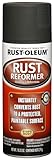
Overview: The Rust-Oleum 248658 Stops Rust Reformer is a single-can solution designed for DIYers tackling rusted metal surfaces. This oil-based spray instantly converts rust into a paintable, flat black base that stops future corrosion. With its 10.25-ounce capacity, it’s ideal for small to medium projects like patio furniture, railings, or automotive patches. The trusted Rust-Oleum brand backs this product with decades of rust-fighting expertise, making it a go-to for homeowners seeking reliable results without professional equipment.
What Makes It Stand Out: The any-angle spray technology sets this apart, allowing upside-down application for hard-to-reach areas like fence undersides or wheel wells. The 20-40 minute tack-free dry time means quick project progression, while the oil-based formula creates superior adhesion to heavily rusted surfaces. Unlike traditional methods requiring extensive sanding to bare metal, this reformer chemically bonds with rust, saving hours of labor. The matte black finish serves as an attractive standalone coating or primer for any oil-based topcoat.
Value for Money: At $8.97 ($0.88 per ounce), this single can offers fair value for occasional users. The pricing aligns with premium spray paints, and you pay only for what you need without committing to bulk quantities. For one-off projects or touch-ups, this eliminates waste and storage concerns. Comparable rust converters from lesser-known brands may cost slightly less but lack Rust-Oleum’s proven track record and any-angle convenience.
Strengths and Weaknesses: Strengths: Trusted brand reputation; any-angle spray technology; fast tack-free drying; eliminates heavy sanding; excellent adhesion on heavily rusted surfaces; versatile for interior/exterior use.
Weaknesses: Requires 24-hour wait before topcoating; oil-based formula demands mineral spirits cleanup; strong fumes necessitate excellent ventilation; slightly higher price point than generic alternatives.
Bottom Line: Perfect for DIY enthusiasts with intermittent rust problems. This reformer delivers professional-quality results without professional-grade complexity, making it the smart choice for small projects where convenience and reliability matter most.
2. Rust-Oleum 248658-3PK Rust Reformer Spray, 10.25 oz, Black, 3 Pack
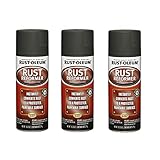
Overview: This three-pack bundles the popular Rust-Oleum 248658 Stops Rust Reformer for users with multiple projects or larger surface areas. Each 10.25-ounce can contains the identical oil-based formula that chemically converts rust into a stable, paintable black surface. Designed for vehicles, fences, trailers, and outdoor equipment, this multi-pack ensures consistent results across several applications. It’s the same trusted product, just scaled for serious DIYers who need more than a single can’s worth of coverage.
What Makes It Stand Out: The value lies in continuity—having three identical cans eliminates color-matching concerns between batches. The any-angle spray technology remains a standout feature, allowing effortless application on vertical surfaces, ceiling fixtures, or complex metalwork. Each can delivers the same 20-40 minute tack-free performance and 24-hour cure time, making project scheduling predictable. The three-pack format is particularly convenient for tackling related projects sequentially without mid-job supply runs.
Value for Money: Priced at $26.91 ($0.88 per ounce), the per-ounce cost matches the single can exactly, offering transparent bulk pricing without a discount. However, the true value emerges in reduced shipping costs and guaranteed product consistency. For users needing 2-3 cans, this pack eliminates multiple store trips and ensures you won’t run short mid-project. It’s a modest investment that prevents the frustration of mismatched batches or emergency resupply.
Strengths and Weaknesses: Strengths: Guaranteed batch consistency; convenient for multiple projects; same trusted oil-based performance; eliminates repeat purchases; ideal for fleet maintenance or property upkeep.
Weaknesses: No per-unit price savings; may be excessive for one-time users; requires proper storage of unused cans; same 24-hour topcoat delay as single can.
Bottom Line: Ideal for property owners or hobbyists with several rust-prone metal items. While not cheaper per ounce, the convenience and consistency make this three-pack a practical choice for planned, multi-stage restoration projects.
3. Seymour 16-45 Rust Converter, Black
Overview: Seymour’s 16-45 Rust Converter offers a robust alternative to mainstream brands, targeting vehicles, trailers, fences, and storage tanks. This black rust converter penetrates deeply into corroded metal, transforming rust into a durable protective coating. The product emphasizes toughness and longevity, appealing to users needing heavy-duty performance. While less recognized than Rust-Oleum, Seymour has carved a niche among professionals seeking reliable, no-frills corrosion solutions. Its straightforward approach focuses on results rather than flashy features.
What Makes It Stand Out: The formula’s penetration capability distinguishes it from surface-only treatments, creating a stronger bond with heavily pitted metal. Seymour specifically highlights reduced prep time—greatly minimizing wire brushing and sanding—which resonates with users tackling severely rusted surfaces. The resulting black coating is notably durable, designed to withstand outdoor exposure without immediate topcoating. Its versatility across residential and commercial applications makes it a flexible choice for varied project portfolios.
Value for Money: At $14.03 for an unspecified volume (likely comparable to 12-ounce competitors), this sits in the mid-range price tier. The value proposition rests on its durability claims and penetration power rather than per-ounce economy. For users prioritizing a tough, long-lasting base coat over brand recognition, the slightly higher cost may be justified. However, the lack of detailed coverage specs makes precise value calculation difficult compared to competitors who quantify square footage per can.
Strengths and Weaknesses: Strengths: Excellent penetration on heavily rusted surfaces; durable, tough finish; versatile application range; reduces prep work significantly; effective as standalone coating.
Weaknesses: Vague product specifications; less brand recognition; unclear coverage area; no any-angle spray mention; potentially longer dry times than advertised.
Bottom Line: A solid choice for demanding applications where maximum penetration and durability are priorities. Best suited for experienced users comfortable with lesser-known brands who value performance specifications over marketing familiarity.
4. Polar Rust Converter Spray - 2 x 17 Fl Oz| Matte Black | Effective Rust Converter for Metal | Weather Resistant Protection Against Corrosion | Ideal for Vehicles, Trailers, Fences & Storage Tanks
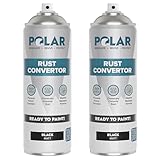
Overview: Polar’s Rust Converter Spray arrives as a two-pack of generous 17-ounce cans, positioning itself as a cost-effective solution for large-scale rust management. This product chemically converts rust into a stable matte black finish while providing weather-resistant protection against corrosion. Engineered for outdoor durability, it addresses vehicles, trailers, fences, and storage tanks. The European-style 500ml sizing offers substantially more product than standard 10-ounce cans, making it ideal for extensive surface restoration projects.
What Makes It Stand Out: The detailed application guidance demonstrates professionalism—specifying 30-second shaking, 20-30cm spray distance, and 15-minute intercoat timing. Each can covers up to 2 square meters (21.5 sq ft), offering superior coverage efficiency. The weather-resistant formula withstands UV rays and rain, suitable for harsh climates. Notably, the finish can remain as a decorative topcoat or accept overpainting, providing flexibility that many competitors don’t emphasize. The two-pack quantity hits a sweet spot between single-can convenience and bulk commitment.
Value for Money: At $23.99 for 34 total ounces ($0.71 per ounce), this delivers exceptional per-ounce value, undercutting major brands significantly. The high coverage rate further amplifies savings, requiring fewer cans for large projects like full trailer restoration or extensive fencing. For users with substantial square footage to treat, the combination of lower unit cost and efficient spreading creates compelling economics that professional contractors will appreciate.
Strengths and Weaknesses: Strengths: Excellent price per ounce; superior coverage per can; comprehensive application instructions; weather-resistant durability; flexible finishing options; larger can size reduces can changes.
Weaknesses: Lesser-known brand may concern some users; larger cans may dry out if not used promptly; limited retail availability; matte finish may not suit all aesthetic preferences.
Bottom Line: Outstanding value for large outdoor projects where coverage and weather resistance are paramount. The detailed instructions and professional formulation make this a smart choice for cost-conscious contractors and serious DIYers tackling extensive rust damage.
5. Rust-Oleum 215215-6PK Stops Rust Rust Reformer Spray, 10.25 oz, Black, 6 Pack
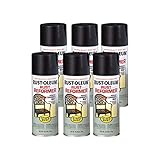
Overview: This six-pack of Rust-Oleum 215215 Stops Rust Rust Reformer targets high-volume users with a water-based formula that converts rust to a paintable surface. Each 10.25-ounce can covers up to 12 square feet, making it efficient for extensive projects. Unlike its oil-based sibling, this version offers easier cleanup and lower VOC emissions while maintaining Rust-Oleum’s trusted performance. The bulk packaging serves contractors, fleet managers, and property maintenance professionals who require consistent, reliable rust treatment across numerous metal surfaces.
What Makes It Stand Out: The water-based chemistry represents a significant departure from traditional oil-based formulas, allowing soap-and-water cleanup and reducing environmental impact. This formulation still achieves the same 20-40 minute dry time and 24-hour cure schedule, proving water-based products can compete on performance. The six-pack quantity ensures batch uniformity across large projects like multi-vehicle restoration or commercial fencing. Each can’s 12 sq ft coverage is clearly specified, enabling accurate project planning and material ordering.
Value for Money: At $45.50 for six cans ($0.74 per ounce), this offers the best per-ounce pricing in the Rust-Oleum lineup and undercuts most competitors. The bulk purchase yields substantial savings over individual cans while ensuring supply continuity. For professionals, the predictable cost per project and reduced reordering frequency translate to operational efficiency. The water-based formula’s easier cleanup also saves labor time and solvent costs, adding hidden value beyond the purchase price.
Strengths and Weaknesses: Strengths: Lowest per-ounce cost; water-based cleanup; trusted brand consistency; clearly defined coverage; ideal for professional use; reduced VOCs for indoor applications; predictable performance across large projects.
Weaknesses: Requires oil-based topcoat (limitation for some users); large upfront investment; proper storage essential to prevent can degradation; may be excessive for casual DIYers.
Bottom Line: The ultimate value for contractors and facility managers. This six-pack combines Rust-Oleum’s reliability with water-based convenience and unbeatable bulk pricing, making it the professional’s choice for systematic rust management programs.
6. Rust-Oleum 248658-6PK Rust Reformer Spray, 10.25 oz, Black, 6 Pack
Overview: This six-pack bundle from Rust-Oleum delivers a reliable solution for tackling extensive rust problems across multiple projects. Each 10.25-ounce can contains an oil-based formula designed to chemically convert rusted metal into a flat black, paintable surface without requiring labor-intensive sanding to bare metal.
What Makes It Stand Out: The any-angle spray technology sets this product apart, allowing application in any direction—even upside down—which proves invaluable when treating hard-to-reach undercarriage components or vertical surfaces. The formula creates a strong chemical bond with rusted surfaces, transforming them into a protected substrate ready for topcoating within 24 hours. With a tack-free drying time of just 20-40 minutes, projects progress quickly.
Value for Money: At $0.88 per ounce in this six-pack configuration, this represents solid value for large-scale restoration work or fleet maintenance. The bulk packaging reduces per-unit cost, making it economical for body shops and DIY enthusiasts with multiple vehicles. While requiring a separate topcoat for final finish, the time saved on surface preparation justifies the investment.
Strengths and Weaknesses: Strengths include the flexible any-angle spray nozzle, fast tack-free drying, trusted Rust-Oleum brand reliability, and excellent coverage for the price. Weaknesses include the mandatory 24-hour wait before painting, strong oil-based odor requiring ventilation, and the need to purchase six cans even for smaller projects.
Bottom Line: This bulk-packaged rust reformer excels for extensive rust treatment projects where value and performance matter. The innovative spray technology and proven conversion chemistry make it ideal for automotive underbodies, farm equipment, and structural metalwork.
7. JENOLITE Rust Converter Spray for Metal 400 ml (13.52 fl oz). All In One Fast‑Acting Epoxy, Rust Reformer, Primer & Inhibitor. Converts Rust to a Paint‑Ready Surface. Made in Britain

Overview: JENOLITE brings British industrial heritage to the consumer market with this epoxy-based rust converter that promises rapid transformation of corroded metal. Founded in 1939 and trusted by aerospace giants like Boeing and Airbus, this single-can solution combines rust conversion, priming, and inhibition in one formulation.
What Makes It Stand Out: The fast-acting epoxy chemistry neutralizes rust within approximately 15 minutes—a significant time advantage over competitors. This all-in-one approach eliminates multiple product steps, creating a durable black surface that serves as its own primer. The heritage factor carries weight: manufacturer credentials with the UK Ministry of Defence and major aviation companies suggest rigorous quality standards.
Value for Money: At $1.48 per fluid ounce, JENOLITE commands a premium price but justifies it through professional-grade performance and triple-action capability. Each 400ml can covers roughly 2 square meters, offering adequate coverage for automotive parts, garden furniture, or tools. For users seeking aerospace-quality treatment without buying industrial quantities, this represents accessible professional technology.
Strengths and Weaknesses: Strengths include rapid 15-minute conversion time, epoxy durability, prestigious industrial heritage, low-odor formulation, and combined primer functionality. Weaknesses include higher cost per ounce, smaller coverage area than some competitors, and the need for careful application technique to avoid runs.
Bottom Line: For discriminating users who demand proven industrial performance, JENOLITE delivers exceptional quality. The fast-acting epoxy formula and prestigious manufacturing credentials make it ideal for automotive restoration, valuable tool preservation, and premium outdoor equipment.
8. Rust Kutter - Stops Rust and Converts Rust Spots to Leave A Primed Surface Ready to Paint, Professional Rust Repair Manufactured in USA – Sprayer Included

Overview: Rust Kutter offers an American-made solution for rust conversion with a focus on professional results and user convenience. This product arrives with its own sprayer, emphasizing immediate usability for treating rust spots on vehicles, tools, and outdoor equipment without additional equipment investment.
What Makes It Stand Out: The included sprayer accessory distinguishes Rust Kutter from aerosol-only competitors, providing flexibility for users preferring non-aerosol application or needing to cover larger surfaces efficiently. The professional-grade formulation chemically reacts with rust, breaking it down into a stable, paintable black compound while simultaneously creating a protective barrier against future oxidation.
Value for Money: At $0.72 per fluid ounce, Rust Kutter presents attractive pricing, especially considering the included sprayer adds value. This positions it as a cost-effective choice for budget-conscious DIYers and professionals alike. The ability to apply with brush, roller, or the provided sprayer offers versatility that maximizes the product’s utility across different project scales.
Strengths and Weaknesses: Strengths include USA manufacturing, versatile application methods, competitive pricing, protective barrier formation, and immediate usability. Weaknesses include potentially less convenient than aerosols for small touch-ups, sprayer quality unknown compared to professional equipment, and possible cleanup requirements.
Bottom Line: Rust Kutter excels as a versatile, economical rust conversion solution particularly suited for users wanting application flexibility. The included sprayer and multi-method compatibility make it ideal for treating larger surfaces like fences, gates, or vehicle panels.
9. AGS RUST SOLUTIONS Rust Spray Paint, 14oz, Durable Matte Black Finish, Safe for All Surfaces, Eradicate Rust and Ensure Long-Lasting Protection Against Weather and Wear
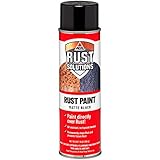
Overview: AGS RUST SOLUTIONS positions itself as a high-tech, universal rust remedy suitable for extreme applications from automotive to aviation. This 14-ounce aerosol promises direct-to-rust application with advanced epoxy fortification, creating a durable matte black finish that withstands severe environmental conditions.
What Makes It Stand Out: The product’s versatility across nine distinct categories demonstrates exceptional formulation confidence. Technical specifications impress: withstands temperatures up to 300 degrees Fahrenheit and survives 1,000 hours of salt spray testing, metrics that support its professional-grade claims. UV-resistant properties ensure longevity even in direct sunlight.
Value for Money: At $1.47 per ounce, pricing aligns with premium rust converters despite marketing as a “paint” rather than pure converter. The comprehensive protection claims and multi-surface compatibility justify the cost for users seeking one product for diverse applications. For marine or aviation use where failure is costly, the price represents insurance.
Strengths and Weaknesses: Strengths include extreme temperature resistance, proven salt spray durability, UV protection, versatile surface compatibility, and high-tech epoxy formulation. Weaknesses include premium pricing, potential overkill for light-duty applications, and matte black finish may require topcoating for color matching.
Bottom Line: AGS delivers a heavy-duty rust solution for demanding environments where performance is non-negotiable. For marine vessels, performance vehicles, or industrial equipment exposed to extreme conditions, this product provides laboratory-tested protection. Professionals in harsh environments will appreciate its robust capabilities.
10. Rust-Oleum 344713 Automotive 2-In-1 Rust Reform & Seal Spray, 12 oz, Flat Black
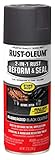
Overview: Rust-Oleum’s Automotive 2-In-1 formulation targets vehicle-specific rust problems with a dual-action approach that both reforms existing corrosion and seals metal against future damage. Designed for automotive applications, this product emphasizes chemical and abrasion resistance in harsh underhood and undercarriage environments.
What Makes It Stand Out: The flexible, rubberized coating distinguishes this from standard rust converters, providing enhanced impact resistance and durability against road debris, salt, and chemicals. The 2-in-1 designation promises both repair and prevention in a single application, simplifying automotive rust management. Quick drying to the touch in just one hour accelerates project completion.
Value for Money: At $1.19 per ounce, this automotive-specific product offers reasonable value within the Rust-Oleum ecosystem. Coverage of 12-13 square feet per can provides adequate treatment area for typical vehicle rust spots. While not the cheapest option, the specialized automotive formulation and rubberized protection justify the modest premium over general-purpose converters.
Strengths and Weaknesses: Strengths include rubberized flexibility, chemical and abrasion resistance, quick one-hour dry time, trusted automotive brand positioning, and 2-in-1 convenience. Weaknesses include automotive focus limiting broader marketing, flat black finish may need topcoating for visible areas, and moderate coverage compared to industrial alternatives.
Bottom Line: This product excels for automotive-specific rust repair where flexibility and durability matter most. Ideal for undercarriages, wheel wells, and engine bay components exposed to extreme conditions. For vehicle owners seeking a trusted brand with automotive expertise, this 2-in-1 reformer and sealer delivers reliable, long-lasting protection with minimal hassle.
Understanding Rust Converter Sprays
Rust converter sprays represent a chemical solution to a chemical problem. Unlike traditional rust removers that physically strip oxidation away, these products trigger a transformative reaction that converts iron oxide into a stable, inert compound. This distinction is crucial for undercoat prep, where complete rust removal is often impractical in hard-to-reach areas.
The Science Behind Rust Conversion
The active ingredients typically involve tannic acid or phosphoric acid-based formulations that react with iron oxide (Fe2O3) to create iron tannate or iron phosphate. This new compound forms a hard, black barrier that’s significantly less reactive to moisture and oxygen. Think of it as turning your enemy into your ally—what was once a flaky, expanding corrosion becomes a protective primer layer. For undercarriage applications, this conversion process is particularly valuable because it penetrates into pits and crevices where sandblasters and wire brushes simply cannot reach.
Why Undercoat Prep Demands Specialized Solutions
Your vehicle’s underside faces unique challenges: constant moisture exposure, road salt, gravel impacts, and extreme temperature fluctuations. Standard rust converters designed for garden furniture or wrought iron railings lack the specific adhesion promoters and flexibility agents needed to survive the flexing, vibration, and thermal cycling of automotive substrates. Automotive-grade formulations incorporate epoxy resins or vinyl acrylic polymers that remain slightly flexible after curing, preventing the brittle fracture that can occur when a rigid coating is applied to a vibrating frame rail.
Key Benefits of Using Rust Converters Before Undercoating
Skipping the conversion step is perhaps the most common mistake in DIY undercoating projects. Directly applying undercoating over active rust creates a moisture trap, accelerating corrosion underneath your expensive protective layer. A quality rust converter chemically neutralizes this threat while simultaneously creating an ideal bonding surface.
The converted surface provides a microscopically rough profile that mechanical undercoatings can physically grip. This is especially critical for asphalt-based or rubberized undercoatings that rely on both chemical and mechanical adhesion. Additionally, the dark color change most converters undergo serves as a visual confirmation that you’ve achieved complete coverage—a practical quality control measure when working underneath a vehicle with poor lighting.
Essential Features to Evaluate
When comparing formulations, focus on performance characteristics rather than marketing claims. The most expensive option isn’t always the best fit for your specific project.
Chemical Composition Matters
Tannic acid-based converters generally offer faster drying times and work well on light to moderate surface rust. Phosphoric acid formulations penetrate deeper and are better suited for heavier corrosion but may require longer cure times. Some advanced products hybridize both acids with added copolymer resins for enhanced durability. Check the SDS (Safety Data Sheet) for exact concentrations—effective products typically contain 5-10% active acid content.
Coverage Area and Efficiency
Underside coverage varies dramatically based on viscosity and solids content. Thicker formulations with 30-40% solids might only cover 150-200 square feet per gallon but provide better build in a single coat. Thinner, more penetrating formulas can reach 300+ square feet but may need multiple applications on heavily pitted surfaces. For spray applications, consider that overspray losses under a vehicle can reduce actual coverage by 20-30% compared to controlled environment applications.
Drying Time and Curing Process
“Touch dry” times are misleading. While a converter might feel dry in 30 minutes, full chemical conversion and polymer cross-linking can take 24-72 hours depending on temperature and humidity. Rushing to apply undercoating before complete cure is a recipe for delamination. Look for products that specify both dry-to-touch and full cure times, and always build in a buffer period. Cold weather formulas include catalysts that remain active down to 35°F, crucial for winter garage projects.
Compatibility with Undercoating Materials
Not all converters play nice with all undercoatings. Solvent-based converters can interfere with water-based undercoating adhesion, and vice versa. The ideal scenario is using a converter and undercoating from the same product family, but when mixing brands, perform a test patch. Apply the converter to a small, hidden area, let it fully cure, then apply your undercoating and check adhesion after 48 hours using the cross-hatch test method.
Application Surface Considerations
Success begins with honest assessment of what you’re working with. The “spray and pray” approach fails when underlying conditions aren’t properly evaluated.
Evaluating Rust Severity
Surface rust (light orange powder) responds beautifully to converters. Scale rust (flaky layers) needs mechanical removal first—use a wire brush or needle scaler to eliminate loose material. Pit rust (deep penetration) requires multiple converter applications, allowing each layer to penetrate deeper into the cavities. If you can poke through the metal with a screwdriver, no converter will save it; that panel needs replacement.
Surface Preparation Requirements
Contrary to some marketing claims, rust converters aren’t magic bullets. Remove all grease, oil, and road grime using a degreaser specifically formulated for automotive undercarriages. Pressure washing is essential, but allow 24 hours of dry time. Trapped moisture under the converter film will cause bubbling and failure. For best results, the surface should be “clean but rusty”—free of contaminants but with rust intact for the chemical reaction.
Application Techniques for Professional Results
The difference between amateur and professional results often comes down to technique, not product choice.
Spray Pattern and Distance
Hold the can or spray gun 8-12 inches from the surface, using a consistent side-to-side motion with 50% overlap. For complex geometries like control arms and crossmembers, use multiple attack angles to ensure complete coverage. The goal is a wet, uniform film without runs or drips. Runs not only waste product but create thick spots that cure unevenly and can crack under vibration.
Layering Strategies
Two light coats outperform one heavy coat every time. The first application should be a light “tack coat” that penetrates and begins conversion. Wait 15-30 minutes (or per manufacturer specs) then apply a second, slightly heavier “build coat.” This approach prevents the surface skinning over before deeper penetration occurs. For severe rust, a third coat applied after the second has become tacky can work wonders.
Temperature and Humidity Factors
Ideal application conditions are 65-75°F with relative humidity below 60%. Cold metal surfaces cause condensation, interfering with adhesion. In hot, dry conditions, the converter can skin over too quickly, trapping solvents underneath. If you’re working in a humid climate, consider using a dehumidifier in your garage for 24 hours before and after application. In cold weather, use a heat gun on low setting to gently warm metal surfaces to at least 50°F before spraying.
Safety and Environmental Considerations
These are chemical products that demand respect. The confined space under a vehicle amplifies exposure risks.
VOC Content and Regulations
Volatile Organic Compound regulations vary by state, with California’s CARB standards being the most restrictive. High-VOC products (450+ g/L) generally perform better but may be illegal in your area. Low-VOC formulations (below 250 g/L) have improved dramatically but may require longer cure times. Always check local regulations before purchasing, especially when ordering online from out-of-state suppliers.
Personal Protective Equipment
Beyond basic gloves and safety glasses, invest in a proper respirator with organic vapor cartridges. The mist created by spraying creates inhalable droplets that can cause respiratory irritation. A disposable Tyvek suit prevents skin contact and keeps the product off your clothes. Ensure adequate ventilation—even in a garage, use a fan to create airflow away from your breathing zone.
Disposal and Cleanup
Never pour leftover converter down drains. Cured product and contaminated rags can often be disposed of as solid waste, but check local hazardous waste regulations. For cleanup, use the recommended solvent (usually acetone or xylene) while the product is still wet. Once cured, mechanical removal is your only option. Keep a dedicated spray gun for converters—trying to clean them thoroughly enough for other uses is nearly impossible.
Common Mistakes to Avoid
Even seasoned DIYers fall into predictable traps. The most frequent error is treating rust converter as a replacement for proper surface prep. Another is applying undercoating too soon—always err on the side of longer cure times. Using converters on non-ferrous metals like aluminum or galvanized steel leads to poor results and potential corrosion acceleration. Always test with a magnet first; if it’s not magnetic, you need a different product.
Cost vs. Value Analysis
Budget-friendly converters ($15-25 per quart) often contain lower solids content and may require more coats, potentially costing more in labor and product than a premium option ($35-50 per quart). Calculate cost per covered square foot, not price per can. A $40 product that covers 250 sq ft in one coat is cheaper than a $20 product needing three coats to cover the same area. Factor in your time value—multiple applications spread over several days versus a single afternoon.
Professional vs. DIY Applications
Professional shops often use two-part epoxy converters that require mixing and have limited pot life but offer superior performance. These aren’t practical for most DIYers. Consumer-grade aerosols provide convenience but at a higher per-ounce cost and with less control over film build. The sweet spot for serious enthusiasts is quart or gallon containers designed for use with undercoating guns, offering professional results without the two-part complexity.
Longevity and Performance Expectations
A properly applied rust converter should remain stable for 5-10 years before requiring touch-up, assuming quality undercoating is applied over it. However, stone chips and undercoating breaches will expose the converter layer to moisture, eventually compromising it. Annual inspections of your undercarriage, especially after winter, allow for spot treatment before problems spread. The converted layer is not structural—it won’t restore lost metal thickness, only stabilizes what’s remaining.
Maintenance After Application
Once your undercoating is applied, the converter layer becomes invisible but still requires consideration. Pressure washing your undercarriage should be done carefully—avoid directing high-pressure streams at undercoating seams where water could penetrate to the converter layer. If you notice undercoating peeling, address it immediately. The exposed converter will eventually fail if left unprotected, and re-treating through intact undercoating is impossible.
Troubleshooting Common Issues
White residue forming after application indicates the converter reacted with moisture or was applied over contaminated surfaces—this requires removal and reapplication. Bubbling suggests trapped solvents or application over wet metal. Poor adhesion of subsequent undercoating usually means insufficient cure time or incompatible chemistries. If the converted area feels tacky after 48 hours, you likely applied too thickly or humidity is preventing proper cure.
Seasonal and Climate Considerations
Northern climates with heavy road salt demand the most robust converter formulations, often necessitating phosphoric acid-based products with high resin content. Coastal areas with salt air benefit from converters with added corrosion inhibitors beyond the basic conversion chemistry. Desert environments with extreme temperature swings require flexible formulations that won’t crack. Some converters are specifically marketed as “winter formulas” with freeze-thaw stability, important if your garage isn’t climate-controlled.
Warranty and Manufacturer Support
Reputable manufacturers offer technical data sheets with detailed performance specifications and application guidelines. Some provide written warranties when their converter is used with their undercoating system according to spec. This is valuable for restorations where documentation matters. Be wary of products with vague performance claims and no technical support contact information. A company that stands behind their product will have chemists available to answer specific application questions.
Integration with Complete Undercoating Systems
The most effective approach treats rust conversion as one component of a comprehensive system. This typically includes: degreaser/cleaner, rust converter, etch primer (optional but recommended for bare metal spots), and finally undercoating. Some advanced systems use a “sealer” coat between converter and undercoating for maximum adhesion. Understanding how your chosen converter fits into this chain prevents weak links that compromise the entire protection strategy.
Frequently Asked Questions
How long must I wait before applying undercoating after using a rust converter?
Wait a minimum of 24 hours in ideal conditions (70°F, low humidity), but 48-72 hours is safer for full chemical conversion and curing. Test by pressing a clean rag firmly against the surface—if any residue transfers, it’s not ready. Cold or humid conditions extend cure time proportionally.
Can I apply rust converter over previously painted surfaces?
No. Rust converters require direct contact with iron oxide to work. Painted surfaces should be stripped to bare metal or rust, or you should use an etch primer instead. Applying converter over paint wastes product and provides no benefit.
What’s the difference between rust converter and rust encapsulator?
Converters chemically transform rust into a stable compound. Encapsulators create a moisture-proof seal over rust without changing its chemistry. Converters are superior for undercoat prep because they actually neutralize the corrosion process rather than just trapping it.
Do I need to remove all rust before applying converter?
Remove loose, flaky scale rust with a wire brush, but stable, adhered rust should remain. The converter needs rust to react with—removing too much defeats the purpose. The goal is clean, tight rust, not bare metal.
Can rust converter sprays be used on brake components?
Absolutely not. Never apply any coating to brake rotors, drums, or friction surfaces. Overspray onto calipers should be avoided. The high heat and critical function of brake components make them off-limits for rust converters.
How do I know if the rust is too severe for converter treatment?
If rust has perforated the metal or you can flake off pieces larger than a quarter, it’s too far gone. Poke suspect areas with an awl—if it penetrates, you need replacement panels. Converters stabilize surface corrosion, not structural rot.
Will rust converter stop rust from spreading?
Yes, when properly applied to all affected areas and sealed with undercoating. However, it won’t prevent new rust from forming in adjacent untreated areas. Complete coverage is essential for effective long-term protection.
Can I use a rust converter on my exhaust system?
Standard converters can’t handle exhaust temperatures and will burn off. High-temperature formulas exist but are generally unnecessary—exhaust systems are designed to surface-rust and don’t benefit from undercoating. Focus on frame and body components instead.
How should I store partially used rust converter?
Transfer to a smaller, airtight container to minimize air exposure. Store at room temperature, away from direct sunlight. Some products include nitrogen propellant in aerosol versions that helps preserve shelf life after partial use. Check manufacturer guidelines—most have a 12-24 month shelf life once opened.
Is it normal for the converter to change color during curing?
Yes. Most converters transition from a milky or clear liquid to a dark blue or black as the chemical reaction occurs. Incomplete color change indicates insufficient product, poor penetration, or that the surface wasn’t actually rust (possibly dirt or grease instead).