Ever tried spotting a micro-scratch in your ceramic coating under a standard garage bulb? It’s like searching for a contact lens in a swimming pool. For car care enthusiasts and professional detailers alike, lighting isn’t just about seeing what you’re working on—it’s about revealing the invisible. The difference between a good paint correction and a show-stopping finish often comes down to how well you can actually see the defects you’re correcting. That’s where tripod inspection lights revolutionize the game, transforming your garage into a professional-grade inspection booth without the five-figure investment.
Unlike handheld flashlights that leave you one-handed or bulky overhead shop lights that cast harsh shadows, tripod-mounted inspection lights deliver precision illumination exactly where you need it, hands-free. They let you step back and view panels from the proper distance, simulate natural sunlight at any hour, and catch those elusive swirl marks that only appear from specific angles. Whether you’re applying paint protection film, performing a multi-stage correction, or simply conducting a thorough pre-wash inspection, the right tripod light becomes an extension of your expertise.
Top 10 inspection lights tripod
Detailed Product Reviews
1. Festool Inspection Light SYSLITE STL 450-Set

Overview:
The Festool SYSLITE STL 450-Set commands a premium price for a reason—it’s engineered specifically for professionals who cannot afford to miss surface imperfections. This inspection light delivers 1200 lumens at 5000K across a 25-inch spread, creating even illumination that reveals flaws invisible under standard lighting. Its specialized design prioritizes quality over raw power, making it a precision tool rather than a general floodlight.
What Makes It Stand Out:
Unlike general-purpose work lights, this tool serves one mission: defect detection. The IP55-rated housing, non-marring casing, and 16-foot cord demonstrate jobsite-ready design. The Festool Service All-Inclusive warranty adds peace of mind that budget brands can’t match. Its unique form factor allows placement inches from delicate surfaces without damage, while the tripod adapter enables hands-free operation at precise angles for detailed inspection work.
Value for Money:
At over $600, this is a serious investment. However, for auto body specialists, finish carpenters, or quality inspectors, the cost pays for itself by preventing costly callbacks and ensuring customer satisfaction. Cheaper alternatives might offer more lumens, but none match this purpose-built precision and warranty protection. It’s a business tool, not a consumer gadget.
Strengths and Weaknesses:
Pros include exceptional build quality, specialized optics for flaw detection, robust warranty, professional-grade durability, and the 16-foot cord reach. Cons are the steep price, lower total lumen output compared to sub-$100 alternatives, lack of battery power, and narrow specialization that limits general use.
Bottom Line:
If surface perfection is your business, this is your light. For casual DIYers, it’s overkill. Professionals will appreciate the quality and precision that justify the premium, making it a worthwhile investment for those who earn a living by getting finishes right the first time.
2. Rechargeable LED Work Light with Stand, Aluminum 67" Portable Cordless Work Light, 8AH Battery, 500/1500/2500 Lumen, 4000/6500K Dimmable Camping Light with Detachable Tripod (Carrying Bag Included)

Overview:
This rechargeable LED work light balances portability with performance, offering cordless convenience for mobile tasks. The 8AH battery delivers up to 20 hours of runtime on low, while three lamp heads provide adjustable coverage from 32 to 67 inches. Weighing just 4.4 pounds with a carrying bag included, it’s designed for true portability across job sites, campsites, or home projects.
What Makes It Stand Out:
The triple-head design with independent 180° vertical and 270° horizontal rotation gives unparalleled lighting flexibility. The detachable tripod and magnetic base transform it from a stand light to a handheld unit instantly. Multiple modes (500/1500/2500 lumens) and color temperatures (4000K/6500K) adapt to any situation, from auto detailing to camping, making it a true multi-purpose tool.
Value for Money:
At $75, it sits in the sweet spot between budget and premium. You get legitimate portability, decent brightness, and thoughtful features like the carrying bag. While corded lights offer more power for less, the battery convenience justifies the premium for mobile users who need freedom from outlets and frequent location changes.
Strengths and Weaknesses:
Pros include excellent portability, long battery life, versatile mounting options, adjustable heads, and included accessories. Cons are that maximum brightness drains battery quickly, it’s less powerful than corded alternatives, and build quality may not match professional-grade brands for heavy daily use.
Bottom Line:
Ideal for DIYers, campers, and mobile contractors who prioritize flexibility over maximum output. The cordless design and adjustable heads make it a versatile companion for various tasks where movement matters more than raw lumens. It’s a smart compromise between power and portability.
3. 32000LM LED Work Light with Tripod, 3x100W 3-Head Floodlight, Plug-in 120V, 3 CCT 3000K/5000K/6500K, 360° Adjustable, IP66, 43.7-65.4 in, 16.4 ft Cord, Portable Telescoping Stand for Jobsite/Workshop

Overview:
This 32,000-lumen beast delivers professional-grade illumination at a budget-friendly price. Three 100W heads provide massive coverage for large job sites, workshops, or outdoor projects. The telescoping stand reaches 43.7-65.4 inches, while IP66 rating handles harsh conditions. This is pure, plug-in power for serious work that demands maximum visibility.
What Makes It Stand Out:
The three CCT options (3000K/5000K/6500K) give professionals color-accurate lighting for painting, photography, or detailed assembly. Each head rotates 360° for precise aiming and shadow reduction. The 16.4-foot cord and simple single-switch operation support gloved use on busy sites. It’s designed for framers, electricians, and mechanics who need reliable, bright light without battery limitations.
Value for Money:
At $72, this offers incredible brightness-per-dollar. You’re getting contractor-level output for less than some portable units cost. The corded design eliminates battery replacement costs and downtime, making it economical for frequent use. For stationary tasks, it’s hard to beat this output-to-price ratio, especially with the professional features included.
Strengths and Weaknesses:
Pros include extreme brightness, color temperature selection, robust IP66 waterproofing, excellent value, and professional-grade features. Cons are the lack of battery power, limited portability due to cord, potential heat generation from high output, and it’s heavier than portable units, making frequent relocation less convenient.
Bottom Line:
Perfect for contractors, electricians, and serious DIYers who need maximum brightness for stationary tasks. If you have access to power and want professional output without professional pricing, this is your best bet. The CCT selection is a bonus for color-critical work that many cheaper lights skip.
4. Rechargeable Work Light, 2Pack 1200LM Double-Sided Portable Work Lights with 8 Modes, Magnetic Inspection Light with 1/4" Tripod Mount, 360° Rotatable Stand for Car Repair, Garage, Emergency

Overview:
This 2-pack of pocket-sized work lights delivers surprising versatility at an unbeatable price. Each unit provides 1200 lumens from the LED side and 500 lumens from the COB side, with eight total modes including emergency flashers. At just 2.36 × 2.32 × 1.1 inches and 2.82 oz, they disappear into any pocket or toolbox, ready for immediate deployment.
What Makes It Stand Out:
The dual-sided design with independent controls effectively gives you two lights in one. The strong magnetic base and 360° rotating bracket enable hands-free use in tight spaces like engine bays or under sinks. The 1/4-inch tripod mount and spring clip hook add mounting flexibility for camping or emergency use. IPX4 rating and 3-meter drop protection ensure durability for field use.
Value for Money:
At $26 for two, this is exceptional value. You get magnetic mounting, multiple modes, USB-C charging, and weather resistance for less than a single basic flashlight. For mechanics, HVAC techs, or emergency kits, the dual-pack approach means you always have a backup ready, doubling your utility while staying under $30.
Strengths and Weaknesses:
Pros include incredible portability, strong magnetic base, dual-sided design, fast USB-C charging, and unbeatable price. Cons are limited brightness for large area lighting, shorter 3.5-9 hour runtime depending on mode, and IPX4 rating (splash-resistant only). It’s not a primary work site light but excels as a task light.
Bottom Line:
These are perfect secondary lights for professionals or primary lights for DIYers. The magnetic base and tiny size make them ideal for automotive work, electrical panels, or emergency kits. Buy them for convenience and versatility, not for lighting up an entire room. The 2-pack value is hard to ignore for anyone needing reliable task lighting.
5. LED Work Lights with Stand, 21000 Lumen, 2-Head Adjustable Work Light, Waterproof Foldable Tripod, 6,500 Kelvin, Extended Cord for Outdoor & Indoor Job Sites, Workshops, Construction, Garage Lighting

Overview:
This budget-friendly work light delivers an impressive 21,000 lumens from two adjustable heads, making it a bright contender for job sites and workshops. The 6500K color temperature provides crisp daylight illumination, while the IP66 rating ensures weather resistance for outdoor use. It’s a straightforward, high-output solution for those who need brightness without frills.
What Makes It Stand Out:
For under $45, you’re getting serious brightness that rivals lights twice the price. The 360° rotating heads and detachable design add flexibility for different tasks. The aluminum alloy housing and tempered glass suggest durability, while the advanced heat dissipation system promises longevity during extended use. The extended power cord adds reach across large work areas.
Value for Money:
This offers maximum lumens per dollar in this roundup. While it lacks color temperature adjustment and battery power, the raw output and included tripod make it a steal for budget-conscious buyers. The 30-day money-back guarantee and 2-year warranty provide purchase protection rarely seen at this price point, reducing buyer risk significantly.
Strengths and Weaknesses:
Pros include exceptional brightness for the price, IP66 waterproofing, adjustable heads, heat management, and strong warranty support. Cons are no battery option, fixed 6500K color temperature, questionable long-term durability at this price point, and basic features compared to premium brands with more refined engineering.
Bottom Line:
If you need maximum brightness on a minimal budget, this delivers. It’s ideal for construction sites, garage work, or outdoor projects where power is available. Don’t expect premium build quality, but expect impressive illumination for the price. The warranty makes it a low-risk purchase for budget-minded buyers who prioritize output over features.
6. Zetunlo 21000Lumen LED Work Lights with Stand - 3 Head Portable Work Light with 16FT Cord - IP66 Waterproof Tripod Worklights for Outdoor Indoor Job Site Workshop Garage Construction Site Lighting

Overview: The Zetunlo work light delivers 21,000 lumens through three adjustable LED heads on a telescoping tripod. Built for demanding job sites, this IP66-rated waterproof unit replaces halogen systems with energy-efficient LED technology. Each head contains 72 high-efficiency LED beads producing 6500K natural white light. The 16-foot power cord provides substantial reach across work areas, while the 11-pound unit folds for transport.
What Makes It Stand Out: Exceptional brightness-to-price ratio distinguishes this work light. Tool-free adjustment allows 360° horizontal and 180° vertical rotation without moving the entire unit. The IP66 waterproof rating and die-cast aluminum housing with tempered glass ensure durability in harsh conditions. Detachable heads function as standalone floodlights usable on floors or hung overhead, maximizing versatility.
Value for Money: At $59.57, it significantly undercuts professional alternatives while delivering comparable brightness. LED technology reduces electricity costs by 80% compared to halogen, and the 50,000-hour lifespan eliminates frequent bulb replacements. For contractors and serious DIYers, durability and performance justify every dollar.
Strengths and Weaknesses: Strengths include extreme brightness, robust weatherproof construction, flexible positioning, detachable heads, and a generous power cord. The telescoping tripod adjusts to 78.7 inches. Weaknesses are the 11-pound weight limiting portability, corded-only operation restricting placement, and potential overkill for casual home use. No battery backup may inconvenience some users.
Bottom Line: This Zetunlo work light excels for professional applications where maximum illumination and durability are paramount. While heavier than portable models, its brightness, weather resistance, and adjustable features make it outstanding for construction sites, workshops, and emergency lighting needs.
7. 2025 Rechargeable Work Light with Stand, 4 in 1 Cordless Camping Light, 700/1200/2200 Lumens, 4000/6500K Dimmable LED Work Lamp with Detachable Tripod(Grey)
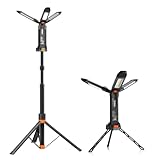
Overview: This rechargeable work light prioritizes portability and cordless convenience over raw power. Delivering 700-2,200 lumens through three individually controllable LED tubes, it’s designed for camping and mobile tasks. The 8Ah battery provides up to 17 hours of runtime on low brightness. The detachable tripod extends to 57 inches, while dual color temperature options (4000K/6500K) adapt to various environments.
What Makes It Stand Out: The concealed mini tripod integrated into the lamp base is genuinely innovative, allowing use without the full tripod. Individual control of each LED tube lets users illuminate specific areas while conserving battery. USB-C charging modernizes the experience, and the 8Ah battery capacity exceeds most competitors. The 4-in-1 design enables handheld, floor-standing, hanging, or tripod-mounted configurations.
Value for Money: At $79.99, you’re paying for cordless freedom rather than brightness. While 2,200 lumens is modest compared to corded models, the 17-hour runtime and versatility justify the cost for outdoor enthusiasts. Comparable cordless systems often cost $100+ with less battery capacity.
Strengths and Weaknesses: Strengths include true cordless operation, exceptional battery life, modular head control, compact storage, USB-C charging, and dual color temperatures. The lightweight design enhances portability. Weaknesses are limited brightness for large job sites, relatively short tripod height, battery degradation over time, and higher cost-per-lumen than corded alternatives.
Bottom Line: Ideal for campers, mobile contractors, and emergency preparedness where portability and runtime outweigh maximum brightness. While not suited for large construction sites, its cordless flexibility and smart features make it a versatile lighting companion for outdoor adventures and focused task work.
8. ULANZI MT-89 Extendable Tripod Aluminum, 82" Portable Adjustable Light Stand with 1/4" Screw Quick Release, Camera Phone Tripod for Camera Video Light Smartphone, Lightweight for Travel,Up Load 2.2LBS

Overview: The ULANZI MT-89 is an ultra-lightweight aluminum tripod designed for mobile creators. Extending to 82 inches yet weighing just 1.31 pounds, it supports cameras, video lights, and smartphones up to 2.2 pounds. The quick-release plate enables rapid equipment changes. The compact 15.16-inch folded length fits easily in backpacks. It’s engineered for travel vloggers and content creators prioritizing portability.
What Makes It Stand Out: The extreme weight-to-height ratio is remarkable—few tripods achieve 82-inch extension at under 1.5 pounds. The quick-release mechanism is genuinely convenient for run-and-gun shooting. The red locking rings provide visual confirmation of leg security. Its primary distinction is honest marketing: the manufacturer explicitly warns against overloading at full extension.
Value for Money: At $29.95, this tripod redefines budget-friendly portability. Comparable lightweight stands cost $50-80 with similar load limitations. For smartphone videographers and owners of small LED panels, it delivers professional-height perspectives at entry-level pricing. The aluminum construction ensures reasonable durability.
Strengths and Weaknesses: Strengths include exceptional portability, impressive maximum height, quick-release functionality, intuitive leg locks, and unbeatable price. It’s ideal for action cameras and lightweight LED panels. Weaknesses are the restrictive 2.2-pound capacity, compromised stability when fully extended with heavier loads, and lack of advanced features like a ball head.
Bottom Line: The MT-89 excels as a travel companion for lightweight gear. Content creators using smartphones, action cameras, or small video lights will appreciate its packability and height range. However, professionals requiring rock-solid stability for heavy equipment should invest in sturdier alternatives.
9. Szwbee 32000 Lumen LED Work Light with Stand & Remote, 4-Head 280W Portable Tripod Light with 16.5FT Cord, 3000K–6000K Adjustable, Waterproof Light for Indoor & Outdoor Job Site Workshop Construction

Overview: The Szwbee work light dominates brightness with 32,000 lumens from four independent LED heads. This 280W system includes a remote control for adjusting brightness, color temperature (3000K-6000K), and power. The IP66 waterproof rating and reinforced tripod target professional construction sites. A 16.5-foot cord provides ample reach, while independent head adjustability eliminates shadows across large areas.
What Makes It Stand Out: Remote control functionality is a game-changer for active job sites, allowing adjustments while working. Four heads provide superior coverage versus three-head systems. The expansive color temperature range reduces eye strain during extended use and adapts to different tasks. Reinforced screws securing each head prevent the wobbling common in lesser tripods. Each head contains 144 LED beads for exceptional illumination density.
Value for Money: At $69.99, this represents extraordinary value—dollar-per-lumen pricing undercuts competitors by 30-50%. Professional alternatives with similar brightness often exceed $150. The included remote, adjustable color temperature, and four-head design add premium features without premium pricing.
Strengths and Weaknesses: Strengths include class-leading brightness, remote convenience, versatile color temperatures, rock-solid stability, waterproof construction, and independent head control. The detachable heads add flexibility. Weaknesses are corded-only operation limiting placement, significant weight reducing portability, and potential overkill for residential use. The remote requires line-of-sight.
Bottom Line: For professionals demanding maximum illumination and convenience, this Szwbee light is unmatched. The remote control and four-head design solve real job site frustrations, while the price makes high-end features accessible. It’s the top choice for construction and large-scale projects where brightness and adaptability are critical.
10. VIJIM MT-79 Extendable Photography Light Stand, 81" Portable Adjustable Light Tripod with 1/4" Screw, 360° Ball Head Camera Phone Tripod for Continute Output Lighting, Webcams, Cameras,for Pocket3

Overview: The VIJIM MT-79 is an 81-inch aluminum tripod with an integrated 360° ball head for content creators. Weighing just 550 grams, it features seven height levels and converts between table-top and selfie stick configurations. The standard 1/4-inch screw supports webcams, compact cameras, video lights, and smartphones. It collapses to 14.4 inches for travel and includes non-slip foot pads.
What Makes It Stand Out: The integrated ball head is a significant advantage over basic light stands, enabling smooth pan-and-tilt adjustments without additional accessories. The convertible design between tripod and selfie stick modes maximizes utility for vloggers. Seven extension levels provide finer height control than typical four-section legs. The large-area leg grips enhance stability despite the lightweight build.
Value for Money: At $29.95 with a ball head, this tripod aggressively undercuts competitors. Similar stands with ball heads typically start at $45. For streamers using webcams and mobile videographers, it delivers professional features at entry-level pricing. The one-year warranty adds confidence.
Strengths and Weaknesses: Strengths include the included ball head, ultra-lightweight design, impressive 81-inch height, convertible functionality, and precise height adjustments. It’s stable with loads under 1.5 pounds. Weaknesses are the modest 2.2-pound capacity, instability with heavier equipment at full extension, and lack of an included phone holder. The ball head’s durability under heavy use remains unproven.
Bottom Line: The VIJIM MT-79 is excellent for content creators needing an affordable, portable tripod with angle adjustment capabilities. It outperforms basic light stands for webcam and smartphone use but cannot replace professional supports for heavy gear. For mobile creators and streamers, it offers outstanding versatility and value.
Why Proper Lighting is Non-Negotiable in Car Care
Paint correction without proper lighting is essentially guesswork. Those microscopic scratches, holograms, and orange peel textures hide in plain sight under inadequate illumination. Professional detailers know that defects reveal themselves differently depending on light intensity, angle, and color temperature. A single overhead fluorescent fixture creates a blanket of flat, lifeless light that masks as many issues as it reveals.
Tripod-mounted inspection lights solve this by giving you control over your visual environment. You can replicate the harsh scrutiny of direct noon sunlight to find rock chips, or use diffused side-lighting to expose wash-induced swirls that only appear when light grazes the surface at shallow angles. This level of control is critical when you’re making irreversible decisions about clear coat removal or spending hours on a concours-level detail.
What Makes Tripod Inspection Lights Different?
The fundamental advantage lies in stability and positioning freedom. While a handheld inspection light forces you to divide attention between holding the tool and evaluating the surface, tripod lights create a fixed light source you can move around. This allows you to adopt the proper viewing stance—typically with your eye at panel level and several feet back—exactly how judges scrutinize cars at Pebble Beach.
Modern tripod systems also offer height adjustability from ground-level wheel inspection to overhead roof panel examination without repositioning the base. The best models feature articulating heads that pivot 360 degrees and tilt 180 degrees, letting you maintain perfect beam angle while you circle the vehicle. Compare this to repositioning a floor lamp or recruiting a helper to hold a flashlight, and the efficiency gains become obvious for both mobile detailers and fixed-location shops.
Key Features That Separate Professional-Grade from Amateur Hour
Not all tripod lights deserve space in your garage. The difference between a $50 hardware store special and a professional inspection system runs deeper than brand names. Understanding these specifications helps you invest wisely.
Lumens and Brightness: Finding the Sweet Spot
Lumens measure total light output, but more isn’t always better for inspection work. A blistering 5000-lumen floodlight will wash out fine scratches and blind you with reflections. For paint inspection, the sweet spot typically falls between 1000-3000 lumens, depending on your workspace size and ambient light conditions.
The key is adjustability. A light that pumps out 2500 lumens at maximum but dims smoothly to 200 lumens gives you versatility for different tasks: high power for overall panel assessment, low power for close-up swirl detection without overwhelming glare. Look for models with stepped dimming rather than simple high/low settings—1% increments provide surgical precision when you’re chasing that last 1% of defect removal.
Color Temperature: Why Kelvin Matters for Paint Inspection
Color temperature, measured in Kelvin (K), fundamentally changes how defects appear. Warm light (3000K-4000K) casts a yellowish hue that can hide imperfections, while extremely cool light (6000K+) creates a blue tint that artificially exaggerates some defects while masking others.
For automotive paint work, 5000K-5500K represents the gold standard—pure white light that closely matches midday sun. This neutral illumination shows true paint color and lets you evaluate metallic flake, pearl effects, and tint coats accurately. Some advanced systems offer adjustable color temperature, letting you toggle between warm and cool to catch different defect types on the same panel.
Color Rendering Index (CRI): The Hidden Spec That Pros Obsess Over
CRI measures how accurately a light source reveals colors compared to natural sunlight. A typical hardware store LED might score 70-80 CRI, making it fine for changing tires but terrible for paint evaluation. Professional inspection lights must achieve 95+ CRI minimum, with 98+ being ideal.
High CRI becomes critical when color-matching touch-up paint or evaluating multi-stage paint jobs. Low CRI lights can make a perfect color match appear slightly off, leading to unnecessary rework. For ceramic coating applications, high CRI ensures you spot high spots and streaks before they cure, saving hours of polishing correction.
Beam Angle and Adjustability: Spotlight vs Floodlight
Beam angle determines how light interacts with the paint surface. A narrow 25-degree spotlight creates intense glare and dark shadows—useful for pinpointing specific scratches but terrible for overall panel assessment. A wide 120-degree floodlight provides even coverage but lacks the intensity to reveal fine defects.
The professional solution is variable focus or interchangeable lenses. Some premium systems let you twist the head to adjust beam angle from 30 to 120 degrees, while others include snap-on diffusers and reflectors. For tripod use, a 60-90 degree beam with the ability to add diffusion provides the best starting point for most car care tasks.
Power Source: Battery, Corded, or Hybrid?
Your workflow dictates the best power solution. Corded lights offer unlimited runtime but create trip hazards and limit placement options. Battery-powered units provide ultimate mobility but require charge management and can fade as cells deplete.
Hybrid systems give you the best of both worlds—run on AC power in the shop with automatic battery backup for mobile jobs. For garage-based detailers, a 10-foot cord with integrated cable management works perfectly. Mobile professionals should prioritize swappable battery packs with USB-C fast charging and clear runtime indicators showing remaining minutes at current brightness.
Build Quality and Durability: Workshop-Worthy Construction
Garage environments are brutal on equipment. Chemical exposure from wheel acids, fallout removers, and ceramic coating overspray can degrade cheap plastics. Look for aluminum or reinforced polymer housings with chemical-resistant finishes.
IP65 rating should be your baseline for dust and moisture resistance. The tripod itself needs robust leg locks that won’t slip under vibration from polishers and should feature non-marring feet that won’t scratch epoxy floors. Professional units use metal threads for mounting rather than plastic, which strips after a few attachment cycles.
Height and Stability: The Tripod Factor
A tripod that wobbles at full extension is worse than no tripod at all. Quality systems extend from 2 feet for bumper work to 7+ feet for roof inspection while maintaining rigidity. The center column should raise and lower smoothly without drift.
Stability features include retractable spiked feet for outdoor use on gravel and rubberized feet for indoor floors. Some professional models incorporate a hook on the center column for hanging a sandbag—essential when you’re working in breezy conditions or with heavy light heads that raise the center of gravity.
Portability and Storage: From Garage to Mobile Detailing
Even garage-based detailers need to move lights around vehicles and store them efficiently. A folded length under 30 inches fits most tool cabinets. Weight matters too—carbon fiber tripods slash pounds but triple cost. Aluminum offers the best balance, with quality systems weighing 5-7 pounds total.
Quick-release plates let you detach the light head for handheld use in tight spaces like engine bays or wheel wells. Carrying cases with padded compartments protect your investment and keep accessories organized. For mobile detailers, look for systems where the tripod doubles as a carrying handle for the light head itself.
Understanding Light Technologies: LED vs Halogen vs Fluorescent
LEDs dominate modern inspection lighting for good reason. They produce minimal heat—crucial when you’re working inches from paint—offer instant full brightness, and last 50,000+ hours. Their efficiency means you get 2000 lumens from a battery pack that would struggle to power a 500-lumen halogen.
Halogen lights provide excellent CRI and color temperature but run blisteringly hot, making them hazardous near paint and PPF. They also draw massive power, limiting battery options. Fluorescent tubes offer diffuse light but are fragile, contain mercury, and suffer from flicker that can obscure defects during inspection. For car care, premium COB (Chip-on-Board) LEDs are the undisputed champion.
Tripod Types and Mechanisms: More Than Just Three Legs
The tripod itself is as important as the light head. Different designs excel for specific car care scenarios.
Traditional Telescoping Tripods
These photography-style tripods offer maximum height and stability. Twist-lock or lever-lock leg sections let you level on uneven garage floors. Many include a ball head or pan-tilt head for precise angle adjustment. The downside is setup time—multiple leg sections take longer to deploy than simpler designs.
Compact Tabletop Tripods
For mobile detailers working in tight client garages, tabletop tripods provide stability on car hoods, tool chests, or even the vehicle itself (with protective padding). They sacrifice height for portability but excel for close-up work on specific panels. Some models feature flexible legs that wrap around roll bars or mirror mounts for creative positioning.
Magnetic Base Tripods
These innovative systems replace one or more legs with powerful neodymium magnets, letting you attach directly to car lifts, metal garage cabinets, or even the vehicle’s steel frame (with paint protection). They’re unbeatable for engine bay work or undercarriage inspections but require a ferrous surface, limiting placement options.
Articulating Arm Systems
Professional detailers increasingly prefer articulating arms over traditional tripods. These wall-mounted or bench-mounted systems extend like a dentist’s lamp, offering infinite positioning without floor space requirements. While not technically “tripods,” they serve the same function with superior precision and zero tripping hazard. The investment pays off for dedicated detailing bays.
The Role of Dimmability and Power Control
Variable brightness isn’t just a convenience—it’s a diagnostic tool. Starting at low power (200-400 lumens) reveals the overall finish and lets you spot major defects without overwhelming glare. Gradually increasing intensity helps you prioritize which scratches need aggressive correction versus those that will disappear with a single-stage polish.
Some advanced systems include strobe or pulse modes that freeze polisher rotation visually, letting you check for pad wobble or technique issues in real-time. Look for lights with memory functions that return to your last-used brightness, saving adjustment time when moving between panels.
Weather Resistance and IP Ratings: Detailing in Real-World Conditions
Mobile detailers face rain, humidity, and temperature extremes. An IP65 rating ensures the light survives rain exposure during outdoor jobs, while IP67 allows temporary submersion—useful if you’re working near pressure washers. The rating system is specific: first digit is dust protection (6 is maximum), second is water protection (5 is water jets, 7 is immersion).
Internal battery compartments should be gasket-sealed separately from the electronics. Charging ports need rubber covers that actually stay closed. In humid climates, look for models with internal silica gel compartments or condensation drains—moisture inside the lens fogs optics and can cause permanent damage.
Smart Features and Connectivity: The Future of Inspection Lighting
Bluetooth connectivity and smartphone apps might seem gimmicky until you’re balancing on a step ladder adjusting a 7-foot-high light. Premium systems let you control brightness, color temperature, and beam angle from your phone. Some even save preset scenes: “Paint Correction Mode” at 5500K, 1500 lumens, 60-degree beam; “Ceramic Coating Mode” at 5000K, 800 lumens, diffused.
Group control allows you to sync multiple lights, eliminating the tedious process of adjusting each unit individually. Battery management apps show exact runtime remaining and send alerts when charge drops below 20%. For professional shops, some systems integrate with shop management software, automatically logging inspection hours for billing purposes.
How to Position Your Tripod Light for Maximum Effectiveness
The classic “detailing triangle” positions your eye, the light source, and the defect in a precise relationship. For swirl detection, place the light 45 degrees to the panel surface and view from the opposite side at panel level. This creates shadows in the scratch valleys that make them pop.
For overall finish evaluation, position the light directly above the panel but angled 30 degrees toward you, simulating how sunlight hits a car outdoors. When checking for high spots in ceramic coating, use cross-polarized positioning—two lights at 90-degree angles to each other eliminate reflections and reveal coating thickness variations. Always move the light, not yourself, when scanning large panels—your viewing angle should remain constant.
Common Mistakes That Ruin Your Inspection Results
Using maximum brightness constantly is the rookie error. Excessive lumens wash out fine defects and cause eye fatigue. Another mistake is inconsistent positioning—moving your viewing angle instead of the light source creates false positives and misses real issues.
Neglecting ambient light control sabotages even the best tripod system. A single overhead fluorescent fixture competing with your inspection light creates conflicting color temperatures and confusing shadows. Use blackout curtains or work during low-light hours for critical inspection phases. Finally, dirty lenses and reflectors scatter light unpredictably—clean optics weekly with microfiber cloths and isopropyl alcohol.
Maintenance and Care for Longevity
Treat your inspection light like your best polisher. Wipe down the tripod legs after each use to prevent chemical buildup. Lubricate leg locks monthly with dry silicone spray—never oil-based products that attract dust. Store batteries at 50% charge if you won’t use the light for weeks; full charge storage degrades lithium cells.
Inspect power cables for nicks and kinks, especially at strain relief points. For battery models, cycle through all cells every month—don’t just use the primary pack while spares sit forgotten. Clean lens optics with dedicated lens cleaner, not glass cleaner that contains ammonia. Check tripod stability quarterly by fully extending and gently pushing the head—any wobble indicates worn bushings that need replacement.
Budget vs Premium: Where to Invest Your Money
Entry-level tripod lights ($50-$150) get you brightness and basic adjustability but sacrifice CRI, build quality, and beam control. They’re fine for weekend warriors doing occasional wax jobs but will frustrate serious detailers. Mid-range units ($150-$350) hit the sweet spot for most enthusiasts, offering 95+ CRI, solid construction, and reliable adjustability.
Premium systems ($350-$800) justify their cost for professionals through hybrid power, app control, and articulating heads that save minutes on every panel. The ROI comes from catching defects before they become callbacks and from reduced eye strain during 8-hour correction sessions. Invest first in CRI and beam quality—brightness is cheap, but accurate color rendition is what separates pro results from amateur hour.
Safety Considerations in the Workshop
A 7-foot tripod with a heavy light head is a tip-over hazard waiting to happen. Always position tripods where they won’t get bumped by passing people or rolling tool chests. Route cables overhead or use cord covers to prevent tripping—garage floors are hard enough without adding fall risks.
Electrical safety matters, especially with corded models near water. Use GFCI-protected outlets for all inspection lighting. Battery models eliminate shock risk but introduce fire hazards if cells are damaged—inspect battery packs for swelling or corrosion monthly. Never leave lights running unattended near flammable materials like rags soaked in solvents. The heat from even LED heads can ignite materials in enclosed spaces.
Frequently Asked Questions
What’s the ideal lumen range for paint correction work?
For most garage environments, 1500-2500 lumens provides optimal defect visibility without overwhelming glare. Start at the lower end for dark colors and increase for silver/white vehicles. The key is smooth dimmability rather than raw power.
Can I use a photography tripod with any LED light?
Technically yes, but photography tripods prioritize compactness over workshop durability. Their leg locks and heads aren’t designed for chemical exposure or vibration. Plus, most lack the height range needed for vehicle roof inspection. A dedicated inspection tripod uses heavier-duty materials and often includes features like cable management clips.
Why does color temperature matter more for ceramic coating than waxing?
ceramic coatings cure quickly, leaving little time to catch high spots or streaks. The wrong color temperature can make uneven coating thickness appear level. At 5500K, you see the true curing state. Also, many coatings have a slight blue tint when wet—neutral light prevents color confusion.
How do I prevent my tripod from scratching epoxy garage floors?
Use non-marring rubber feet and keep them clean of grit. For extra protection, place silicone furniture pads under each foot. Never drag a tripod—always lift and place. Some pros keep a dedicated 3x3 foot mat they position the tripod on, which also catches any chemical drips.
Is a single high-end light better than two mid-range units?
Two mid-range lights usually win for versatility. You can position them for cross-lighting, use one for overall assessment while the other does detail work, or have a backup when batteries die. A single premium light excels for specific tasks but limits your lighting strategies.
What’s the real-world difference between 95 CRI and 98 CRI?
On solid colors, minimal. But on metallic and pearl finishes, that 3-point difference reveals flake orientation and tint coat uniformity that 95 CRI might miss. For concours work or color-matching, 98+ CRI is non-negotiable. For weekend waxing, 95 CRI suffices.
How far should I position the light from the panel?
For general inspection, 3-4 feet creates even coverage. For swirl detection, move to 2-3 feet to increase intensity and shadow definition. For ceramic coating high spot checks, 1-2 feet with the light nearly parallel to the surface works best. Always adjust distance before brightness—changing distance alters the light-to-shadow ratio.
Can tripod lights help with interior detailing?
Absolutely. Position a tripod light outside the vehicle, aiming through windows to illuminate interiors without creating harsh reflections on glass. For trunk and engine bay work, compact tabletop tripods shine. Some detailers mount small LED panels on flexible tripods that clip to seat frames.
How do I clean chemical residue off the light housing?
Use a microfiber towel dampened with distilled water for light cleaning. For stubborn coating residue or polish splatter, isopropyl alcohol on a cotton swab works. Never spray cleaner directly on the housing—liquid can seep into switches. Avoid aggressive solvents like acetone that damage protective coatings.
What’s the lifespan of a professional tripod inspection system?
With proper maintenance, the light head lasts 50,000+ hours (about 17 years at 8 hours daily). The tripod mechanism typically needs bushing replacement every 3-5 years in professional use. Battery-powered units require cell replacement every 2-3 years depending on cycle count. Quality systems become shop mainstays that outlast multiple polishers.