The automotive detailing world has evolved dramatically over the past decade, and hybrid ceramic wax represents one of the most significant leaps forward for enthusiasts who demand professional-grade results without the complexity of multi-stage coating systems. You’ve likely heard the buzz in online forums and seen the impressive water-beading videos, but what exactly makes this technology so revolutionary for everyday car care?
Unlike the waxes your father applied in the driveway every spring, modern hybrid ceramic waxes bridge the gap between traditional carnauba formulas and expensive professional ceramic coatings, delivering exceptional hydrophobic properties and UV resistance with application processes simple enough for a Saturday afternoon project. As paint protection becomes increasingly crucial for maintaining your vehicle’s value and appearance in harsh environmental conditions, understanding the nuances of these advanced formulas isn’t just helpful—it’s essential for making an informed investment in your car’s finish.
Top 10 Hybrid Ceramic Wax
Detailed Product Reviews
1. Meguiar’s Hybrid Ceramic Wax, Easy-to-Use Spray Wax for Car Detailing with the Superior Protective Power of Advanced SiO2 Hybrid Barrier Technology, 26 Oz Spray Bottle

Overview: Meguiar’s Hybrid Ceramic Wax revolutionizes paint protection with its breakthrough spray-on, rinse-off formula. This 26-ounce bottle delivers ceramic-grade SiO2 technology without the complexity of traditional ceramic coatings. Designed for enthusiasts who want professional results without professional effort, it creates a durable hydrophobic barrier that repels water, dirt, and contaminants while enhancing gloss.
What Makes It Stand Out: The application method is genuinely innovative—simply spray onto a wet vehicle after washing, rinse thoroughly, and dry. No buffing, curing, or special equipment required. The advanced SiO2 hybrid barrier technology bonds during the rinse cycle, creating protection that traditional spray waxes can’t match. The extreme water beading action is immediately visible, with droplets forming tight beads that roll off effortlessly.
Value for Money: At $13 for 26 ounces, this represents exceptional value. Comparable traditional carnauba waxes cost more per ounce and require far more labor. While not as durable as professional ceramic coatings lasting years, it provides months of protection for a fraction of the cost. The time saved alone justifies the price, making frequent reapplication practical and economical.
Strengths and Weaknesses: Strengths include foolproof application, no residue on trim, impressive hydrophobic properties, and suitability for all paint types. The large bottle size allows multiple applications. Weaknesses: longevity can’t match professional coatings (typically 3-6 months), performance depends on proper application and surface prep, and it may not build thickness like traditional waxes.
Bottom Line: Perfect for DIY detailers seeking ceramic protection without the learning curve. It delivers genuine hydrophobic performance with minimal effort, making it ideal for maintaining daily drivers between major details. For $13, it’s an easy recommendation.
2. Turtle Wax Hybrid Solutions Ceramic Spray Coating, High Shine Car Wax, Offers Durable Paint Protection, Extreme Water Beading Action, Safe for Glass, Wheels, Trim and More, 16 oz (Pack of 1)
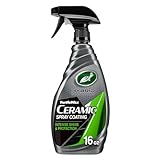
Overview: Turtle Wax’s Hybrid Solutions Ceramic Spray Coating delivers professional-grade protection in a user-friendly format. This 16-ounce spray combines ceramic polymers with traditional wax benefits, creating a durable shield against UV rays, dirt, and road contaminants while boosting color depth and clarity to a mirror-like finish.
What Makes It Stand Out: True versatility sets this apart—it’s safe for paint, glass, headlights, trim, and wheels, eliminating the need for multiple products. The formula allows application in direct sunlight, a rarity among ceramic products. It creates an exceptionally slick surface where water instantly beads and rolls off, significantly reducing drying time and preventing water spot formation.
Value for Money: At $13.48 for 16 ounces, it’s competitively priced against other ceramic sprays. While smaller than some competitors, its multi-surface capability means you won’t need separate trim or wheel protectants. The UV protection adds value by preventing paint oxidation, potentially saving on future correction costs. Performance rivals products costing twice as much.
Strengths and Weaknesses: Strengths include impressive gloss enhancement, true multi-surface safety, sun-friendly application, and excellent hydrophobicity. The spray delivery ensures even coverage. Weaknesses: requires buffing with a microfiber cloth, best results demand clay bar prep, 16-ounce size limits applications per bottle, and it may leave residue if over-applied.
Bottom Line: An outstanding choice for detailers wanting maximum versatility. If you value the convenience of treating your entire vehicle’s exterior with one product, this delivers. The sun-application feature and UV protection make it particularly suitable for outdoor enthusiasts.
3. Meguiar’s Hybrid Ceramic Liquid Wax, Shield Your Paint with a Residue-Free Liquid Car Wax with Advanced SiO2 Hybrid Technology and Long-Lasting Water-Beading Protection, 16 Oz Bottle

Overview: Meguiar’s Hybrid Ceramic Liquid Wax bridges classic detailing and modern technology. This 16-ounce bottle delivers cutting-edge SiO2 hybrid protection through a familiar liquid wax application. It creates a resilient barrier against harsh elements while providing extreme water beading, all without the whitening residue that plagues traditional waxes on trim and gaskets.
What Makes It Stand Out: The residue-free performance is a game-changer—apply it confidently near black plastic and rubber without staining. It applies like traditional liquid wax but cures in minutes, delivering ceramic protection without specialized equipment. The formula maintains the tactile feedback and control that enthusiasts expect from liquid waxes while incorporating advanced hydrophobic technology.
Value for Money: At $24.23 for 16 ounces, it’s a premium-priced product. However, the residue-free formula saves time on cleanup and prevents unsightly white stains that require additional products to remove. The durability claims of several months per application mean fewer treatments annually, offsetting the higher initial cost compared to monthly spray applications.
Strengths and Weaknesses: Strengths include exceptional water beading, zero residue on non-painted surfaces, familiar application method, and professional-grade protection. It builds a more substantial layer than spray alternatives. Weaknesses: higher price point, requires more physical effort than spray-on options, needs proper curing time, and the smaller bottle size limits coverage area.
Bottom Line: Ideal for traditionalists wanting ceramic benefits without sacrificing application control. The non-whitening formula alone justifies the premium for vehicles with extensive trim. If you enjoy the ritual of waxing and demand professional results, this delivers exceptional value despite the higher price.
4. Meguiar’s G200416EU Hybrid Ceramic Liquid Car Wax 473ml Advanced SiO2 Technology

Overview: This European-variant of Meguiar’s Hybrid Ceramic Liquid Wax delivers advanced SiO2 protection in a familiar liquid format. The 473ml (16-ounce) bottle promises 4-6 months of durable paint sealing against the elements, combining traditional wax application ease with modern ceramic technology for extreme water beading action.
What Makes It Stand Out: The explicit 4-6 month protection claim provides clear expectations rarely stated by competitors. Its non-whitening formula on trim and rubber gaskets ensures clean application without tedious cleanup. The quick-curing formula sets in minutes rather than hours, making it practical for weekend detailers who need their vehicle ready promptly.
Value for Money: At $26.48, it’s the priciest option per ounce among the Meguiar’s lineup. However, the quantified longevity claim helps justify the cost—if you apply it twice yearly versus monthly sprays, the annual cost becomes competitive. The EU formulation may offer subtle differences in performance for European climate conditions, though most users won’t notice variations from the US version.
Strengths and Weaknesses: Strengths include the specific durability timeframe, residue-free performance, quick curing, and advanced hydrophobic protection. The recommendation to pair with Hybrid Ceramic Detailer shows a complete system approach. Weaknesses: premium pricing, potentially limited availability outside Europe, and minimal differentiation from the standard Meguiar’s liquid version.
Bottom Line: Choose this if you value explicit durability claims and want a proven, no-residue formula. While expensive, the extended protection period and professional results make it cost-effective for enthusiasts who detail semi-annually. It’s a set-and-forget solution for serious paint protection.
5. Turtle Wax Hybrid Solutions Ceramic Wet Wax, Spray on Car Wax for 1-Step High Gloss Shine and Ceramic Coating Protection for Paint, Wheels,Glass and More, Extreme Water Beading, 26 oz (Pack of 1)

Overview: Turtle Wax Hybrid Solutions Ceramic Wet Wax redefines convenience with its innovative wet-application formula. This 26-ounce spray is designed for use on freshly washed, wet vehicles—simply spray and towel dry for instant ceramic protection, high gloss, and extreme water beading in one streamlined step.
What Makes It Stand Out: The one-step application process is unmatched for speed. You apply it to wet surfaces during the drying phase, eliminating separate waxing sessions. It accelerates drying while preventing water spots, a unique dual benefit. The multi-surface formulation works safely on paint, glass, chrome, plastic, and wheels, making it a true all-in-one solution for post-wash protection.
Value for Money: At $13 for 26 ounces, this offers exceptional value per ounce. The time savings are substantial—what normally takes two separate steps becomes one efficient process. For weekly washers, this makes ceramic protection practical and affordable. The large bottle provides numerous applications, driving the cost-per-use extremely low compared to traditional methods.
Strengths and Weaknesses: Strengths include incredible time efficiency, water spot prevention, suitability for all exterior surfaces, and foolproof application. It makes ceramic protection accessible to absolute beginners. Weaknesses: durability is less than dedicated coatings (typically 1-2 months), performance varies with water quality, and it must be applied to wet surfaces only, limiting flexibility.
Bottom Line: The ultimate solution for time-pressed car owners who wash frequently. If you want ceramic protection without adding time to your wash routine, this is perfect. While not the longest-lasting option, the convenience factor makes it a revolutionary product for maintenance washing.
6. Turtle Wax Hybrid Solutions Ceramic Graphene Paste Wax for Car Detailing, High Gloss Shine, Extreme Water Beading, Long-Lasting Protection, for Paint, Glass Metal, Wheels and More, 5.5 oz (Pack of 1)
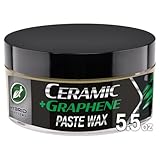
Overview: The Turtle Wax Hybrid Solutions Ceramic Graphene Paste Wax represents the cutting edge of consumer-grade automotive protection, combining traditional wax craftsmanship with modern ceramic and graphene polymer technology. This 5.5-ounce container delivers a professional-grade barrier against environmental contaminants while enhancing your vehicle’s aesthetic appeal through advanced chemical engineering.
What Makes It Stand Out: This product’s proprietary blend of ten different waxes infused with ceramic and graphene polymers creates a super-hydrophobic surface that produces dramatic water beading and sheeting action. Unlike conventional waxes, it actively defends against UV degradation while preserving your clear coat from oxidative wear. The formula’s versatility stands out—it safely enhances paint, glass, metal, chrome, aluminum, and even wheels, making it a true multi-surface solution for comprehensive vehicle detailing.
Value for Money: At $18.69, this paste wax positions itself as an accessible entry point into graphene-enhanced protection. While the 5.5-ounce size may seem modest, a little product goes a long way, typically covering 2-3 average-sized vehicles per container. Compared to professional ceramic coatings costing hundreds of dollars, this offers comparable water-repelling performance and gloss enhancement at a fraction of the price, delivering exceptional cost-per-application value.
Strengths and Weaknesses: Strengths include its advanced graphene-ceramic formula providing superior protection and slickness, true multi-surface compatibility, forgiving application even in direct sunlight, and professional-level results achievable by novices. Weaknesses involve the paste format requiring more physical effort than spray alternatives, the relatively small container size limiting high-volume users, and restrictions against use on textured plastics and rubber trim that may necessitate additional masking.
Bottom Line: This graphene-infused paste wax is ideal for enthusiasts seeking maximum protection without professional installation costs. It excels for those wanting durable, multi-surface enhancement with cutting-edge technology. While spray-wax users may find the application more labor-intensive, the superior longevity and protection justify the extra effort for serious car care aficionados.
7. Turtle Wax Hybrid Solutions Ceramic Spray Coating, High Shine Car Wax, Offers Durable Paint Protection, Extreme Water Beading Action, Safe for Glass, Wheels, Trim and More, 16 oz (Pack of 2)
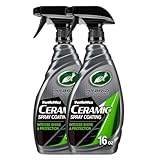
Overview: The Turtle Wax Hybrid Solutions Ceramic Spray Coating delivers advanced ceramic protection through an incredibly user-friendly spray format. This twin-pack offering provides 32 ounces of hydrophobic coating that forms a durable shield against UV rays, dirt, and road contaminants while delivering a mirror-like gloss finish across your vehicle’s exterior surfaces.
What Makes It Stand Out: The spray application revolutionizes ceramic protection, eliminating the complexity traditionally associated with ceramic coatings. This twin-pack configuration ensures you have ample product for multiple applications or larger vehicles. The formula creates an ultra-slick surface where water instantly beads and rolls off, dramatically reducing drying time and preventing water spot formation. Its comprehensive surface safety extends to glass, headlights, trim, and wheels, streamlining your detailing process with one versatile product.
Value for Money: At $23.38 for two 16-ounce bottles, this represents exceptional value in the ceramic protection category. You’re receiving twice the typical single-bottle quantity at a price point that undercuts many premium spray waxes while delivering superior ceramic-based protection. The cost-per-ounce makes regular maintenance applications economically feasible, allowing you to maintain consistent protection year-round without breaking your detailing budget.
Strengths and Weaknesses: Major strengths include foolproof spray-and-buff application, generous quantity in the twin-pack, true multi-surface versatility, and performance that rivals more expensive competitors. The ability to apply in direct sunlight adds practical flexibility. However, achieving optimal results requires thorough surface decontamination with clay bar or polish beforehand, adding a preparation step. The spray format may not match the longevity of paste waxes, necessitating more frequent reapplication for maximum protection.
Bottom Line: Perfect for busy car owners who prioritize convenience without sacrificing protection quality. The twin-pack ensures you’re always stocked for regular maintenance. While dedicated enthusiasts might prefer paste for ultimate longevity, this spray coating excels for those wanting professional results with minimal time investment and maximum ease of use.
8. Turtle Wax 53412 Hybrid Solutions Ceramic Polish and Wax, Removes Car Scratches and Swirl Marks, Provides Water Repellency, Protection, and Shine, Hand or Machine Application, 14 oz. (Pack of 1)

Overview: The Turtle Wax Hybrid Solutions Ceramic Polish and Wax streamlines your detailing routine by combining paint correction, polishing, sealing, and protection into one efficient step. This 14-ounce formula tackles light surface scratches, swirl marks, and oxidation while simultaneously laying down a durable ceramic-infused wax barrier that keeps your vehicle cleaner for extended periods.
What Makes It Stand Out: This product’s one-step architecture eliminates the traditional multi-stage correction process, making paint enhancement accessible to beginners. The ceramic-infused polishing compound not only removes imperfections but leaves behind long-lasting hydrophobic protection that repels water and contaminants. Its synthetic wax polymers enhance color depth and gloss, delivering a mirror-like shine that endures for months rather than weeks, bridging the gap between pure polishes and standalone waxes.
Value for Money: At $13.44, this polish and wax hybrid delivers remarkable value by consolidating two separate products into one. Purchasing dedicated polishing compounds and protective waxes separately would easily cost twice as much. The 14-ounce container provides sufficient product for multiple applications, making it an economical choice for maintaining your vehicle’s finish while addressing minor paint defects without professional detailing expenses.
Strengths and Weaknesses: Key strengths include significant time savings through combined correction and protection, impressive swirl mark and light scratch removal capabilities, and the convenience of hand or machine application. The formula’s ability to be topped with additional ceramic products allows for customized protection levels. However, as a compromise product, it won’t replace dedicated heavy-cut compounds for deep scratches, and the protection level, while good, may not match specialized pure waxes or coatings focused solely on protection.
Bottom Line: Ideal for car owners with lightly swirled or scratched paint who want improvement without investing in multiple specialized products. It’s a smart choice for maintenance detailing and minor correction. For vehicles with severe paint defects or those seeking maximum protection, dedicated products may be preferable, but this excels as an efficient all-in-one solution.
9. Turtle Wax Hybrid Solutions Ceramic Acrylic Black Car Wax Spray, Restores Apperance of Black Car Paint, Ceramic Coating Protection, Extreme Water Beading, High Gloss Shine, 16 oz (Pack of 1)
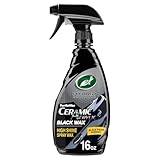
Overview: Specifically engineered for dark-colored vehicles, the Turtle Wax Hybrid Solutions Ceramic Acrylic Black Car Wax Spray addresses the unique challenges faced by black, dark blue, and charcoal paint finishes. This 16-ounce spray formulation combines black-pigmented carnauba wax with advanced ceramic polymers to restore depth while filling light scratches and swirl marks in one convenient step.
What Makes It Stand Out: The black pigmented formula actively enhances color depth and clarity, unlike generic waxes that can appear hazy on dark paint. It fills minor imperfections rather than just masking them, creating a smoother surface that reflects light more uniformly. The acrylic infusion provides critical UV defense specifically formulated to prevent black paint’s tendency toward fading and oxidation, while ceramic polymers deliver durable water-repelling protection that simplifies maintenance between washes.
Value for Money: At $14.29, this specialized treatment offers targeted value that generic products cannot match. Black vehicle owners typically spend more on products trying to achieve satisfactory results, making this reasonably priced for its niche formulation. The 16-ounce size provides multiple applications, and the time saved by using a product designed specifically for your paint color eliminates the frustration and expense of trial-and-error with incompatible waxes.
Strengths and Weaknesses: Primary strengths include the color-specific formulation that truly enhances dark paint, effective scratch-filling capabilities, superior UV protection for fade-prone black finishes, and the convenience of spray application. The 24-hour cure time for maximum benefits ensures durable results. The obvious limitation is its specialization—this product is unsuitable for light-colored vehicles, restricting its utility in multi-car households with varied paint colors. It also requires careful application to avoid buildup on edges.
Bottom Line: An essential product for black vehicle owners seeking to maintain that showroom depth and clarity. It eliminates the common frustrations of greying residue and subpar results from standard waxes. If you own a dark-colored car and want maximum aesthetic impact with minimal effort, this specialized formula justifies its purchase immediately.
10. Meguiar’s Hybrid Ceramic Wash & Wax - Sophisticated Car Wash Gently Cleans and Adds Shine and Slickness While Boosting Paint with Hybrid Ceramic Wax and Extreme Water Beading - 48oz

Overview: Meguiar’s Hybrid Ceramic Wash & Wax redefines maintenance cleaning by integrating advanced Hybrid Ceramic wax protection into a premium car wash soap. This 48-ounce concentrate gently lifts dirt and grime while simultaneously boosting your paint’s protective layer, delivering extreme water beading action that makes subsequent cleaning and drying significantly easier.
What Makes It Stand Out: This product’s dual-action formula eliminates the separate wash-then-wax process, saving substantial time for regular maintenance. The hybrid ceramic technology provides genuine protection enhancement rather than just cosmetic gloss. Its remarkable versatility shines through multiple application methods—whether using a foam cannon at a 6:1 dilution or traditional bucket wash at 2 ounces per gallon, it adapts to your preferred detailing style while remaining safe on all glossy paints and clear coats.
Value for Money: At $10.56 for 48 ounces ($0.22 per fluid ounce), this represents outstanding economy in the ceramic protection space. The concentrated formula yields numerous washes, making it far more cost-effective than purchasing separate premium car shampoo and spray wax. For those who wash their vehicles frequently, this product essentially provides ongoing protection maintenance at minimal incremental cost, extending the life of previously applied waxes or coatings.
Strengths and Weaknesses: Major strengths include exceptional convenience through combined cleaning and protection, clear coat-safe formulation that won’t strip existing wax, versatile dilution ratios for different application methods, and impressive water beading that rivals dedicated spray products. However, as a maintenance product, it doesn’t replace standalone wax applications for maximum protection and requires regular use to maintain benefits. The protection level, while genuine, is less durable than dedicated paste waxes or coatings.
Bottom Line: Perfect for car owners who wash frequently and want to maintain protection effortlessly between full wax applications. It excels as a time-saving maintenance solution that delivers real ceramic benefits. While not a replacement for periodic deep protection, it’s an intelligent addition to any car care regimen that prioritizes convenience and consistent upkeep.
What Exactly Is Hybrid Ceramic Wax?
Hybrid ceramic wax is a sophisticated blend of traditional wax polymers infused with silicon dioxide (SiO2) nanoparticles—the same active ingredient found in professional-grade ceramic coatings. This fusion creates a protective layer that chemically bonds to your vehicle’s clear coat while maintaining the user-friendly application characteristics of conventional waxes. The “hybrid” designation refers to this marriage of old-school ease-of-use with cutting-edge nanotechnology, resulting in a product that delivers ceramic-like performance without requiring specialized equipment, controlled environments, or professional installation expertise.
The formulation typically combines synthetic polymers for flexibility and gloss with ceramic nanoparticles that create a hardened, glass-like surface structure. When properly applied, these products form a semi-permanent barrier that actively repels water, dirt, and contaminants while enhancing the depth and clarity of your paint’s finish. The concentration of SiO2 varies significantly between formulations, directly impacting durability, water behavior, and overall protection levels.
The Science Behind the Hybrid Formula
At the molecular level, hybrid ceramic waxes utilize suspended SiO2 particles that are small enough to fill microscopic imperfections in your clear coat while creating a new, smoother surface topology. These particles cross-link as the product cures, forming a durable matrix that becomes chemically bonded to the paint surface. The synthetic polymer component acts as a carrier and flexibility agent, preventing the brittle characteristics that pure ceramic coatings can exhibit while ensuring the product can be applied in thin, even layers without specialized tools.
This nanotechnology allows the protective layer to maintain a degree of breathability, which prevents moisture entrapment—a common issue with some traditional sealants—while still providing impressive chemical resistance against environmental contaminants like bird droppings, tree sap, and acid rain. The result is a protective coating that typically lasts 3-6 months, significantly outperforming traditional carnauba waxes while costing a fraction of professional ceramic coating installations.
How Hybrid Ceramic Wax Differs From Traditional Options
Understanding the landscape of paint protection helps contextualize where hybrid ceramic wax fits into your car care arsenal. Each category serves specific needs, but the hybrid approach occupies a unique middle ground that appeals to serious enthusiasts who detail their vehicles regularly.
Traditional Carnauba Wax: The Old Standard
Carnauba wax, derived from Brazilian palm leaves, has been the gold standard for automotive gloss for over a century. It provides warm, deep shine that’s particularly flattering on darker paints but offers minimal durability—typically 4-8 weeks under ideal conditions. Carnauba creates a physical layer that sits on top of the paint rather than bonding chemically, making it susceptible to detergent wash removal and environmental degradation. While it remains popular for show cars and concours events where maximum gloss is prioritized over longevity, it requires frequent reapplication that most daily drivers find impractical.
Synthetic Polymer Sealants: The Middle Ground
Pure synthetic sealants introduced polymer technology to create longer-lasting protection, typically 3-5 months. These products offer improved chemical resistance and easier application than carnauba but lack the advanced hydrophobic behavior and hardness characteristics of ceramic-infused formulas. They remain an excellent budget-friendly option for those prioritizing ease of maintenance over cutting-edge performance, though they don’t provide the dramatic water beading or self-cleaning properties that make ceramic hybrids so popular in the social media age of detailing.
Professional-Grade Ceramic Coatings: The Premium Choice
Full ceramic coatings represent the pinnacle of paint protection, offering 2-5 years of durability with extreme hardness ratings (9H) and phenomenal chemical resistance. However, they require meticulous paint correction beforehand, controlled application environments to prevent contamination, and professional installation that can cost thousands of dollars. The application process involves multiple layers, extended curing times, and specific maintenance protocols—making them impractical for DIY enthusiasts or those not ready to make a long-term commitment to a single vehicle.
Key Benefits of Choosing a Hybrid Ceramic Wax
The primary advantage of hybrid ceramic wax lies in its exceptional hydrophobic properties, which create dramatic water behavior that actively helps keep your vehicle cleaner between washes. Water beads up and rolls off at angles as low as 15-20 degrees, carrying away light dust and contaminants in what detailers call the “self-cleaning effect.” This characteristic significantly reduces water spotting after rain and makes routine washing faster and safer, as dirt has less opportunity to bond to the surface.
UV protection represents another critical benefit, with most quality hybrids blocking 90%+ of harmful ultraviolet radiation that causes paint oxidation and clear coat failure over time. This is particularly valuable for vehicles parked outdoors regularly. The chemical resistance to environmental contaminants like bird droppings, bug splatter, and tree sap is substantially improved over traditional waxes, giving you more time to remove these hazards before they etch into your paint.
Application speed and forgiveness during the process make hybrid waxes accessible to beginners while still satisfying experienced detailers. Most formulations allow application in direct sunlight (though it’s not recommended) and can be buffed off easily even if they dry completely, unlike some traditional waxes that become difficult to remove. The versatility of spray, liquid, and paste formats means you can choose an application method that matches your workflow preferences.
Potential Drawbacks to Consider
No product is perfect, and hybrid ceramic waxes have limitations that informed buyers should understand. Durability, while improved over traditional waxes, still pales compared to professional ceramic coatings. Most hybrids require reapplication every 3-6 months depending on environmental exposure and maintenance habits, which means ongoing time investment for long-term protection. In regions with harsh winters or extreme UV exposure, you might find yourself at the shorter end of that lifespan spectrum.
The initial cost per ounce is significantly higher than traditional waxes or sealants, though still far below professional coating installation. This can create sticker shock for those accustomed to $15 wax tins, though the cost-per-month of protection often works out favorably when factoring in reduced application frequency. Some lower-quality hybrids can create a somewhat “artificial” or “plastic-like” appearance on certain paint colors, particularly metallics, though premium formulations have largely solved this issue.
The learning curve for optimal application exists despite marketing claims of “effortless” use. Achieving the advertised durability requires proper surface preparation, correct product layering, and appropriate cure times—skip these steps and you’ll see performance drop dramatically. Additionally, the SiO2 content can make removal more challenging on hot days or dark-colored vehicles if you work too slowly or apply too heavily.
Essential Features to Evaluate Before Buying
When navigating the crowded marketplace of hybrid ceramic waxes, several technical specifications separate exceptional products from mediocre ones. Understanding these characteristics helps you make an informed decision based on your specific needs rather than marketing hype.
SiO2 Concentration Levels
The percentage of silicon dioxide in the formula directly correlates with durability and water behavior, though manufacturers rarely disclose exact concentrations. Instead, look for terms like “high-silica content,” “advanced SiO2 suspension,” or specific durability claims. Products advertising 6+ months of protection typically contain higher SiO2 concentrations than those promising 3 months. Be wary of vague “ceramic-infused” claims without specific performance metrics—these may contain minimal active ingredients.
Application Method Versatility
Quality hybrids offer flexibility in application. Spray formulas excel for maintenance applications and hard-to-reach areas but may sacrifice some durability compared to liquid or paste versions. The best products allow multiple application methods—spray-on/wipe-off, spray-on/rinse-off, or traditional applicator pad application—giving you options based on time constraints and conditions. Consider whether the product can be applied to wet or dry surfaces, as wet-application capability significantly speeds up the detailing process.
Curing Time and Conditions
Pay attention to manufacturer-specified cure times, which typically range from 24-48 hours for full hardness development. Some advanced formulas advertise “instant cure” or “no cure time,” but these generally sacrifice maximum durability for convenience. The ideal product cures to touch within 1-2 hours (allowing you to drive the vehicle) but continues hardening over 24+ hours. Check temperature and humidity requirements too—premium hybrids work across broader environmental ranges, while budget options may demand ideal conditions.
Longevity and Durability Ratings
Scrutinize durability claims carefully, noting whether they’re based on “ideal conditions” or real-world testing. Look for products that specify expected lifespan in months rather than vague “long-lasting” terminology. Consider your local climate—some formulations are specifically engineered for high-UV environments, while others prioritize salt and chemical resistance for winter conditions. Independent reviewer testing and enthusiast forum feedback often provide more realistic durability expectations than manufacturer claims.
Understanding Application Techniques
The method you choose for applying hybrid ceramic wax significantly impacts both the final result and the durability you achieve. Each technique has optimal use cases and learning curves that affect your workflow.
Spray-On, Wipe-Off Methods
This approach has revolutionized consumer-level ceramic protection, allowing application in as little as 15-30 minutes for an entire vehicle. The process involves misting the product onto a panel, immediately spreading with a microfiber towel, then buffing to a high gloss with a second clean towel. Work in small sections (2’x2’ maximum) to prevent the product from drying too quickly, especially on hot days. The key is using minimal product—5-6 sprays per panel is typically sufficient. Over-application doesn’t improve protection and makes removal unnecessarily difficult.
Traditional Paste Application
Paste formulations appeal to purists who prefer the control of applicator pads and the ritual of hand-application. This method involves applying thin, even layers with a foam applicator using cross-hatch patterns to ensure complete coverage. While more time-consuming (expect 45-90 minutes for a sedan), paste application often yields more uniform coverage and potentially longer durability due to the ability to work the product into the paint more thoroughly. The tactile feedback helps prevent missed spots, and the thicker consistency reduces waste from overspray or wind during outdoor application.
Surface Preparation: The Foundation of Success
The most critical factor determining your hybrid ceramic wax’s performance is the condition of the surface you’re applying it to. These products are designed to bond to clean, smooth clear coat—not to fill in or cover up existing contamination. Skipping proper preparation is the number one reason enthusiasts report disappointing durability.
Begin with a thorough decontamination wash using a pH-neutral automotive shampoo. Follow with a dedicated iron remover to dissolve embedded brake dust and rail particles that regular washing can’t remove. Next, perform a clay bar treatment or clay mitt pass to mechanically remove bonded surface contaminants like tree sap, overspray, and industrial fallout. This step is non-negotiable—any remaining contamination creates a barrier between the wax and your paint, preventing proper bonding.
After claying, inspect the paint for defects. While hybrid ceramic waxes can hide minor swirls temporarily, they won’t correct them, and the SiO2 layer will lock these imperfections beneath the surface. For optimal results, perform paint correction using a dual-action polisher and appropriate compound/polish combinations. Even a single-step polish to remove light oxidation and swirl marks will dramatically improve both the gloss and the wax’s ability to bond effectively. Finally, wipe down all surfaces with an isopropyl alcohol solution or dedicated surface prep spray to remove polishing oils and residues before applying your hybrid wax.
Durability Factors: What Affects Longevity?
Real-world durability rarely matches laboratory testing, and understanding the variables that accelerate degradation helps set realistic expectations and informs maintenance schedules. Several environmental and behavioral factors dramatically impact how long your hybrid ceramic wax protection lasts.
Environmental Exposure Impact
Geographic location plays a massive role in coating lifespan. Vehicles in the Arizona desert experience intense UV degradation that can reduce durability by 30-40% compared to milder climates. Coastal areas expose paint to salt air that accelerates chemical breakdown of the SiO2 matrix. Urban environments with industrial pollution and acid rain create etching challenges that compromise the protective layer. Garaged vehicles typically see 50-100% longer protection than those parked outdoors 24/7, as they’re shielded from UV, temperature extremes, and airborne contaminants.
Maintenance Wash Frequency and Technique
Paradoxically, washing your car too frequently with improper techniques can degrade hybrid ceramic wax faster than environmental exposure alone. Automated car washes with harsh brushes and alkaline detergents can strip protection within weeks. Even hand washing with aggressive scrubbing or dirty wash mitts creates micro-marring that compromises the coating’s integrity. The sweet spot is bi-weekly maintenance washes using pH-neutral, wax-safe shampoos and the two-bucket method with grit guards. This keeps contaminants from bonding while preserving the protective layer.
Cost-Benefit Analysis: Is It Worth the Investment?
Evaluating the true value of hybrid ceramic wax requires looking beyond the initial purchase price and considering the total cost of ownership over time. A quality hybrid ceramic wax typically costs $20-40 for enough product to treat a standard sedan 3-4 times. Assuming 4-month durability per application, you’re looking at $5-10 per month of protection when applying it yourself.
Compare this to professional ceramic coating at $1,500-3,000 for 3-5 years of protection, which works out to $25-80 monthly but requires significant upfront investment. Traditional carnauba wax at $15 per tin might seem cheaper, but with monthly reapplication needed, you’re spending more time and ultimately similar money for inferior protection. Factor in the reduced washing frequency and easier cleaning that hybrid waxes provide, and the time savings become a tangible benefit.
For the enthusiast who details their vehicle quarterly, hybrid ceramic wax offers the best balance of performance, cost, and flexibility. It allows you to experiment with different brands and formulations without committing to a multi-year coating, and the DIY nature means you’re not paying for professional labor. The protection level is more than sufficient for daily drivers that face real-world conditions rather than garage-queen show cars.
Common Application Mistakes to Avoid
Even experienced detailers can sabotage their results with hybrid ceramic waxes by falling into predictable traps. Recognizing these pitfalls before you start ensures your time investment yields maximum protection.
Applying to improperly decontaminated surfaces tops the list of errors. The SiO2 particles need direct contact with clean clear coat to form proper bonds. Any wax, sealant, or contamination layer prevents this chemical bonding, reducing durability to weeks instead of months. Always assume previous products are present and remove them thoroughly before application.
Over-application is another frequent mistake. More product doesn’t equal more protection—it just makes removal difficult and can cause streaking, hazing, or an uneven finish. The ceramic particles self-level at a specific thickness; additional layers beyond this simply waste product and create problems. Follow manufacturer guidelines precisely, and remember that thin, even layers always outperform thick, uneven applications.
Working in direct sunlight or on hot panels causes the product to flash-cure before you can spread it properly, leading to high spots and difficult removal. While many hybrids are marketed as “sun-friendly,” optimal results come from working in shade with surface temperatures between 60-80°F. If you must work outdoors, early morning or late afternoon provides the best conditions, and keeping a spray bottle with quick detailer handy helps lubricate stubborn spots.
Maintenance Tips for Extended Protection
Maximizing the lifespan of your hybrid ceramic wax requires a maintenance routine that complements rather than compromises the SiO2 layer. The first 48 hours after application are critical—avoid washing, rain exposure, or covering the vehicle during this initial cure period. This allows the ceramic matrix to fully harden and achieve maximum chemical resistance.
For routine maintenance, implement a “touchless” pre-wash strategy. Use a foam cannon or pump sprayer to apply a thick layer of snow foam and let it dwell for 5-10 minutes before rinsing. This encapsulates and removes loose dirt without mechanical agitation, reducing swirl induction. When hand washing is necessary, use the two-bucket method with grit guards, a premium microfiber wash mitt, and a pH-neutral shampoo specifically formulated for ceramic-coated vehicles.
Every 4-6 weeks, apply a ceramic booster or detail spray containing SiO2 to reinforce the existing layer. These maintenance products deposit additional ceramic particles that bond to the underlying wax, effectively “recharging” the hydrophobic properties and extending overall durability. Avoid traditional quick detailers or spray waxes that contain cleaning agents or petroleum distillates, as these can degrade the ceramic matrix over time.
Professional vs. DIY Application Considerations
While hybrid ceramic waxes are engineered for consumer application, certain scenarios warrant professional installation to ensure optimal results. Professional detailers bring expertise in paint correction, controlled environments, and experience with product-specific quirks that can elevate the final outcome significantly.
Consider professional application if your vehicle’s paint requires extensive correction. A detailer can perform multi-stage paint correction efficiently, addressing deep scratches, heavy oxidation, or severe swirl patterns that would take a DIYer days to resolve. They also have access to professional-grade preparation chemicals and lighting systems that reveal defects invisible in home garages. The cost premium—typically $200-400 including paint correction—can be justified for newer vehicles where preserving factory paint thickness is critical.
DIY application makes sense for enthusiasts who enjoy the process and have already invested in basic detailing tools. If your paint is in good condition requiring only light polishing, the satisfaction of doing it yourself combined with the cost savings is substantial. The learning experience also helps you maintain the coating properly, as you’ll understand its characteristics intimately. Just ensure you have adequate lighting, a clean workspace, and the patience to follow preparation steps meticulously.
Frequently Asked Questions
How long does hybrid ceramic wax realistically last on a daily driver?
Most quality hybrid ceramic waxes provide 3-4 months of solid protection on daily-driven vehicles, with some premium formulations extending to 6 months under ideal conditions. However, harsh winters, intense sun exposure, or frequent automatic car washes can reduce this to 6-8 weeks. Your maintenance routine and parking situation have the biggest impact on actual longevity.
Can I apply hybrid ceramic wax over existing sealant or wax?
No, for optimal results you must remove all previous protection layers. The SiO2 particles need to bond directly to clean clear coat. Applying over existing products creates a barrier that prevents proper adhesion, dramatically reducing durability. Always strip the paint using a decontamination wash and isopropyl alcohol wipe-down before application.
Is hybrid ceramic wax safe for matte or satin finishes?
Standard hybrid ceramic waxes will add unwanted gloss to matte and satin finishes, altering their appearance. However, some manufacturers offer matte-specific formulations that provide protection without shine. Always verify the product is labeled as safe for matte finishes before application, and test in an inconspicuous area first.
Will hybrid ceramic wax remove or hide existing scratches?
Hybrid ceramic wax is a protective product, not a corrective one. It may temporarily mask very light swirl marks by filling them, but it doesn’t remove paint defects. For permanent scratch removal, you need paint correction through polishing or compounding before applying the wax. The ceramic layer will then protect the corrected finish.
How soon can I wash my car after applying hybrid ceramic wax?
Wait a minimum of 24 hours before the first wash, and ideally 48 hours for full cure. During this period, the SiO2 matrix is still cross-linking and achieving full hardness. Premature washing or rain exposure can interrupt this process, reducing durability and water behavior. If the vehicle gets wet accidentally, gently pat dry with a clean microfiber towel rather than wiping.
Can I layer hybrid ceramic wax for increased durability?
Most formulations benefit from two thin layers applied 1-2 hours apart, allowing the first layer to flash but not fully cure. Beyond two layers, additional applications rarely improve durability and can cause curing issues or high spots. Follow manufacturer recommendations, as some products are specifically designed as single-layer applications.
Does hybrid ceramic wax provide protection against rock chips?
No paint protection product short of paint protection film (PPF) can prevent rock chips. Hybrid ceramic wax provides minimal impact resistance at best. Its primary function is chemical resistance, UV protection, and hydrophobic behavior. For physical impact protection, you need PPF, though some enthusiasts apply hybrid wax over PPF for enhanced water behavior and easier cleaning.
What’s the difference between spray-on/rinse-off and spray-on/wipe-off hybrids?
Rinse-off formulas are designed for application to wet vehicles after washing, then rinsed away to leave behind a thin ceramic layer. They’re faster but generally less durable. Wipe-off versions require manual buffing and typically provide longer-lasting protection and better gloss. Rinse-off products excel for maintenance applications, while wipe-off versions are better for initial treatments.
Can I apply hybrid ceramic wax in my garage during winter?
Temperature is critical—most products require ambient and surface temperatures above 50°F to cure properly. Cold conditions slow or prevent the chemical bonding process. If your garage is heated to 60°F+, application is fine. Avoid applying if temperatures will drop below freezing within 24 hours, as this can cause curing failures and hazing.
How do I know when it’s time to reapply hybrid ceramic wax?
The most reliable indicator is water behavior. When water stops beading tightly and begins to sheet or flatten on the surface, protection is diminishing. Another sign is increased difficulty during washing, where dirt seems to stick more readily. Most enthusiasts develop a schedule based on their climate—reapply at the start of each season for consistent year-round protection, or perform a simple water beading test monthly to time reapplication precisely.