Washing your car shouldn’t feel like a chore that leaves you with sore arms and subpar results. Enter the foam cannon—the game-changing tool that transforms your driveway into a professional detailing bay, draping your vehicle in a thick, clinging blanket of cleansing foam. While premium models can command hefty price tags, the budget foam cannon market has exploded with options that deliver impressive performance without draining your wallet. But here’s the truth: not all affordable foam cannons are created equal, and understanding what separates the gems from the junk is crucial for any car care enthusiast looking to elevate their wash game.
Whether you’re a weekend warrior tackling weekend dirt or a daily driver devotee maintaining that showroom shine, finding the right budget foam cannon requires more than just clicking the lowest-priced option online. This guide cuts through the marketing noise to reveal what actually matters when shopping for an affordable foam cannon, how to maximize its performance, and why spending a little time understanding the mechanics will save you money and frustration in the long run. Let’s dive into the foamy details that’ll have you washing like a pro while keeping your budget intact.
Top 10 Foam Cannons
Detailed Product Reviews
1. Tool Daily Foam Cannon with 1/4 Inch Quick Connector, 1 Liter, 5 Pressure Washer Nozzle Tips
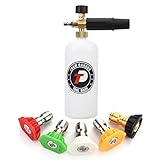
Overview: Tool Daily’s foam cannon offers an accessible entry point into professional-grade car care for pressure washer owners. This 1-liter unit operates effectively across 1000-3000 PSI systems and ships with five quick-connect nozzle tips, transforming your pressure washer into a versatile cleaning system for vehicles, driveways, and outdoor surfaces.
What Makes It Stand Out: The comprehensive nozzle set (0°, 15°, 25°, 40°, 65°) provides exceptional versatility rarely found at this price point. The intuitive adjustment system features a top-mounted knob controlling foam concentration and an adjustable nozzle for spray patterns, allowing precise customization without complicated settings. This dual-adjustment mechanism helps both novices and veterans achieve optimal results quickly.
Value for Money: At $19.99, this represents outstanding value. The five nozzle tips alone would cost $10-15 separately, effectively making the foam cannon itself a $5-10 investment. While construction uses standard brass and plastic components rather than premium alloys, the functional performance rivals units costing twice as much, making it ideal for weekend warriors and budget-conscious enthusiasts.
Strengths and Weaknesses: Strengths include the versatile nozzle set, simple operation, reliable quick-connect system, and clear foam adjustment controls. It generates satisfactory foam thickness for most cleaning tasks. Weaknesses include the opaque bottle preventing fluid level monitoring, and the basic plastic filter may degrade faster than stainless steel alternatives. Some users report occasional leaking at connection points under maximum pressure.
Bottom Line: For budget-conscious buyers wanting maximum versatility, this foam cannon delivers professional results without the premium price tag. The nozzle variety compensates for basic construction, making it a smart choice for occasional to moderate use.
2. Raincovo Foam Cannon for Pressure Washer, Snow Clear Foam Cannon for Car Wash, Stainless Steel Filter, Adjustable Nozzle with M22 and 1/4 Inch Quick Connect, Additional 1.1 mm Orifice Nozzle

Overview: Raincovo’s transparent foam cannon brings literal visibility to your car washing routine. This $23.99 unit features a see-through 1-liter bottle and stainless steel filter, offering meaningful upgrades over budget alternatives while maintaining broad compatibility through both M22 and 1/4-inch quick connect fittings for pressure washers from 1000-3000 PSI.
What Makes It Stand Out: The crystal-clear bottle eliminates guesswork about soap levels and mixing ratios, while the stainless steel filter provides superior corrosion resistance and longevity compared to standard plastic filters. The inclusion of both M22 and 1/4-inch connections ensures compatibility with virtually any pressure washer system, and the spare 1.1mm orifice nozzle optimizes foam generation for lower-pressure systems under 1500 PSI—a thoughtful inclusion for electric washer owners.
Value for Money: This mid-range option justifies its $4 premium over basic models through durable components that extend service life. The stainless filter resists chemical degradation from harsh detergents, while the dual connection system prevents compatibility headaches. For users with sub-1500 PSI washers, the extra nozzle delivers noticeably denser foam that basic cannons cannot produce.
Strengths and Weaknesses: Strengths include excellent visibility, durable filter, versatile connectivity, and the bonus low-pressure nozzle. The wide mouth reduces spills during filling. Weaknesses include a slightly higher price point and the clear plastic bottle may show soap residue buildup over time, requiring occasional cleaning. The adjustment knobs feel less precise than premium units but function adequately.
Bottom Line: A solid step-up choice for users wanting durability and convenience without breaking the bank. The clear bottle and stainless filter make it worth the modest premium for regular users who value longevity.
3. Pressure Washer Foam Cannon, Adjustable Snow Foam Lance with 1L Bottle, 1/4" Quick Connect and 5 Spray Nozzle Tips for Car Wash

Overview: This no-frills foam cannon delivers essential functionality at an aggressive $15.99 price point. Designed for 1000-3000 PSI pressure washers, it includes a 1-liter bottle and five quick-connect nozzle tips, providing the core features needed for effective foam washing without unnecessary embellishments that drive up cost.
What Makes It Stand Out: The brass construction at this price is noteworthy, offering better corrosion resistance and thread durability than all-plastic alternatives. The five-nozzle set matches more expensive competitors, providing 0° through 65° spray patterns for diverse cleaning applications from pinpoint blasting to gentle fan spraying. Its straightforward design prioritizes function over form, appealing to practical buyers who want results without paying for aesthetics.
Value for Money: Exceptional—this is among the most affordable functional foam cannons available from reputable sources. The brass components and included nozzle set deliver value exceeding the price by a significant margin. While lacking premium features like clear bottles or stainless filters, it performs the primary task of generating thick foam admirably. Perfect for entry-level users, rental property maintenance, or as a reliable backup unit.
Strengths and Weaknesses: Strengths include unbeatable price, durable brass fittings, comprehensive nozzle set, and simple, reliable operation. The quick-connect system works consistently. Weaknesses include an opaque bottle preventing level checks, basic plastic filter, and potentially shorter lifespan under daily commercial use. Foam thickness adjustment may be less refined than premium models, requiring more trial and error.
Bottom Line: If budget is your primary concern, this foam cannon punches far above its weight class. It delivers reliable performance for occasional to moderate use, making it ideal for beginners or cost-conscious buyers who prioritize function over features.
4. AstroAI Foam Cannon, Heavy Duty Car Foam Blaster Wide Neck Adjustable Snow Foam Lance and Thick Foam for Pressure Washer with 1/4" Quick Connector,1L Bottle

Overview: AstroAI’s foam cannon targets users frustrated with narrow-mouth designs that spill soap during filling. At $22.99, this unit emphasizes user-friendly design with its extra-wide neck and heavy-duty foam core, compatible with standard 1/4-inch quick-connect pressure washers operating between 1000-3000 PSI for diverse cleaning applications.
What Makes It Stand Out: The exceptionally wide neck prevents spills and allows easy pouring, addressing a common pain point that wastes expensive car shampoo. The upgraded filter block design provides enhanced protection against debris and foam particles, while the heavy-duty foam core generates denser, thicker foam than standard units through improved aeration. The 360-degree rotating nozzle holder offers superior directional control for hard-to-reach areas like wheel wells and roof racks.
Value for Money: Competitively priced in the mid-range, the wide-mouth convenience justifies the cost for users who value ease of use and hate wasting product. While lacking a clear bottle or multiple connection options, the thoughtful design elements and durable brass construction offer good longevity for regular users. The foam quality rivals more expensive units.
Strengths and Weaknesses: Strengths include spill-free wide neck, robust foam generation, effective filter system, and excellent nozzle rotation flexibility. The brass construction ensures durability. Weaknesses include opaque bottle, single connection type (1/4-inch only), and no included nozzle tips beyond the foam cannon itself. The foam adjustment knob lacks fine granularity.
Bottom Line: Perfect for users who prioritize convenience and hate wasting soap. The wide-mouth design and thick foam output make it a pleasure to use, though you’ll need to purchase nozzle tips separately for maximum versatility.
5. Raincovo Foam Cannon Wide Mouth for Pressure Washer, Thick Snow Foam Lance for Car Wash, Adjustable Soap Cannon with 1/4 Inch Quick Connector, Additional 1.1mm Orifice Nozzle

Overview: Raincovo’s premium wide-mouth foam cannon positions itself as a professional-grade solution at $32.99. This top-tier unit combines superior build quality with thoughtful features like a see-through bottle with measurement markings, weighted stainless steel filter, and tool-free nozzle replacement system designed for serious enthusiasts and professional detailers.
What Makes It Stand Out: The threaded detachable nozzle allows quick, tool-free maintenance—superior to fixed-pin designs that require complete disassembly. The weighted filter with flexible hose ensures you use every drop of solution, while the graduated clear bottle enables precise soap-to-water ratios for consistent results. The professional-grade foam output creates luxuriously thick snow foam even at lower PSI, preventing swirl marks through superior lubrication.
Value for Money: This is a premium-priced unit that delivers genuine professional features. The build quality, user-friendly design, and performance justify the cost for serious enthusiasts and professional detailers who wash vehicles frequently. While overkill for occasional users, it eliminates common frustrations found in cheaper models and will likely outlast them by years.
Strengths and Weaknesses: Strengths include exceptional foam quality, transparent measured bottle, weighted filter, tool-free maintenance, and robust construction. The wide mouth and stable base enhance usability significantly. Weaknesses include highest price in this comparison and may be excessive for casual users. The premium features require a slight learning curve to master fully.
Bottom Line: For dedicated detailers seeking the best experience, this foam cannon is worth every penny. It transforms car washing from chore to pleasure, delivering professional results with unmatched convenience and durability.
6. Tool Daily Foam Cannon with Dual Connector Accessory, 1/4 Inch Quick Connector, 5 Pressure Washer Nozzle Tips, 1 Liter

Overview: The Tool Daily Foam Cannon with Dual Connector Accessory positions itself as a versatile cleaning solution for pressure washer owners. This 1-liter unit features a 1/4-inch quick connector and works with pressure washers rated between 1000-3000 PSI. The package includes five nozzle tips covering angles from 0° to 65°, making it adaptable for various cleaning tasks from car washing to driveway cleaning.
What Makes It Stand Out: The innovative dual connector system with a two-way shuttle valve distinguishes this model from standard foam cannons. Users can switch between foam dispensing and pressure washing without disassembling components, saving significant time during multi-stage cleaning jobs. The adjustable nozzle allows precise control over foam thickness by simply turning the top knob, while the double-ended connector ensures consistent water flow even with the foam dispenser attached.
Value for Money: At $32.99, this foam cannon sits in the mid-range category. The dual connector functionality effectively provides two tools in one, justifying the price premium over basic models. While cheaper alternatives exist, the time-saving shuttle valve feature adds tangible value for users who frequently alternate between soap application and high-pressure rinsing.
Strengths and Weaknesses: Strengths include the convenient switching mechanism, comprehensive nozzle set, and clear operational instructions. The 1-liter capacity is standard and adequate for most vehicles. Weaknesses include the limited 3000 PSI maximum, which may not suit high-powered commercial washers, and the requirement for a pressure washer (which is clearly stated but limits versatility). Some users may find the dual connector adds slight bulk.
Bottom Line: This Tool Daily model suits car enthusiasts and homeowners seeking efficiency. The quick-switch capability makes it ideal for those who value workflow speed over absolute cost savings.
7. Foam Cannon for Pressure Washer, Foam Sprayer Car Wash with 1/4 Inch Quick Connector, Adjustable Soap Cannon with 5 Pressure Washer Nozzle Tips for Car Detailing, 1 Liter, A Blue Glove
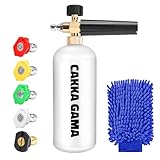
Overview: This Foam Cannon for Pressure Washer targets users wanting professional-grade car detailing results. The kit includes a 1-liter soap cannon, five pressure washer nozzle tips, and a blue glove for hand protection. Built with durability in mind, it features water-air dual-pipe mixing technology and a precision foaming filter to generate dense, snow-like foam instantly.
What Makes It Stand Out: The advanced foaming system sets this apart from entry-level models. The dual-pipe mixing technology creates richer foam with less soap, while the precision filter ensures consistent foam quality. The inclusion of a protective glove demonstrates attention to user experience. The adjustable knob controls dispensing amount, and the nozzle adjusts spray patterns from 0° to 60° for versatile application.
Value for Money: Priced at $59.99, this represents a premium investment. The high-grade materials and corrosion-resistant construction promise longevity, while the enhanced foam efficiency reduces soap consumption over time. For serious detailers, the superior foam quality justifies the cost, though casual users may find comparable performance in mid-range options.
Strengths and Weaknesses: Strengths include exceptional foam generation, durable build quality, and comprehensive accessory package. The 1/4-inch quick connector ensures broad compatibility. Weaknesses include the higher price point and the 60° maximum spray angle (versus 65° in some competitors), which offers marginally less coverage for delicate rinsing. The “blue glove” inclusion, while thoughtful, may not suit all users’ preferences.
Bottom Line: Best suited for automotive detailing enthusiasts who prioritize foam quality and equipment durability. The investment pays off for frequent users who demand professional results.
8. Tool Daily Short Pressure Washer Gun with Foam Cannon, 1/4 Inch Quick Connector, with 5 Pressure Washer Nozzle Tips, 1 Liter

Overview: The Tool Daily Short Pressure Washer Gun with Foam Cannon offers an all-in-one solution combining a pressure washer gun and foam cannon. This combo features M22 fittings compatible with both 14mm and 15mm connections, covering major brands like Generac, Simpson, Sun Joe, and Karcher. The foam cannon attaches via 1/4-inch quick disconnect and operates between 1000-3000 PSI.
What Makes It Stand Out: Unlike standalone foam cannons, this kit includes a dedicated short pressure washer gun, eliminating compatibility guesswork. The versatile M22 fittings adapt to virtually any residential pressure washer through direct connection or the included brass coupler. The gun handles up to 4000 PSI and 8 GPM, while the adjustable snow foam lance provides precise mixing control.
Value for Money: At $39.99, this package delivers exceptional value by bundling two essential tools. Purchasing a quality pressure washer gun and foam cannon separately would typically cost $50-$70. The included five nozzle tips (0°, 15°, 25°, 40°, 65°) further enhance versatility, making this a cost-effective entry point for new pressure washer owners.
Strengths and Weaknesses: Strengths include comprehensive compatibility, high-pressure gun rating, and convenient combo packaging. The short gun design improves maneuverability in tight spaces. Weaknesses include the foam cannon’s 3000 PSI limit, which doesn’t fully leverage the gun’s 4000 PSI capability. Users with existing quality guns may not need the replacement. The shorter wand length might reduce reach for larger vehicles.
Bottom Line: Perfect for newcomers needing both gun and foam cannon, or those upgrading from basic equipment. The broad compatibility and bundled savings make it a smart purchase.
9. SOFIPE Foam Cannon Kit, 1L Bottle Snow Foam Cannon with 5 Pressure Washer Nozzle Tips, 1/4 Inch Quick Connector, Compatible with Gas Pressure Washers&Electric Pressure Washers

Overview: The SOFIPE Foam Cannon Kit enters the market as a budget-conscious option priced at just $14.99. Despite the low cost, it includes a 1-liter bottle, five stainless steel nozzle tips, and 1/4-inch quick connector compatibility. The unit operates across an impressive 1000-4000 PSI range, accommodating both electric and gas pressure washers.
What Makes It Stand Out: The stainless steel nozzle tips provide durability rarely seen at this price point, resisting corrosion better than brass alternatives. The 65° foam nozzle creates gentle, even coverage for scratch-free washing. An adjustable air intake and vertical spray pattern allow users to customize foam density and application style, features typically reserved for pricier models.
Value for Money: This represents outstanding value, costing less than half of mid-tier competitors. The wide PSI range ensures compatibility with virtually any residential pressure washer, from basic electric models to powerful gas units. While build quality may not match premium brands, the stainless steel nozzles and functional foam generation deliver performance that exceeds expectations for the price.
Strengths and Weaknesses: Strengths include unbeatable price, stainless steel nozzles, wide PSI compatibility, and scratch-free cleaning claims. The adjustable foam performance adds versatility. Weaknesses include potentially shorter lifespan due to lower-cost materials, basic construction, and limited brand recognition. The foam density may not match premium models, and customer support reliability is unproven.
Bottom Line: Ideal for beginners testing foam cannon benefits or budget-minded users with occasional cleaning needs. The price makes it a low-risk entry point.
10. MJJC Foam Cannon S V3.0 (Thicker Snow Foam Technology) with 1/4 Inch Quick Connector for Pressure Washer, 34 oz Bottle (V3.0 (1/4" Quick Connector) + SOAP Sample)

Overview: The MJJC Foam Cannon S V3.0 represents the pinnacle of consumer foam cannon technology, featuring proprietary Thicker Snow Foam Technology that creates shaving cream-like foam consistency. This professional-grade unit includes a 34-ounce bottle, 1/4-inch quick connector, and multiple precision orifice nozzles optimized for different pressure ranges from 1300-3600 PSI.
What Makes It Stand Out: Six key upgrades differentiate the V3.0, including improved foam generation that uses minimal soap for maximum thickness. The 360-degree spray control offers unmatched maneuverability, while the redesigned straw tube ensures complete liquid consumption. The new bottle design reduces tipping risk, and the tool-free connection system eliminates need for thread sealant. Interchangeable orifice nozzles (1.1mm and 1.25mm included) optimize performance across pressure ranges.
Value for Money: At $86.99, this is a premium investment. For professional detailers and serious enthusiasts, the superior foam quality, efficiency, and durability justify the cost through reduced soap usage and better cleaning results. Casual users may struggle to justify the price difference over mid-range options, but performance gains are tangible.
Strengths and Weaknesses: Strengths include exceptional foam thickness, pressure-specific optimization, stable design, and professional build quality. The included soap sample allows immediate testing. Weaknesses include high cost and potential need to purchase additional orifice nozzles for pressure washers exceeding 2200 PSI. The complexity may overwhelm beginners.
Bottom Line: The ultimate choice for professionals and perfectionists who demand the thickest foam and finest control. Worth every penny for those who prioritize premium results.
Why Foam Cannons Revolutionized DIY Car Washing
Remember the bucket-and-sponge days? Those methods often just moved dirt around, creating swirl marks that haunted your paint. Foam cannons changed everything by introducing a touchless pre-wash phase that safely lifts contaminants before you ever lay a mitt on the surface. The magic lies in the air-injection system that mixes water, soap, and oxygen to create a dense foam that clings vertically to panels, breaking down road grime and encapsulating dirt particles.
The Science Behind Foam Cleaning
Foam isn’t just for show—it’s a sophisticated cleaning mechanism. When properly aerated soap solution contacts your paint, the foam structure increases dwell time, allowing surfactants to penetrate and loosen bonded contaminants. This chemical action reduces mechanical cleaning aggression, meaning fewer micro-scratches and preserved clear coat integrity. Budget models that nail this chemistry-to-engineering balance give you 80% of professional-grade performance at a fraction of the cost.
Professional Results Without the Price Tag
High-end detailing shops charge premium rates partly for their equipment, but modern manufacturing has democratized foam cannon technology. Today’s budget units utilize the same fundamental principles as their expensive counterparts: venturi effect suction, adjustable air intake, and pressurized delivery. The key is knowing which components matter most and which corners can be safely cut without sacrificing the foam quality your paint deserves.
Understanding Foam Cannon Anatomy
Before you can judge a budget foam cannon’s worth, you need to understand its core components. Each part plays a specific role in foam generation, and weak links in budget models typically reveal themselves in predictable places.
Bottle Capacity and Design
Most budget foam cannons sport 32-ounce (1-liter) bottles, though some stretch to 34 or 35 ounces for extra capacity. Don’t be swayed by larger numbers alone—bottle design impacts stability and soap efficiency. Wide-base bottles resist tipping during filling, while translucent materials let you monitor soap levels. The pickup tube’s position matters too; models with angled or weighted tubes ensure you use every last drop of concentrated soap rather than wasting 10-15% at the bottom.
Orifice Noifice Nozzle Basics
The orifice nozzle is the heart of your foam cannon’s performance. This tiny component controls water flow rate and pressure drop, directly affecting foam density. Budget models typically come with a 1.1mm orifice, optimized for pressure washers in the 1.8-3.5 GPM range. Some include multiple orifices for different pressure washer specs—this adaptability is a hallmark of smarter budget designs that punch above their weight class.
Connector Types Explained
Quick-connect fittings are standard, but thread compatibility varies. Most budget units feature ¼-inch quick-connect plugs that mate with standard pressure washer wands. However, the receiving coupler on your pressure washer might be different. Understanding whether you need M22, 3/8-inch, or proprietary connections before buying prevents frustrating adapter hunts later.
Pressure Washer Compatibility: The Critical Factor
Your foam cannon is only as good as its marriage to your pressure washer. This relationship determines everything from foam thickness to component longevity, yet it’s where most budget buyers stumble.
PSI Requirements for Budget Models
Contrary to popular belief, more pressure isn’t always better. Budget foam cannons typically perform optimally between 1,000-3,000 PSI. Electric pressure washers delivering 1,800-2,300 PSI are the sweet spot, generating sufficient agitation without stressing plastic components or creating excessive mist. Gas pressure washers above 3,200 PSI can actually degrade budget seals faster and may require downstream pressure reduction for best results.
GPM Flow Rates and Foam Quality
Gallons Per Minute (GPM) is the secret ingredient for thick foam. Budget cannons need at least 1.4 GPM to function, but 2.0-2.5 GPM produces that Instagram-worthy shaving cream consistency. Electric models in the 1.8-2.0 GPM range work beautifully with properly sized orifices. If your pressure washer is on the lower end, look for budget cannons with smaller orifices (1.1mm or less) that create better backpressure and aeration.
Electric vs. Gas Pressure Washers
Electric pressure washers pair naturally with budget foam cannons due to their moderate PSI/GPM profiles and consistent operation. Gas models deliver more raw power but can overwhelm budget seals and create wasteful overspray. If you’re running gas, consider adding an adjustable pressure regulator or using a longer lance to reduce impact pressure at the cannon head.
Foam Cannon Features That Actually Matter
Budget doesn’t mean barebones. Several features separate functional foam cannons from frustrating ones, and spotting these details in product descriptions helps you avoid disappointment.
Adjustable Spray Patterns
A quality budget cannon offers both fan spray and stream pattern adjustments. The fan width control lets you cover large panels quickly or narrow the focus for wheel wells and rocker panels. The soap-to-water ratio knob is equally critical—being able to dial in more soap for heavily soiled areas and less for maintenance washes stretches your soap dollar further.
Air Injection Ratio
The best budget models achieve a 1:10 to 1:15 air-to-liquid ratio, creating dense, clinging foam. This is controlled by the venturi design and adjustable air intake valve. Cannons with clearly marked adjustment knobs and positive click-stops make it easier to replicate settings wash after wash, removing guesswork from your routine.
Build Materials: Brass vs. Plastic
Here’s where budget reality sets in. Premium cannons use brass for the main body and stainless steel for hardware. Budget units typically use reinforced nylon or ABS plastic for bodies with brass inserts at high-stress points. This hybrid approach keeps costs down while maintaining durability where it counts. Avoid all-plastic connectors—these crack under pressure. Look for brass quick-connect fittings and stainless steel screws even on budget models.
The Budget Foam Cannon Sweet Spot
Defining “budget” in the foam cannon world requires context. Prices range from $15 bargain-bin specials to $80 near-premium units, with a performance cliff that drops sharply below $20.
What “Budget” Really Means in 2024
In today’s market, $25-45 represents the budget sweet spot. This range delivers proper venturi design, brass connectors, adjustable controls, and replacement parts availability. Below $20, you’re gambling with weak plastics, fixed orifices, and inconsistent foam quality. Above $45, you’re approaching mid-tier pricing where diminishing returns kick in for casual users.
Price vs. Performance Trade-offs
Budget cannons compromise on metal content and brand prestige, not core functionality. A $30 unit might use a plastic body but still deliver excellent foam if the internal geometry is sound. Where they typically lag is longevity—O-ring lifespan, thread durability, and resistance to chemical degradation. Treating a budget cannon with proper maintenance can extend its life from 1-2 years to 3-5 years, erasing the premium advantage.
Long-Term Value Considerations
Calculate cost-per-wash, not just purchase price. A $30 cannon that lasts 100 washes costs $0.30 per use. A $15 cannon that fails after 20 washes costs $0.75 per use and creates frustration. Factor in soap efficiency too—better foam generation means using less concentrated soap, saving money on every wash. A cannon that uses 20% less soap pays for itself within a year for active washers.
Common Budget Foam Cannon Mistakes
Even the best budget foam cannon underperforms when used incorrectly. These errors plague newcomers and experienced detailers alike, turning potential foam parties into watery disappointments.
Incorrect Soap Dilution Ratios
More soap doesn’t equal more foam. In fact, over-concentrated solutions can collapse foam structure, creating a runny mess. Most concentrated car soaps work best at 1:10 to 1:16 dilution in the cannon’s bottle. Start conservative—1 ounce of soap to 10-12 ounces of water—and adjust upward. Thick, shaving-cream foam should cling for 3-5 minutes before sliding off. If it runs immediately, your ratio is off or your pressure washer specs don’t match the orifice.
Water Temperature Misconceptions
Hot water doesn’t improve foam quality; it actually reduces it by decreasing water surface tension too much and stressing plastic components. Cold to lukewarm water (60-80°F) produces the most stable foam structure. Budget plastics also degrade faster with repeated hot water exposure, so stick to ambient temperature water for longevity and performance.
Pressure Washer Mismatch Issues
Forcing a high-GPM cannon onto a low-GPM pressure washer produces weak, bubbly foam. Conversely, a low-flow orifice on a high-GPM washer creates excessive backpressure and potential seal failure. Always match your cannon’s included orifice to your pressure washer’s GPM rating. Many budget sellers now list compatible GPM ranges—pay attention to these specs.
Maintenance: Extending Your Foam Cannon’s Life
Budget foam cannons reward proper care with surprising longevity. A 5-minute post-wash routine can double or triple their lifespan, making them genuine long-term investments.
Daily Cleaning Routine
After each use, fill the bottle with clean water and spray for 30 seconds to flush soap residue from the injector, lines, and nozzle. This prevents surfactant buildup that clogs the venturi and degrades O-rings. Leave the bottle detached to air dry—trapped moisture breeds mold and corrodes metal components. Never store a cannon with soap solution; it turns into a chemical sludge that ruins seals.
Deep Cleaning and Descaling
Hard water deposits choke foam performance over time. Monthly, soak disassembled components in a 50/50 white vinegar and water solution for 15 minutes to dissolve mineral scale. Remove and clean the mesh filter screen at the bottle inlet—this tiny part catches debris that starves the venturi. Lubricate O-rings with silicone grease quarterly to maintain pliability and prevent cracking.
Storage Best Practices
Store your foam cannon indoors, away from UV light that brittles plastic. If you must keep it in a garage, hang it rather than letting it sit on a shelf—this prevents internal components from compressing and deforming. Remove the bottle entirely and store it separately with the cap off to allow complete drying. In freezing climates, ensure no water remains in the body to prevent ice expansion damage.
Performance Optimization Tips
Maximizing a budget foam cannon’s output requires technique refinements that cost nothing but dramatically improve results.
Pre-Rinsing Techniques
Always pre-rinse your vehicle with plain water first. This removes loose dirt and cools the panels, preventing premature foam drying. A cool surface gives foam maximum dwell time. For extremely dirty vehicles, a touchless pre-wash with a stronger dilution (1:8) applied to lower panels and wheel wells first breaks down the worst grime before your main foam application.
Foam Consistency Adjustments
If foam is too watery, reduce the water-to-soap ratio slightly and increase the air intake knob. If it’s too thick and won’t spray evenly, decrease air intake and thin the solution. The sweet spot produces foam that holds its shape for several minutes but still flows slowly down vertical panels. Experiment on your garage door first—this saves soap and lets you dial in settings without wasting product on your car.
Contact Time Maximization
Thick foam needs 3-5 minutes of dwell time to work effectively. Work in shade during cooler parts of the day. Section your vehicle into thirds—roof/hood, sides, rear—and foam each area sequentially. By the time you finish the third section, the first is ready for contact washing. This systematic approach ensures optimal cleaning without letting foam dry and leave residue.
Soap Selection for Budget Setups
Your foam cannon is only as good as the soap you feed it. Budget cannons pair best with specific soap formulations that maximize their mechanical limitations.
Concentrated vs. Ready-to-Use Formulas
Concentrated soaps are non-negotiable for budget setups. They cost less per wash and let you control dilution for different tasks. A quality concentrated shampoo at $20 per gallon, used at 1:16 dilution, costs roughly $0.10 per wash. Ready-to-use formulas cost 3-4x more and often contain thickeners that clog budget venturis. Look for “super concentrated” or “professional dilutable” on labels.
pH-Neutral Importance
Budget cannons often use less chemically resistant plastics than premium models. pH-neutral soaps (pH 6-8) prevent premature degradation of seals and bottles. More importantly, they’re safe for all surfaces—paint, PPF, vinyl wraps, and delicate trim. Avoid highly alkaline degreasers or acidic wheel cleaners in your foam cannon unless it’s specifically rated for chemical resistance; these will destroy budget O-rings in months.
Wax and Sealant Safe Options
Many budget-friendly soaps now include wax or SiO2 additives. While convenient, these can build up on your cannon’s internals over time. If you use these products, increase your cleaning frequency to weekly flushes. For pure cleaning performance without residue, choose a dedicated wash soap without protectants, then apply wax separately. This keeps your cannon cleaner longer and gives you better control over protection layers.
Connector Conundrums: Making It Fit
Nothing’s more frustrating than a foam cannon that won’t connect to your pressure washer. Understanding connector standards saves you from buying multiple adapters or returning incompatible units.
Quick-Connect Standards
The ¼-inch quick-connect plug is the universal standard for pressure washer accessories. Your foam cannon’s male plug should snap into your wand’s female coupler. However, some budget pressure washers use proprietary connectors. Check your pressure washer manual or measure the existing coupler’s inner diameter. M22 (22mm) thread is common on gas models and requires a simple adapter to convert to ¼-inch quick-connect.
Adapter Solutions
Adapters cost $5-10 and solve most mismatches. If your pressure washer has an M22 threaded wand, buy an M22 to ¼-inch quick-connect adapter. For unusual thread sizes, bring your wand to a hardware store to test-fit adapters. Avoid stacking multiple adapters—each connection is a potential leak point. A single, properly sized adapter maintains pressure and prevents frustrating mid-wash disconnections.
Thread Size Fundamentals
The foam cannon’s inlet thread where it screws into the bottle is typically 1.5-inch diameter with coarse threads. Some budget models use metric threads that don’t seal well with standard bottles. Check user reviews for “leaking bottle” complaints—a common sign of poor thread compatibility. Quality budget cannons include a rubber gasket in the bottle cap; if yours doesn’t, add one from a hardware store for pennies.
When to Upgrade From Budget to Premium
Budget foam cannons serve most enthusiasts brilliantly, but certain scenarios justify stepping up to mid-tier or premium models. Recognizing these tipping points prevents premature upgrades while ensuring you don’t waste money on inadequate tools.
Performance Bottlenecks
If you’ve optimized your technique, matched orifices to your pressure washer, and tried multiple soaps but still can’t achieve thick foam, your pressure washer might be the limitation. However, if you’re running 2.5+ GPM and 2,000+ PSI with weak results, the cannon’s internal venturi design is likely flawed. This is rare in the $30+ range but common in sub-$20 units. Upgrading to a $60-80 model with a precision-machined venturi and brass body can unlock that last 20% of performance.
Durability Limitations
Are you washing multiple vehicles weekly or running a mobile detailing side hustle? Budget plastic bodies fatigue under heavy use. Cracked housings, stripped threads, and chronic O-ring failures after a few months signal you’ve outgrown budget territory. A mid-range brass-bodied cannon withstands daily use and offers rebuild kits, making it cheaper long-term for high-volume washers despite higher upfront cost.
Feature Gaps
Budget cannons rarely include multiple orifice sets, advanced filtration, or chemical-resistant seals for aggressive cleaners. If you need to foam on iron removers, alkaline degreasers, or other specialty chemicals, premium chemical-resistant models are mandatory. Similarly, if you switch between pressure washers frequently, a cannon with interchangeable orifices saves constant fiddling. For most weekend warriors, these features remain unnecessary luxuries.
Troubleshooting Common Issues
Even quality budget foam cannons encounter problems. Most issues stem from simple fixes rather than catastrophic failure, saving you from unnecessary replacements.
Weak Foam Production
First, verify your pressure washer meets minimum specs (1.4 GPM, 1,000 PSI). Next, check the soap dilution—overly concentrated solutions collapse foam. Inspect the air intake knob; many users accidentally close it completely. Remove and clean the orifice nozzle with a pin to clear debris. If these steps fail, check for suction leaks—cracked pickup tubes or loose bottle connections prevent proper venturi action.
Leaking Problems
Leaks typically occur at three points: the bottle threads, the wand connection, or the body seams. For bottle leaks, ensure the gasket is present and the cap is hand-tight (over-tightening cracks plastic). Wand connection leaks often mean a worn O-ring—replace it for pennies. Body seam leaks indicate a cracked housing, usually from freezing or over-pressurization. These are generally unrepairable, but most occur within warranty periods.
Inconsistent Spray Patterns
A spray that sputters or changes pattern mid-use points to air intake issues or clogged filters. Clean the air intake valve with compressed air. Check the bottle’s pickup filter for debris. Ensure your pressure washer’s unloader valve is functioning correctly—pressure fluctuations directly affect spray consistency. If the pattern won’t adjust from fan to stream, the adjustment mechanism is likely stripped from over-tightening.
Seasonal Considerations for Foam Cannon Use
Your budget foam cannon’s performance and longevity fluctuate with the seasons. Adapting your technique to weather conditions prevents damage and maintains results year-round.
Winter Washing Challenges
Freezing temperatures are kryptonite to foam cannons. Water expands when freezing, cracking housings and bottles. Never store your cannon in an unheated garage below 32°F. If you must wash in winter, bring the cannon inside to warm up first, and flush it immediately afterward with winter-grade RV antifreeze (the pink, non-toxic kind) to protect internal passages. Foam quality suffers in cold air too—soap solutions thicken, requiring slightly more water dilution.
Summer Heat Adjustments
Hot surfaces cause foam to dry almost instantly, leaving soap residue and reducing cleaning action. Wash in early morning or late evening when panels are cool. Increase your water-to-soap ratio slightly in summer heat to slow drying. Consider adding a “foam booster” product designed to increase foam stability in high temperatures—these are inexpensive and extend dwell time even on 90°F days.
Water Restrictions and Regulations
Drought-prone areas often restrict car washing. Foam cannons are actually water-efficient when used correctly, applying soap with minimal water usage. The key is capturing runoff or washing on permeable surfaces. Some budget cannons now include flow restrictors that limit output to under 3 GPM, helping comply with regulations while still producing adequate foam. Check local ordinances—many allow pressure washer use during restrictions because they’re more efficient than hose-and-bucket methods.
Environmental and Water Usage Factors
Modern car care balances cleanliness with environmental responsibility. Budget foam cannons play a surprising role in reducing water waste and chemical runoff when used thoughtfully.
Foam Cannon Efficiency
A typical hose-and-bucket wash uses 80-100 gallons of water. A pressure washer with foam cannon uses 20-40 gallons for the same vehicle. The foam’s extended dwell time means less water needed for rinsing, and the focused spray reduces overspray waste. Budget cannons contribute to this efficiency by making the technology accessible to more users, collectively reducing water consumption across the DIY detailing community.
Biodegradable Soap Importance
Budget cannons often have less sophisticated seals that degrade with harsh chemicals. Biodegradable, pH-neutral soaps are gentler on both your equipment and the environment. Look for soaps with EPA Safer Choice certification or similar eco-labels. These formulas break down in soil within days and won’t harm plants or wildlife if runoff enters storm drains (though you should always aim to wash on grass or gravel when possible).
Runoff Management
The foam cannon’s concentrated application actually makes runoff management easier than traditional methods. The foam stays where you spray it rather than dripping everywhere. Use a wash mat or park on a slight incline to direct runoff away from storm drains. Many car care enthusiasts now use containment berms for commercial-grade environmental compliance, even in home settings. Your budget foam cannon becomes part of a responsible washing system, not just a toy.
Frequently Asked Questions
Will a budget foam cannon work with my electric pressure washer that only has 1.6 GPM?
Yes, but you’ll need to optimize your setup. Choose a budget cannon with a smaller 1.1mm orifice designed for low-flow pressure washers. Dilute your soap slightly more than recommended (1:18 instead of 1:14) to improve flow. Keep your pressure washer’s inlet filter clean to maximize actual flow rate. While you won’t get the densest foam, you’ll still achieve adequate cleaning performance for maintenance washes.
How long should a budget foam cannon realistically last with proper care?
With diligent maintenance—flushing after each use, monthly deep cleaning, and proper storage—a quality budget foam cannon ($25-40 range) should last 3-5 years for weekend users. Heavy users washing weekly might see 2-3 years before O-rings or plastic threads wear. Sub-$20 models typically last 6-18 months regardless of care due to inferior materials. The bottleneck is usually the plastic bottle threads, which fatigue from repeated tightening.
Can I use dish soap or household cleaners in my budget foam cannon to save money?
Absolutely not. Dish soaps contain salts and degreasers that strip wax, damage paint, and destroy foam cannon seals. They’re not pH-balanced and leave residues. The cost savings are negligible—a gallon of proper car soap costs $0.10-0.15 per wash versus $0.05 for dish soap—but the potential damage runs into hundreds of dollars in paint correction. Budget foam cannons are even more vulnerable to chemical attack than premium models. Stick with dedicated car wash soaps.
Why does my foam cannon produce great foam one day and weak foam the next?
Inconsistency usually stems from water temperature differences, pressure washer warm-up state, or soap settling. Always let your pressure washer run for 60 seconds before foaming to stabilize pressure. Mix your soap solution thoroughly before each use—concentrates can separate overnight. Check for air leaks in the pickup tube; temperature changes can affect plastic connections. If using well water, mineral content fluctuations impact foam stability—consider a pre-filter.
Are brass-bodied foam cannons worth the extra cost over plastic budget models?
For most users, no. A $35 plastic-bodied cannon with brass connectors and proper maintenance lasts years. Brass bodies ($60-100) offer better heat resistance and rebuildability, benefits only high-volume users need. The internal venturi design matters more than body material. However, if you wash commercially or use aggressive chemicals, brass becomes necessary for chemical resistance and OSHA compliance. For weekend warriors, quality plastic is the smarter budget choice.
What’s the difference between a foam cannon and a foam gun (garden hose attachment)?
Foam cannons require pressure washers and produce thick, clinging foam through high-pressure air injection. Foam guns attach to garden hoses, using water pressure alone to create light, runny foam. Cannons are superior for touchless cleaning and paint protection; guns are better for rinsing and light cleaning where pressure washers aren’t available. Budget foam cannons cost the same as premium foam guns but deliver far better performance if you own a pressure washer.
How do I know if my pressure washer has enough power for a foam cannon?
Check your specs: you need at least 1,000 PSI and 1.4 GPM, though 1,800+ PSI and 2.0+ GPM is ideal. Test by timing how long it takes to fill a 5-gallon bucket. If it takes under 2 minutes (2.5 GPM) or 2.5 minutes (2.0 GPM), you’re golden. Electric models labeled “1800 PSI, 1.8 GPM” are the most common compatible units. If your pressure washer struggles with surface cleaners or turbo nozzles, it’ll struggle with foam cannons too.
Can I leave soap in my foam cannon between washes if I wash weekly?
Never. Soap solutions degrade in the bottle, turning into a bacterial soup that clogs the venturi and smells terrible. The surfactants break down, reducing cleaning power. Always empty and rinse after each use. If you’re washing the same vehicle weekly with the same soap, mix a fresh batch each time—it takes 30 seconds and ensures consistent performance. The exception is commercial users who might mix daily batches, but even then, overnight storage is the maximum.
What maintenance costs should I expect with a budget foam cannon?
Virtually zero. Replacement O-ring sets cost $3-5 and last 2+ years. A backup bottle is $8-12 if you crack the original. Pickup tubes are $2-3. Many budget cannons include spare O-rings. The only recurring cost is soap, which you already buy. Compared to $15-25 per car wash at a detailer, a budget foam cannon pays for itself in 2-3 washes. There are no filters, pumps, or proprietary parts to replace regularly.
Will using a foam cannon strip my existing wax or ceramic coating?
A properly used foam cannon with pH-neutral soap is actually gentler than traditional bucket washing and won’t strip protection. The touchless pre-wash phase reduces abrasion, preserving coatings longer. However, using aggressive soaps, excessive pressure, or scrubbing with the foam (instead of rinsing it off) can accelerate coating wear. Budget or premium, the cannon itself doesn’t affect wax longevity—your soap choice and technique do. Stick with coating-safe soaps and enjoy the protective benefits of foam washing.