There’s something undeniably captivating about a classic car with paint that glows like liquid color—deep, rich, and alive with clarity that modern finishes struggle to replicate. That mesmerizing effect comes from single stage paint, a technology that dominated the automotive world until the 1980s when clear coat systems took over. Unlike today’s two-stage systems where color and protection are separate layers, single stage paint combines pigment and protective resins in one cohesive coat, creating a finish that’s both beautiful and surprisingly delicate.
But here’s the catch: that gorgeous, direct pigment finish lacks the sacrificial clear coat that modern vehicles rely on for protection. Every swirl mark, every UV ray, every acid raindrop hits the color layer directly. This is why choosing the right wax isn’t just about shine—it’s about preservation. The wrong product can dull the finish, while the right one transforms your vintage ride into a show-stopping masterpiece that turns heads at every corner.
Top 10 Car Wax For Single Stage Paint
Detailed Product Reviews
1. Meguiar’s Cleaner Wax, Easy-to-Use Paste Wax that Removes Light Defects, Protects Single Stage Paint/Clear Coat, and Leaves a Glossy Shine in One Step, 11 Oz

Overview: Meguiar’s Cleaner Wax in paste form delivers a convenient one-step solution for cleaning and protecting your vehicle’s finish. This 11-ounce container effectively removes surface contaminants and light defects while depositing a protective wax layer. Formulated with rich conditioning oils, it polishes paint to a high gloss and creates a sacrificial barrier against environmental damage. Safe for all glossy finishes including clear coats and single-stage paint, it caters to both novice and experienced users seeking professional results without complex procedures.
What Makes It Stand Out: The dual-action formula eliminates separate cleaning and waxing stages, saving significant time and effort. Unlike traditional pure carnauba waxes, this product is noticeably easier to apply and remove while still delivering quality results. Its versatility accommodates both hand application and dual-action polisher use, making it adaptable to different skill levels and project scopes. The paste format provides controlled product placement, reducing waste on intricate panels.
Value for Money: At $9.26 for 11 ounces, this offers solid mid-range pricing. The one-step convenience eliminates the need for separate purchase of cleaners and waxes, saving $15-20 compared to two-step systems. While requiring more frequent application than premium sealants, it’s economical for quarterly maintenance. The paste concentration means less product per use, offsetting the smaller container size.
Strengths and Weaknesses: Strengths include time-saving one-step process, safe formulation for all glossy paints, versatile application methods, controlled paste application, and professional-grade finish when machine-applied. Weaknesses involve limited defect removal (only light contaminants), shorter durability than synthetic sealants, and more physical effort compared to liquid alternatives. It cannot replace proper paint correction for moderate to heavy damage.
Bottom Line: Perfect for car owners wanting quick, effective maintenance without investing in multiple products. Ideal for preserving well-maintained finishes, though not suited for heavy defect correction.
2. Meguiar’s Deep Crystal Carnauba Wax, High-Grade Carnauba Liquid Car Wax for Long-Lasting Protection, Block Out the Elements, 16 Oz Bottle

Overview: Meguiar’s Deep Crystal Carnauba Wax is a premium liquid wax focused exclusively on delivering exceptional gloss and long-lasting protection. This 16-ounce bottle contains high-grade carnauba that creates a durable barrier against the elements while enhancing paint depth. Engineered with professional-grade UV protection, it prevents sun damage and oxidation. Designed as the final step after polishing, it seals in brilliance and provides that coveted warm carnauba shine that enthusiasts demand for show-quality finishes.
What Makes It Stand Out: The professional-level UV protection distinguishes it from typical consumer carnauba waxes, offering lasting defense against sun damage. Its liquid formulation makes application significantly easier than traditional paste carnauba while delivering comparable aesthetic results. The product excels at sealing in the gloss of freshly polished paint, making it an integral part of a multi-stage detailing process. The result is a deeper, richer finish than synthetic alternatives.
Value for Money: At $9.99 for 16 ounces ($0.62 per ounce), this represents excellent value for genuine high-grade carnauba. It undercuts boutique brands by 50% while delivering similar performance. While it requires separate paint preparation (claying, polishing), the long-lasting protection and professional results justify the cost for enthusiasts who prioritize appearance over convenience.
Strengths and Weaknesses: Pros include brilliant show-car shine, robust UV protection, easy liquid application, excellent sealing properties for polished surfaces, and durable carnauba barrier that outlasts many natural waxes. Cons are the lack of cleaning ability requiring separate prep work, shorter longevity than synthetic sealants (typically 6-8 weeks), and that carnauba’s warm glow may not suit those seeking maximum durability over aesthetics.
Bottom Line: Outstanding for detailers prioritizing depth of shine and UV protection. Best used after proper paint correction, making it ideal for enthusiasts who enjoy multi-step processes.
3. Nu Finish Once a Year Polish and Sealant, Car Polish and Paint Sealant with 3-in-1 Ceramic Technology to Repair, Seal and Repel, 16 fl oz Bottle

Overview: Nu Finish Once a Year Polish and Sealant introduces ceramic technology to consumer-grade car care with its innovative 3-in-1 formula. This 16-ounce bottle combines polishing, sealing, and protective properties using advanced ceramic compounds to repair fine swirls while creating a durable hydrophobic barrier. The ceramic-infused formula promises year-long protection from a single application, delivering extreme water beading and a glossy wet finish without traditional wax. It works on paint and chrome surfaces, appealing to modern car care enthusiasts.
What Makes It Stand Out: The revolutionary “no rubbing or buffing” application process allows use in direct sunlight, eliminating common waxing constraints. Ceramic technology forms a harder, more durable barrier than conventional waxes, actively helping prevent future scratches. The ability to repair fine swirls while protecting adds functional value beyond mere aesthetics. The annual protection claim transforms maintenance schedules, reducing time investment significantly.
Value for Money: At $11.49 for 16 ounces, it’s competitively priced if the durability claims prove accurate. Eliminating quarterly waxing saves approximately $30-40 annually in product costs and countless hours. Compared to professional ceramic coatings costing $500+, it provides accessible ceramic benefits. The repair capabilities add value by reducing the need for separate polish products.
Strengths and Weaknesses: Advantages include incredibly easy application, true ceramic durability, sunlight application flexibility, scratch-repairing properties, and exceptional water beading. Drawbacks involve potentially optimistic “once a year” claims that may not withstand harsh winters or frequent washing, lack of traditional wax warmth in appearance, and limited effectiveness on deeper defects. Performance varies significantly by climate and driving conditions.
Bottom Line: Excellent for drivers seeking low-maintenance protection with modern technology. Ideal for daily drivers in moderate climates, though reapplication may be needed sooner than advertised in severe conditions.
4. Chemical Guys Butter Wet Wax - Deep Wet Shine Car Wax for Cars, Trucks, SUVs, RVs, and More, Easy On/Off Liquid Formula, Banana Scent - 16 oz

Overview: Chemical Guys Butter Wet Wax is a premium liquid carnauba wax engineered for a luxurious detailing experience. This 16-ounce bottle delivers a deep, wet-look shine while protecting paintwork from the elements. The formula enhances gloss, depth, and reflection across all paint colors and is safe for clear coats, single-stage paint, polished metals, and even glass. The signature banana scent transforms routine maintenance into an enjoyable sensory experience while providing solid protective properties.
What Makes It Stand Out: The distinctive banana fragrance creates a unique, pleasant atmosphere during application uncommon in car care products. The exceptionally smooth, spreadable formula wipes on effortlessly and buffs off without streaks or powder residue, significantly reducing application time and effort. Its multi-surface capability safely treats paint, glass, and metal, eliminating the need for separate products. The deep wet shine achieved rivals show-car quality.
Value for Money: At $19.97 ($1.25 per ounce), this commands premium pricing—nearly double comparable carnauba waxes. The value rests on application experience, versatility, and aesthetic results rather than economy. For enthusiasts who wax monthly, the ease of use justifies the cost. However, budget-conscious buyers may find better value in less expensive alternatives that deliver similar protection.
Strengths and Weaknesses: Pros include effortless on/off application, pleasant banana scent, stunning deep wet shine, versatile multi-surface use, and streak-free finish with no residue. Cons are the premium price point, fragrance that may not appeal to all users, absence of cleaning properties requiring separate prep, and durability that necessitates reapplication every 4-6 weeks. It offers no UV protection claims.
Bottom Line: A top-tier choice for detailing enthusiasts who prioritize application enjoyment and aesthetic results. Worth the premium for frequent users who appreciate the sensory experience and showroom finish.
5. Meguiar’s Cleaner Wax - Liquid Car Wax, Cleans, Polishes and Protects Your Vehicle - Easy to Use, Long-lasting Shine - 16 Oz

Overview: Meguiar’s Cleaner Wax in liquid form provides the same one-step cleaning and protection as its paste counterpart in a more convenient format. This 16-ounce bottle safely removes surface contaminants and blemishes from all glossy paint finishes while depositing a protective wax layer. Formulated with rich conditioning oils, it polishes and protects simultaneously, leaving a high-gloss shine. The liquid formulation spreads effortlessly across panels, making it accessible for both hand application and dual-action polisher use.
What Makes It Stand Out: The liquid format eliminates the physical effort required for paste waxes while maintaining dual-action cleaning capability. It spreads more quickly and evenly across large panels, reducing application time significantly. Like the paste version, it uses conditioning oils to polish while protecting, but the fluid consistency makes it easier to work into tight spaces and intricate body lines. Its compatibility with Meguiar’s MT300 polisher provides professional results for enthusiasts.
Value for Money: At $9.99 for 16 ounces, this offers superior per-ounce value compared to the 11-ounce paste version. The one-step process continues to save money versus purchasing separate cleaners and waxes. For quarterly maintenance, it’s highly economical, costing about $2.50 per application for a standard vehicle. The liquid format reduces product waste and speeds up the process, adding time-value.
Strengths and Weaknesses: Strengths include easier application than paste, time-saving one-step process, safe formulation for all glossy paints, versatile hand or machine application, excellent price point, and reduced product waste. Weaknesses involve potential messiness compared to paste, limited defect removal capability, shorter durability than dedicated sealants, and the need for reapplication every 2-3 months. It cannot correct moderate paint damage.
Bottom Line: The superior choice over the paste version for most users, combining convenience, value, and effective maintenance. Perfect for preserving well-cared-for finishes with minimal effort.
6. Turtle Wax Hybrid Solutions Ceramic Acrylic Black Car Polish and Wax, Car Scratch Remover & Car Paint Restorer for Black Cars, Deep Shine, Ceramic Coating Protection & Water Beading, 14 oz (Pack of 1)
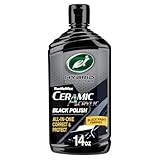
Overview: Turtle Wax’s Hybrid Solutions offers a specialized 2-in-1 polish and wax formulated specifically for black and dark-colored vehicles. This 14-ounce container combines black-pigmented carnauba wax with advanced ceramic polymers to deliver paint correction and durable protection in a single application. Designed to address light scratches, swirl marks, and oxidation while enhancing depth and gloss.
What Makes It Stand Out: The black pigmented formula is the key differentiator, filling in minor imperfections while intensifying the richness of dark paintwork. The ceramic-acrylic hybrid technology provides genuine water-beading properties and UV protection typically found in premium coatings. Its versatility for both hand and machine application makes it accessible to beginners and enthusiasts alike.
Value for Money: At $18 for 14 ounces, this product offers compelling value by eliminating the need for separate polish and wax purchases. Competing black-specific products often cost 30-50% more. The ceramic-infused protection extends intervals between applications, making it cost-effective for maintaining black vehicles’ notoriously difficult finishes.
Strengths and Weaknesses: Strengths include impressive color enhancement, genuine hydrophobic properties, effective light swirl removal, and robust UV defense. The one-step process saves significant time. Weaknesses involve limitations to dark colors only, inability to correct deeper scratches, and the required 24-hour cure time for maximum durability.
Bottom Line: An exceptional choice for black car owners seeking convenient paint correction with lasting protection. It delivers professional-looking results without professional pricing.
7. Collinite 415 Color Up Cleaner Compound-Stain/Oxidation Remover. Easy to Use Formula Restores Shine/Enhances Look. Preps Surface Fast for Wax Protection. For Cars, Trucks, RV’s, Fiberglass (16 fl oz)
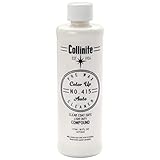
Overview: Collinite 415 is a light-duty pre-wax cleaner compound that safely removes surface contaminants and mild oxidation from automotive finishes. This 16-ounce formula works on clear coat, single-stage paint, metal, and fiberglass surfaces. As a preparatory product, it cleans and primes surfaces to maximize wax bonding and longevity.
What Makes It Stand Out: Unlike aggressive compounds, this cleaner safely decontaminates without compromising clear coats. Its unique versatility extends beyond automotive paint to RVs and fiberglass boats. The ability to function as a wax remover makes it a dual-purpose product, while DA polisher compatibility ensures professional-grade results for enthusiasts.
Value for Money: Priced at $14.05 for 16 ounces, this represents excellent value for a specialized preparatory product. Proper surface preparation can extend wax durability by 50-100%, reducing long-term maintenance costs. Competing pre-wax cleaners typically cost more per ounce without offering the same multi-surface versatility.
Strengths and Weaknesses: Strengths include safe yet effective cleaning, universal color compatibility, impressive versatility across materials, and excellent wax adhesion promotion. The easy hand-application formula suits all skill levels. Weaknesses are its inability to correct significant defects, prohibition on glass/rubber/trim, and absolute requirement for follow-up wax protection.
Bottom Line: Essential for detailers committed to proper vehicle care protocols. It delivers reliable surface preparation that significantly enhances final protection results.
8. Adam’s Polishes One Step Polish 12oz - Safe for Clear Coat, Single Stage, or Lacquer Paint - Increased Cut & Finishing, Body Shop Safe - Easy Application and Removal, Excellent Shine

Overview: Adam’s Polishes One Step Polish is a professional-grade finishing polish engineered for comprehensive paint correction. This 12-ounce body shop-safe formula effectively removes 2000-grit sanding scratches, light defects, and swirl marks from all paint types including clear coat, single stage, and lacquer finishes without harsh solvents.
What Makes It Stand Out: The impressive cutting ability combined with exceptional finishing characteristics sets this apart. It eliminates the traditional two-step cutting and polishing process for moderate defects. Being body shop safe means no silicone oils that interfere with paintwork. The made-in-USA formulation ensures consistent quality and performance.
Value for Money: At $21.24 ($1.77 per ounce), this premium-priced polish delivers professional results that justify the cost. Comparable professional polishes often exceed $2.50 per ounce. The ability to remove sanding scratches while finishing to a high gloss eliminates purchasing multiple products, creating long-term savings.
Strengths and Weaknesses: Strengths include powerful defect removal, universal paint compatibility, easy wipe-off, and excellent gloss enhancement. The formulation works with various pad types for customized results. Weaknesses involve the high price point for casual users, potential overkill for minor swirls, and suboptimal performance without machine application.
Bottom Line: Ideal for serious enthusiasts and professionals requiring significant correction capability. The performance justifies the premium investment.
9. Carfidant Scratch Repair and Swirl Remover - Car Paint Scratch Remover & Restorer Kit with Buffer Pad - Polishing & Waxing Kits - Compound for Vehicles Paint Repair - 8.4 fl. Oz.

Overview: Carfidant’s Scratch Repair and Swirl Remover is a complete paint correction kit featuring an 8.4-ounce bottle of specialized compound and an included buffer pad. This all-in-one solution targets light scratches, swirls, water spots, and oxidation across all automotive paint types, delivering restored gloss and protection without professional equipment.
What Makes It Stand Out: The comprehensive kit approach eliminates guesswork by providing the exact applicator needed for optimal results. The professional-grade chemical formulation avoids unnecessary dyes and scents, focusing purely on performance. Universal paint compatibility ensures safe use on clear coat, single stage, and multi-stage finishes without risk.
Value for Money: At $21.97 including the buffer pad, this kit offers convenience that justifies the price. Purchasing compound and pad separately typically costs more. While 8.4 ounces provides limited quantity for large vehicles, the included applicator and proven formula deliver good value for targeted correction needs.
Strengths and Weaknesses: Strengths encompass the complete kit convenience, safe all-paint formulation, effective light defect removal, and premium chemical quality. The manual buffer pad allows controlled application. Weaknesses include the smaller volume limiting multiple applications, ineffectiveness on deep scratches, and physical effort required for larger panels.
Bottom Line: Perfect for DIYers addressing minor paint imperfections. The kit format simplifies achieving professional-looking results.
10. Turtle Wax Hybrid Solutions Ceramic Acrylic Black Car Wax Spray, Restores Apperance of Black Car Paint, Ceramic Coating Protection, Extreme Water Beading, High Gloss Shine, 16 oz (Pack of 1)
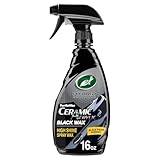
Overview: Turtle Wax Hybrid Solutions Ceramic Acrylic Black Car Wax Spray delivers the same black-pigmented protection as its paste counterpart in a convenient spray format. This 16-ounce bottle combines carnauba wax with ceramic polymers to enhance dark paintwork while providing hydrophobic protection and UV defense in minutes rather than hours.
What Makes It Stand Out: The spray application revolutionizes ease-of-use for black car maintenance, allowing quick touch-ups or full-vehicle treatment without strenuous buffing. The same advanced ceramic-acrylic technology provides exceptional water beading and contaminant resistance. The black pigments actively mask minor imperfections while deepening color richness.
Value for Money: At $16.99 for 16 ounces, this spray offers superior value compared to the paste version—more product for less money with added convenience. The speed of application reduces labor time significantly, making it practical for frequent maintenance. Competing spray waxes lack the specialized black pigments and ceramic protection.
Strengths and Weaknesses: Strengths include effortless spray application, impressive hydrophobic properties, UV protection, excellent color enhancement, and outstanding value. The format enables regular use without dreading the process. Weaknesses involve reduced correction capability versus paste formulas, potential overspray on trim, and the same 24-hour cure requirement for maximum durability.
Bottom Line: The ultimate maintenance solution for black vehicle owners prioritizing convenience without sacrificing protection quality.
Understanding Single Stage Paint Technology
Single stage paint represents automotive finishing in its purest form—a single, homogeneous layer where pigment, binder, and protective agents coexist in perfect harmony. This formulation creates that signature depth and clarity that collectors cherish, but it also means the color itself is the outermost shield against environmental assault.
The Chemistry Behind Single Stage Finishes
The molecular structure of single stage paint differs fundamentally from modern systems. Without a separate clear coat, the paint’s resin system must simultaneously provide color, gloss, and protection. These formulations typically use alkyd or acrylic-alkyd resins that cross-link during curing, creating a durable but porous surface that breathes and expands with temperature changes. This porosity is both a blessing and a curse—it allows for incredible depth but also makes the finish susceptible to moisture intrusion and oxidation.
How Single Stage Paint Differs from Modern Clear Coat Systems
Modern two-stage systems separate aesthetics from protection. The base coat provides pure color, while the clear coat offers a thick, sacrificial barrier against UV rays, chemicals, and physical abrasion. Single stage paint must do it all in one 2-4 mil layer, roughly half the thickness of a modern combined system. This means when you polish or wax single stage paint, you’re working directly on the color layer—there’s no safety net of clear coat to hide mistakes or absorb damage.
Why Single Stage Paint Demands Specialized Wax Protection
The absence of a clear coat transforms wax from a cosmetic enhancement into a critical preservation tool. On single stage finishes, wax becomes the primary defense against the elements, standing between your paint’s pigment and a hostile environment that wants to fade, oxidize, and degrade it.
The Vulnerability Factor: What Makes Single Stage Paint Unique
Single stage paint oxidizes from the surface inward, not from the top down like clear coat failure. This means the very top layer of pigment molecules gradually breaks down, creating that chalky, dull appearance you see on neglected classics. Quality waxes create a molecular barrier that slows this oxidation cascade, essentially putting your paint in suspended animation. Without this protection, UV rays initiate a free radical chain reaction that breaks down the paint’s binder, releasing pigment particles and causing irreversible fading.
Key Characteristics to Look for in Single Stage Paint Waxes
Not all waxes respect the unique needs of single stage paint. The wrong formulation can stain light colors, leave white residue in cracks, or contain abrasives that permanently remove thin paint. The right wax understands it’s protecting a finite, non-renewable resource.
UV Inhibitors and Oxidation Prevention
Look for waxes explicitly formulated with UV absorbers like benzotriazole compounds or hindered amine light stabilizers (HALS). These ingredients don’t just sit on the surface—they actively neutralize UV radiation before it can attack the paint’s molecular structure. A quality single stage wax should contain 3-5% UV inhibitors by volume, creating a sunscreen for your paint that maintains its effectiveness through multiple washes.
Oil-Rich Formulations for Enhanced Nourishment
Single stage paint benefits enormously from waxes rich in natural oils like linseed, tung, or walnut oil. These oils penetrate microscopic pores in the paint, replenishing plasticizers that have evaporated over decades. This oil infusion restores flexibility to brittle paint, reducing the risk of cracking and checking. The best formulations contain 20-30% natural oils, creating that deep, wet look that synthetic sealants simply cannot replicate on vintage finishes.
Abrasive Levels: Finding the Right Balance
Here’s where many enthusiasts go wrong. Single stage paint requires non-abrasive or micro-fine abrasive waxes only. Even “light” polishing compounds designed for clear coats can remove 0.1-0.2 mils of paint—catastrophic when you’re working with only 2-4 mils total thickness. Opt for waxes with abrasives under 0.5 microns, or better yet, use a pure finishing wax and save correction for dedicated, ultra-gentle polishing sessions with a paint thickness gauge.
Types of Waxes That Excel on Single Stage Paint
The wax category you choose dramatically impacts both appearance and longevity on single stage finishes. Each type brings distinct advantages and trade-offs that savvy enthusiasts weigh carefully.
Natural Carnauba-Based Waxes
Brazilian carnauba wax, particularly the #1 yellow grade, remains the gold standard for single stage paint. Its natural hardness creates a durable shell, while its oil content enhances depth. Carnauba’s crystalline structure refracts light in a way that makes single stage paint appear to glow from within. For best results, look for formulations with 40-60% carnauba content by volume—anything less is diluted, anything more becomes difficult to apply smoothly.
Synthetic Polymer Sealants
Modern polymer sealants offer 3-6 months of protection versus carnauba’s 4-8 weeks, but they lack the warmth and depth that makes single stage paint special. However, their cross-linking polymer technology creates a more impermeable barrier against acid rain and industrial fallout. If you choose this route, apply a polymer base layer for protection, then top with a thin carnauba layer for aesthetics—a technique the concours crowd calls “stacking.”
Hybrid Formulations: Best of Both Worlds
The latest innovation combines amino-functional silicones with natural waxes, creating products that bond chemically to paint while providing carnauba’s aesthetic benefits. These hybrids typically last 3-4 months and offer the best compromise for daily-driven classics. They contain silicones that cross-link with paint molecules, creating a semi-permanent bond that resists washing while maintaining that elusive warm glow.
Application Techniques for Optimal Results
Even the finest wax performs poorly without proper application. Single stage paint rewards patience and punishes shortcuts with visible defects that are nearly impossible to remove safely.
Surface Preparation: The Foundation of Success
Never wax over contamination. Single stage paint’s porosity traps dirt deep within its structure. Start with a gentle pH-neutral wash, followed by a citrus-based degreaser to remove old wax and oils. Clay barring is essential but requires extreme care—use a fine-grade clay with excessive lubrication, working in 12x12 inch sections. Follow with an isopropyl alcohol wipe-down (15% IPA to water ratio) to ensure a surgically clean surface that allows maximum wax bonding.
Hand Application vs. Machine Application
For single stage paint, hand application remains the safest method. Use a high-density foam applicator pad, working in straight lines with the body contours, never in circles. Apply thinner than you think—single stage paint’s porosity causes wax to spread further than on clear coats. If you must use a machine, employ a dual-action polisher at speed 2-3 with a finishing pad, using minimal pressure and 3-4 small drops of product per 2x2 foot section.
Curing Time Considerations
Single stage paint’s porous nature extends wax curing time. While clear coats might cure a wax in 10-15 minutes, single stage finishes require 30-45 minutes for proper hazing. Test by gently swiping your finger across the surface—if it smears, it’s not ready. If it wipes clean leaving a glossy streak, removal time has arrived. Rushing this step traps solvents in the paint, leading to hazing and reduced durability.
Layering Strategies for Maximum Depth
The secret to that concours-winning glow lies in strategic layering. Apply your first wax layer thin and let it cure fully—this creates the protective base. Remove it completely, then apply a second layer even thinner, focusing on horizontal panels that receive maximum UV exposure. For show cars, a third layer applied 24 hours later, after the previous layers have fully hardened, creates dimensionality that judges notice. Never exceed three layers; additional coats simply waste product and create removal difficulties.
Common Mistakes That Damage Single Stage Paint
The most catastrophic error is using waxes with cleaners or abrasives on thin or failing paint. Another frequent mistake is waxing in direct sunlight—single stage paint heats faster than clear coats, causing wax to bake on and stain. Avoid waxing below 60°F or above 85°F, as the paint’s porosity changes dramatically with temperature, affecting bonding. Never use applicators that have touched tires or trim, as silicone contamination creates permanent fisheyes in single stage finishes.
Temperature and Humidity Considerations
Single stage paint’s reactivity to environmental conditions exceeds that of clear coats. High humidity (above 70%) prevents proper wax bonding as moisture competes for surface sites. Low humidity (below 30%) causes wax to cure too quickly, creating a brittle layer that flakes off. Ideal conditions are 65-75°F with 40-50% relative humidity. If you must wax in suboptimal conditions, extend cure times by 50% in high humidity or reduce application thickness by 30% in low humidity.
Storage and Shelf Life of Quality Waxes
Premium waxes for single stage paint contain natural oils and UV inhibitors that degrade over time. Store waxes in a cool, dark place between 50-70°F. Once opened, use within 12-18 months as oxidation begins affecting the wax itself. Unopened tins remain viable for 3-5 years if stored properly. Never store wax in your garage if temperatures exceed 90°F—the heat separates oils from solids, ruining the formulation. If wax develops a crust or smells rancid, discard it; it’s lost its protective properties.
Maintaining Your Single Stage Paint Between Waxes
The interval between wax applications determines long-term paint health. Use a pH-neutral shampoo with no wax additives—these create buildup that interferes with proper wax bonding. Dry with plush microfiber towels, blotting rather than dragging. For water spots, use a quick detailer with no cleaners, just lubricants and gloss enhancers. Apply a spray wax every 2-3 washes to maintain the hydrophobic layer, focusing on horizontal surfaces. This maintenance extends full wax durability by 40-60%.
How to Identify If Your Vehicle Has Single Stage Paint
Not sure what you’re working with? The water test reveals all—spray water on a clean panel. If it sheets off in large beads, you likely have a clear coat. If it forms smaller, irregular droplets that don’t sheet cleanly, it’s probably single stage. The polish test is definitive—apply a small amount of polish to a white towel and rub a hidden area. If the towel shows color, it’s single stage. No color transfer indicates clear coat. Model year helps too—most American cars switched by 1985-87, while European and Japanese manufacturers transitioned around 1990-92.
Seasonal Waxing Strategies for Single Stage Paint
Climate dictates your waxing calendar. In UV-intense southern states, wax every 6-8 weeks maximum, using high-UV formulations. Northern climates with road salt require waxing before first snow and immediately after winter’s end, focusing on lower panels and wheel arches. Spring and fall offer the best application conditions—moderate temperatures and lower UV indexes allow wax to cure perfectly while building protection before extreme weather arrives. Never wax within 48 hours of predicted rain; single stage paint’s porosity can trap moisture under fresh wax.
Cost vs. Value: Investing in Premium Protection
A $15 tub of mass-market wax might seem economical, but it often contains abrasives and lacks UV inhibitors essential for single stage survival. Premium waxes at $40-80 per container seem expensive until you calculate cost per application—typically $2-4 per use. Compare that to a $5,000 repaint, and the math becomes clear. The real value lies in preservation, not just appearance. A quality wax used consistently over five years costs less than $200 but can prevent $10,000+ in paintwork restoration.
Professional vs. DIY: Making the Right Choice
Professional detailers charge $200-400 for single stage waxing because it requires specialized knowledge and carries higher risk. However, DIY enthusiasts can achieve equal results with proper education and patience. The tipping point is paint condition—if your single stage paint shows heavy oxidation or thinning, professional assessment prevents irreversible damage. For well-maintained finishes, DIY waxing becomes a rewarding ritual that connects you to your vehicle. Invest in quality tools and products, and your results will rival professional work while building irreplaceable familiarity with your car’s specific needs.
Frequently Asked Questions
How often should I wax my single stage paint car?
For daily-driven vehicles, every 6-8 weeks in summer and 10-12 weeks in winter. Garage-kept show cars can extend to 3-4 months, but never exceed 6 months as UV inhibitors deplete regardless of mileage. Always wax before storage and immediately after extended sun exposure.
Can I use ceramic coatings on single stage paint?
Yes, but with critical caveats. Single stage paint must be perfectly clean and fully decontaminated before application. Ceramic coatings bond permanently and require paint correction first—any remaining defects become locked in. Use coatings specifically formulated for vintage paints, as some modern ceramics require clear coat thickness to achieve proper bonding.
Why does my red single stage paint fade faster than other colors?
Red pigments, particularly organic reds like toluidine and naphthol, have larger molecular structures that absorb more UV energy. This makes them inherently less stable than blue or black pigments. Red single stage paint requires wax with maximum UV protection—look for products advertising “color-safe technology” or “fade-resistant formulas” with proven UV inhibitor content.
Is paste wax better than liquid wax for single stage paint?
Paste waxes typically contain higher concentrations of carnauba and oils, making them superior for single stage finishes. Liquids often contain more solvents and less actual protective content. However, premium liquid waxes with 40%+ carnauba content offer easier application on complex body panels without sacrificing protection.
Can waxing too much damage single stage paint?
Excessive waxing can cause product buildup that attracts dust and creates a cloudy appearance. More critically, over-waxing increases removal frequency, and every removal cycle carries micro-abrasion risk. Stick to the recommended schedule—quality over quantity. Three thin, properly cured layers exceed ten rushed applications.
What’s the white residue I’m seeing in body seams after waxing?
This is called “wax tracking” and occurs when wax penetrates cracks and cures inside. Single stage paint’s porosity exacerbates this issue. Prevent it by masking seams with blue painter’s tape before waxing. If residue appears, remove it with a gentle brush and a 50/50 mix of water and isopropyl alcohol—never scrape or pick at it.
Should I polish before waxing my single stage paint?
Polish only if necessary, and use the least aggressive method possible. Single stage paint has finite thickness, and each polish removes material. For maintained finishes, skip polish and use a cleaner wax once annually. For oxidized paint, use a micro-fine polish (0.5 microns or less) on a test spot first, measuring paint thickness before and after.
Can I apply wax over existing wax on single stage paint?
Layering fresh wax over old creates a weak bond and traps contaminants between layers. Always strip old wax completely using a wax-removing shampoo or citrus degreaser before applying new protection. The exception is using a spray wax as a booster 2-3 weeks after initial application, which adheres to the existing layer without causing bonding issues.
How do I remove wax from plastic trim on a single stage paint car?
Plastic trim on vintage cars is often unpainted and porous. Wax residue turns white and is nearly impossible to remove once cured. Always mask trim before waxing. If you get wax on trim, immediately wipe with a microfiber dampened with all-purpose cleaner. For cured residue, use a dedicated trim cleaner with a soft-bristled brush, working gently to avoid scratching surrounding paint.
Will waxing single stage paint make it look darker or change the color?
Quality waxes enhance color saturation by filling microscopic pores and creating a uniform refractive surface, making colors appear richer and deeper. This isn’t color change—it’s color revelation. However, some waxes with heavy oils can temporarily darken light colors like white or silver. Test on a hidden spot first, and choose waxes marketed as “non-darkening” for light-colored single stage finishes.