Tired of playing contortionist just to reach your oil drain plug? You’re not alone. Modern vehicles sit lower than ever, turning what should be a 20-minute oil change into a frustrating wrestling match with gravity and limited clearance. Whether you’re a weekend warrior tackling your own maintenance or preparing your undercarriage for winter protection, the right set of car ramps transforms your garage floor from an obstacle into an accessible workspace. More than just inclined planes, today’s vehicle ramps represent engineered solutions that balance safety, stability, and convenience—critical factors when you’re sliding underneath two tons of metal.
Unlike jack stands that require precise placement and leave you hoping your floor jack doesn’t slip, quality ramps distribute weight across a broad surface area, creating a stable platform that lets you focus on the task at hand. But not all ramps are created equal, and choosing the wrong pair can turn a simple oil change into a dangerous gamble. This comprehensive guide cuts through the marketing noise to arm you with the knowledge to select ramps that match your specific needs, vehicle requirements, and safety standards—whether you’re draining crankcase oil or spraying protective undercoating.
Top 10 Car Ramps For Oil Changes
Detailed Product Reviews
1. Black Widow Plastic Car Service Ramps - Lifts Vehicles 6.25" H for Maintenance or Oil Changes - Each Ramp is 12" W and 10,000 lbs. Capacity Per Pair-Pack of Two

Overview: The Black Widow service ramps offer a practical solution for DIY mechanics seeking reliable vehicle elevation. Constructed from high-impact plastic with a specialized internal support system, these ramps lift vehicles 6.25 inches off the ground, providing adequate clearance for routine maintenance tasks. Each ramp measures 35.5 inches long by 12 inches wide, supporting up to 10,000 pounds per pair, making them suitable for cars, trucks, SUVs, and vans.
What Makes It Stand Out: The innovative internal support structure running through the ramp’s center distinguishes this product from basic plastic alternatives. This design distributes weight evenly while maintaining a lightweight profile for easy handling. The grid-patterned surface allows water, snow, and debris to filter through, ensuring traction in all weather conditions. At just 12 inches wide, these ramps accommodate standard tires while remaining compact enough for convenient storage.
Value for Money: Priced competitively at $69.99 per pair, these ramps deliver exceptional capacity for the cost. The 10,000-pound rating exceeds many similarly-priced competitors, offering professional-grade capabilities for home garage use. The durable construction ensures years of service, eliminating rental costs or expensive hydraulic alternatives for basic maintenance.
Strengths and Weaknesses: Pros: High weight capacity (10,000 lbs), Lightweight and portable, Weather-resistant grid design, Affordable price point, Wide tire compatibility Cons: Plastic construction may flex under maximum load, 6.25" lift may be insufficient for some trucks, No rubber base stops included
Bottom Line: These ramps excel for homeowners performing oil changes and brake work on standard vehicles, offering impressive capacity and thoughtful design at an accessible price point.
2. MaxxHaul 50515 6.25" Lift Car Ramps, 2-Pack – 13,000lb GVW, Deep Grooved Surface for Stable Tire Placement, Heavy-Duty, Black
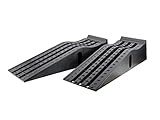
Overview: The MaxxHaul 50515 ramps provide a sturdy elevation solution for vehicle maintenance, offering a 6.25-inch lift height for undercarriage access. Each ramp supports 3,250 pounds, with a combined pair capacity of 6,500 pounds GVW. Constructed from heavy-duty plastic with integrated rubber stops, these ramps prioritize stability and safety during DIY repairs and routine service tasks.
What Makes It Stand Out: The deep grooved surface design delivers superior tire traction compared to smooth or lightly textured alternatives, significantly reducing slippage risk. Rubber base stops prevent ramp movement during vehicle loading—a critical safety feature often overlooked in budget ramps. The black heavy-duty plastic construction resists automotive fluids and withstands repeated use without cracking or degrading.
Value for Money: At $69.99, these ramps sit in the budget-friendly sweet spot while including premium safety features. The 6,500-pound capacity covers most passenger vehicles, though falls short of some competitors. The inclusion of rubber stops and enhanced surface traction justifies the price, offering peace of mind that cheaper alternatives lack.
Strengths and Weaknesses: Pros: Excellent traction grooves, Rubber anti-slip base pads, Chemical-resistant plastic, Stable tire placement, Easy to position Cons: Lower capacity (6,500 lbs per pair), May not suit heavy trucks or SUVs, Plastic can become brittle in extreme cold
Bottom Line: Ideal for sedan and small SUV owners prioritizing safety features, these ramps deliver reliable performance with superior traction and stability for routine home maintenance.
3. FAYUWUOX 60x12 Inch 6000Lbs Aluminum Ramps Lawn Mower, Wheelchair Ramps Home Steps, Low Profile Car Ramps Oil Changes

Overview: These versatile aluminum ramps from FAYUWUOX measure 60 inches long by 12 inches wide, supporting up to 6,000 pounds. While marketed for multiple applications—from lawn mowers to wheelchairs—they function as low-profile car ramps for oil changes and maintenance. The lightweight aluminum construction enables easy transport, while the non-slip surface ensures secure vehicle positioning.
What Makes It Stand Out: The exceptional 60-inch length creates a gradual incline ideal for extremely low-profile vehicles that would bottom out on steeper ramps. This versatility across applications—lawn equipment, motorcycles, wheelchairs, and vehicles—maximizes utility beyond typical single-use car ramps. The aluminum build resists corrosion and maintains structural integrity across temperature extremes, unlike plastic alternatives.
Value for Money: At $238.99, these ramps command a premium price justified by professional-grade aluminum construction and multi-purpose functionality. While significantly more expensive than plastic options, the durability and versatility across equipment types represent long-term value for property owners needing ramps for various tasks. The 6,000-pound capacity limits use to lighter vehicles.
Strengths and Weaknesses: Pros: Extra-long 60" length for low cars, Lightweight aluminum portability, Multi-purpose versatility, Corrosion-resistant, Non-slip surface Cons: High price point, Lower weight capacity (6,000 lbs), May be too long for compact storage
Bottom Line: Perfect for owners of lowered vehicles or those needing ramps for multiple equipment types, these aluminum ramps justify their cost through versatility and professional build quality.
4. Rockland 4 Ton 8000 LBS Solid Steel Car Ramp Set, 35" L x 13" W x 9" H, Heavy Duty Auto Truck Ramps for Oil Change and Car Repair, Ideal for Easy Home Garage Maintenance (Pack of 2)

Overview: The Rockland steel ramp set delivers heavy-duty performance with solid steel construction, supporting up to 8,000 pounds total. Each ramp measures 35 inches long by 13 inches wide, providing a 9-inch lift height—substantially higher than plastic alternatives. Weighing 33 pounds for the set, these ramps offer professional-grade durability for serious DIY mechanics and home garage enthusiasts.
What Makes It Stand Out: Unlike plastic competitors, the solid steel construction eliminates flex and deformation under maximum load, providing unmatched stability and confidence. The 9-inch lift height grants superior undercarriage access for transmission work, exhaust repairs, and other tasks requiring additional clearance. Integrated side grooves facilitate easy carrying and positioning, while the 13-inch width accommodates wider tires found on modern trucks and SUVs.
Value for Money: Priced at $104.99, these ramps represent excellent value for steel construction. While more expensive than basic plastic ramps, the durability, higher lift height, and 8,000-pound capacity justify the premium. They eliminate replacement costs associated with cracked plastic and provide professional-grade stability for frequent users.
Strengths and Weaknesses: Pros: Solid steel durability, 9" maximum lift height, 8,000 lb capacity, Wide 13" tire support, Permanent deformation resistance Cons: Heavier than plastic alternatives (33 lbs), Exposed steel may rust if scratched, Higher price than plastic ramps
Bottom Line: Serious home mechanics working on trucks and SUVs will appreciate the steel construction, superior lift height, and rock-solid stability these ramps provide.
5. ROBLOCK Car Ramps for Lift and Vehicle Maintenance, Portable Low Profile Car Ramps for Garage, Heavy Duty Tire Ramps for Low Chassis Cars and Support Jack, 17.5’‘x10’‘x3.14’’, 2 PCS

Overview: ROBLOCK’s low-profile ramps address a specific niche: lifted access for sports cars and modified vehicles with minimal ground clearance. Measuring just 17.5 inches long by 10 inches wide, these ramps raise tires 2.6 inches off the ground with a gentle 17-degree incline. Despite their compact size, they boast an impressive 20,000-pound GVW rating, supporting even heavy vehicles while providing just enough elevation for jack placement.
What Makes It Stand Out: The innovative honeycomb traction pattern and curved tire cradle design prevent slippage while distributing load evenly. Non-slip base pads and integrated drainage channels demonstrate thoughtful engineering for safety and durability. At only 5.3 pounds per pair, these ramps redefine portability, storing easily in trunk compartments. The extra-wide 10-inch surface accommodates modified vehicles with aftermarket tires.
Value for Money: Priced at an accessible $31.99, these ramps offer exceptional value for owners of lowered vehicles. The 20,000-pound capacity is overkill for most applications but ensures absolute reliability. Specialized design for low chassis cars eliminates the risk of bumper damage during loading, saving potential repair costs.
Strengths and Weaknesses: Pros: Ultra-lightweight (5.3 lbs), 20,000 lb capacity, Gentle 17-degree approach angle, Wide tire platform, Budget-friendly price Cons: Minimal 2.6" lift height, Not suitable for trucks needing high clearance, Short length may be too steep for some lowered cars
Bottom Line: Essential equipment for sports car and tuner enthusiasts, these ramps solve the specific problem of accessing low chassis vehicles without damage, offering incredible capacity at a bargain price.
6. VEVOR 1Piece Vehicle Ramp 20000 lbs/9 Ton Capacity Car Service Ramp, Effortlessly Lift 5.5" High, Durable Nonslip & Portable, for Routine Tire Replacement Repairs, Work with Tandem Wheel Vehicles

Overview: The VEVOR Vehicle Ramp is a heavy-duty single-unit ramp designed for serious load-bearing applications. With a remarkable 20,000-pound capacity, this ramp targets owners of tandem-wheel vehicles, trucks, and RVs who need reliable elevation for maintenance tasks. The ramp provides 5.5 inches of lift height, creating sufficient clearance for routine inspections and tire replacements without excessive elevation.
What Makes It Stand Out: This ramp’s extraordinary 9-ton capacity sets it apart from standard consumer-grade options. The integrated carry handle enhances portability despite its robust construction, while the concave, textured surface ensures tire stability across diverse ground conditions. Specifically engineered for tandem axle vehicles, it addresses a niche market often underserved by traditional ramp sets.
Value for Money: At $33.99 for a single ramp, the price-to-capacity ratio is exceptional for heavy-duty applications. However, most maintenance tasks require two ramps for balanced lifting, effectively doubling the investment. Compared to complete sets, this represents a cost-effective entry point for specialized heavy-vehicle maintenance.
Strengths and Weaknesses: Strengths include unmatched load capacity, durable PP construction resistant to deformation, and excellent portability. The textured surface provides reliable grip. Weaknesses include the single-unit design requiring separate purchase for complete setup, modest 5.5-inch lift height limiting undercarriage access, and potential stability concerns when used individually.
Bottom Line: The VEVOR ramp excels for heavy-duty, single-wheel applications but most users will need two units. It’s ideal for RV and truck owners seeking affordable, high-capacity elevation for basic maintenance tasks.
7. 5Ton Hydraulic Car Ramps-2pcs Drive Up Hydraulic Ramp for Cars, Adjustable Vehicle Lift Ramps for Cars/SUVs/Trucks, Perfect for Oil Change and Undercarriage Repair

Overview: These 5-Ton Hydraulic Car Ramps represent the premium tier of home garage equipment, offering adjustable elevation for versatile vehicle maintenance. Sold as a pair with an 11,000-pound combined capacity, these steel ramps accommodate cars, SUVs, and light trucks. The hydraulic mechanism allows height adjustment from 9.3 to 14 inches, providing unprecedented flexibility for various undercarriage tasks.
What Makes It Stand Out: The hydraulic lift system distinguishes this product from all fixed-height alternatives, enabling precise customization for low-profile sedans or high-clearance trucks. Constructed from welded steel with a thickened frame, these ramps deliver professional-grade durability that plastic competitors cannot match. Safety features include triangular anti-slip plates and ring chain bolts for secure vehicle positioning.
Value for Money: At $151.99, this is a significant investment targeting serious DIY enthusiasts and professional mechanics. While substantially more expensive than basic ramps, the adjustable height eliminates the need for multiple ramp sets, potentially saving money long-term. The steel construction ensures years of reliable service.
Strengths and Weaknesses: Strengths include exceptional height adjustability, robust steel construction, high weight capacity, and comprehensive safety features. Weaknesses include premium pricing, heavier weight reducing portability, and mechanical complexity requiring more maintenance than simple ramps.
Bottom Line: For dedicated home mechanics or professionals seeking maximum versatility and safety, these hydraulic ramps justify their premium price through unmatched adjustability and durability.
8. TOWKING Car Ramps for Oil Changes and Lift, Portable High Profile Car Ramps for Garage, Heavy Duty Tire Ramps for Larger Vehicles and Support Jack, 2pcs

Overview: TOWKING’s High Profile Car Ramps deliver robust lifting capability for larger vehicles, offering a 13,000-pound capacity per pair with a 7-inch lift height. Designed for SUVs, pickup trucks, and light agricultural vehicles, these ramps provide enhanced clearance for oil changes and undercarriage repairs. The portable two-piece set features premium PP construction with thoughtful safety enhancements.
What Makes It Stand Out: The generous 7-inch elevation exceeds standard ramp heights, providing superior workspace underneath larger vehicles. Thirteen integrated anti-slip pads create exceptional ground stability, while the hollow-core design maximizes tire grip. The 17-degree approach angle and self-aligning front stop simplify solo operation, allowing drivers to position vehicles without spotter assistance.
Value for Money: Priced at $84.99, these ramps occupy the mid-range market segment, offering professional features without hydraulic system costs. The high weight capacity and enhanced safety features justify the investment over budget alternatives, particularly for truck and SUV owners requiring reliable elevation.
Strengths and Weaknesses: Strengths include high load capacity, excellent lift height, comprehensive anti-slip protection, and user-friendly design. The 9.3-inch width accommodates various tire sizes. Weaknesses include PP construction being less durable than steel for heavy commercial use, and the ramps may prove bulky for storage in smaller garages.
Bottom Line: These TOWKING ramps strike an excellent balance between capacity, height, and safety, making them a smart choice for owners of larger personal vehicles seeking reliable maintenance access.
9. Ironton 12,000-Lb. GVW Poly Car Ramp Set - Pair

Overview: The Ironton Poly Car Ramp Set offers straightforward, reliable vehicle elevation with a 12,000-pound capacity per pair. These corrosion-resistant ramps utilize high-impact polymer construction to provide durable service for standard maintenance tasks. Measuring 35.5 inches long with an 8.5-inch lift height, they accommodate a wide variety of passenger vehicles.
What Makes It Stand Out: Simplicity defines this product’s appeal. The non-skid tread pattern directly molded into the polymer surface ensures consistent tire traction without additional components. Rubber feet on the base prevent sliding across garage floors, addressing a common safety concern with basic ramps. The integrated design eliminates assembly and requires zero maintenance.
Value for Money: At $64.99, this pair represents solid mid-range value. The corrosion-proof construction ensures longevity in humid climates where metal ramps might deteriorate. While lacking advanced features of premium models, the dependable performance and brand reputation justify the price point for casual DIY mechanics.
Strengths and Weaknesses: Strengths include maintenance-free polymer construction, effective non-skid surface, rubber stability feet, and straightforward operation. Weaknesses include fixed height limiting versatility, moderate capacity unsuitable for heavy trucks, and basic aesthetics. The 6,000-pound per-ramp rating may restrict use on some larger SUVs.
Bottom Line: Ironton’s ramps deliver reliable, no-fuss performance for standard vehicles, making them an excellent choice for homeowners seeking dependable, maintenance-free elevation for occasional use.
10. TOWKING Car Ramps for Oil Changes and Lift, Portable Low Profile Car Ramps for Garage, Heavy Duty Tire Ramps for Low Chassis Cars and Support Jack, 2pcs

Overview: TOWKING’s Low Profile Car Ramps address the specific challenges of servicing low-clearance vehicles, providing a modest 2.6-inch lift height for sports cars and modified vehicles with reduced ground clearance. Despite the low profile, these ramps maintain an impressive 13,000-pound capacity per pair, ensuring compatibility with performance vehicles that carry substantial weight.
What Makes It Stand Out: The ultra-low 2.6-inch elevation with a gentle 17-degree approach angle prevents front spoiler damage on lowered vehicles. The self-aligning front stop provides tactile feedback for precise positioning without assistance. At only 17 inches long, these ramps allow unrestricted jack and tool access, solving a common problem with longer ramp designs.
Value for Money: At $29.99, this is the most affordable specialized ramp option available. The targeted design for low-profile vehicles eliminates the risk of expensive bodywork damage, potentially saving hundreds in repair costs. The high weight capacity relative to price is remarkable.
Strengths and Weaknesses: Strengths include perfect geometry for low cars, high weight rating, compact storage footprint, and excellent grip with six anti-slip pads. Weaknesses include limited lift height restricting undercarriage access, narrow application scope, and PP material being less durable than steel for professional shop use.
Bottom Line: Essential equipment for owners of lowered or sports vehicles, these ramps solve a specific problem affordably and effectively, though general-purpose users should consider higher-lift alternatives.
Why Car Ramps Are Essential for DIY Maintenance
The evolution of automotive design has made DIY maintenance increasingly challenging. Ground clearance has become a luxury rather than a standard feature, with many sedans and even SUVs sitting mere inches from the pavement. This architectural shift isn’t just about aesthetics—lower vehicles benefit from improved aerodynamics and handling—but it creates a practical nightmare for home mechanics.
Car ramps solve this fundamental problem by providing a gradual incline that maintains your vehicle’s structural integrity while creating the vertical space you need. Unlike floor jacks that concentrate force on specific lift points, ramps distribute your vehicle’s weight across the entire tire contact patch and ramp surface. This distribution minimizes stress on suspension components and eliminates the risk of bending pinch welds or damaging undercarriage panels—a common concern when using jack stands on modern unibody vehicles.
For undercoating applications, ramps offer an additional advantage: they keep your vehicle elevated for extended periods without hydraulic pressure concerns. Applying rust-proofing spray or paint requires time for proper coverage and drying. Ramps provide stable, long-term elevation that won’t bleed down or require periodic re-pumping like floor jacks might during a multi-hour undercoating session.
Understanding Ramp Types and Materials
The market offers four primary ramp categories, each with distinct characteristics that impact durability, weight, safety, and price. Understanding these differences helps you match ramp construction to your specific use case and vehicle type.
Steel Ramps: The Heavy-Duty Workhorses
Steel ramps represent the traditional choice for serious DIYers and professional shops. These units typically feature welded steel construction with perforated or grated surfaces for traction. The material’s inherent strength allows for higher weight capacities—often exceeding 12,000 pounds per pair—making them suitable for heavy-duty trucks, vans, and commercial vehicles.
The primary advantage of steel lies in its durability and resistance to deformation. These ramps won’t crack under extreme weight or temperature fluctuations. However, this ruggedness comes with significant drawbacks: weight. A pair of steel ramps can tip the scales at 40-60 pounds, making them cumbersome to maneuver and store. Additionally, uncoated steel is vulnerable to rust, especially in humid climates or when exposed to road salt. Most quality steel ramps feature powder-coating, but chips and scratches inevitably expose bare metal, requiring periodic touch-ups to prevent corrosion.
Aluminum Ramps: Lightweight and Corrosion-Resistant
Aluminum ramps have gained popularity as a premium alternative to steel, offering comparable strength at roughly half the weight. A typical aluminum ramp pair weighs 20-30 pounds, making them far more manageable for users with limited strength or storage constraints. Their natural corrosion resistance eliminates rust concerns, a significant advantage for those in coastal or winter climates.
The manufacturing process typically involves extruded aluminum with integrated tread patterns or rubberized surfaces for grip. While aluminum ramps generally cost 30-50% more than steel equivalents, their longevity and portability justify the investment for many enthusiasts. The main limitation is that aluminum has a lower fatigue threshold than steel—repeated extreme loading can eventually cause stress fractures, though this typically only occurs after years of heavy use beyond rated capacities.
Polymer/Plastic Ramps: Modern and Affordable
High-density polyethylene (HDPE) and reinforced polymer ramps have revolutionized the entry-level market. These units leverage advanced plastics engineering to create surprisingly strong, lightweight platforms at accessible price points. Modern polymer ramps can support up to 16,000 pounds per pair, challenging the dominance of metal ramps.
The benefits extend beyond cost and weight. Polymers won’t rust, dent, or scratch your garage floor. Many feature integrated tire stops and textured surfaces molded directly into the design. The primary concern with plastic ramps is UV degradation—prolonged sunlight exposure can embrittle the material over time. Additionally, extreme cold can make some polymers more brittle, though quality manufacturers add impact modifiers to mitigate this. Always check the specified operating temperature range if you live in a region with harsh winters.
Hybrid Designs: Best of Both Worlds
Innovative manufacturers now offer hybrid ramps that combine materials strategically. These might feature steel-reinforced polymer construction or aluminum frames with polymer driving surfaces. The goal is optimizing strength-to-weight ratios while managing costs. Hybrids often provide the best value proposition, offering professional-grade capacity with consumer-friendly weight and pricing.
These designs frequently incorporate clever features like folding mechanisms for storage or modular components that allow height adjustments. When evaluating hybrids, pay close attention to the connection points between materials—these junctions represent potential failure points if not properly engineered.
Weight Capacity: The Non-Negotiable Metric
Your vehicle’s Gross Vehicle Weight Rating (GVWR) is the starting point for ramp selection, but smart buyers build in safety margins. The GVWR, found on the driver’s door jamb sticker, represents the maximum operating weight including passengers, cargo, and fluids. For ramp purposes, you need to consider the front axle weight, which typically bears 55-60% of the total in most passenger vehicles.
A critical safety principle: never use ramps rated exactly at your vehicle’s weight. Industry standards recommend ramps with a capacity rating at least 1.5 times your vehicle’s heaviest axle weight. For example, if your truck’s front axle weighs 3,200 pounds, select ramps rated for 5,000 pounds or higher. This buffer accounts for dynamic loading as you drive onto the ramps, weight transfer during braking, and material fatigue over time.
For undercoating work where you’ll be spraying heavy underbody coatings, factor in the additional weight of multiple product layers. While this seems negligible, thick rubberized undercoating can add 15-25 pounds to undercarriage components—insignificant alone but worth considering when operating near weight limits.
Height and Lift Angle: Getting the Right Clearance
Ramp height determines your working clearance, but the lift angle is equally important for preventing underside damage. Most passenger car ramps provide 6-8 inches of lift, raising the vehicle enough for comfortable oil changes and undercoating access. Lowered vehicles or sports cars may require specialized low-profile ramps with 4-5 inch lift heights to avoid front splitter contact.
The lift angle—the incline degree from ground to ramp top—directly impacts approach clearance. Standard ramps use 15-17 degree angles, suitable for most sedans and SUVs. Steeper angles (12-14 degrees) work for higher-clearance vehicles but require precise alignment. More gradual angles (8-10 degrees) are ideal for low-profile performance cars but demand longer ramp lengths and more driveway space.
When calculating needed height, measure from your garage floor to the lowest point of your oil pan or undercoating target area. Add 4-6 inches to this measurement to determine minimum ramp height for comfortable tool manipulation. Remember that undercoating requires extra clearance for spray can or gun maneuverability—being able to see and reach every frame rail and crossmember without contorting your arm at awkward angles.
Ramp Width and Tire Compatibility
Narrow ramps create a psychological barrier—many DIYers fear driving off the edges. Standard ramp widths range from 9-12 inches, but your tire width should determine selection. Measure your tire’s tread width at the contact patch, then add 2-3 inches on each side for safety margin. Oversized off-road tires exceeding 12 inches in width require specialized wide-format ramps or modular systems with adjustable width.
Tire stop design varies significantly between manufacturers. Some use integrated curved stops that cradle the tire, while others employ abrupt vertical blocks. Curved designs provide better security but can trap low-profile tires if not matched correctly. Vertical stops offer universal compatibility but may cause abrupt halting that startles new users. Look for ramps with tire stops approximately 4-6 inches high—sufficient to prevent roll-off without risking tire damage.
For undercoating applications, consider how ramp width affects access to inner wheel wells. Wider ramps can obstruct spraying angles, while narrower units may require careful positioning to ensure stability. Some professionals use individual wheel ramps rather than paired units, allowing independent wheel positioning for optimal undercarriage exposure.
Safety Features That Matter Most
Beyond basic construction, specific safety features separate quality ramps from dangerous imitations. These elements work synergistically to prevent the three primary failure modes: sliding, tipping, and collapsing.
Anti-Slip Surfaces and Texturing
The ramp-to-tire interface requires aggressive texturing to prevent spin-out, especially on smooth concrete garage floors. Quality ramps feature diamond plate patterns, raised ribs, or embedded grit surfaces. For polymer ramps, look for molded-in textures with depth exceeding 1/8 inch—shallow patterns polish smooth over time.
The ramp-to-floor interface is equally critical. Rubberized bottom pads or textured base surfaces prevent migration during loading. Some premium ramps include replaceable rubber feet that grip concrete even when wet or oily—a crucial feature when working with spilled motor oil or undercoating overspray.
Wheel Chocks and Stabilization
Never rely solely on ramps without secondary wheel chocks. Place heavy-duty rubber chocks behind the rear wheels (when front wheels are on ramps) to prevent any rollback. For extra security, engage your parking brake and leave the vehicle in gear or in “Park” for automatic transmissions.
Advanced ramp systems include integrated chock systems that lock into the ramp structure, creating a unified safety system. These prevent the chocks from kicking out under load—a common failure mode with standalone chocks on smooth surfaces. If your ramps don’t include integrated chocks, invest in professional-grade rubber wheel chocks with ribbed bottoms, not cheap plastic versions that slide.
Safety Straps and Locking Mechanisms
Folding or adjustable-height ramps must include positive locking mechanisms that prevent collapse under load. Look for steel pins, locking tabs, or bolt-through designs rather than simple friction locks. Some systems employ redundant locks—requiring two separate actions to release—preventing accidental collapse during use.
Safety straps that connect ramps together prevent splaying or separation when a vehicle’s weight applies sideways force. This feature is particularly important on uneven floors or when working on vehicles with aggressive tire camber. Straps should be rated for at least twice the ramp’s capacity and feature secure, tool-free adjustment.
Undercoating-Specific Ramp Considerations
Undercoating demands unique ramp features beyond standard oil change requirements. The process involves prolonged elevation, chemical exposure, and extensive undercarriage movement that tests ramp stability differently than brief oil changes.
Chemical resistance becomes paramount. Petroleum-based undercoatings, solvents, and cleaners can degrade polymer ramps not formulated for chemical exposure. Check manufacturer specifications for compatibility with common undercoating products like fluid film, Woolwax, or rubberized asphalt coatings. Steel ramps with powder coating offer the best chemical resistance, but ensure the coating is intact—bare steel spots will rust rapidly when exposed to corrosive undercoating salts.
Ramp height consistency affects spray patterns. Quality ramps maintain their shape under load without flexing or compressing. Even minor deflection changes the undercarriage angle, causing coating thickness variations. Test ramps by loading them with your vehicle and measuring height at multiple points before committing to a full undercoating session.
Consider ramp surface protection. Undercoating overspray creates a mess on ramp surfaces, making them slippery for future use. Apply painter’s tape to ramp driving surfaces before undercoating, or use disposable plastic sheeting. Some professionals dedicate a specific ramp set exclusively to undercoating work, accepting that they’ll become coated themselves.
Storage and Portability Factors
Your garage real estate is valuable, and ramps that consume excessive space quickly become garage sale candidates. Evaluate your storage constraints before purchasing. Solid-core polymer ramps often nest together, reducing footprint to the size of a single ramp. Folding steel or aluminum ramps collapse to 4-6 inch height profiles that slide under workbenches or hang on walls.
Weight directly impacts portability. If you’ll carry ramps to track days, autocross events, or help friends with maintenance, prioritize lightweight aluminum or polymer options under 25 pounds per pair. Heavy steel ramps, while stable, become burdensome for mobile use.
Consider ramp length relative to your garage depth. Longer ramps with gradual angles provide better clearance but require 6-8 feet of approach space. Measure your available runway before ordering, accounting for garage door clearance and any obstacles. Some ramps feature removable approach sections that reduce storage length while maintaining gentle angles during use.
Price vs. Quality: Finding Your Sweet Spot
Car ramps span from $30 economy sets to $400+ professional-grade systems. Understanding what you gain at each price tier prevents both dangerous underspending and unnecessary overspending.
Entry-level polymer ramps ($30-$80) serve occasional users with standard passenger vehicles under 4,000 pounds. These units typically support 6,000-8,000 pounds per pair and provide adequate height for basic oil changes. Quality control varies significantly in this range—stick to established automotive brands rather than generic imports lacking safety certifications.
Mid-range ramps ($80-$180) offer improved materials, higher capacities (8,000-12,000 pounds), and enhanced safety features like integrated chocks and better surface texturing. This tier represents the best value for most DIY enthusiasts, balancing cost with professional-grade safety margins.
Premium ramps ($180-$400+) target heavy-duty users, professionals, and those with specialized needs. These feature aircraft-grade aluminum, modular designs, or ultra-low-profile configurations for performance vehicles. The investment makes sense if you perform monthly maintenance or own multiple vehicles with varying requirements. Professional-grade ramps often include lifetime warranties and replaceable wear components, reducing long-term costs.
Remember that your safety has no price tag. Spending an extra $50 for ramps with proper certifications and safety margins is infinitely cheaper than a hospital visit or vehicle damage from a ramp failure.
Proper Ramp Setup and Usage Protocol
Even the best ramps become dangerous when used improperly. Follow this systematic approach every time you elevate your vehicle:
Surface Preparation: Clear the area of debris, oil spots, and loose gravel. Your garage floor should be clean, dry, and level. Use a level tool to verify floor flatness—ramps on sloped surfaces create uneven loading and tipping risks.
Ramp Positioning: Place ramps directly in front of your tires, ensuring they’re parallel and aligned with your wheel tracks. Measure from a fixed reference point (like a garage wall) to both ramps to verify equal spacing. The distance between ramp centers should match your vehicle’s track width within 1 inch.
Approach Technique: Engage your parking brake and start your engine. Shift into the lowest gear (or “Drive” for automatics) and creep forward at idle speed. Avoid using throttle—the goal is smooth, controlled movement. Have a spotter watch ramp alignment and signal when your tires contact the stops.
Securing the Vehicle: Once positioned, place wheel chocks behind the rear wheels. Shift into “Park” or first gear, engage the parking brake firmly, and shut off the engine. For manual transmissions, leave the vehicle in first gear with the parking brake engaged.
Stability Verification: Before sliding underneath, physically shake the vehicle side-to-side from the rear. Quality ramps shouldn’t shift or wobble. If you detect movement, lower the vehicle immediately and reposition the ramps on a more stable surface.
Final Checks: Verify that ramps remain fully seated on the floor with no gaps underneath. Check that tire stops are fully engaged and that safety straps (if equipped) are taut. Only then should you proceed with your oil change or undercoating work.
Common Mistakes That Lead to Accidents
Ramp failures rarely occur without warning—most result from preventable user errors. Recognizing these common mistakes helps you maintain perfect safety records.
Overloading represents the most frequent error. Users glance at total vehicle weight without considering axle weight distribution or safety margins. Always calculate front axle weight specifically, then apply the 1.5x safety factor. Remember that adding accessories like winches, aftermarket bumpers, or plow mounts significantly increases front axle weight.
Improper surface preparation causes countless incidents. Ramps placed on gravel, grass, or cracked concrete can shift or sink under load. Even smooth garage floors become hazardous when wet or oily. Always use ramps on firm, level surfaces. For outdoor use on asphalt, place plywood sheets under ramps to prevent sinking into hot pavement.
Driving too quickly onto ramps creates dynamic loads that exceed static weight ratings. That momentary acceleration can generate forces 2-3 times your vehicle’s static weight. Always approach at idle speed, letting the engine’s torque at minimal RPM provide smooth, controlled movement.
Neglecting wheel chocks is a cardinal sin. Ramps are designed to prevent forward movement, not backward rolling. The parking brake alone is insufficient—brake cables stretch, and mechanisms fail. Quality rubber wheel chocks are non-negotiable safety equipment.
Using damaged ramps courts disaster. Inspect your ramps before each use, checking for cracks in polymer units, rust on steel welds, or bent components in aluminum ramps. Any deformation or structural compromise means immediate retirement. Don’t attempt repairs—replace compromised ramps entirely.
Maintenance and Longevity Tips
Proper maintenance extends ramp lifespan and ensures consistent safety performance. Establish a maintenance routine that becomes as habitual as checking your oil.
For steel ramps, quarterly inspection and touch-up are essential. Clean surfaces with brake cleaner to remove oil and grime, then inspect welds for cracks or rust. Touch up any paint chips with rust-inhibiting spray paint. Apply a light coat of WD-40 to moving parts and locking mechanisms, wiping away excess to prevent floor contamination.
Aluminum ramps require less intensive care but benefit from annual disassembly (if applicable) and cleaning. Check all bolts for proper torque—aluminum threads can gall if over-tightened. Apply anti-seize compound to threads during reassembly. Clean traction surfaces with a stiff brush and degreaser to maintain grip.
Polymer ramps need UV protection if stored where sunlight exposure occurs. A light application of automotive trim restorer every six months prevents brittleness. Clean with mild soap and water—avoid harsh solvents that can degrade the plastic. Inspect for stress whitening, which indicates material fatigue, especially around load-bearing areas.
All ramp types benefit from periodic load testing. Once yearly, load your ramps with your heaviest vehicle and measure deflection at multiple points. Any permanent deformation or height loss under load indicates material fatigue requiring replacement.
When to Choose Ramps Over Jack Stands
The ramps vs. jack stands debate divides DIY communities, but each tool serves distinct purposes. Understanding when ramps are the superior choice optimizes both safety and efficiency.
Ramps excel for tasks requiring front-end elevation where both wheels rise simultaneously. Oil changes, transmission fluid services, and undercoating applications benefit from ramp stability and ease of use. The setup time is dramatically faster—simply drive up versus positioning a jack, lifting, and placing stands. For frequent maintenance, this time savings adds up significantly.
Jack stands become necessary when you need wheels free to rotate (brake jobs, wheel bearing replacement) or when lifting one corner or end of the vehicle. They also provide better access to certain undercarriage areas that ramps might obstruct. However, jack stands introduce more potential failure points—the jack itself, the stand mechanism, and the lift point integrity.
For undercoating specifically, ramps offer the advantage of keeping suspension components at normal ride height, allowing coatings to settle into natural crevices and joints. Jack stands can unload suspension components, changing geometry and potentially causing coatings to crack when the vehicle returns to normal height.
Many experienced DIYers own both, using ramps for 80% of undercarriage work and reserving jack stands for specific tasks requiring wheel removal. This hybrid approach maximizes safety while maintaining versatility.
Frequently Asked Questions
1. Are car ramps actually safer than jack stands for oil changes?
When used correctly on level surfaces, quality ramps are inherently safer for oil changes because they distribute weight across a broad base and eliminate the risk of improper jack stand placement. However, “safer” depends on proper usage—ramps on uneven floors or without wheel chocks can be dangerous. For pure oil change tasks, ramps offer faster setup and more stability, but always use wheel chocks regardless of your lifting method.
2. What’s the minimum weight capacity I need for my sedan?
Most passenger sedans have front axle weights between 1,800-2,200 pounds. Following the 1.5x safety factor, you need ramps rated for at least 3,300 pounds per pair. However, consider future vehicle purchases and occasional passenger loading. Ramps rated for 6,000-8,000 pounds provide an ideal safety margin for most family sedans and crossovers without excessive cost.
3. Can I use car ramps on my sloped driveway?
Never use ramps on slopes exceeding 2-3 degrees. Even minor inclines create dangerous lateral forces that can cause ramps to slide or vehicles to shift. If your only working surface is sloped, use jack stands on level ground plates instead. For oil changes, consider driving the front wheels onto leveling blocks first to create a flat surface, then positioning ramps on those blocks—but only if the combined setup remains perfectly stable.
4. How do I prevent ramps from sliding on smooth garage floors?
Quality ramps include rubberized base pads, but you can enhance grip by cleaning the floor thoroughly and placing rubber matting underneath. Avoid using ramps on epoxy-coated floors unless the coating is specifically formulated for high traction—the smooth surface reduces friction dangerously. For permanent setups, consider bolting steel ramps to the floor through pre-drilled mounting holes.
5. Are plastic ramps strong enough for regular use on heavy trucks?
Premium polymer ramps rated for 12,000-16,000 pounds can handle full-size trucks when used within specifications. The key is verifying the rating is per pair (not per ramp) and checking for certifications from organizations like ANSI. However, for trucks exceeding 7,000 pounds GVWR, steel or aluminum ramps typically provide better long-term durability and resistance to the higher dynamic loads trucks generate during loading.
6. What’s the ideal ramp height for undercoating applications?
Undercoating requires more clearance than oil changes because you need room to maneuver spray wands and see the entire undercarriage. Aim for 8-10 inches of lift height, which typically requires ramps with 9-11 inch platform heights. This elevation lets you comfortably reach frame rails, rocker panels, and wheel wells without contorting your body. Lower heights work but increase application time and reduce coating quality due to poor visibility.
7. Can I build my own wooden ramps to save money?
Homemade wooden ramps are strongly discouraged. While wood can support significant weight, predicting failure points is difficult without engineering expertise. Wood’s inconsistent grain structure, potential for hidden internal cracks, and susceptibility to moisture and rot create unpredictable safety risks. Professional ramps undergo rigorous testing and include safety features impossible to replicate in home workshops. The $50-100 saved isn’t worth the potential consequences.
8. How should I store ramps to maximize their lifespan?
Store ramps in a cool, dry location away from direct sunlight. For polymer ramps, UV exposure is the primary aging factor. Hang steel and aluminum ramps on wall brackets to prevent moisture accumulation and save floor space. Never stack heavy objects on ramps during storage, as this can cause permanent deformation. If ramps get wet, dry them thoroughly before storage to prevent rust or mildew.
9. Why do some ramps have such steep inclines while others are more gradual?
Ramp angle represents a design trade-off between clearance, length, and vehicle compatibility. Steep ramps (15-17 degrees) require less horizontal space but demand higher vehicle approach angles, limiting their use on low cars. Gradual ramps (8-10 degrees) need 7-8 feet of approach space but accommodate virtually any vehicle. Low-profile sports car ramps use extreme angles (5-7 degrees) that are exceptionally long but prevent front splitter damage.
10. How long should a quality pair of car ramps last with regular use?
With proper maintenance and usage within rated capacities, quality steel or aluminum ramps should last indefinitely—essentially a lifetime purchase. Polymer ramps typically last 5-10 years depending on UV exposure and usage frequency. Signs of retirement include permanent deformation under load, cracks deeper than 1/8 inch, rust-through on steel welds, or any wobbling during the stability check. If you’re using ramps monthly, inspect them quarterly and budget for replacement every 7-10 years as preventive safety.