Your vehicle’s undercarriage battles a constant war against moisture, salt, chemicals, and road debris. While most car owners religiously wash and wax their paint, the metal beneath their feet silently corrodes, compromising structural integrity and resale value. automotive undercoating kits represent your first line of defense in this hidden battlefield, transforming vulnerable steel into a protected fortress that can withstand decades of environmental assault.
Understanding these kits isn’t just about buying a product—it’s about making an informed investment in your vehicle’s longevity. Whether you’re restoring a classic muscle car, protecting a daily driver through harsh winters, or maintaining a fleet vehicle, the right undercoating approach can mean the difference between a car that lasts 5 years and one that thrives for 20. This comprehensive guide walks you through everything you need to know to select and apply undercoating like a professional, without the professional price tag.
Top 10 Automotive Undercoating Kits
Detailed Product Reviews
1. Rust-Oleum 248656 Professional Grade Rubberized Undercoating Spray, 15 oz, Black

Overview: The Rust-Oleum 248656 Professional Grade Rubberized Undercoating Spray delivers industrial-strength protection in a consumer-friendly aerosol can. Designed for underbodies of cars, trucks, and RVs, this 15-ounce formula creates a durable barrier against corrosion, water, salt, and chemical damage. The professional-grade composition sets it apart from budget alternatives, offering reliable performance for DIY enthusiasts and casual users seeking to extend their vehicle’s lifespan without professional application costs.
What Makes It Stand Out: This product’s any-angle spray technology and wide comfort tip enable effortless application in hard-to-reach areas, even when held upside down—a game-changer for coating complex undercarriage components. The fast one-hour dry time minimizes project downtime, while its sound-deadening properties provide the added benefit of reducing road noise. Covering 10-15 square feet per can, it’s perfectly sized for targeted touch-ups or smaller vehicles.
Value for Money: At $8.27 per can ($0.55 per ounce), this represents exceptional value for a professional-grade formula. It undercuts the 3M equivalent by a penny per ounce while delivering comparable performance. For occasional users, this single-can approach eliminates waste and upfront investment in spray equipment, making it the most economical choice for one-time applications or maintenance of a single vehicle.
Strengths and Weaknesses: Strengths include the innovative any-angle spray tip, quick drying time, trusted Rust-Oleum brand reputation, and superior corrosion resistance. The sound-deadening performance is noticeably effective. Weaknesses are limited coverage per can, requiring multiple purchases for larger vehicles, and the aerosol format may not suit users seeking paintable finishes or bulk applications.
Bottom Line: Ideal for DIYers tackling small to medium undercoating projects, this spray offers professional protection without professional pricing. It’s the smart choice for targeted rust prevention and noise reduction.
2. Barrier Bond - Rubberized Undercoating Sound Deadener Kit, 28oz 4-Pack, Black Spray, Vehicle Undercoating, with Spray Gun
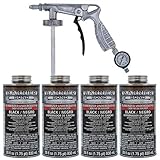
Overview: The Barrier Bond Rubberized Undercoating Kit positions itself as a comprehensive solution for serious automotive enthusiasts and professionals. This four-pack of 28-ounce cans, bundled with a dedicated spray applicator gun, addresses larger-scale projects like full truck undercoating or multiple vehicle maintenance. The paintable, fast-drying formula meets stringent 50-state VOC compliance, making it environmentally responsible while delivering robust protection against corrosion and road noise.
What Makes It Stand Out: Unlike single-can options, this kit provides the specialized spray gun necessary for professional-grade application, ensuring even coverage without runs or drips. The paintable compatibility offers customization flexibility that many competitors lack, allowing users to match their vehicle’s color scheme. The 50-state VOC compliance demonstrates a commitment to environmental standards that professionals operating in regulated markets require.
Value for Money: At $114.99 for 112 total ounces, the per-ounce cost is approximately $1.03—significantly higher than aerosol alternatives. However, the included spray gun ($30-50 value) and bulk quantity justify the premium for users undertaking multiple projects. For a single vehicle, it’s overkill; for a shop or enthusiast maintaining a fleet, the convenience and consistency deliver strong long-term value.
Strengths and Weaknesses: Strengths include the complete kit convenience, environmental compliance, paintable finish, and professional application tool. The larger cans reduce waste compared to multiple aerosols. Weaknesses are the high upfront cost for casual users, storage requirements for leftover product, and the need for an air compressor to power the spray gun.
Bottom Line: Perfect for professionals, restoration shops, or serious DIYers with multiple vehicles. The kit format eliminates guesswork and provides commercial-quality results worth the investment for frequent users.
3. 3M Professional Grade Rubberized Undercoating, Corrosion, Water and Salt Spray Resistant, 03584, 16 oz. Aerosol

Overview: The 3M Professional Grade Rubberized Undercoating leverages decades of automotive expertise in a convenient 16-ounce aerosol format. This asphalt-based formula provides versatile protection for wheel wells, quarter panels, interior fenders, and under-hood applications beyond just undercarriages. Engineered to resist water, salt spray, and abrasion, it serves as a reliable defense against rust while simultaneously dampening road noise for a quieter cabin experience.
What Makes It Stand Out: 3M’s reputation for quality adhesives and coatings lends immediate credibility, while the asphalt-based composition offers exceptional adhesion to metal surfaces. The multi-purpose designation isn’t just marketing—it genuinely performs across diverse applications where rubberized coatings might fail. The sound-deadening properties are particularly effective, creating a noticeable reduction in gravel and road noise transmission.
Value for Money: Priced at $8.99 ($0.56 per ounce), it commands a slight premium over the Rust-Oleum equivalent but remains highly accessible. You’re paying for 3M’s research-backed formulation and consistent quality control. For users prioritizing brand trust and proven performance over absolute lowest cost, this represents solid value. The 16-ounce size provides a bit more coverage than standard 15-ounce cans.
Strengths and Weaknesses: Strengths include trusted brand reputation, versatile application options, excellent sound deadening, and reliable corrosion protection. The asphalt base provides superior adhesion. Weaknesses include potentially messier application than synthetic rubber formulas, slightly higher cost, and limited coverage for larger projects.
Bottom Line: A dependable choice for quality-conscious DIYers who trust the 3M name. Excellent for comprehensive vehicle protection with the bonus of significant noise reduction.
4. Tekton44 Undercoating for Vehicles, Automotive Black Undercoating Kit (8 Liter Cans + 1 Spray Gun + 1 Spray Wand)

Overview: The Tekton44 Undercoating Kit represents a professional-tier solution packaged for serious automotive restoration and fleet maintenance. This comprehensive kit includes eight liters of coating, a dedicated spray gun, and a spray wand—everything needed for extensive undercarriage protection. Formulated to resist cracking, peeling, and running, it maintains permanent tackiness that ensures flexibility even in extreme cold, preventing the brittle failure common in lesser products.
What Makes It Stand Out: The sheer volume and professional equipment set this apart from consumer aerosols. The permanently tacky characteristic is unique, allowing the coating to self-heal minor scratches and maintain elasticity throughout temperature cycles. The non-run, non-drip formulation when applied with the included gun provides confidence for vertical surface application without waste or mess, a critical feature for shop environments.
Value for Money: At $218.90 for 8 liters (270 ounces), the cost breaks down to $0.81 per ounce—remarkably economical for professional-grade material. While the upfront investment is substantial, the per-ounce savings versus aerosols are significant for large projects. For restoration shops or fleet operators, this bulk approach eliminates frequent repurchasing and provides consistent batch quality.
Strengths and Weaknesses: Strengths include exceptional corrosion resistance, professional application tools, bulk value, cold-weather flexibility, and the permanently tacky self-healing property. The formula’s stability prevents cracking over time. Weaknesses include high initial cost, storage requirements, and being overkill for single-vehicle owners. Requires air compressor and proper ventilation.
Bottom Line: The definitive choice for professional shops, restoration experts, or enthusiasts tackling multiple classic car projects. The bulk format and professional results justify the investment for serious users.
5. Tekton44 Undercoating for Cars and Trucks, Black Sprayable Undercoating Kit (4 Liter Cans + 1 Spray Gun + 1 Spray Wand)
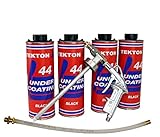
Overview: The Tekton44 Undercoating Kit in the 4-liter configuration offers the same professional-grade formula as its larger sibling but in a more manageable size for dedicated enthusiasts. This kit includes four liters of coating plus spray gun and wand, providing professional application capabilities without the overwhelming volume of the eight-liter version. The formulation maintains its core strengths: high corrosion resistance, crack-proof flexibility, and permanent tackiness for self-healing protection.
What Makes It Stand Out: This kit bridges the gap between consumer aerosols and bulk professional products. Users get professional application equipment and the same advanced formula that doesn’t run, drip, or crack, but with a quantity suitable for one to two vehicles rather than an entire fleet. The permanently tacky characteristic remains a unique selling point, ensuring the coating adapts to metal flexing and temperature changes without failure.
Value for Money: At $152.90 for 4 liters (135 ounces), the per-ounce cost is $1.13—higher than the bulk 8-liter kit but lower than purchasing equivalent aerosol cans. For enthusiasts undertaking a single restoration or maintaining a couple of daily drivers, this hits the sweet spot of professional quality without excessive leftover product. The included spray gun adds $30-50 of value.
Strengths and Weaknesses: Strengths include professional-grade formula, manageable quantity, included application tools, superior flexibility, and excellent corrosion protection. The non-run formulation saves material and reduces cleanup. Weaknesses include higher per-ounce cost than the bulk version, still significant upfront investment, and requiring compressor equipment and proper safety setup.
Bottom Line: Perfect for serious DIY enthusiasts and small shop owners who want professional results on one or two vehicles. It delivers commercial-quality protection with more practical volume.
6. FLUID FILM FFSG Spray Gun Applicator Kit

Overview: The FLUID FILM FFSG Spray Gun Applicator Kit is a specialized tool designed for applying FLUID FILM rust inhibitors and lubricants. This purpose-built applicator features an adjustable nozzle that allows users to control flow rate and spray pattern for optimal coverage. Weighing just 0.921 kilograms and measuring compact dimensions, it’s engineered specifically for the unique viscosity of FLUID FILM products. Made in the United States, this kit represents the official application method recommended by the manufacturer for automotive undercoating, rustproofing, and corrosion protection projects.
What Makes It Stand Out: Unlike generic spray guns, the FFSG kit is precision-engineered for FLUID FILM’s lanolin-based formula. The adjustable nozzle provides exceptional control over material flow, preventing clogging and ensuring even distribution. Its lightweight design reduces fatigue during extended use, while the quality construction reflects American manufacturing standards. The tool’s compatibility with FLUID FILM’s entire product line makes it indispensable for professionals who rely on this trusted brand for corrosion protection.
Value for Money: At $122.99, this applicator sits at the premium end for single-purpose tools. However, for dedicated FLUID FILM users, the investment pays dividends in consistent results and reduced waste. Generic guns often require thinning or suffer from poor atomization, potentially compromising protection. When compared to professional application services costing hundreds of dollars, this kit quickly justifies its price for regular users or commercial operators.
Strengths and Weaknesses: Strengths include purpose-built design, adjustable flow control, lightweight construction, and official manufacturer support. The US origin ensures quality standards. Weaknesses are its single-brand limitation, premium pricing, and lack of included material—requiring separate FLUID FILM purchase. DIYers using multiple product types may find it less versatile than universal alternatives.
Bottom Line: This applicator is essential for FLUID FILM loyalists and professional rustproofers prioritizing quality results. Casual DIYers or those using varied undercoating materials should consider more versatile options.
7. U-POL Raptor Black Urethane Spray-On Truck Bed Liner Kit, Protective Paint with Spray Gun, for Tailgates & Trucks, Vehicle Undercoating, 4 Quart Kit

Overview: The U-POL Raptor Kit delivers a professional-grade 2K urethane truck bed liner solution in a comprehensive DIY package. This four-quart system includes everything needed to coat a 6-8 foot truck bed: four 750ml bottles of black base, one liter of hardener, a dedicated spray gun, and detailed instructions. The 2K urethane formulation creates a tough, flexible barrier that resists scratches, stains, and extreme temperatures while reducing road noise. Its UV-resistant properties prevent fading, ensuring long-lasting protection for truck beds, tailgates, and undercarriages.
What Makes It Stand Out: This kit’s standout feature is its complete, ready-to-use professional system. The 2K urethane chemistry provides superior durability compared to single-component alternatives, staying flexible to prevent cracking. The included spray gun is calibrated for the material’s specific viscosity, and the rapid-drying formula allows multiple coats within an hour. Its versatility extends beyond truck beds to trailers, boats, and undercoatings, with the ability to brush or roll for custom textures.
Value for Money: At $142.90, the kit offers exceptional value compared to $500+ professional installations. Covering a full truck bed with commercial-grade material, the cost per square foot is highly competitive. The inclusion of a purpose-designed spray gun eliminates compatibility guesswork, while the quart-sized bottles prevent waste. For DIY enthusiasts seeking professional results, this represents significant savings without sacrificing quality.
Strengths and Weaknesses: Strengths include comprehensive kit contents, professional-grade 2K urethane, UV resistance, rapid drying, and versatile application methods. The flexible, noise-reducing finish outperforms cheaper alternatives. Weaknesses include requiring an 8 CFM compressor, mandatory proper mixing, and limited color options without tinting. Inexperienced users may face a learning curve with 2K systems.
Bottom Line: Perfect for truck owners wanting professional bed liner protection at DIY prices. Experienced DIYers with proper compressors will achieve excellent results, while novices should practice first.
8. Tekton44 Undercoating for Cars, RVs, Commercial Trucks Black Undercoating Kit (12 Liter Cans + 1 Spray Gun + 1 Spray Wand)
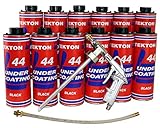
Overview: The Tekton44 Undercoating Kit is a heavy-duty professional solution designed for high-volume applications on cars, RVs, and commercial trucks. This comprehensive package includes twelve liters of black undercoating, a professional spray gun, and a specialized spray wand for hard-to-reach areas. Formulated for maximum corrosion resistance, the coating remains permanently tacky to maintain flexibility in extreme cold, preventing cracks and peels. Its non-drip formulation ensures clean application, even on vertical surfaces, making it ideal for comprehensive undercarriage protection.
What Makes It Stand Out: The sheer volume sets this kit apart—twelve liters accommodate multiple vehicles or large commercial applications. The permanently tacky characteristic ensures the coating never fully hardens, providing continuous flexibility and self-healing properties. The included spray wand extends reach into frame rails and wheel wells, while the professional-grade gun handles the high-viscosity material without thinning. This commercial-focused design prioritizes durability over aesthetics.
Value for Money: At $275.00 ($0.68 per fluid ounce), the upfront cost is substantial but economical for bulk users. Professional undercoating services charge $150-300 per vehicle, so this kit pays for itself after two applications. The large quantity eliminates frequent reordering for fleet operators, and the professional tools are reusable. For individual car owners, however, the volume may lead to material waste.
Strengths and Weaknesses: Strengths include massive material volume, professional equipment, superior cold-weather flexibility, corrosion resistance, and non-drip application. The permanently tacky formula ensures longevity. Weaknesses are high initial investment, potential waste for single-vehicle users, and the tacky finish attracting dirt. Storage of leftover material requires careful planning.
Bottom Line: Ideal for professional detailers, fleet operators, and serious enthusiasts maintaining multiple vehicles. Casual DIYers should opt for smaller kits to avoid waste and excessive cost.
9. Automotive Spray-On Rubberized Undercoating Material, 1-Gallon RUS-1020F1

Overview: The RUS-1020F1 is a straightforward, no-frills rubberized undercoating material supplied in a one-gallon container. Designed for spray gun application, this product provides basic corrosion protection for vehicle undercarriages, wheel wells, and hidden body panels. The rubberized formula creates a flexible barrier that absorbs impacts and resists moisture intrusion. As a material-only offering, it allows users to apply the coating with their existing spray equipment, making it a simple addition to any automotive protection regimen without unnecessary complexity or bundled accessories.
What Makes It Stand Out: Simplicity is this product’s primary advantage. By focusing solely on the coating material, it offers maximum flexibility for users who already own spray guns or prefer specific application tools. The one-gallon size provides sufficient coverage for a standard vehicle undercarriage, while the rubberized formulation ensures basic protection against road salt, moisture, and minor abrasions. Its compatibility with standard automotive spray equipment eliminates the need for specialized tools.
Value for Money: At $47.11 ($0.37 per ounce), this is among the most economical undercoating options available. The price point makes it attractive for budget-conscious DIYers and those experimenting with undercoating. However, the true cost must factor in separate spray gun purchase or rental. Compared to all-in-one kits, the material-only approach saves money if you own equipment, but may cost more for first-time users needing to buy tools.
Strengths and Weaknesses: Strengths include low material cost, simple formulation, compatibility with standard spray guns, and adequate coverage for single vehicles. The rubberized texture provides decent impact resistance. Weaknesses are lack of application equipment, limited technical specifications, unknown durability compared to premium brands, and potential need for thinning. No UV resistance or advanced features are advertised.
Bottom Line: Best for experienced DIYers with existing spray equipment seeking affordable basic undercoating. First-timers should consider complete kits for better overall value and guaranteed compatibility.
10. BAOZIZI Undercoating Spray Gun with 33.82oz Aluminum Cup, 360° Spray Hose Woolwax Fluid Film Undercoating for Truck Bed Liner Powder Coating Spray Gun kit, Rubberized Undercoat, Car Rust Proofing

Overview: The BAOZIZI Undercoating Spray Gun is a comprehensive application system designed for professional-grade rustproofing and undercoating. This kit includes a precision spray gun with a 33.82oz aluminum cup, three flexible extension tubes, two air hose connectors, a pressure gauge, gloves, brushes, and sealing tape. Featuring a 4.0mm nozzle and advanced technology that boosts flow rate by 60%, it handles high-viscosity materials like Woolwax and Fluid Film without constant refilling. The 360° spray wands ensure complete coverage in tight spaces, making it ideal for chassis protection and truck bed liners.
What Makes It Stand Out: This kit’s completeness sets it apart—every accessory needed for professional application is included. The 360° flexible wands access frame rails and wheel wells that standard guns cannot reach. The large aluminum cup and enhanced flow rate significantly reduce downtime, while the pressure gauge ensures consistent application. Unlike brand-specific applicators, this universal system works with oil, solvent, and water-based coatings, offering exceptional versatility for various projects beyond automotive use.
Value for Money: At $46.99, this kit delivers remarkable value. Comparable professional spray guns alone cost $80-150, while this includes accessories worth another $30-50. The multi-material compatibility eliminates need for multiple dedicated guns. For DIYers and professionals alike, the comprehensive package eliminates separate accessory purchases, providing immediate readiness. The aluminum cup’s durability ensures long-term use, justifying the investment.
Strengths and Weaknesses: Strengths include complete accessory package, 360° coverage capability, high-viscosity handling, universal material compatibility, and excellent price point. The large cup capacity and enhanced flow rate boost efficiency. Weaknesses include lesser-known brand reputation, potential quality control variability, and possible need for material thinning. The included accessories, while comprehensive, may not match premium brand durability.
Bottom Line: An exceptional value for DIY enthusiasts and professionals seeking versatile undercoating equipment. The comprehensive kit and innovative wands make it ideal for thorough rust-proofing projects.
What Is Automotive Undercoating and How Does It Work?
Automotive undercoating is a protective barrier applied to a vehicle’s undercarriage, wheel wells, and other exposed metal components. Unlike paint that sits on the surface, quality undercoating products penetrate rust, create a flexible waterproof membrane, and actively inhibit corrosion through chemical compounds. This protective layer deflects road salt, moisture, and debris while absorbing sound and reducing road noise. Modern formulations have evolved from simple tar-based products to sophisticated polymer and rubberized compounds that flex with your vehicle’s movement and temperature fluctuations.
Why Your Vehicle Desperately Needs Undercoating Protection
The statistics are sobering: vehicles in salt-belt states can show significant rust within 3-5 years without protection. Road salt is hygroscopic, meaning it attracts and holds moisture against metal surfaces long after snow melts. Combine this with stone chips that expose bare metal, and you have a perfect corrosion recipe. Undercoating doesn’t just prevent cosmetic rust—it protects critical structural components like frame rails, suspension mounting points, and brake lines. A single failed brake line due to corrosion creates a safety hazard that no amount of exterior wax can prevent.
Types of Undercoating Kits: Which Formula Matches Your Needs?
Rubberized Undercoating Kits
These create a thick, textured finish that excels at sound deadening and impact resistance. The rubberized compounds remain flexible, making them ideal for daily drivers that encounter varied road conditions. They typically require more drying time but offer superior protection against stone chips.
Asphalt-Based Undercoating Systems
The traditional choice for maximum durability, asphalt-based products create an incredibly hard shell that lasts for years. These are heavier and best suited for trucks, SUVs, and vehicles that face extreme conditions. Application requires careful surface prep since they don’t adhere well to existing rust.
Wax and Oil-Based Penetrating Kits
These thinner formulations creep into seams and crevices where rust begins. They’re easier to apply and maintain, making them perfect for classics and show cars where originality matters. Annual reapplication is necessary, but they offer excellent protection for vehicles stored during harsh months.
Polyurethane and Polymer Coatings
The modern premium option, these create a semi-permanent bond with metal surfaces. They cure to a hard yet flexible finish that resists chemicals and UV degradation. While more expensive, they often provide the best long-term value for vehicles you plan to keep indefinitely.
Key Features to Evaluate in Quality Undercoating Kits
When comparing kits, focus on coverage rate (square feet per gallon), dry time, VOC compliance, and temperature application range. Premium kits include specialized applicators like wands for frame rails and cavity wax injection tools. Look for products with rust converters that chemically transform existing oxidation rather than just covering it. The best kits provide multiple viscosity options for different application areas—thicker for flat panels, thinner for internal cavities.
Understanding Coverage Area: Size Matters More Than You Think
A common mistake is underestimating how much product you need. A compact car requires 1-1.5 gallons for complete coverage, while a crew cab truck might need 3-4 gallons. Coverage rates listed on products assume ideal conditions and thin application. Real-world application typically uses 30-40% more product due to overspray, multiple coats, and absorption into rust. Always purchase 20% more than calculated needs—running out mid-project leaves unfinished sections vulnerable to accelerated corrosion.
Application Methods: Sprayers, Brushes, and Aerosols Decoded
Compressed Air Sprayers
Professional-grade results require a minimum 3 HP compressor delivering 7+ CFM at 90 PSI. These systems provide the most even coverage and reach into tight spaces. Invest in a spray gun with a 1.8-2.2mm nozzle and a 24-36 inch wand for frame rails. Practice your technique on cardboard first to avoid runs and uneven buildup.
Aerosol Can Systems
Perfect for touch-ups and small areas, aerosol kits offer convenience but limited coverage (typically 10-15 sq ft per can). They work best for wheel wells and spot treatments. For full vehicles, you’ll need 12-20 cans, making them more expensive per square foot than bulk systems.
Brush and Roller Application
The most controlled method for detailed work around suspension components and brake lines. While labor-intensive, brushing ensures complete coverage of every nook. Use natural bristle brushes for oil-based products and synthetic brushes for water-based formulas. This method excels for frame-off restorations where access is unlimited.
Surface Preparation: The Non-Negotiable Foundation
Success is 90% preparation and 10% application. Begin with a thorough pressure washing, using a degreaser to remove oil and road grime. Let the vehicle dry completely for 24-48 hours in a low-humidity environment. Remove loose rust and scale with a wire wheel or media blasting—never apply over flaking rust. Wipe all surfaces with wax and grease remover immediately before application. For vehicles with existing undercoating, remove any loose material but don’t strip sound factory coatings. Mask off exhaust components, drivetrain parts, and rubber bushings with quality automotive tape and plastic sheeting.
Step-by-Step Professional Application Process
Start with the vehicle on jack stands, wheels removed for maximum access. Begin application at the front, working rearward in systematic sections. Apply light tack coats first, building to final thickness in 3-4 passes rather than one heavy coat. Hold the spray gun 8-10 inches from the surface, moving in overlapping passes. For frame rails, use the wand to inject coating 12-18 inches into the cavity while slowly withdrawing. Coat the inner fender lips, rocker panel interiors, and trunk floor undersides. Allow 4-6 hours between coats and 24-48 hours full cure time before driving. Apply a second coat to high-impact areas like wheel wells and behind tires.
Professional Application vs. DIY Kits: The Real Cost-Benefit Analysis
Professional undercoating services range from $150 for basic spray-on treatments to $1,500 for comprehensive rustproofing with cavity wax injection. DIY kits cost $75-$300 in materials but require 6-10 hours of labor and equipment investment. The break-even point comes at 2-3 vehicles—if you plan to protect multiple cars or reapply every few years, DIY equipment pays for itself. Professionals offer warranties and proper facility ventilation, while DIY provides complete control over product choice and application thickness. Consider your mechanical skill, available space, and time value when deciding.
Cost Breakdown: Investment vs. Long-Term Savings
A quality DIY kit with compressor and spray gun investment totals $300-$500 initially, dropping to $75-$150 per vehicle thereafter. Compare this to accelerated depreciation from rust—a corroded vehicle loses 15-25% of its resale value and may fail safety inspections prematurely. Factor in potential repair costs: frame repairs can exceed $3,000, while brake line replacements run $500-$1,200. Undercoating provides ROI within 2-3 years in salt-belt regions, not including the intangible value of driving a safer, quieter vehicle.
Optimal Timing: When to Apply Undercoating for Maximum Effect
Apply undercoating during dry, moderate weather—ideally 60-80°F with low humidity. In northern climates, schedule application in late spring after winter salt has washed away but before summer humidity peaks. Southern owners should apply before hurricane season. Never apply when rain is forecast within 48 hours or when temperatures will drop below 50°F during cure time. For new vehicles, apply within the first 6 months before corrosion begins. Used vehicles benefit most from fall application, providing maximum protection through winter’s salt assault.
Critical Mistakes That Ruin Undercoating Projects
The number one error is inadequate surface prep—applying over wet or dirty surfaces causes immediate failure. Second is applying too thick, which leads to cracking and peeling as the coating cures. Third is neglecting internal cavities where rust starts first. Fourth is using the wrong product type for your climate—rubberized coatings in extreme cold become brittle and crack. Fifth is rushing between coats, trapping solvents that prevent proper curing. Always follow manufacturer dry times precisely, even if they seem excessive.
Safety Protocols and Environmental Responsibility
Work in a well-ventilated area with forced air exhaust; undercoating fumes are toxic and flammable. Wear a NIOSH-approved respirator with organic vapor cartridges, not just a dust mask. Chemical-resistant gloves, coveralls, and eye protection are mandatory. Keep fire extinguishers rated for chemical fires nearby. For cleanup, use mineral spirits for oil-based products and soap/water for water-based formulas. Dispose of waste properly—most municipalities classify undercoating waste as hazardous material. Never apply near storm drains or waterways; use ground tarps to catch overspray and drips.
Maintenance Schedule for Lasting Protection
Inspect your undercoating annually, preferably before winter. Look for cracks, chips, or thin spots, especially behind wheels and along frame rails. Touch up damaged areas immediately with matching product—delay allows rust to gain a foothold. Pressure wash the undercarriage quarterly to remove mud and salt buildup, but avoid direct high-pressure spray on the coating itself. Reapply a maintenance coat every 3-5 years for rubberized products, 2-3 years for wax-based formulas, and 5-7 years for polyurethane systems. Keep a detailed log of application dates and products used for future reference.
Warning Signs That Demand Immediate Reapplication
If you notice bubbling or blistering, moisture has penetrated beneath the coating—strip and reapply that section immediately. Flaking indicates the coating has lost adhesion, often from improper prep or excessive thickness. A chalky surface texture signals UV degradation, common in asphalt-based products after 3-4 years. Visible rust streaks mean the coating has been compromised and the metal is actively corroding. Any bare metal spots from rock chips need touch-up within weeks, not months. Listen for increased road noise; sound dampening loss often precedes visual coating failure.
Frequently Asked Questions
How long does DIY undercoating typically last compared to professional applications?
With proper surface preparation and application, quality DIY undercoating lasts 3-5 years for rubberized products, matching many professional applications. The difference isn’t longevity but consistency—professionals have equipment ensuring even coverage. Key factors affecting lifespan include your climate, driving conditions, and whether you perform annual inspections and touch-ups. Wax-based DIY applications may need reapplication every 2-3 years, while polyurethane systems can last 5-7 years regardless of who applies them.
Can I apply undercoating over existing rust, or must I remove it completely?
You must remove loose, flaky rust completely, but surface oxidation can be treated with rust converter included in premium kits. The converter chemically transforms iron oxide into a stable, paintable surface. For severe rust with pitting, media blasting is necessary—covering deep corrosion traps moisture and accelerates hidden deterioration. Light surface rust is acceptable after wire wheel treatment, but any rust that pits the metal requires professional assessment before coating.
What’s the realistic drying time before I can drive my vehicle?
While surface dry may occur in 4-6 hours, full cure requires 24-48 hours without exception. Driving sooner flexes the undercarriage before the coating achieves full adhesion, causing cracks and premature failure. For multi-coat applications, wait 4-6 hours between coats, then 48 hours final cure. In humid conditions below 60°F, extend cure time to 72 hours. Rushing this step ruins even the best application—plan your project over a weekend when the vehicle can remain stationary.
Are undercoating kits safe for all vehicle components?
No—never coat exhaust systems, catalytic converters, heat shields, or drivetrain components like CV joints and U-joints. The coating burns off hot exhaust parts, creating toxic fumes and fire hazards. On drivetrain components, it traps heat and attracts dirt, causing premature wear. Rubber bushings and brake components must be masked off completely. Some modern vehicles have plastic underbody panels—these should be removed before application, as coating adhesion to plastic is poor and may void corrosion warranties.
How much money will I actually save with a DIY kit?
First vehicle savings are modest—$50-$100 after equipment costs. The real value emerges with subsequent vehicles and reapplications. A $300 compressor and spray gun investment amortizes over 5-7 vehicles, dropping per-vehicle cost to $75-$125 in materials versus $150-$400 professional services. If you reapply every 4 years on a 12-year vehicle ownership, DIY saves $900-$1,800 per vehicle in salt-belt regions. Factor in the ability to use premium products professionals might not offer, and the value proposition strengthens considerably.
Will undercoating void my vehicle’s factory corrosion warranty?
It depends on your manufacturer and application quality. Some warranties require dealer-applied treatments or prohibit certain product types. Before applying, review your warranty terms carefully. Generally, properly applied undercoating that doesn’t cause damage won’t void warranties, but poor application that traps moisture or interferes with drain holes can create warranty claim denials. Document your process with photos and keep product specifications—this demonstrates due diligence if warranty issues arise. When in doubt, consult your dealer’s service manager.
Can undercoating be removed if I need to perform repairs?
Yes, but removal is labor-intensive. Mechanical removal with a heat gun and scraper works for rubberized and asphalt coatings, while chemical strippers are necessary for polymer coatings. Plan on 4-8 hours for partial removal around repair areas. This is actually an argument for lighter, multi-coat applications rather than one heavy coat—thin layers are easier to repair and touch up. Some shops refuse to work on heavily undercoated vehicles due to removal time, so maintain detailed records of what products you used.
How do I choose between rubberized, asphalt, and wax-based for my climate?
Rubberized suits moderate climates with mixed conditions—flexible enough for temperature swings without becoming brittle. Asphalt excels in extreme cold and heavy salt exposure but may soften in sustained desert heat. Wax/oil-based formulas are ideal for dry climates and vehicles stored winters, requiring reapplication but offering superior creep into seams. Polyurethane works universally but commands premium pricing. Consider your average temperature range, salt exposure, and whether the vehicle operates year-round when selecting.
What compressor specifications do I really need for proper spray application?
Minimum requirements: 3 HP motor, 20-gallon tank, delivering 7 CFM at 90 PSI continuously. Smaller compressors require frequent pauses, causing uneven application as the coating begins setting between sprays. For continuous spraying, 5+ HP and 60-gallon tank are professional standards. Don’t forget moisture—install an in-line filter and drain your tank completely before starting, as water in the air stream causes coating failure and nozzle clogging.
How do I inspect my undercoating job to ensure it’s effective?
Use a bright LED work light and inspection mirror to view all surfaces. Effective coating appears uniform in texture and thickness with no bare metal, runs, or thin spots. Gently tap with a screwdriver handle—it should sound solid, not hollow or cracking. Check that all seams and welds are covered, especially in boxed frame sections. After one month, inspect again for cracks that indicate improper cure. An effective job maintains flexibility without tackiness and shows no rust bleeding through. When in doubt, apply an extra coat—there’s no such thing as too much protection in critical areas.